How Flexible Are Flexible Solar Panels?
How Flexible Are Flexible Solar Panels?
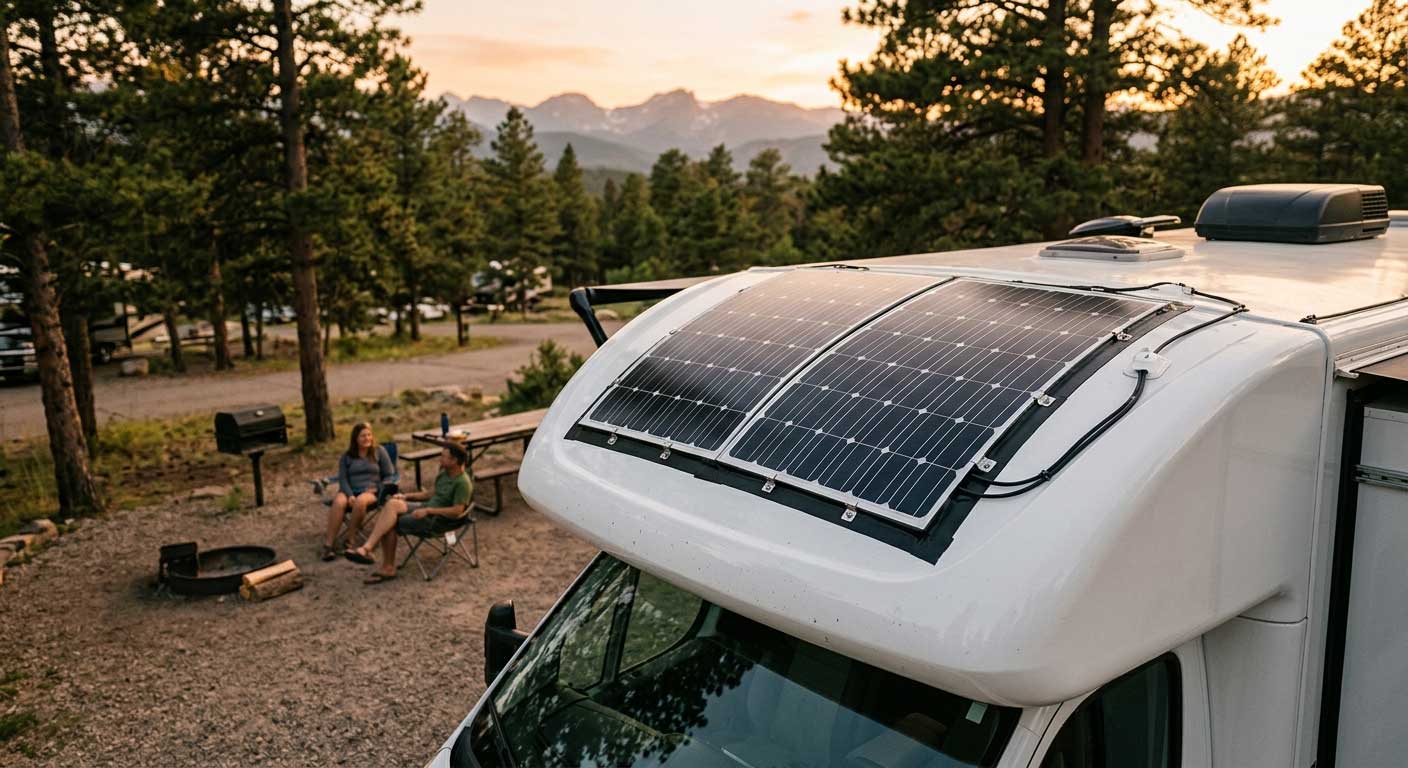
Most flexible solar panels can safely bend between 30° and 50°, depending on their construction and materials. They are flexible enough to follow the contours of RV roofs, boats, camper vans, and curved structures, but they are not designed to be folded repeatedly or rolled into tight cylinders.
A customer from Florida once sent us photos of a flexible panel installed on the roof of a small fishing boat. Three years later, the panel was still producing power close to its original output. Around the same time, another customer contacted us about a similar-looking panel that failed within eighteen months.
The difference wasn’t obvious from the photos.
Both were labeled as flexible solar panels.
Both were mounted outdoors.
Both looked almost identical.
The real difference was hidden inside the materials and how the panels were installed.
That is why the question “how flexible are flexible solar panels” deserves a more detailed answer than a simple bend angle printed on a specification sheet.
What Makes Flexible Solar Panels Flexible?
Most people imagine the solar cells themselves are flexible.
They are not.
Solar cells remain relatively fragile silicon components.
The flexibility comes from the surrounding layers.
Instead of being protected by thick tempered glass and heavy aluminum frames, flexible solar panels use lightweight polymer materials that allow the entire module to conform to curved surfaces.
This design significantly reduces weight.
A conventional 100W glass panel often weighs between 13 and 18 pounds.
A comparable flexible panel may weigh less than 5 pounds.
That weight reduction creates installation opportunities where rigid panels simply do not work.
Common applications include:
- RV roofs
- Camper vans
- Sailboats
- Fishing boats
- Tiny homes
- Portable off-grid systems
According to the U.S. Department of Energy’s National Renewable Energy Laboratory (NREL), lightweight photovoltaic technologies continue to expand deployment options for transportation and mobile energy systems.
Source:
https://www.nrel.gov
The Bend Limit Most Buyers Never Think About
When manufacturers advertise flexibility, they usually highlight the maximum bend angle.
30 degrees.
40 degrees.
Sometimes 50 degrees.
That number is useful, but it rarely tells the full story.
A solar panel that can technically bend 50 degrees does not necessarily perform best when installed at 50 degrees.
In practice, experienced installers rarely push panels anywhere near their maximum rated curvature.
The same principle applies to many engineering products.
Just because something can operate at its limit does not mean it should.
Over the years, we’ve reviewed installations on RV fleets, utility trailers, and marine vessels. The systems that age best usually follow gentle curves rather than aggressive bends.
There is less mechanical stress.
Less vibration impact.
Less long-term fatigue.
That observation doesn’t come from a laboratory. It comes from seeing what happens after thousands of miles on rough highways and years of exposure to heat, rain, and UV radiation.
Can Flexible Solar Panels Be Rolled Up?
This is one of the most misunderstood topics in the solar industry.
Many buyers assume flexible means rollable.
Most flexible solar panels are not designed to be rolled repeatedly.
They are designed to conform to a shape and remain in that position.
There is a big difference.
Repeated bending can create microscopic fractures inside solar cells.
These fractures are often invisible.
The panel may continue producing power for months before performance gradually declines.
Research from NREL has documented how mechanical stress contributes to microcrack formation within photovoltaic cells, potentially affecting long-term performance.
Source:
https://www.nrel.gov
If your application requires regular folding and unfolding, a portable folding solar panel is usually a better choice than a roof-mounted flexible module.
Why ETFE Panels Usually Last Longer
Several years ago, the market was flooded with inexpensive PET-based flexible panels.
They were lightweight.
They were affordable.
Unfortunately, many aged poorly.
After prolonged UV exposure, surface yellowing became common.
Power output often dropped faster than expected.
Today, premium flexible panels increasingly use ETFE surfaces instead.
ETFE offers several advantages:
- Higher UV resistance
- Better scratch resistance
- Improved weather durability
- Better resistance to saltwater environments
- Higher light transmission
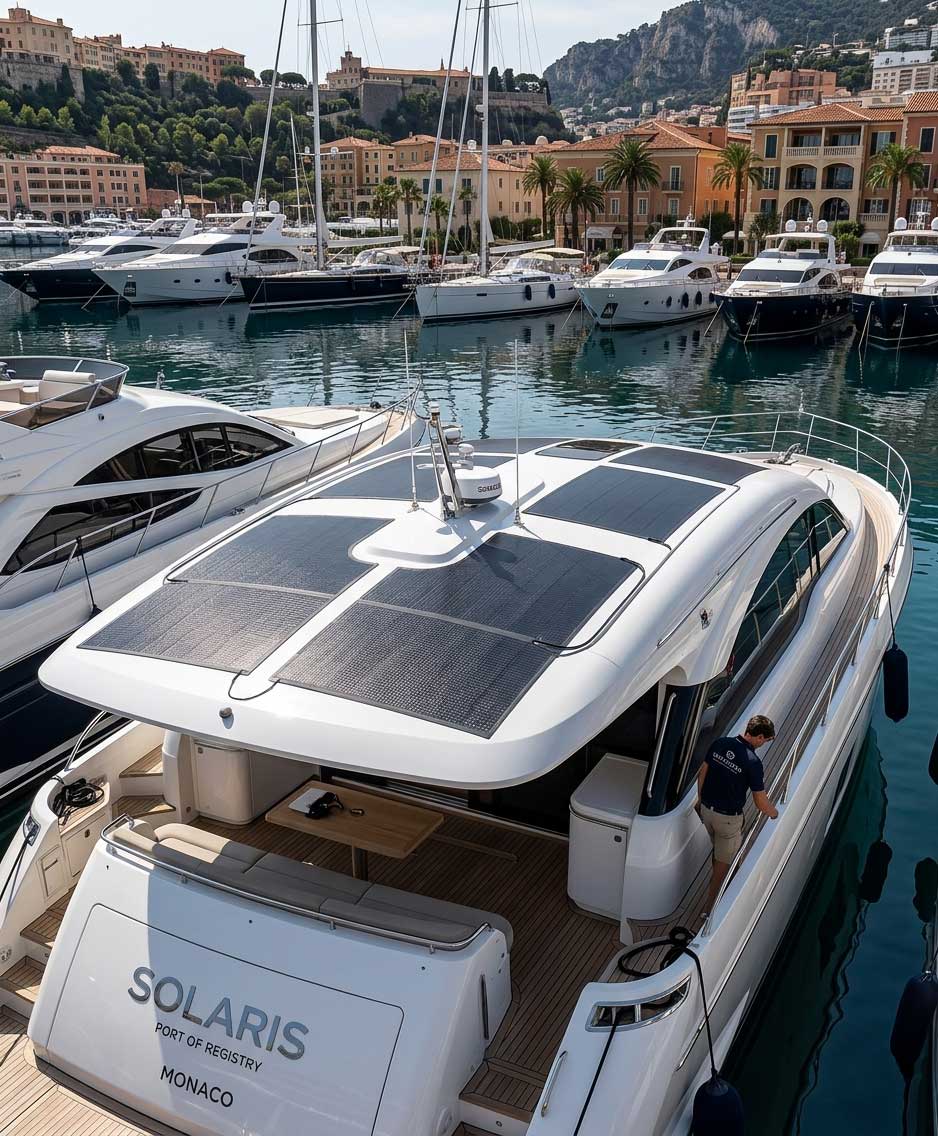
In marine installations, this difference becomes particularly noticeable.
One marina contractor we worked with described ETFE as “the material that finally made flexible panels practical for long-term boat use.”
That statement might be a little dramatic, but there is some truth behind it.
According to material performance data published by ETFE manufacturers, ETFE films maintain excellent optical properties even after years of outdoor exposure.
Source:
https://www.dupont.com
How Flexible Are Flexible Solar Panels on RV Roofs?
Most RV roofs are not as curved as people think.
Many feature only a gentle crown designed to improve water runoff.
For modern flexible solar panels, this level of curvature is usually easy to accommodate.
Typical compatibility looks like this:
| Application | Suitability |
|---|---|
| Class B Camper Van | Excellent |
| Class C RV | Excellent |
| Travel Trailer | Excellent |
| Fiberglass Camper Roof | Excellent |
| Curved Boat Cabin | Very Good |
| Highly Rounded Surfaces | Verify Specifications |
One installation we observed involved a camper van conversion where rigid panels would have required custom aluminum framing.
The owner chose flexible panels instead.
Installation time dropped significantly.
The finished appearance was cleaner.
Wind resistance was also reduced because the panels sat much closer to the roof.
Those practical advantages often matter more than flexibility itself.
Does Greater Flexibility Reduce Efficiency?
Not directly.
A common misconception is that flexible panels generate less electricity because they are flexible.
The reality is more complicated.
Efficiency depends primarily on:
- Cell technology
- Manufacturing quality
- Operating temperature
- Shading conditions
- Installation quality
The bigger challenge for flexible panels is heat.
Unlike framed glass modules, flexible panels are often mounted directly against a surface with minimal airflow underneath.
Higher temperatures can reduce power output.
According to the International Energy Agency (IEA), photovoltaic module efficiency generally declines as operating temperatures increase beyond standard test conditions.
Source:
https://www.iea.org
This is why proper installation remains critical.
A premium panel installed poorly will often underperform a mid-range panel installed correctly.
What Experienced Installers Usually Recommend
After years of reviewing customer projects, one recommendation comes up repeatedly.
Don’t buy based solely on maximum flexibility.
Instead, focus on the overall design.
Look at:
- ETFE surface quality
- Cell technology
- Manufacturer reputation
- Warranty coverage
- Installation method
- Environmental conditions
Some of the longest-lasting systems we’ve encountered were never bent anywhere near their advertised limit.
They simply matched the application well.
That tends to be the difference between a panel that lasts three years and one that remains productive for more than a decade.
FAQ:How Flexible Are Flexible Solar Panels?
How flexible are flexible solar panels compared to rigid panels?
Flexible solar panels can bend approximately 30°–50° depending on design, while rigid solar panels cannot bend at all.
Can flexible solar panels be installed on boats?
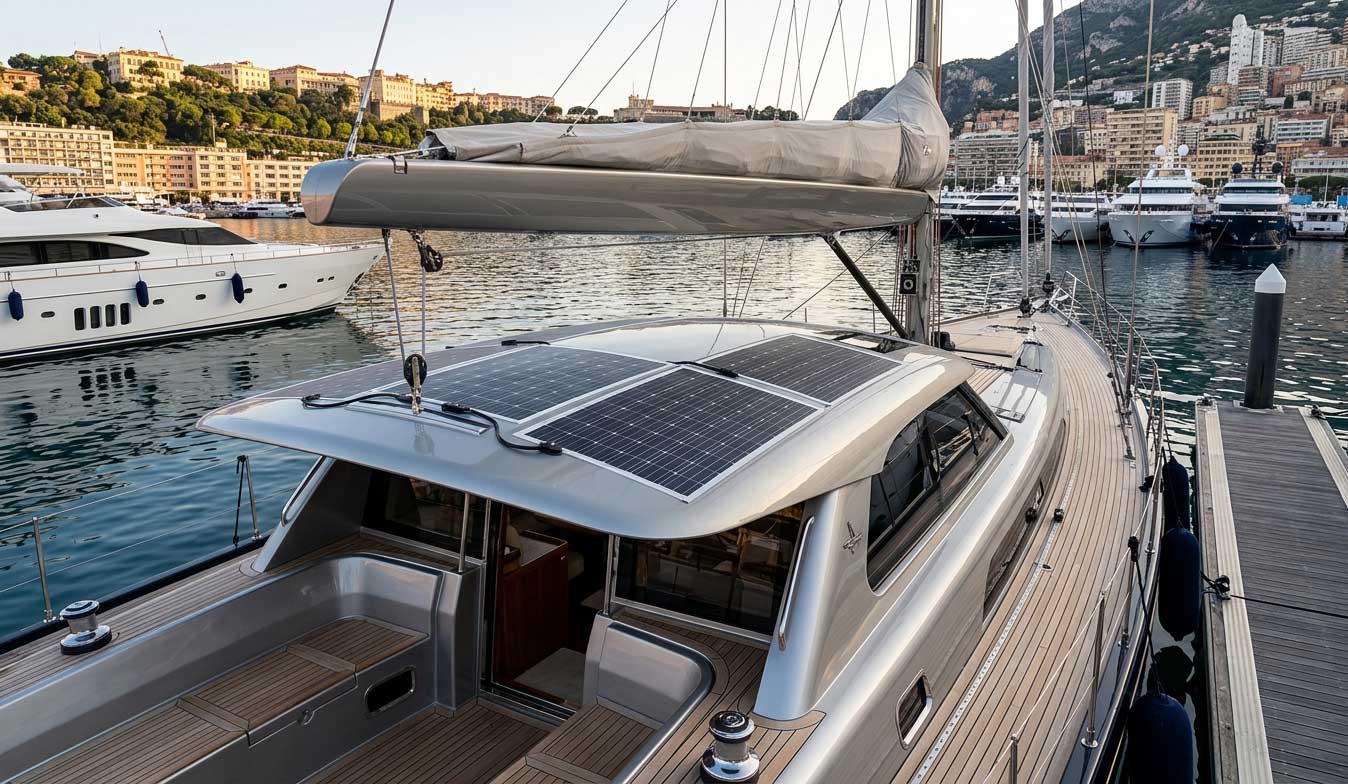
Yes. Flexible solar panels are widely used on sailboats, fishing boats, and yachts because they adapt well to curved surfaces.
Can I walk on a flexible solar panel?
Most manufacturers do not recommend walking on flexible solar panels unless specifically designed for that purpose.
Do flexible solar panels crack?
They can develop microcracks if repeatedly bent, twisted, or installed beyond their specified bend limits.
How long do flexible solar panels last?
High-quality ETFE flexible solar panels commonly last 10–20 years when properly installed and maintained.
Final Thoughts
So, how flexible are flexible solar panels?
Flexible enough to follow the curves of an RV roof, a sailboat cabin, or a camper van without requiring heavy framing. Not flexible enough to be treated like a roll-up mat.
The best-performing installations rarely push panels to their bending limits. Instead, they use flexibility as it was originally intended—a way to simplify installation, reduce weight, and bring solar power to surfaces where traditional panels struggle to fit.
Related recommendations
-

how to fasten flexible solar panels to roof?
278Discover how to fasten flexible solar panels to roof surfaces safely and securely. Learn proven adhesive and mechanical mounting methods from real-world solar installation experience.
View details -
how to hook up portable solar panels to rv batteries?
189Connect portable solar panels to RV batteries through a compatible charge controller, with correct polarity, cables, and protection. Check panel, battery, an...
View details -
What Is a Bifacial Solar Panel?
272Discover what is a bifacial solar panel, how it works, real energy gains, installation requirements, and expert insights from Bright Solar.
View details -
How Long Do Portable Solar Panels Last?
265How long do portable solar panels last? Learn the real lifespan of portable solar panels, what affects durability, and how to extend performance outdoors.
View details