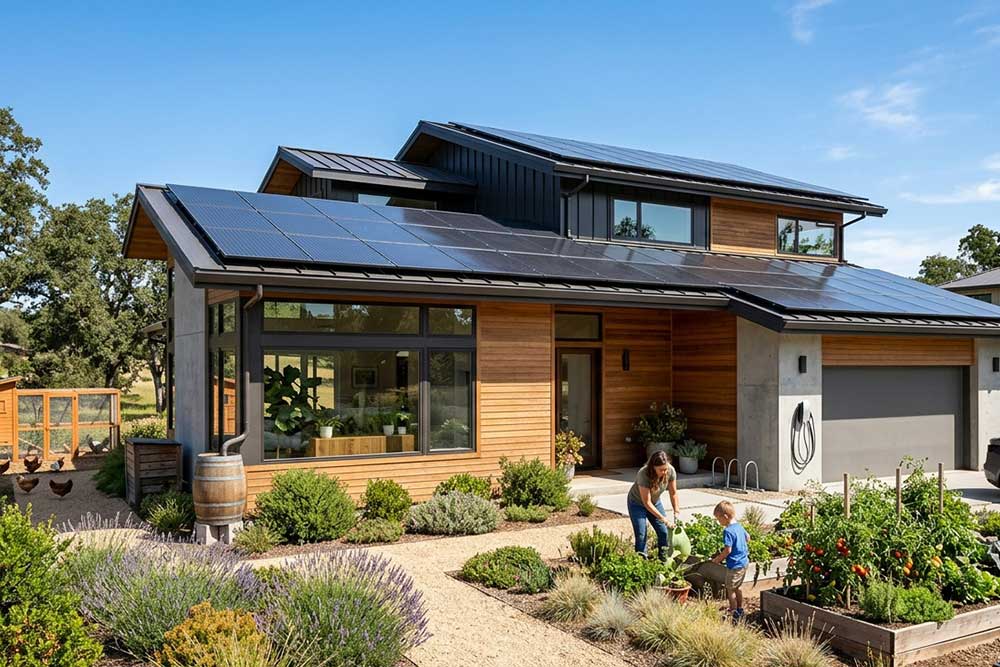
How To Make Solar Panels?
How to make solar panels? Solar panels are made by transforming purified silicon into photovoltaic cells, connecting multiple cells together, protecting them with durable materials, and testing the finished modules for performance and safety.
Making a solar panel involves much more than placing solar cells behind a piece of glass. During my experience working with solar product development, I have learned that every layer inside a module affects its efficiency, durability, and long-term performance.
At Bright Solar, we work with different solar technologies, including flexible solar panels, portable solar modules, and customized photovoltaic solutions. Customers often ask how solar panels are made because they want to understand what determines product quality before making a purchase.
The manufacturing process combines semiconductor technology, material engineering, and strict quality control. A reliable solar panel must not only generate electricity but also withstand years of outdoor exposure.
According to data from the International Energy Agency (IEA), solar photovoltaic power has become one of the key technologies supporting global renewable energy expansion, with solar capacity increasing rapidly worldwide.
How To Make Solar Panels Step by Step?
The complete solar panel manufacturing process usually includes these major steps:
- Preparing high-purity silicon
- Producing silicon wafers
- Manufacturing photovoltaic cells
- Connecting solar cells
- Building the module structure
- Installing electrical components
- Testing the finished solar panel
Each step has a direct influence on the final product.
A solar panel is essentially a carefully engineered energy conversion device. The photovoltaic cells capture sunlight, while the surrounding materials protect those cells from moisture, heat, mechanical stress, and environmental damage.
Step 1: Preparing Silicon Materials for Solar Panels
The first stage of making solar panels begins with silicon.
Silicon is chosen because it is a semiconductor material that can convert sunlight into electricity through the photovoltaic effect.
However, raw silicon from natural sources cannot immediately become a solar cell.
The material must go through purification processes.
The basic material preparation includes:
- Extracting silica from quartz or sand
- Producing metallurgical-grade silicon
- Refining silicon to solar-grade purity
Solar manufacturing requires extremely pure silicon because impurities can reduce electrical performance.
Why Silicon Quality Matters
The quality of silicon affects:
- Solar cell efficiency
- Electrical stability
- Long-term degradation
- Manufacturing consistency
A small defect in early production stages can influence thousands of cells later in the process.
This is why professional solar manufacturers carefully control raw materials before production begins.
Step 2: Making Silicon Wafers
After purification, silicon is formed into large blocks called ingots.
These silicon ingots are processed into thin wafers.
The wafer manufacturing process includes:
- Growing silicon crystals
- Cutting ingots into thin slices
- Cleaning wafer surfaces
- Preparing wafers for cell production
The wafer is the foundation of a photovoltaic cell.
Although it looks simple, the wafer must maintain precise thickness and surface quality to achieve reliable solar conversion.
Step 3: Creating Solar Cells From Silicon Wafers
This is where the solar energy conversion function is created.
Manufacturers transform silicon wafers into photovoltaic cells through several processes.
Surface Treatment
The wafer surface is modified to improve sunlight absorption.
A textured surface reduces reflection and allows more sunlight to enter the silicon material.
Adding Electrical Layers
Manufacturers create positive and negative electrical regions inside the silicon wafer.
When sunlight reaches the cell, electrons move through these layers and generate direct current electricity.
Applying Conductive Materials
Metal contacts are added to collect and transfer electricity generated by the photovoltaic cell.
After this stage, the individual solar cell can produce electrical power.
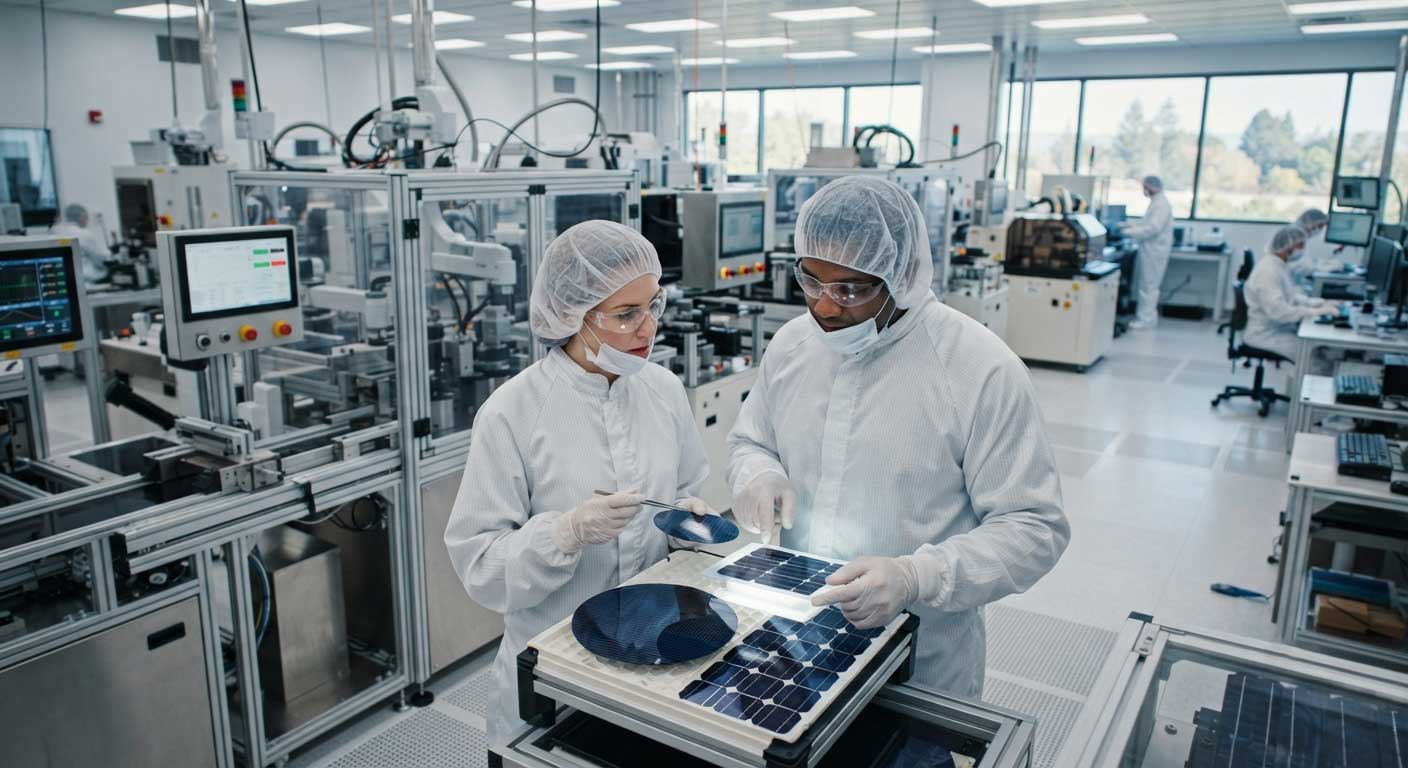
Step 4: Connecting Solar Cells Together
A single solar cell cannot generate enough electricity for most applications.
Manufacturers connect multiple cells together to create a complete solar module.
This process is called solar cell interconnection or stringing.
During this stage:
- Solar cells are arranged into rows
- Conductive ribbons connect the cells
- Electrical pathways are created
- Cell alignment is checked
Common solar panel designs include:
| Panel Type | Typical Cell Configuration |
|---|---|
| Traditional residential panel | 60 or 72 cells |
| Modern high-efficiency panel | 108 half-cut cells |
| Large commercial module | 144 half-cut cells |
The arrangement affects the panel’s voltage, current, size, and overall power output.
Step 5: Building the Solar Panel Layer Structure
After solar cells are connected, manufacturers assemble the protective layers around them.
A typical solar panel structure includes:
| Component | Function |
|---|---|
| Glass layer | Protects cells and allows sunlight transmission |
| Encapsulant film | Seals and protects photovoltaic cells |
| Solar cells | Convert sunlight into electricity |
| Back sheet | Provides insulation and protection |
| Aluminum frame | Adds mechanical strength |
| Junction box | Transfers generated electricity |
Each layer has a specific role.
For example, the encapsulant protects the solar cells from moisture, while the glass layer protects against physical impact and weather exposure.
How Bright Solar Looks at Solar Panel Manufacturing
At Bright Solar, manufacturing is not only about producing a panel with a high watt rating.
Different applications require different designs.
For example:
A residential rooftop panel focuses on:
- High efficiency
- Long lifespan
- Weather resistance
A flexible solar panel for RVs, boats, or outdoor equipment requires:
- Lightweight construction
- Flexible materials
- Easy installation
- Resistance to vibration
The manufacturing process must match the environment where the solar panel will be used.
Quality Testing and Final Assembly in Solar Panel Manufacturing
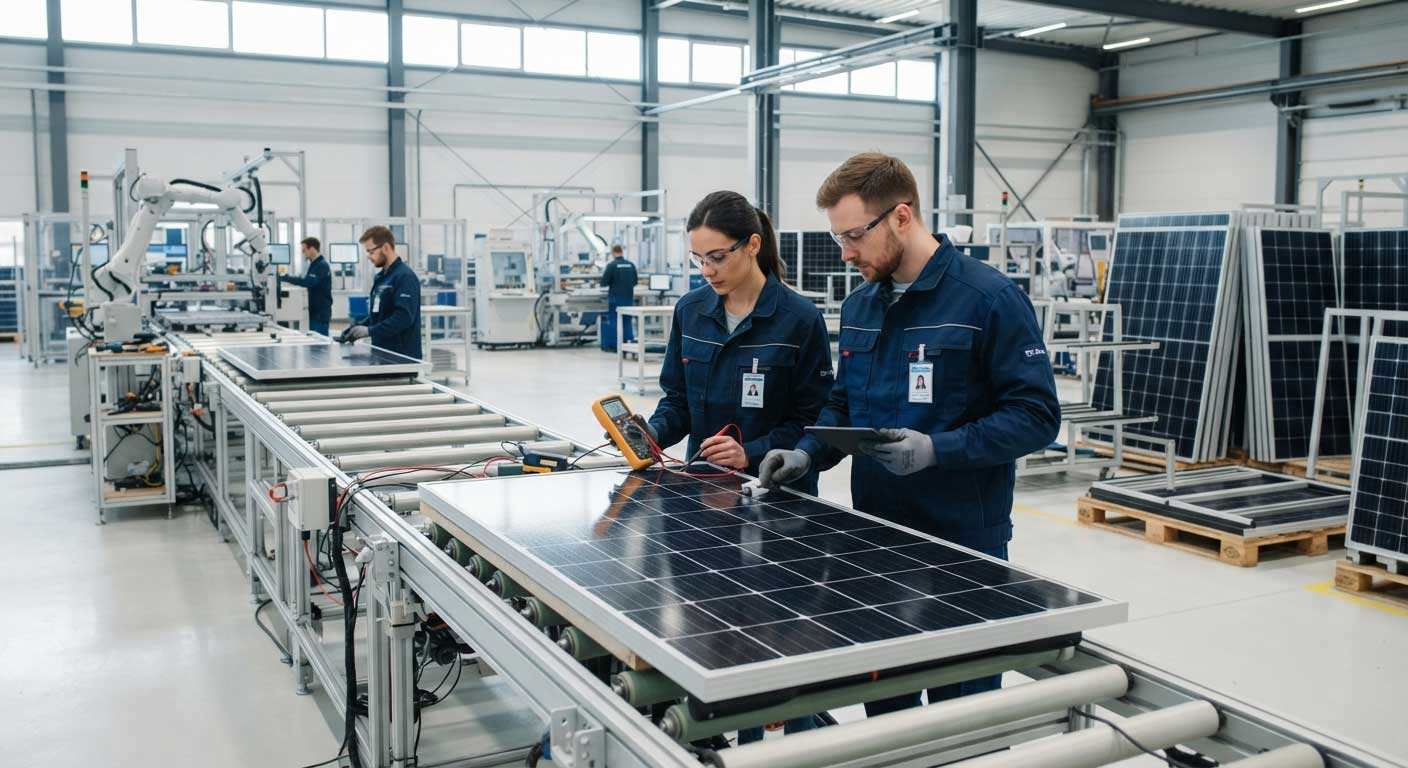
After solar cells are connected into a complete circuit, manufacturers move into the testing stage. This is where small differences become important. A solar panel that looks perfect from the outside can still have electrical problems if one connection is weak or one cell performs below specification.
At Bright Solar, we understand that panel manufacturing is not only about assembling materials. During production inspections, engineers check electrical output, insulation resistance, mechanical strength, and environmental durability before products leave the factory.
Typical solar panel testing includes:
| Testing Process | Purpose | Common Standard |
|---|---|---|
| Electroluminescence (EL) Test | Detect hidden cracks in solar cells | Before and after lamination |
| Flash Test | Measure actual power output | Rated wattage verification |
| Insulation Test | Check electrical safety | IEC standards |
| Mechanical Load Test | Simulate wind and snow pressure | Up to thousands of pascals |
| Waterproof Test | Verify protection against moisture | IP protection requirements |
The International Electrotechnical Commission (IEC) provides widely used standards for photovoltaic modules, including IEC 61215 for module design qualification and IEC 61730 for safety testing. These standards help ensure solar panels can operate reliably for decades in outdoor environments.
One detail many buyers overlook is the difference between laboratory efficiency and real-world performance. A panel may achieve impressive numbers under Standard Test Conditions (STC), but actual output depends on temperature, installation angle, shading, and local weather.
This is why experienced manufacturers focus on long-term stability rather than only chasing peak efficiency.
How Solar Panels Are Made for Long-Term Outdoor Performance
A solar panel spends its entire life exposed to sunlight, rain, wind, dust, and temperature changes. Manufacturing decisions made during production directly affect its durability.
For example, flexible solar panels require different engineering compared with traditional rigid modules. The materials must balance lightweight construction with resistance against bending, vibration, and outdoor exposure.
Bright Solar’s flexible solar panels use lightweight structures designed for applications where conventional glass modules are difficult to install, such as:
- RV rooftops
- Marine applications
- Portable solar systems
- Curved surfaces
- Off-grid equipment
The manufacturing process usually adds protective layers to prevent damage:
- Front protective layer
Protects solar cells from scratches, moisture, and UV exposure. - Encapsulation material
Holds cells in place and reduces the risk of corrosion. - Back protection layer
Provides mechanical support and improves weather resistance. - Junction box and wiring system
Transfers generated electricity safely to the external circuit.
According to the U.S. Department of Energy, modern photovoltaic modules are designed to provide reliable electricity generation for approximately 25–30 years, although many panels continue producing electricity beyond their original warranty period.
Source: U.S. Department of Energy Solar Photovoltaics Basics
How Long Does the Solar Panel Manufacturing Process Take?
The production time depends on the panel type, factory capacity, and customization requirements.
For standard crystalline silicon modules, manufacturing can be completed within several days once raw materials are available. However, the complete supply chain—from silicon production to finished solar modules—requires much longer because semiconductor processing and material preparation happen before final assembly.
A simplified timeline looks like this:
| Manufacturing Stage | Approximate Time |
|---|---|
| Silicon purification and wafer preparation | Several weeks |
| Solar cell processing | Several days |
| Module assembly | 1–3 days |
| Testing and inspection | Hours to several days |
| Packaging and shipping preparation | Several days |
For customized solar products, such as flexible panels with special dimensions, different connectors, or specific installation requirements, manufacturers usually need additional engineering time.
From my experience working with solar product development, customers often focus on the final wattage number but underestimate the importance of manufacturing consistency. Two panels with the same rated power can perform differently over ten years if one has weaker encapsulation or poorer quality control.
That difference usually appears after years of outdoor exposure—not on the first day after installation.
FAQ About How to Make Solar Panels?
What materials are used to make solar panels?
Most solar panels use silicon solar cells, tempered glass or protective films, encapsulation materials, aluminum frames, and electrical components. Flexible solar panels may replace glass with lightweight polymer layers.
How are solar cells connected inside a panel?
Solar cells are connected using metal conductors that create electrical pathways. Multiple cells are combined into strings to increase voltage and power output.
Can solar panels be manufactured at home?
Small experimental solar cells can be assembled at home, but producing efficient commercial solar panels requires specialized equipment, clean manufacturing environments, and strict quality testing.
How long do manufactured solar panels last?
Most quality solar panels are designed for 25 years or more of operation. Performance gradually decreases over time, commonly with annual degradation rates below 1% for many modern modules.
Are flexible solar panels made differently from rigid panels?
Yes. Flexible solar panels use lightweight materials and different protective structures. They are designed for applications requiring lower weight and curved installation surfaces.
Why is solar panel quality control important?
Quality control prevents problems such as microcracks, poor electrical connections, moisture damage, and early power loss. Testing helps ensure stable performance throughout the panel’s service life.
Conclusion: Understanding How to Make Solar Panels
Learning how to make solar panels reveals that photovoltaic manufacturing is more than connecting solar cells together. Every stage, from silicon processing to final testing, affects efficiency, reliability, and lifespan.
At Bright Solar, we believe high-quality solar products come from careful material selection, controlled manufacturing processes, and practical experience from real installation environments.
Whether for residential rooftops, RV applications, marine systems, or off-grid projects, a reliable solar panel begins with reliable manufacturing.
The prev: How to Clean a Solar Panel?The next: How to Wire Solar Panels?
Related recommendations
-

What are the benefits of solar panels?
21Solar panels generate clean electricity from sunlight, reduce grid dependence, and can lower long-term electricity costs. They also support renewable energy ...
View details -
How to Clean Solar Panels on Roof?
251Learn how to clean solar panels on roof safely with expert maintenance tips, real performance data, cleaning methods, and rooftop solar care advice from Bright Solar.
View details -
How Solar Energy Is Converted Into Electricity?
258How solar energy is converted into electricity? Learn how solar cells generate power, the photovoltaic process, and expert solar insights from Bright Solar.
View details -
How Do Solar PV Panels Generate Electricity?
276Learn how do solar pv panels generate electricity through solar cells, photovoltaic effects, and energy conversion. Bright Solar explains how PV systems work.
View details