How to Wire Solar Panels?
How to wire solar panels? Solar panels are wired by connecting individual modules in series, parallel, or a combination of both to achieve the required voltage and current for an inverter, battery system, or off-grid application. Proper wiring improves safety, efficiency, and system reliability.
When designing solar systems, wiring is often treated as a simple connection task. In reality, it is one of the areas where installation mistakes happen most frequently. A panel with excellent efficiency can still underperform if the wiring configuration does not match the inverter, charge controller, or battery requirements.
During my experience working with solar products and flexible photovoltaic solutions at Bright Solar, I have seen projects where the panels themselves were correctly selected, but incorrect cable sizing or connection methods caused unexpected power losses. The wiring design needs to consider voltage, current, distance, environmental conditions, and future expansion.
According to the National Renewable Energy Laboratory (NREL) Photovoltaic System Design Resources, electrical configuration and system design directly influence photovoltaic system performance, safety, and long-term operation.
How to Wire Solar Panels in Series
Increasing Voltage While Keeping Current the Same
The most common way to wire solar panels is connecting them in series. In this configuration, the positive terminal of one solar panel connects to the negative terminal of the next panel.
The main effect is:
- Voltage increases
- Current remains approximately the same
- Total power output increases
For example:
| Solar Panel Configuration | Panel Specification | Total Output |
|---|---|---|
| 1 Panel | 400W, 40V, 10A | 40V, 10A |
| 2 Panels in Series | 400W each | 80V, 10A |
| 3 Panels in Series | 400W each | 120V, 10A |
Series wiring is commonly used in residential and commercial systems because higher voltage allows electricity to travel through cables with lower current loss.
However, there is an important limitation. When panels are connected in series, the performance of the entire string can be affected by the weakest panel.
For example, if one panel is shaded by a tree branch or covered with dirt, the output of the connected string may decrease.
This is why professional installers evaluate:
- Roof direction
- Shading conditions
- Panel orientation
- Module specifications
- Inverter voltage range
before deciding the wiring method.
How to Connect Solar Panels in Parallel
Increasing Current While Maintaining Voltage
Parallel wiring connects all positive terminals together and all negative terminals together.
Unlike series connections:
- Voltage stays the same
- Current increases
- System capacity increases
Example:
| Solar Panel Configuration | Voltage | Current |
|---|---|---|
| One 400W Panel | 40V | 10A |
| Two Panels Parallel | 40V | 20A |
| Three Panels Parallel | 40V | 30A |
Parallel connections are often selected for systems that need stable voltage, such as some battery-based solar applications, RV solar setups, and portable solar solutions.
At Bright Solar, flexible solar panels are frequently used in applications where installation conditions are different from traditional rooftops. For RVs, boats, and curved surfaces, wiring decisions often depend on limited installation space and battery system requirements rather than only maximum power output.
Choosing Between Series and Parallel Solar Panel Wiring
The correct wiring method depends on the complete solar system design.
Before connecting panels, installers usually check:
1. Inverter Voltage Requirements
Every inverter has a specific operating voltage range. A series connection that produces too much voltage may exceed the inverter’s maximum input limit.
2. Battery System Requirements
Off-grid systems using batteries often require careful voltage matching between solar panels, charge controllers, and battery banks.
3. Cable Distance
Long cable runs create voltage drop. Increasing system voltage through series wiring can sometimes reduce cable losses.
4. Environmental Conditions
Temperature affects solar panel voltage. Cold weather can increase open-circuit voltage, which must be considered during system design.
The U.S. Department of Energy Solar Photovoltaic Technology Basics explains that photovoltaic systems require proper electrical integration between modules, power electronics, and energy storage components to operate safely.
Solar Panel Wiring Safety Tips and Professional Installation Practices
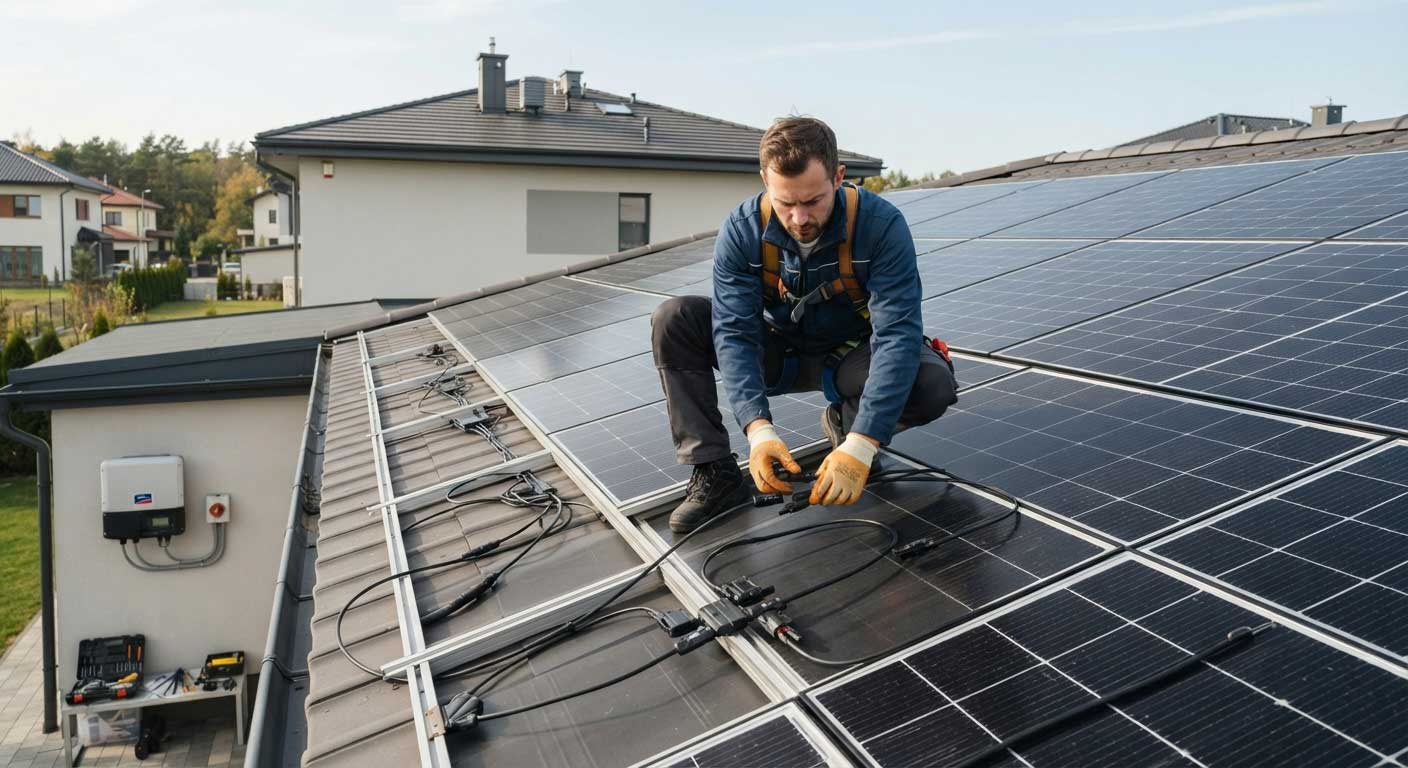
Wiring solar panels is not only about making electrical connections. A photovoltaic system works outdoors for decades, which means every connector, cable, and junction point must handle heat, moisture, UV exposure, and mechanical stress.
During Bright Solar project discussions with installers, one issue appears repeatedly: people often focus on panel wattage but underestimate the importance of wiring quality. A 400W solar panel may produce excellent power under ideal conditions, but poor connections can create resistance, heat buildup, and unnecessary energy loss.
Professional solar wiring normally follows several important practices:
1. Use the Correct Solar Cable Size
Solar cables must be selected according to:
- Current rating
- Cable length
- Installation environment
- Temperature conditions
- Voltage requirements
A cable that is too thin can create higher resistance and voltage drop. In larger systems, this may reduce energy production and increase heat generation.
Common photovoltaic cable specifications include:
| System Size | Typical Cable Consideration |
|---|---|
| Small RV Solar System | Short cable distance, lower current |
| Residential Rooftop System | Longer cable routes, weather exposure |
| Commercial Solar Array | Higher current, larger cable requirements |
The National Electrical Code (NEC) in the United States provides installation requirements for photovoltaic systems, including conductor sizing, protection, and grounding practices.
Source: National Fire Protection Association NEC Information
2. Use Compatible Solar Connectors
Most modern solar modules use MC4-style connectors because they provide:
- Waterproof connection
- Reliable electrical contact
- Easy installation
- Protection against outdoor conditions
However, mixing connectors from different manufacturers can create problems. Even if two connectors appear identical, their locking mechanisms and electrical contact quality may differ.
A loose connector can increase resistance. Over time, this may lead to:
- Heat generation
- Connector damage
- Reduced system efficiency
- Potential safety risks
This is especially important for flexible solar panels installed on RVs, boats, or portable systems where vibration and movement are common.
Common Mistakes When Wiring Solar Panels
Many solar wiring problems are not caused by complicated technical failures. They usually come from small installation mistakes.
Some frequent issues include:
Incorrect Series Connection Voltage
Connecting too many panels in series can create voltage higher than the inverter or charge controller can handle.
Before wiring, always calculate:
Total System Voltage = Panel Voltage × Number of Panels in Series
For example:
Three 40V panels connected in series:
40V × 3 = 120V
This value must remain within the equipment operating range.
Mixing Different Solar Panels
Connecting panels with different electrical characteristics can reduce performance.
Problems may occur when combining:
- Different wattages
- Different voltages
- Different cell technologies
- Different manufacturers
For example, connecting a 100W flexible solar panel with a 400W rigid module may not deliver the expected output because their electrical characteristics are different.
Ignoring Shading Effects
A small amount of shading can influence a solar string.
During rooftop inspections, installers often check nearby:
- Trees
- Chimneys
- Roof structures
- Antennas
before deciding panel placement and wiring configuration.
A good wiring design considers the real installation environment, not just the specifications printed on the datasheet.
How to Wire Solar Panels for Different Applications
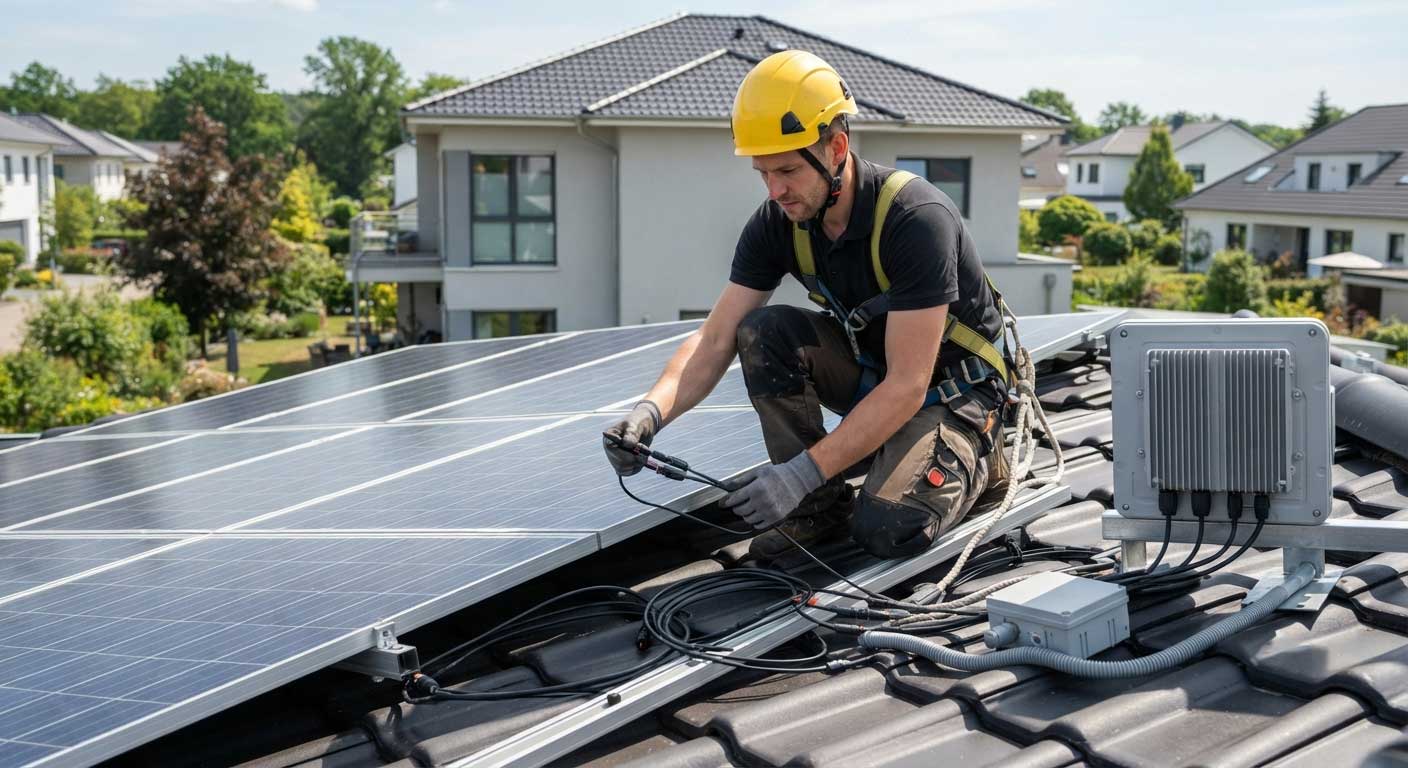
Solar panel wiring methods change depending on where the system will be installed.
Residential Solar Systems
Most home solar systems connect multiple panels in series to reach the inverter’s preferred voltage range. Modern string inverters are designed to manage higher DC voltage inputs efficiently.
RV Solar Panel Wiring
RV systems usually have limited roof space, so wiring decisions depend on:
- Battery voltage
- Charge controller type
- Available installation area
- Travel conditions
Flexible solar panels are popular in RV applications because they are lightweight and easier to install on curved surfaces.
Off-Grid Solar Systems
Off-grid systems often combine solar panels, batteries, and charge controllers. Wiring must balance solar input voltage with battery charging requirements.
A well-designed off-grid system is not simply about adding more panels. The relationship between panel voltage, battery capacity, and daily energy consumption determines whether the system performs reliably.
FAQ About How to Wire Solar Panels?
Can I wire solar panels myself?
Small solar projects may be suitable for experienced DIY users, but larger systems require electrical knowledge and compliance with local regulations. Incorrect wiring can damage equipment or create safety hazards.
Should solar panels be wired in series or parallel?
It depends on the system design. Series wiring increases voltage, while parallel wiring increases current. The best choice depends on inverter requirements, battery systems, and installation conditions.
What happens if solar panels are wired incorrectly?
Incorrect wiring may cause low power output, inverter errors, overheating connectors, equipment damage, or unsafe operating conditions.
Do solar panels need special wires?
Yes. Solar systems require photovoltaic-rated cables designed to withstand UV exposure, outdoor temperatures, and long-term environmental conditions.
Can I connect different wattage solar panels together?
It is possible in some systems, but it is generally not recommended because different electrical characteristics can reduce overall performance.
How many solar panels can I connect in series?
The maximum number depends on panel voltage, inverter maximum input voltage, and local temperature conditions. Always calculate the highest possible voltage before installation.
Conclusion: Understanding How to Wire Solar Panels Correctly
Understanding how to wire solar panels helps homeowners, installers, and businesses build safer and more efficient photovoltaic systems. The wiring method affects voltage, current, energy losses, and long-term reliability.
From residential rooftops to flexible solar applications, Bright Solar focuses on creating photovoltaic solutions that match real installation requirements. Proper panel selection is only the beginning — correct electrical design determines how well the system performs over years of operation.
A reliable solar system is built from many small details: quality modules, correct wiring, suitable connectors, and careful installation practices.
The prev: How To Make Solar Panels?The next: What Roof Is Best for Solar Panels?
Related recommendations
-

What Is a Bifacial Solar Panel?
272Discover what is a bifacial solar panel, how it works, real energy gains, installation requirements, and expert insights from Bright Solar.
View details -
how can solar panels help the environment?
233how can solar panels help the environment? Discover how solar energy reduces emissions, protects natural resources, and supports a cleaner sustainable future.
View details -
how many solar panels can i fit on my roof?
189how many solar panels can i fit on my roof? Estimate panel capacity from usable roof area, panel size, efficiency, roof layout, access pathways, and obstructions.
View details -
How Flexible Are Flexible Solar Panels?
272How flexible are flexible solar panels in actual use? Learn real bend limits, durability facts, RV and marine applications, and expert insights from Bright Solar.
View details