How to keep snow off solar panels?
To keep snow off solar panels, use proper installation angles, allow natural melting, and remove heavy snow carefully with solar-safe tools. Avoid scratching surfaces or damaging electrical components during winter maintenance.
How to keep snow off solar panels during winter
Understanding how to keep snow off solar panels is important for homeowners, RV users, and off-grid system owners in cold climates. Snow does not permanently damage solar panels, but a thick layer can block sunlight and temporarily reduce electricity production.
At Bright Solar, we work with flexible solar panel applications for RVs, marine systems, and outdoor power projects where weather conditions directly affect energy availability. During cold-weather projects, we often focus less on “removing every snowflake” and more on preventing long-lasting coverage. A light layer may disappear naturally, while heavy wet snow requires attention because it can stay on the surface longer.
A practical snow management strategy includes:
- Installing panels at a suitable angle
- Choosing a location with good sunlight exposure
- Removing heavy snow when necessary
- Avoiding harsh cleaning methods
- Monitoring system output during winter
According to the U.S. Department of Energy, photovoltaic systems can continue operating in cold climates, and solar panels often perform efficiently in lower temperatures because photovoltaic cells lose efficiency as temperatures rise.
Why snow affects solar panel performance
Snow blocks sunlight from reaching solar cells
Solar panels generate electricity when photovoltaic cells receive sunlight. When snow covers the surface, less solar radiation reaches the cells.
The impact depends on:
| Snow Condition | Effect on Solar Production |
|---|---|
| Light frost | Small temporary reduction |
| Thin snow layer | Reduced output until melting |
| Heavy wet snow | Significant production loss |
| Complete coverage | Minimal electricity generation |
A few inches of snow may completely cover a small residential or portable panel, while larger rooftop arrays may experience partial coverage only.
Cold weather itself is not the main problem
Many people assume winter temperatures reduce solar performance. In reality, cold temperatures can improve photovoltaic efficiency.
The main issue is not cold air. It is:
- Snow coverage
- Shorter daylight hours
- Lower sun angle
- Increased shading
The National Renewable Energy Laboratory (NREL) provides solar resource information showing that photovoltaic production depends heavily on available sunlight, location, and seasonal conditions.
Step-by-step methods for keeping snow off solar panels
1. Install panels at the correct angle
Panel angle is one of the most effective passive snow-management methods.
A steeper installation angle helps snow slide away naturally after:
- Sunlight warms the surface
- Snow becomes lighter
- Gravity pulls snow downward
For rooftop solar systems, installers usually consider local climate, roof structure, and annual sunlight conditions when selecting tilt angles.
For portable and flexible solar panels, users can often reposition panels temporarily after snowfall to improve exposure.
2. Let sunlight remove light snow naturally
Not every snowfall requires manual cleaning.
Natural melting works when:
- Snow layer is thin
- Temperature rises above freezing
- Sunlight reaches the panel surface
- Panel angle allows runoff
Many solar owners make the mistake of cleaning panels immediately after every snowfall. In some situations, waiting a short period allows the sun to clear the surface without any risk of damage.
3. Remove heavy snow safely
When snow accumulation becomes heavy, manual removal may be necessary.
Recommended tools:
- Soft solar panel snow rake
- Long extension snow brush
- Non-abrasive cleaning tools
Avoid:
- Metal shovels
- Hard scraping tools
- Walking directly on panels
- Hot water on frozen surfaces
Solar modules are designed for outdoor conditions, but physical impact can damage protective layers or connections.
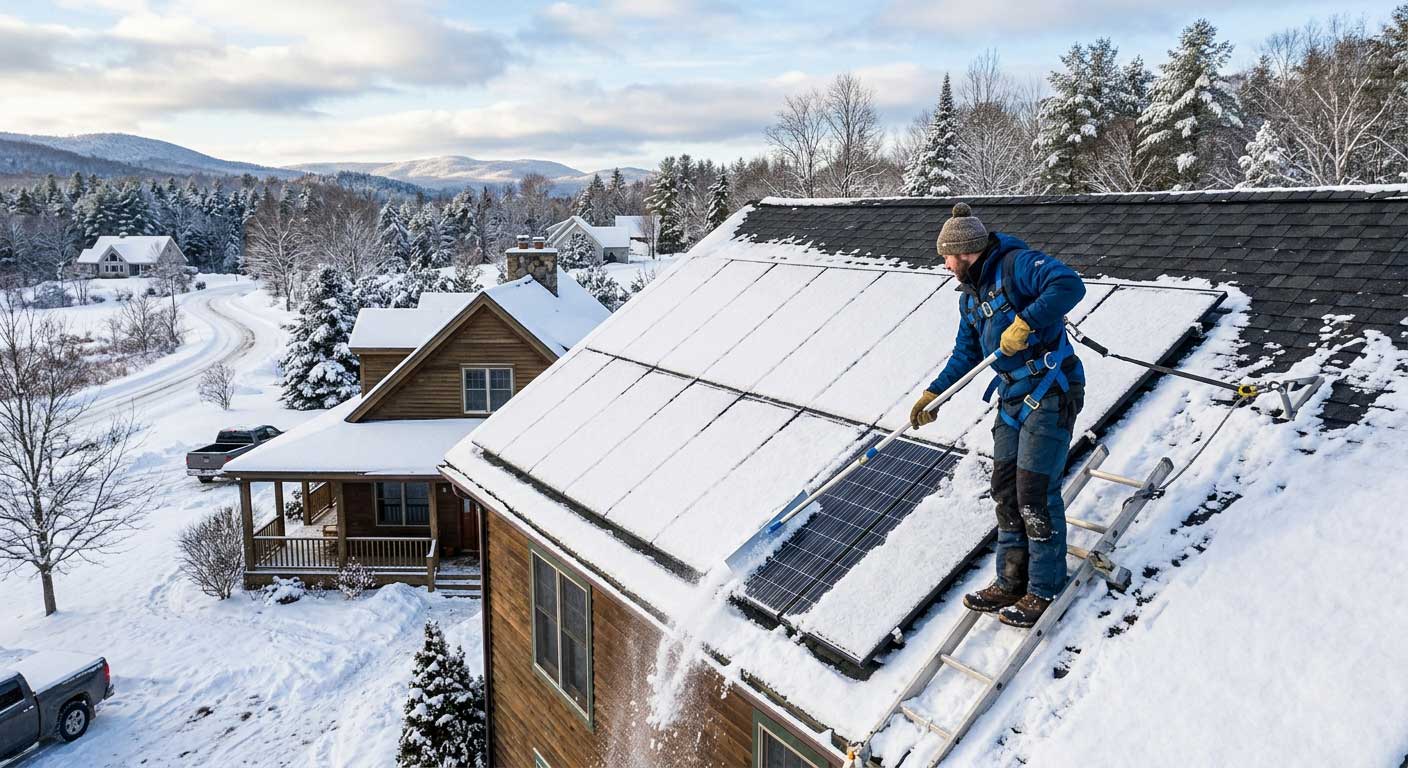
How to prevent snow accumulation on solar panels
Improve panel placement
Before installation, consider:
- Avoiding areas below trees
- Keeping panels away from snow drift zones
- Selecting open areas with sunlight
- Planning cable and mounting access
Bright Solar’s flexible solar panels are often used in applications where installation locations are unusual, such as RV roofs and marine surfaces. In these situations, accessibility becomes an important part of maintenance planning.
Use snow-resistant solar installation designs
A well-designed solar system considers winter conditions from the beginning.
Important design factors:
| Factor | Benefit |
|---|---|
| Proper tilt angle | Helps snow slide away |
| Strong mounting | Handles weather loads |
| Good drainage | Prevents water accumulation |
| Easy access | Simplifies maintenance |
Snow maintenance tips for different solar applications
Residential rooftop solar
Homeowners should:
- Monitor production during storms
- Remove only heavy snow when needed
- Avoid unsafe roof access
RV and portable solar panels
Mobile solar users should:
- Store portable panels after use
- Remove snow before charging
- Check cable connections
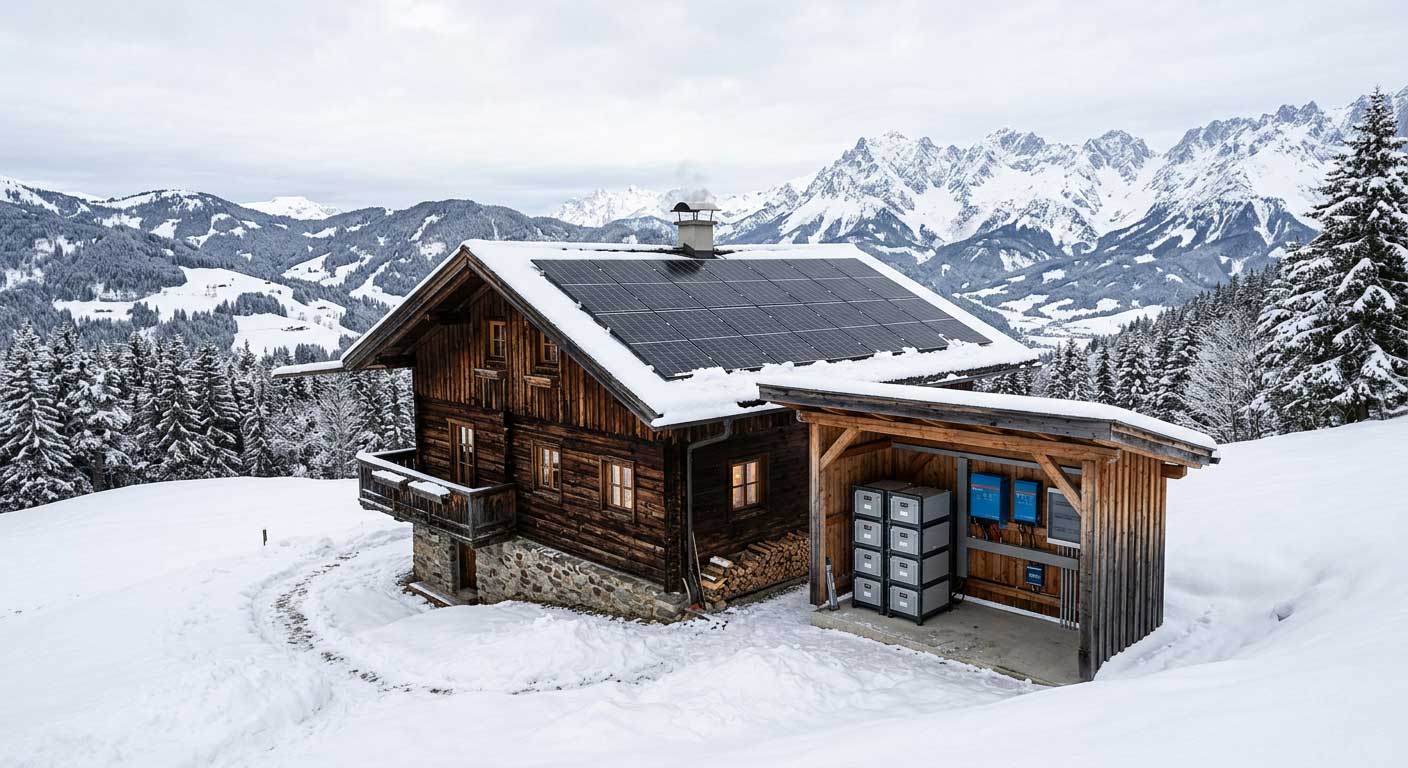
Off-grid solar systems
Remote systems require extra planning because winter energy demand may increase.
Important considerations:
- Larger battery capacity
- Additional solar capacity
- Regular performance monitoring
FAQ About Keeping Snow Off Solar Panels
Do I need to remove snow from solar panels?
Not always. Light snow can often melt naturally, but heavy snow blocking sunlight may need safe removal.
Can snow damage solar panels?
Snow itself usually does not damage solar panels, but excessive weight, improper cleaning, or physical impact can create problems.
Do solar panels work under snow?
Solar panels produce little electricity when completely covered because sunlight cannot reach the photovoltaic cells.
What is the safest way to remove snow from solar panels?
Use a soft solar snow rake or brush designed for photovoltaic surfaces.
Can I use hot water to melt snow on solar panels?
It is not recommended because sudden temperature changes may stress panel materials.
Do solar panels melt snow automatically?
Sometimes. Dark panel surfaces absorb sunlight and can warm faster than surrounding snow, helping melting.
Are solar panels worth installing in snowy areas?
Yes. Properly designed solar systems can operate effectively in cold climates with suitable installation and maintenance.
Final Answer: How to keep snow off solar panels?
Knowing how to keep snow off solar panels helps maintain winter energy production without unnecessary maintenance risks. The best approach combines proper installation angle, natural snow melting, and safe cleaning methods when heavy snow blocks sunlight.
Bright Solar designs flexible solar panel solutions for RV, marine, portable, and off-grid applications where reliable performance is required in changing outdoor conditions.
The prev: How to install ring solar panel?The next: How to make solar panel at home?
Related recommendations
-

What can i run on a 100 watt solar panel?
256What can i run on a 100 watt solar panel? Explore real power examples, device compatibility, energy calculations, and practical off-grid uses with Bright Solar.
View details -
how many kwh will a solar panel produce?
78A 400W solar panel can generate about 1.6 kWh with four equivalent full-sun hours, before system losses. Actual daily production depends on sunlight, weather...
View details -
How effective are solar panels?
173How effective are solar panels? Discover solar energy benefits, power output, efficiency factors, and real-world performance insights from Bright Solar experts.
View details -
How Much Does It Cost for One Solar Panel?
215How much does it cost for one solar panel? Discover real 2026 solar panel prices, watt-based costs, installation factors, and expert buying insights from Bright Solar.
View details