common flexible solar panel problems and how to fix them?
common flexible solar panel problems and how to fix them?
Most flexible solar panel problems come from heat buildup, installation mistakes, water intrusion, cracked cells, or damaged connectors. In many cases the panel itself is not dead. Careful inspection, improved ventilation, connector replacement, or partial repairs can restore output and extend service life.
A few summers ago I was asked to inspect three flexible panels mounted on a small camper parked near the Gulf Coast. The owner thought every panel had failed after only two years.
Only one panel was actually damaged.
The other two were simply running too hot.
That visit changed how I evaluate flexible solar systems.
Author Experience
This article was written by a technical consultant who has worked with RV, marine and off-grid flexible solar installations for more than ten years. Field inspections have included camper roofs, fiberglass boats, aluminum vans and portable systems exposed to high temperatures and coastal environments.
Some failures happened exactly where the brochure said they never would.
Others were caused entirely by installation.
The Most Common Flexible Solar Panel Problems
| Problem | Frequency | Repair Difficulty |
|---|---|---|
| Heat buildup | Very common | Easy |
| Delamination | Common | Moderate |
| Connector failure | Common | Easy |
| Cell cracking | Moderate | Difficult |
| Water intrusion | Moderate | Moderate |
| Hot spots | Moderate | Difficult |
| Adhesive failure | Common | Easy |
According to the National Renewable Energy Laboratory, elevated operating temperature significantly reduces photovoltaic efficiency and accelerates material aging.
Source:
https://www.nrel.gov
The International Energy Agency also reports that thermal stress remains one of the major causes of long-term PV degradation.
Source:
https://www.iea-pvps.org
Heat Buildup Is the Problem I See Most Often
Flexible panels often sit directly against roofs.
No air.
No cooling.
No space underneath.
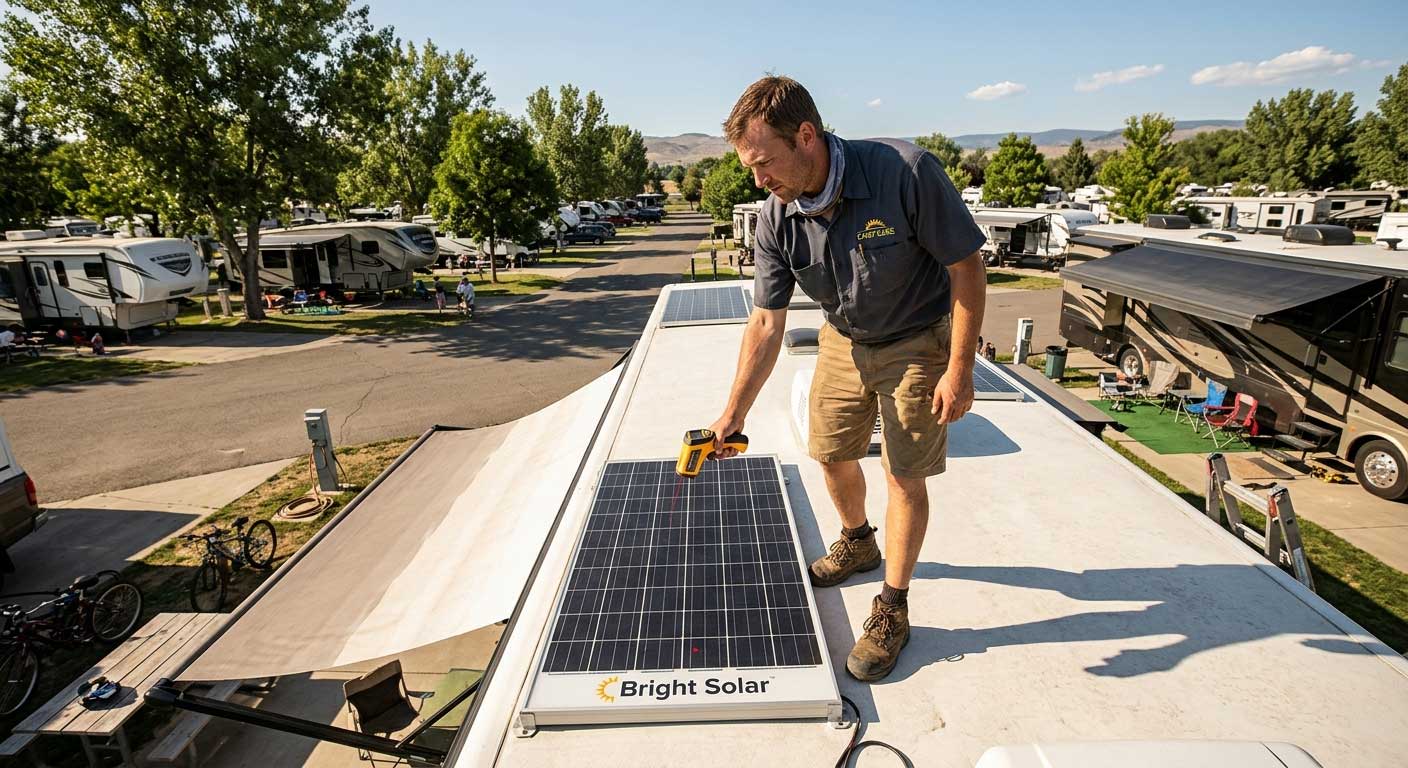
During an inspection in Arizona, I measured an ETFE flexible panel surface at 78°C while ambient temperature was only 41°C.
The owner complained that charging current dropped every afternoon.
The panel itself was functioning normally.
The heat was simply reducing efficiency.
Research from NREL indicates crystalline silicon modules lose roughly 0.3% to 0.5% of output for every degree Celsius increase above standard testing temperature.
That number becomes very noticeable on RV roofs.
Delamination Happens Slowly
People expect failure to happen overnight.
It rarely does.
First the edge becomes slightly cloudy.
Then the surface starts lifting.
Months later moisture appears.
Eventually output drops.
Marine installations are especially vulnerable.
Salt crystals work their way into tiny gaps around edges.
Repeated heating and cooling cycles expand the materials.
The bond weakens.
You may notice:
- Yellow areas
- Air bubbles
- Edge lifting
- Surface wrinkles
Small sections can sometimes be sealed.
Large areas usually require replacement.
Connector Problems Are Surprisingly Common
I have replaced more MC4 connectors than damaged solar cells.
One boat owner lost almost 40% output because of a corroded connector hidden beneath a seat compartment.
The panel was healthy.
The wiring was not.
Check:
- Loose terminals
- Water inside connectors
- Green corrosion
- Burn marks
- Melted plastic
A multimeter often identifies the problem within minutes.
Cracked Cells Can Be Invisible
Flexible panels bend.
Cells do not.
That is an important distinction.
Excessive bending during installation may create microcracks that cannot be seen with the naked eye.
According to research published by the Fraunhofer Institute, repeated mechanical stress contributes to crack formation in crystalline solar cells.
Source:
https://www.ise.fraunhofer.de
Symptoms include:
- Lower current output
- Uneven heating
- Intermittent charging
- Reduced voltage
Once the cell itself is cracked, repair is generally uneconomical.
Water Intrusion Is Usually an Installation Problem
Several years ago I inspected a van conversion in Oregon.
Rain had entered through cable penetrations.
Water migrated beneath the panel.
The owner blamed the manufacturer.
The actual issue was an unsealed cable gland.
Water intrusion often causes:
- Junction box corrosion
- Bypass diode failure
- Connector oxidation
- Insulation damage
Good sealing matters as much as good panels.
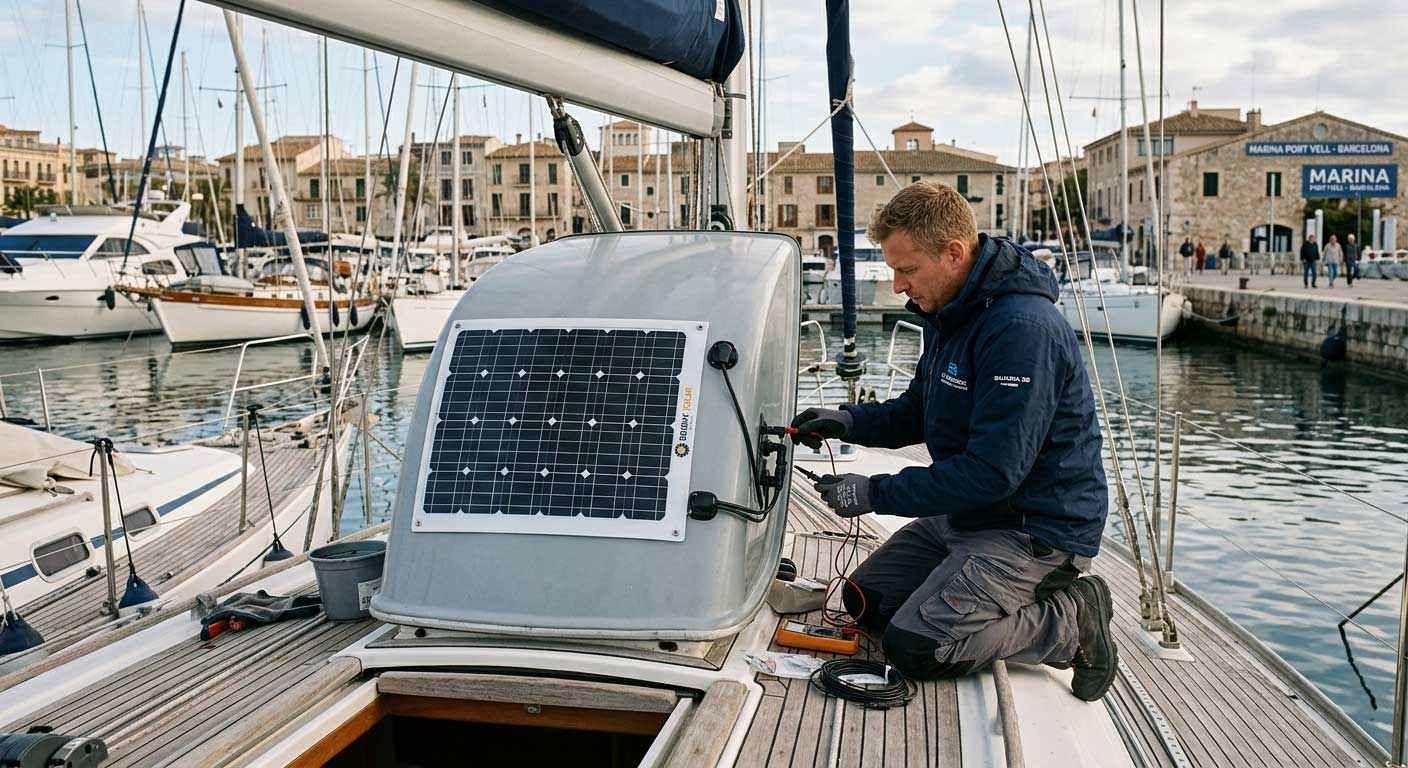
How to Diagnose a Flexible Solar Panel
I generally follow this sequence.
- Measure open-circuit voltage.
- Check connector condition.
- Measure charging current.
- Inspect the surface.
- Check panel temperature.
- Examine mounting conditions.
Many owners skip directly to replacement.
Diagnosis comes first.
| Test | Normal Result |
|---|---|
| Voltage | Within specification |
| Current | Near rated value |
| Temperature | Uniform |
| Surface | No bubbles |
| Connectors | Clean and dry |
Repair Options
Minor Problems
- Replace connectors.
- Reseal cable entries.
- Improve ventilation.
- Clean the surface.
- Tighten electrical connections.
Moderate Problems
- Replace junction boxes.
- Repair wiring.
- Seal edge separation.
Severe Problems
- Extensive delamination.
- Large cracked areas.
- Burned cells.
- Water-damaged laminates.
Replacement is usually more economical.
What We Changed at Bright Solar
After several years of field feedback, we noticed that most failures were not caused by solar cells.
They came from heat.
That observation changed our design priorities.
We began focusing on:
- ETFE surface materials
- Improved heat dissipation
- Better edge sealing
- Marine-grade junction boxes
- Saltwater resistance
A panel may survive years electrically but fail mechanically.
Both matter.
FAQ:common flexible solar panel problems and how to fix them?
Can flexible solar panels be repaired?
Yes. Wiring, connectors, sealants and junction boxes can often be repaired. Damaged cells usually cannot.
Why does my flexible panel produce less power?
Heat, shading, dirt, poor ventilation and connector issues are the most common reasons.
Can overheating permanently damage a panel?
Yes. Long-term overheating accelerates material aging and may cause delamination.
How long do flexible panels usually last?
Quality ETFE flexible panels commonly operate for 10–15 years depending on climate and installation conditions.
Should I replace a delaminated panel?
Small edge separation may be repaired. Extensive delamination generally requires replacement.
how to fix flexible solar panel?
In most cases, how to fix flexible solar panel problems depends on identifying the failure source first. Loose wiring, damaged connectors, junction box faults, and surface delamination can often be repaired, while cracked solar cells usually require panel replacement rather than repair.
Visit the product page:Flexible Solar Panel
Final Thoughts
The biggest lesson I learned from field repairs is that flexible solar panels rarely fail for only one reason.
Heat starts the process.
Poor installation accelerates it.
Moisture finishes it.
If you inspect systems early, improve airflow, and replace small components before they fail completely, many flexible panels can continue producing power years longer than their owners expect.
The reality behind common flexible solar panel problems and how to fix them is less dramatic than people imagine. Most failures begin quietly.
And most of them give warning signs long before the lights go out.
Related recommendations
-

How Much Does Solar Power Cost To Install?
152How much does solar power cost to install? Learn solar installation prices, system cost factors, equipment expenses, and expert insights from Bright Solar.
View details -
how many watts can a solar panel generate?
114Solar panels can range from 50W to over 700W, depending on panel size, cell efficiency, and design. Actual output varies with sunlight, temperature, shading,...
View details -
how are solar panels made?
141Learn how are solar panels made with real factory process insights, silicon production steps, and Bright solar engineering experience from global manufacturing lines.
View details -
How Much Are Solar Panels for My House?
177How much are solar panels for my house? Discover real 2026 installation costs, pricing by home size, expert insights, and practical ways to estimate your residential solar investment with Bright Solar.
View details