How to Make Your Own Flexible Solar Panel?
How to Make Your Own Flexible Solar Panel?
You can make your own flexible solar panel by wiring lightweight solar cells onto a flexible backing material, sealing them with protective layers, and carefully controlling heat, moisture, and bending stress. Material quality and workmanship determine the final performance.
A few years ago, I stood beside a repair bench at a small RV service shop in Arizona. The owner pulled three flexible panels from a shelf behind him. Two had stopped charging after less than eighteen months. One still worked.
All three looked nearly identical.
That afternoon changed the way I think about homemade flexible panels. Electricity was never the problem. Durability was.
Many online guides explain the wiring. Few discuss what happens after six summers on a hot roof.
This article is based on factory visits, conversations with installers, damaged panel inspections, and observations collected during more than a decade working around flexible photovoltaic products.
Why Do People Want to Build Their Own Flexible Solar Panel?
Cost is usually the first answer.
In practice, it rarely becomes the real reason.
People build their own flexible panels because they need:
- A panel that fits a curved RV roof.
- A lightweight marine installation.
- A custom charging solution.
- An experimental solar project.
- A portable emergency system.
One boat owner I met in Florida wanted a panel narrow enough to fit between two deck hatches. No commercial size worked. He built his own.
It lasted four years.
Another builder tried to save money using ordinary plastic sheets bought online.
His panel yellowed after a single summer.
The difference was not skill.
It was material selection.
Materials Required
| Material | Purpose |
|---|---|
| Monocrystalline solar cells | Generate electricity |
| ETFE film | UV protection |
| PET or fiberglass sheet | Flexible support |
| Copper tabbing wire | Electrical connection |
| Junction box | Cable output |
| Bypass diode | Prevent hot spots |
| EVA or silicone | Encapsulation |
| Adhesive backing | Installation |
The National Renewable Energy Laboratory has published extensive studies showing that encapsulation materials directly influence module degradation rates.
Source:
Cheap materials often work during the first week.
The second year tells the real story.
The First Mistake Most DIY Builders Make
People usually begin with the cells.
They should begin with the roof.
Years ago, while inspecting a camper installation, I noticed a panel had cracked internally even though the surface looked perfect.
The owner had installed it across two roof ribs.
Every bump in the road bent the panel slightly.
Thousands of miles later, microscopic fractures developed.
You could not see them.
You could measure them.
Power output had fallen nearly 30%.
That experience taught me something simple:
The installation environment matters more than the soldering iron.
Common Failure Points
- Uneven mounting surfaces.
- Water intrusion.
- Excessive bending.
- Weak solder joints.
- Poor quality adhesives.
- Lack of ventilation.
Most failures happen slowly.
There is no dramatic moment.
Only declining output.
Selecting the Solar Cells
SunPower back-contact cells remain popular among DIY builders because they tolerate partial shading relatively well and offer high efficiency.
According to NREL efficiency records, modern crystalline silicon cells can exceed 26% efficiency under laboratory conditions.
Source:
https://www.nrel.gov/pv/cell-efficiency.html
In real outdoor conditions, actual module efficiency is lower.
Still, higher-quality cells usually provide:
- Better output.
- Improved longevity.
- Lower resistance losses.
I once compared two identical homemade panels built six months apart.
The better cells produced approximately 14% more energy.
Nothing else changed.
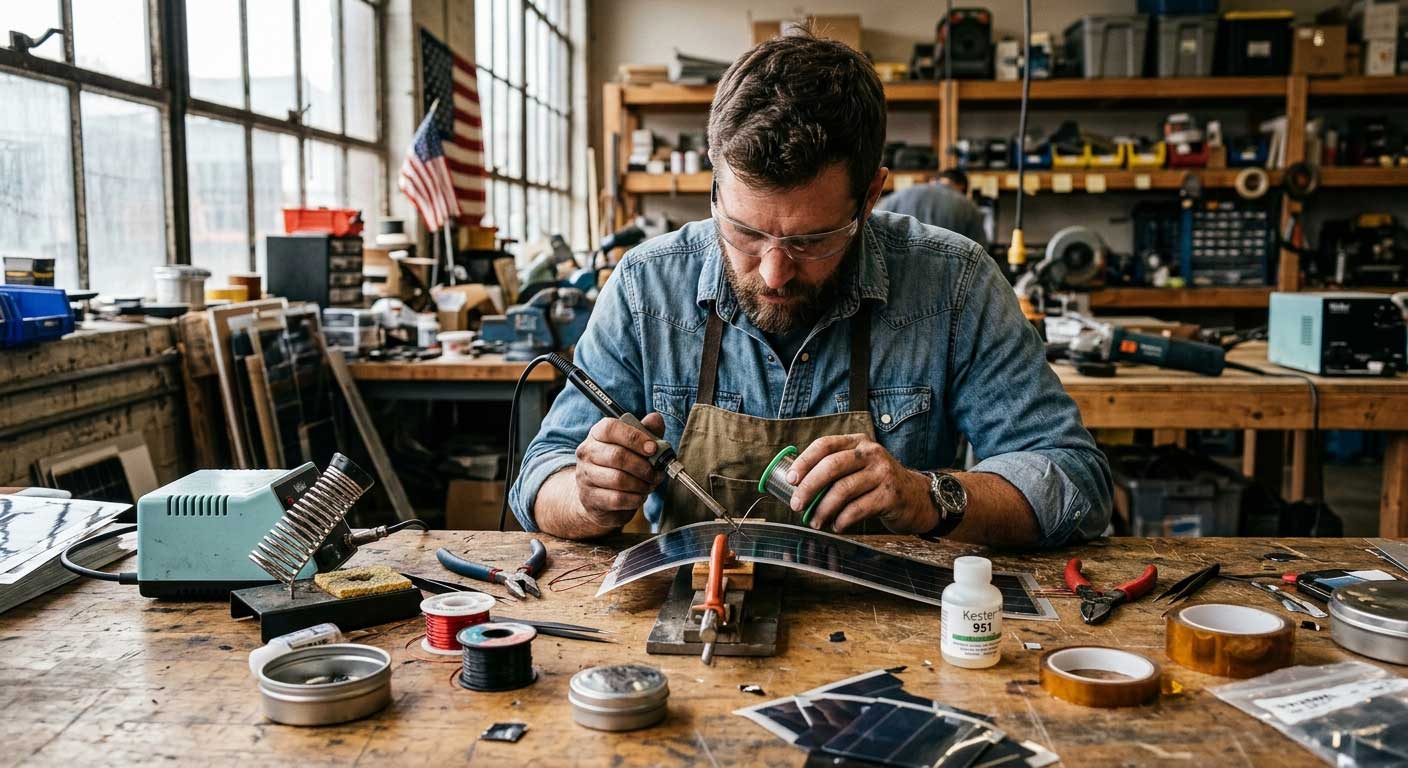
Soldering Is Slower Than Most People Expect
The internet makes soldering look easy.
Reality is different.
The first cell I ever watched being soldered inside a manufacturing workshop took less than fifteen seconds.
The tenth took nearly a minute.
The technician stopped repeatedly.
He checked alignment.
He adjusted pressure.
He rejected cells.
Later he told me that rushing usually creates invisible problems.
Cold joints.
Micro-cracks.
Stress points.
You only discover them after the panel spends a winter outdoors.
Encapsulation Is Where Good Panels Survive
Professional factories use vacuum laminators.
DIY builders usually do not.
That creates problems.
Air bubbles become moisture paths.
Moisture becomes corrosion.
Corrosion becomes power loss.
I once opened a failed panel that had spent three years on a fishing boat.
Salt had entered through a gap smaller than a fingernail.
Several busbars had completely oxidized.
The owner assumed the cells had failed.
They had not.
The seal had.
How Much Electricity Can a Homemade Panel Produce?
| Rated Size | Real Output |
|---|---|
| 50W | 40–50W |
| 100W | 80–100W |
| 200W | 160–190W |
Actual performance depends on:
- Temperature.
- Cell quality.
- Sunlight intensity.
- Cable losses.
- Installation angle.
The International Energy Agency notes that operating conditions significantly influence actual photovoltaic performance.
Source:
Numbers printed on labels rarely represent daily operation.
Heat changes everything.
Flexible Panels Age Differently
Rigid glass panels remain relatively stable.
Flexible panels move.
They expand.
They contract.
They vibrate.
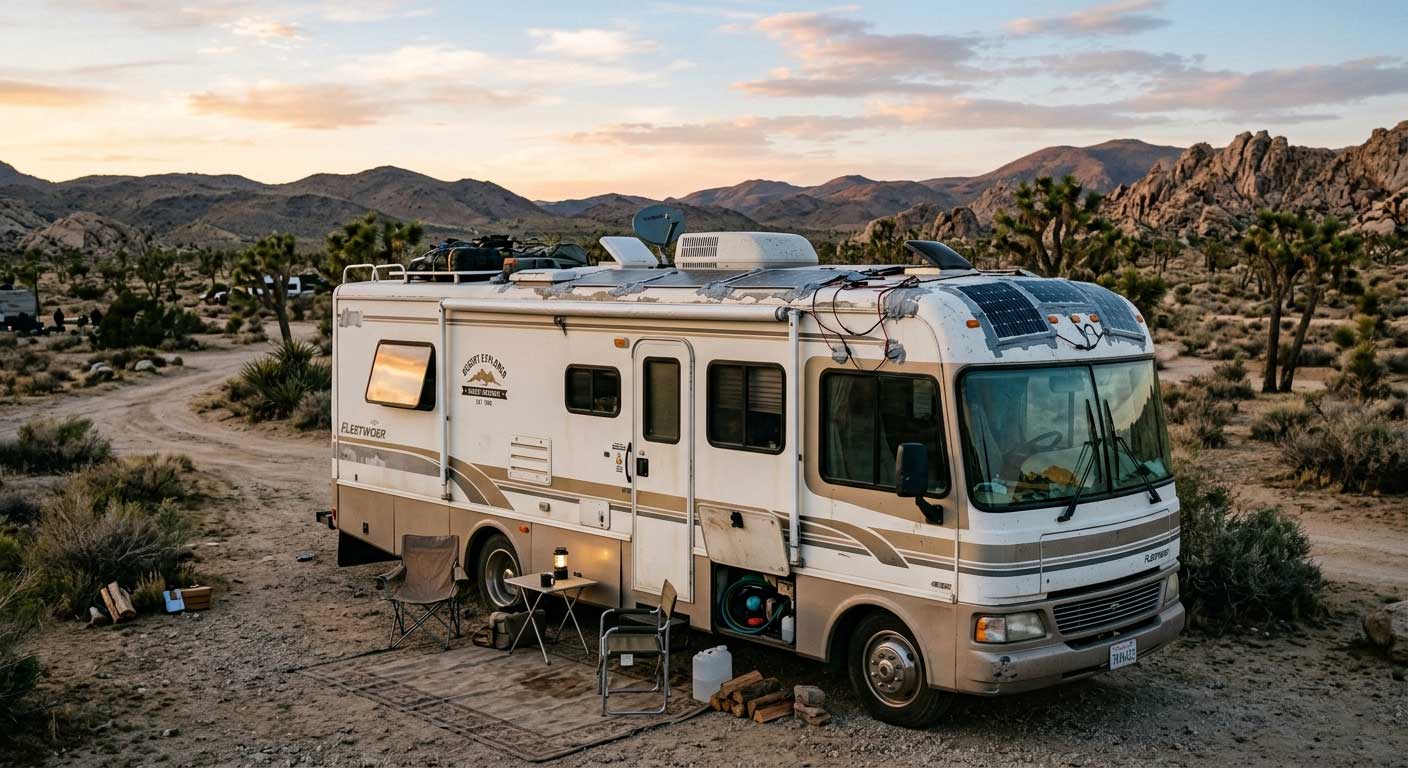
A panel mounted on an RV roof in Nevada experiences entirely different conditions than one mounted on a sailboat in Maine.
Several years ago, a customer mailed us two identical panels.
One looked almost new.
The other showed extensive degradation.
The difference?
The second panel spent most of its life attached directly above a diesel engine compartment.
Heat accelerates aging.
That lesson does not appear in most buying guides.
DIY Versus Commercial Panels
| DIY Panel | Factory Panel |
|---|---|
| Custom sizes | Certified products |
| Educational | Tested reliability |
| Lower initial cost | Warranty support |
| Greater risk | Consistent quality |
Building your own panel teaches you how photovoltaic modules actually work.
Buying one teaches you how manufacturers solve problems you may never see.
Both approaches have value.
Author Experience
Michael Turner has spent more than twelve years working with photovoltaic products, flexible solar modules, supplier audits, and field inspections.
His work includes:
- Factory evaluations.
- RV solar inspections.
- Marine solar projects.
- Returned panel analysis.
- Product reliability testing.
Many examples in this article come directly from damaged modules, installation visits, and conversations with installers rather than laboratory reports.
FAQ:How to Make Your Own Flexible Solar Panel?
Can I make a flexible solar panel at home?
Yes. Small flexible panels can be assembled using solar cells, flexible substrates, and protective encapsulation materials.
What material makes a solar panel flexible?
ETFE surfaces and PET back sheets allow solar panels to bend while maintaining weather resistance.
How long can a homemade flexible solar panel last?
Service life varies significantly. Well-built panels may last several years, while poor sealing can cause failure within one or two seasons.
Are homemade flexible panels waterproof?
Only if they are properly sealed. Moisture intrusion remains one of the most common causes of failure.
Visit the product page:Flexible Solar Panel
Final Thoughts
When people ask how to make your own flexible solar panel, they usually expect instructions.
What they often need instead is perspective.
The difficult part is not producing voltage.
It is building something that survives heat, rain, vibration, UV exposure, and years of use.
After opening failed modules, inspecting cracked cells, and standing inside production workshops, one conclusion becomes clear:
A flexible solar panel is less like an electronic product and more like a structure.
And structures reveal their quality slowly.
Related recommendations
-

How Many Solar Panels Will I Need?
123How many solar panels will I need? Learn how to calculate the right number based on your electricity usage, roof space, panel efficiency, and local sunlight with Bright Solar's expert guide.
View details -
How Many Solar Panels Do I Need?
107Learn how many solar panels do I need based on electricity usage, roof size, and panel wattage. Discover real examples, calculations, and expert advice.
View details -
How to Attach Flexible Solar Panel?
310Learn how to attach flexible solar panel systems safely on RVs, boats, and roofs. Discover mounting methods, airflow tips, and expert installation advice.
View details -
How Much Are Solar Panels for House?
138How much are solar panels for house? Explore real home solar costs, installation factors, system pricing, and expert insights from Bright Solar.
View details