How Long Does a Solar Panel Last?
How Long Does a Solar Panel Last?
A solar panel typically lasts 25 to 30 years or more, continuing to generate electricity after its warranty period with gradual performance reduction. Modern photovoltaic modules are designed for decades of outdoor operation, with lifespan affected by material quality, installation, climate, and maintenance.
When homeowners ask Bright Solar “how long does a solar panel last?”, they are usually looking for a simple number. The reality is more interesting. A solar module does not suddenly stop producing power after 25 years. Instead, it slowly loses output as materials age under sunlight, temperature changes, moisture, and mechanical stress.
From reviewing residential solar projects and evaluating photovoltaic equipment, our engineering team has seen systems installed more than a decade ago still producing strong energy output. In many cases, the difference between an aging system and a reliable long-term system comes down to manufacturing quality and installation details that were decided on day one.
Solar panels are designed as long-life electrical equipment. The goal is not only producing electricity in the first year, but maintaining stable performance through thousands of days of weather exposure.Visit the product page: Flexible Solar Panel
What Is the Average Lifespan of a Solar Panel?
Most modern solar panels are expected to operate for:
| Solar Panel Age | Typical Condition |
|---|---|
| 0–10 years | Near original rated performance |
| 10–20 years | Small annual output reduction |
| 20–30 years | Continues producing electricity with lower output |
| 30+ years | Possible operation depending on condition |
The commonly quoted 25-year lifespan refers mainly to manufacturer performance expectations, not a failure date.
Many manufacturers guarantee that panels will maintain a specific percentage of their original power output after 25 years. For example, a module rated at 400 watts may still produce a significant amount of electricity after decades of operation.
According to the National Renewable Energy Laboratory (NREL), photovoltaic modules generally experience slow and predictable degradation rather than sudden performance failure.
Reference:
How Solar Panel Degradation Affects Lifetime Performance
Solar panels lose a small amount of efficiency every year. This natural process is called degradation.
The main causes include:
- Continuous ultraviolet radiation exposure.
- Repeated heating and cooling cycles.
- Moisture entering protective layers.
- Mechanical stress from wind and weather.
- Aging of electrical materials.
Modern solar panels typically have degradation rates around 0.3% to 0.5% per year, although actual values vary depending on technology and manufacturing quality.
A simplified example:
| Years Installed | Approximate Remaining Output |
|---|---|
| Initial installation | 100% |
| 10 years | 95–97% |
| 25 years | 85–92% |
| 30 years | 82–90% |
This means an older solar panel usually does not stop working—it simply produces slightly less electricity than when it was new.
For homeowners, this gradual reduction is important when calculating long-term energy savings.
What Factors Determine How Long a Solar Panel Lasts?
1. Solar Panel Manufacturing Quality
The lifespan of a solar panel begins inside the factory.
Important manufacturing factors include:
- Silicon wafer quality.
- Cell consistency.
- Encapsulation materials.
- Glass strength.
- Junction box reliability.
- Quality inspection procedures.
A solar panel contains multiple layers working together. The photovoltaic cells generate electricity, while glass, encapsulants, and protective materials shield those cells from outdoor conditions.
A small manufacturing weakness may not appear immediately. Problems such as moisture penetration or microcracks can develop years later.
At Bright Solar, we focus on evaluating complete module specifications rather than looking only at wattage ratings. Two panels with identical power output can have different long-term performance depending on production standards.
2. Installation Quality and System Design
A high-quality solar panel can still experience reduced lifespan if installation work is poor.
Professional installation affects durability through:
- Correct mounting pressure.
- Proper roof attachment.
- Weatherproof cable management.
- Reliable electrical connections.
- Accurate system design.
During residential inspections, we often find that problems appearing years later are related to installation details rather than the solar modules themselves.
For example:
- Incorrect cable placement can expose wiring to unnecessary weather damage.
- Poor sealing methods can create water intrusion risks.
- Improper mounting can increase mechanical stress.
A solar installation is a complete system, not just a group of panels attached to a roof.
How Weather Conditions Affect Solar Panel Lifespan
Solar panels are built to handle outdoor environments, but local climate conditions influence aging.
| Environmental Factor | Potential Impact |
|---|---|
| Extreme heat | Accelerates material stress |
| Heavy snowfall | Adds mechanical loading |
| Coastal salt air | Increases corrosion risk |
| Hail storms | May damage glass surfaces |
| Dust accumulation | Reduces energy production |
According to the International Electrotechnical Commission (IEC), photovoltaic modules are tested under environmental conditions including temperature cycling, humidity exposure, and mechanical load testing to verify durability.
Reference:
Solar panels installed in different regions may age differently. A rooftop system in a mild climate may experience less stress than one exposed to extreme heat, salt air, or severe weather.
Do Solar Panels Really Last 25 Years?
Yes, but the meaning of “last” needs clarification.
A solar panel reaching 25 years does not mean it becomes unusable.
Instead:
- Electricity production gradually decreases.
- Some system components may require replacement.
- Maintenance becomes more important.
- The panels may continue producing energy.
The solar industry often uses 25 years because it represents a common warranty benchmark and a realistic planning period for homeowners.
However, many older photovoltaic installations continue operating beyond this timeframe.
The key measurement is not whether a panel reaches a specific birthday—it is whether the remaining energy production justifies continued operation.
How to Extend the Lifespan of Solar Panels
Solar panels are designed to work with minimal maintenance, but long-term performance depends on how the system is cared for after installation.
At Bright Solar, we have found that homeowners who monitor their systems regularly usually identify small issues before they become expensive repairs. A sudden drop in energy production is often the first warning sign, not a complete system failure.
Practical ways to extend solar panel lifespan include:
- Checking system production through monitoring software.
- Removing excessive dirt or debris when necessary.
- Inspecting panels after severe weather events.
- Keeping nearby trees trimmed to prevent shading.
- Scheduling professional electrical inspections when needed.
Solar panels do not require frequent maintenance, but ignoring the system completely for decades can reduce its overall performance.
How Often Should Solar Panels Be Maintained?
For most residential solar systems, maintenance requirements are relatively low.
A typical maintenance schedule may include:
| Maintenance Activity | Recommended Timing |
|---|---|
| Visual roof inspection | Once or twice per year |
| Energy production review | Monthly |
| Panel cleaning | When heavy dirt or debris appears |
| Electrical inspection | Every few years or after system issues |
| Shade assessment | When surrounding trees grow |
In areas with frequent dust, pollen, bird activity, or limited rainfall, solar panels may require more frequent cleaning.
However, cleaning frequency depends heavily on location. A rooftop in a dry region may collect more dust than one exposed to regular rainfall.
The National Renewable Energy Laboratory (NREL) notes that soiling losses vary by climate, location, and environmental conditions, meaning maintenance requirements are not identical for every solar installation.
Reference:
Which Solar Components Usually Fail First?
When discussing how long does a solar panel last, homeowners often focus only on the modules. In reality, a solar system contains several components with different service lives.
Typical expectations:
| Component | Expected Lifespan |
|---|---|
| Solar panels | 25–30+ years |
| Inverter | 10–15 years |
| Mounting structure | 25–30+ years |
| Monitoring equipment | 5–15 years |
| Solar battery storage | 8–15 years |
The inverter is commonly the first major component requiring replacement because it contains electronic components operating continuously.
A homeowner with a 30-year solar plan should consider future inverter replacement when calculating total system ownership costs.
The solar panels themselves are usually among the most durable parts of the installation.
How Solar Technology Has Improved Panel Durability
Solar panel technology has changed significantly over the past decade.
Manufacturers now use improved materials and cell designs to increase efficiency and reliability.
Advanced Solar Cell Technologies
Modern modules increasingly use technologies such as:
- TOPCon (Tunnel Oxide Passivated Contact).
- Heterojunction (HJT).
- Improved PERC designs.
- Half-cut cell structures.
These technologies help reduce electrical losses and improve performance under different operating conditions.
Better Protective Materials
The outer layers of a solar module are critical for long-term survival.
Manufacturers have improved:
- Glass durability.
- Encapsulant materials.
- Backsheet protection.
- Junction box designs.
These improvements help protect solar cells from:
- Moisture.
- UV radiation.
- Thermal expansion.
- Mechanical stress.
A panel spends its entire life outdoors, so material protection is just as important as cell efficiency.
What Can Shorten Solar Panel Lifespan?
Although modern solar panels are durable, several conditions may accelerate aging.
Extreme Heat
High temperatures can increase thermal stress on materials.
Solar panels are tested for temperature changes, but repeated extreme heat cycles may contribute to faster degradation.
Poor Installation Practices
Installation mistakes can create problems years later.
Examples include:
- Incorrect mounting methods.
- Poor waterproofing.
- Loose electrical connections.
- Improper cable routing.
These issues may affect not only the panels but also the roof structure.
Severe Weather Damage
Solar panels are designed to withstand normal outdoor conditions, but extreme events such as large hail, hurricanes, or falling objects can cause physical damage.
Regular inspections after severe weather can help detect problems early.
Real-World Solar Panel Lifespan: What Happens After 25 Years?
A common misunderstanding is that solar panels become useless after 25 years.
In practice, the situation is different.
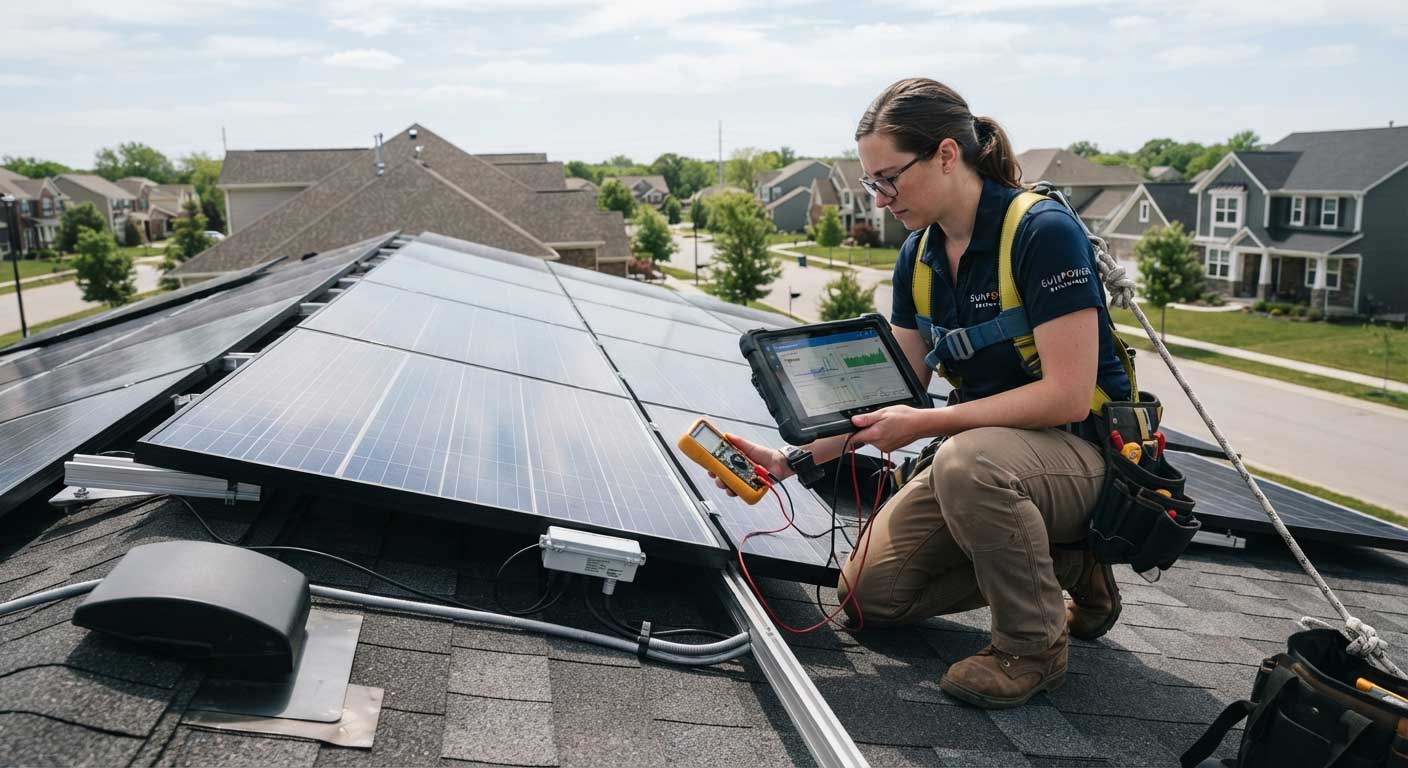
After two or three decades:
- Panels usually still generate electricity.
- Output is lower than when new.
- Some electrical components may need replacement.
- System monitoring becomes more important.
For example, a 400W solar panel installed today may not produce exactly 400W after 25 years, but it can still provide meaningful electricity production.
The decision to continue operating an older system depends on:
- Remaining output.
- Repair costs.
- Electricity prices.
- System condition.
Many homeowners choose to continue using older systems because the panels still provide valuable energy.
FAQ About How Long Does a Solar Panel Last?
How long does a solar panel last?
A solar panel typically lasts 25 to 30 years or longer. Most modern panels continue producing electricity after their warranty period, although output gradually decreases due to normal degradation.
Do solar panels stop working after 25 years?
No. The 25-year period usually refers to a performance warranty. Solar panels often continue generating electricity beyond this period with reduced output.
What is the average solar panel degradation rate?
Modern solar panels generally degrade around 0.3% to 0.5% per year, depending on manufacturing quality, climate conditions, and installation environment.
Can solar panels last 40 years?
Some solar panels may continue operating beyond 30 years, but performance depends on material quality, maintenance history, weather exposure, and system condition.
What part of a solar system needs replacement first?
The inverter typically requires replacement before the solar panels because its electronic components experience continuous operation.
How can homeowners make solar panels last longer?
Homeowners can extend system life by maintaining clean panels, monitoring production, preventing shading, inspecting after storms, and using professional installation services.
Conclusion
The answer to how long does a solar panel last is generally 25 to 30 years or more, but the real lifespan depends on many factors beyond the panel itself. Manufacturing quality, installation methods, climate exposure, and maintenance habits all influence long-term performance.
At Bright Solar, we approach solar lifespan from an engineering perspective. A reliable photovoltaic system is not created only by choosing efficient panels—it requires quality materials, proper installation, and long-term performance planning.
For homeowners, understanding solar panel lifespan helps make better decisions about system investment, maintenance, and future energy planning.
A well-designed solar installation can continue producing clean electricity long after its initial warranty period, making durability one of the most important factors when choosing solar technology.
Related recommendations
-

what is a solar panel made of?
246what is a solar panel made of? Explore the silicon cells, glass, aluminum frame, encapsulants, backsheet, copper, and other materials inside modern PV modules.
View details -
do it yourself solar panel kits?
260Explore do it yourself solar panel kits with real installation insights, safety notes, system limits, and Bright solar field experience for off-grid setups.
View details -
How many watts does a solar panel generate?
72Solar panels commonly range from 100W to 550W or more, depending on their size, cell technology, and design. Actual power output varies with sunlight, temper...
View details -
how to calculate solar panel needs for home?
244Learn how to calculate solar panel needs for home with energy usage, sunlight hours, system losses, and panel output factors for accurate solar sizing.
View details