how to fix flexible solar panel on roof?
how to fix flexible solar panel on roof?
The safest way to fix a flexible solar panel on a roof is to use a UV-resistant structural adhesive or a hybrid mounting system that combines adhesive bonding with mechanical fasteners. The right solution depends on roof material, climate conditions, and expected wind exposure.
I’ve worked with lightweight solar installations for more than ten years, from recreational vehicles crossing the American Southwest to metal-roof warehouses exposed to Atlantic coastal storms. One lesson repeats itself over and over: when flexible panels fail, the problem is rarely the panel. It’s almost always the installation method.
A flexible panel weighs little. Wind doesn’t care.
That distinction matters more than most installation guides admit.
According to the U.S. Department of Energy (energy.gov), rooftop solar systems can experience substantial thermal stress and environmental loading throughout their operating life. Meanwhile, research published by the National Renewable Energy Laboratory (NREL.gov) highlights how mounting quality directly influences long-term photovoltaic reliability.
Understanding how to fix flexible solar panel on roof structures properly starts with understanding what actually causes failures.
Why Flexible Solar Panels Require a Different Installation Method
Traditional framed solar panels rely on aluminum rails and clamps.
Flexible panels don’t have that luxury.
Instead, they depend on direct contact with the mounting surface. Every expansion cycle, temperature fluctuation, vibration event, and wind gust transfers stress directly through the panel backing and mounting system.
In practical terms, that means installation quality becomes part of the product’s lifespan.
On a commercial project in Texas several years ago, two identical flexible solar systems were installed on neighboring service vehicles. One received proper roof preparation. The other was rushed.
After eighteen months, the difference was obvious.
One looked factory-new.
The other showed edge lifting and partial adhesive failure.
The panels were identical. The workmanship wasn’t.
Choosing the Right Roof Mounting Method
Recommended Installation Methods by Roof Type
| Roof Type | Recommended Method | Difficulty Level |
|---|---|---|
| Aluminum Roof | Structural adhesive | Easy |
| Steel Roof | Adhesive or hybrid mount | Moderate |
| Fiberglass Roof | Marine-grade adhesive | Easy |
| RV Roof | Adhesive mounting | Easy |
| Asphalt Shingle Roof | Mechanical fasteners with waterproof sealing | Moderate |
| Commercial Flat Roof | Engineered adhesive system | Moderate |
The roof material should determine the mounting strategy.
Not convenience.
Not installation speed.
Not cost alone.
Best Adhesive Method for Flexible Solar Panels
For most residential and mobile applications, adhesive mounting remains the preferred approach.
The reason is simple.
No holes.
No penetrations.
No unnecessary leak risks.
However, the success of adhesive mounting depends almost entirely on preparation.
A roof can appear spotless while still carrying invisible contaminants that reduce bond strength.
I’ve seen installers wipe a roof with a dry cloth and assume it’s ready. Months later, panel corners begin lifting.
The adhesive wasn’t weak.
The surface was.
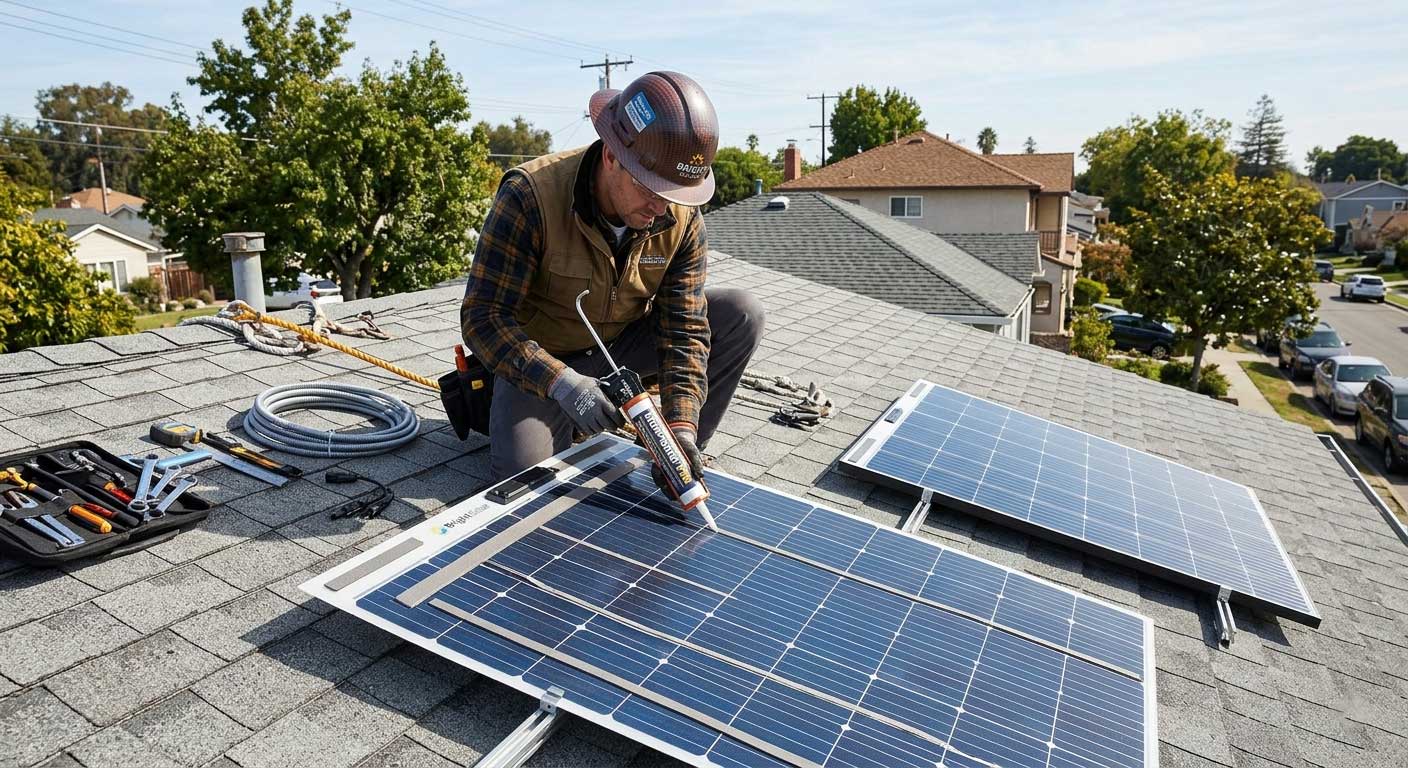
Surface Preparation Checklist
Before fixing a flexible solar panel to a roof:
- Remove dust and debris
- Eliminate oxidation
- Degrease the mounting area
- Allow the surface to dry completely
- Verify installation temperature requirements
- Follow adhesive manufacturer specifications
ASTM testing consistently demonstrates that surface preparation significantly influences adhesive bond performance across exterior applications.
When Mechanical Fasteners Make Sense
There are situations where adhesive alone may not be enough.
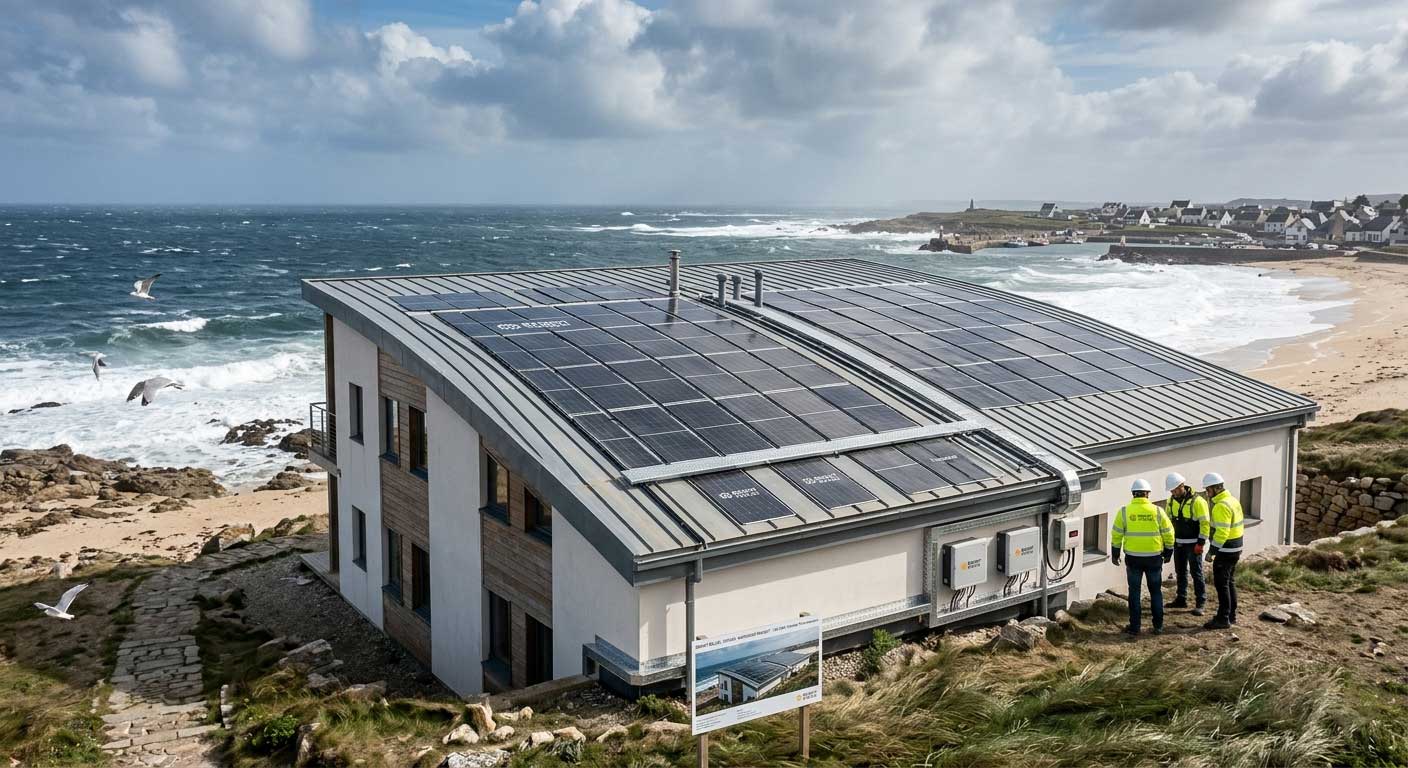
Coastal properties.
Hurricane zones.
High-rise rooftops.
Areas with significant wind uplift exposure.
In those environments, many professional installers add mechanical retention points.
Not because adhesive is inadequate.
Because weather can be unforgiving.
According to the Solar Energy Industries Association (SEIA.org), rooftop solar systems should be designed to comply with local structural and wind-loading requirements established by building codes.
Recommended Fastening Hardware
- Stainless steel screws
- Corrosion-resistant rivets
- EPDM sealing washers
- UV-resistant roof sealants
The critical detail is waterproofing.
A poorly sealed fastener can create roof damage long before a solar panel becomes loose.
Hybrid Mounting: The Method Many Professionals Prefer
After years of field installations, this has become my preferred approach for demanding environments.
Adhesive across the panel surface.
Mechanical retention at strategic points.
The adhesive distributes loads evenly.
The fasteners provide backup security during extreme weather events.
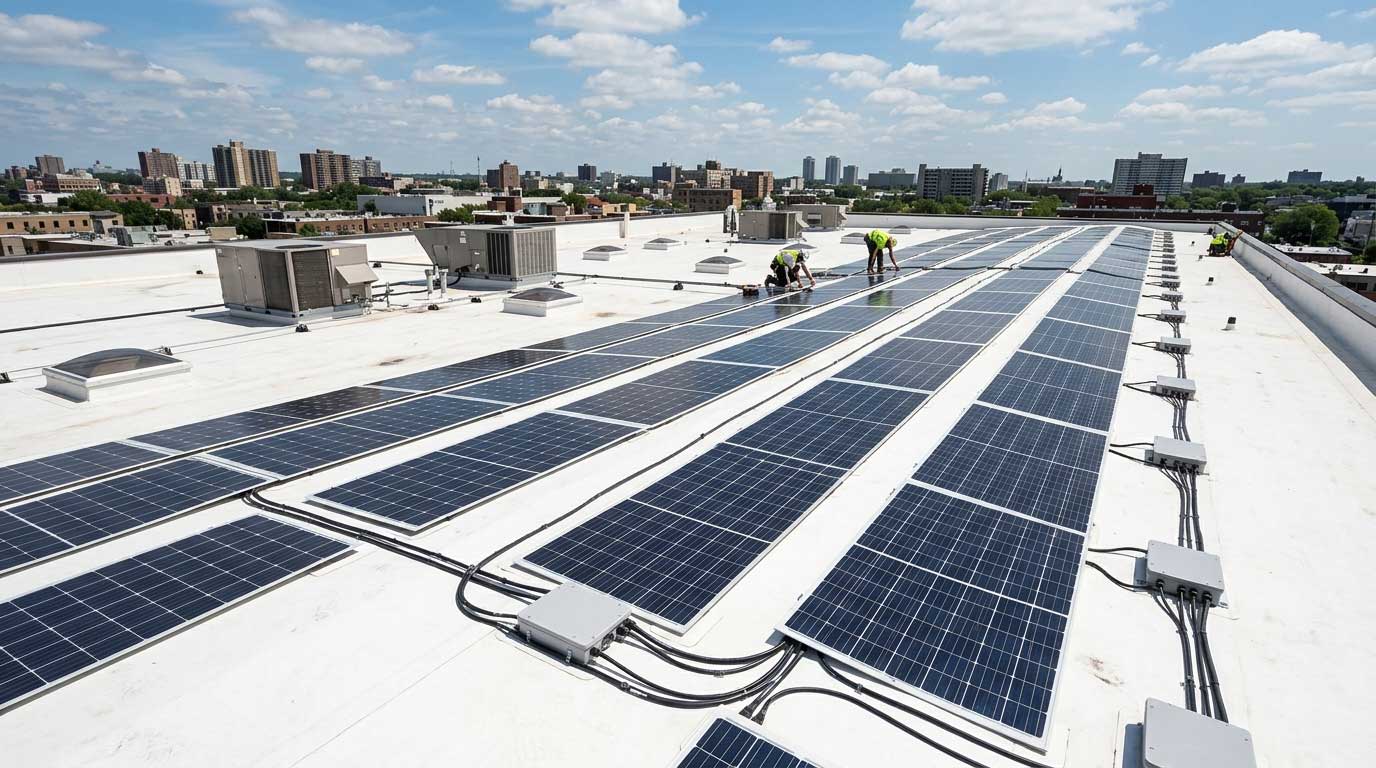
On a coastal warehouse project near Florida’s Gulf Coast, this method survived multiple storm seasons without a single panel detachment.
Some installations are designed for normal conditions.
Others are designed for reality.
Environmental Factors Most Installers Underestimate
Temperature.
It’s rarely discussed enough.
During summer inspections, I’ve measured dark metal roofs exceeding 70°C (158°F).
At those temperatures, materials behave differently.
Adhesives soften.
Roof materials expand.
Flexible panels experience continuous thermal movement.
NREL research has repeatedly documented thermal cycling as a major factor affecting photovoltaic system durability.
That doesn’t mean flexible panels are unreliable.
It means installation decisions should account for real operating conditions rather than laboratory assumptions.
Conditions That Require Additional Attention
- Coastal environments
- Desert climates
- Snow-prone regions
- High-altitude locations
- Industrial rooftops with heat exposure
Each environment introduces different stresses.
Treating them the same is a mistake.
Common Installation Mistakes That Shorten Lifespan
Even quality products can fail when basic installation principles are ignored.
The most common issues I encounter include:
- Installing on contaminated surfaces
- Using construction adhesive instead of solar-rated adhesive
- Skipping waterproof sealing
- Ignoring thermal expansion
- Mounting during unsuitable weather conditions
- Applying uneven adhesive coverage
Most failures don’t happen immediately.
That’s what makes them deceptive.
The installation appears successful until months later when the first corner begins to separate.
FAQ: how to fix flexible solar panel on roof?
Can I fix a flexible solar panel on a roof without drilling?
Yes. Many flexible solar panels are designed specifically for adhesive mounting systems that eliminate the need for roof penetrations.
What adhesive works best for flexible solar panels?
A UV-resistant structural adhesive approved for outdoor photovoltaic applications generally provides the best long-term performance.
Will adhesive-mounted flexible solar panels survive strong winds?
Yes, when installed correctly. In high-wind regions, hybrid mounting systems provide additional security.
How long do adhesive-mounted panels last?
Properly installed systems can remain securely bonded for more than a decade, depending on environmental conditions and maintenance practices.
Should flexible solar panels sit directly on the roof?
That depends on the panel design and manufacturer recommendations. Always follow the installation specifications supplied with the product.
Visit the product page:Flexible Solar Panel
Final Answer
If you’re wondering how to fix flexible solar panel on roof structures safely and reliably, the answer is straightforward: use a mounting method matched to the roof material, local climate, and expected wind conditions. Structural adhesives remain the most common solution, while hybrid systems provide additional protection in demanding environments. In real-world installations, careful preparation consistently matters more than the specific hardware used. A properly installed system should remain secure, weather-resistant, and productive for years. That’s ultimately the most reliable approach to how to fix flexible solar panel on roof projects.
Related recommendations
-

how solar panels make electricity?
263Solar panels use photovoltaic cells to convert sunlight into DC electricity, which an inverter can convert into AC power for homes, businesses, batteries, or...
View details -
how long does it take to get solar panels installed?
314how long does it take to get solar panels installed? Learn typical 1–3 day installation times, 60–90 day project timelines, permits, inspections, and utility approval.
View details -
How Solar Panels Generate Electricity?
252How solar panels generate electricity explained with photovoltaic technology, solar cells, energy conversion steps, and expert solar insights from Bright Solar.
View details -
How Expensive Are Solar Panels for a Home?
232How expensive are solar panels for a home? Learn residential solar costs, installation factors, equipment pricing, and what affects your total investment with Bright Solar.
View details