Do Solar Panels Work in the Shade?
Solar panels do work in the shade, but their electricity production usually decreases when sunlight is blocked. The amount of lost power depends on the shading intensity, panel technology, system configuration, and duration of obstruction. Partial shade from trees, chimneys, or nearby buildings can affect output differently from uniform shade.
For homeowners, RV owners, and off-grid users, understanding how shade affects solar panels helps with system planning, panel placement, and realistic energy expectations. Bright Solar’s flexible solar panels are designed for applications such as RVs, boats, and off-grid installations, where changing surroundings can make sunlight conditions less predictable.
How Does Shade Affect Solar Panel Output?
Solar panels generate electricity when sunlight reaches their photovoltaic cells. When an object blocks that light, the affected cells receive less solar energy and produce less current.
The impact is not always proportional to the shaded area. A small shadow across part of a panel can sometimes cause a larger-than-expected reduction, depending on how the cells are connected and how the system manages current.
Common sources of shade include:
- Trees and overhanging branches.
- Chimneys, roof structures, and vents.
- Neighboring buildings and fences.
- RV air conditioners, antennas, and roof accessories.
- Masts, rigging, and other equipment on boats.
A shadow that moves across a panel during the morning may have a different effect from one that covers the same area during the strongest sunlight hours. This is why evaluating a solar installation requires more than checking whether the panel receives direct sunlight at noon.
Does Partial Shade Reduce the Power of the Entire Panel?
It can. In conventional crystalline-silicon modules, photovoltaic cells are electrically connected, so shading one section may restrict current through a larger section of the module.
Many conventional panels use bypass diodes to reduce the impact of shaded cell groups. These diodes can allow current to bypass an affected section, helping other sections continue generating electricity. However, bypassing cells also means that some of the panel’s available voltage is lost.
The actual result depends on the module’s electrical layout, the position of the shadow, and the operating conditions.
For example, a narrow shadow from an RV roof vent crossing several cell rows may produce a different electrical effect from a broad shadow covering one corner. The visible shadow area alone does not tell you exactly how much power the system will lose.
Can Solar Panels Generate Electricity Without Direct Sunlight?
Yes. Solar panels can use diffuse sunlight, which is sunlight scattered by clouds and the atmosphere rather than arriving directly from the sun.
According to the Australian Government’s solar technology guidance, photovoltaic panels respond to both direct and diffuse sunlight. They can therefore continue producing electricity on cloudy days, although clear conditions with direct sunlight generally support greater generation.
This distinction matters when interpreting the phrase do solar panels work in the shade. Shade does not always mean darkness. A panel beneath a bright, overcast sky may still receive substantial diffuse light, while a panel covered by a dense structure may receive much less.
What Happens Under Different Shading Conditions?
| Lighting condition | Expected solar panel behavior |
|---|---|
| Direct sunlight | Generally supports higher electricity production. |
| Light shade | Electricity generation continues, but output may decrease. |
| Heavy shade | Output can fall substantially, depending on the obstruction and electrical design. |
| Bright overcast sky | Panels can generate electricity from diffuse sunlight. |
| Complete darkness | Solar panels do not generate meaningful photovoltaic electricity. |
These are general descriptions, not guaranteed output percentages. Actual power depends on irradiance, cell temperature, module construction, and system configuration.
Which Solar Panel Technologies Handle Shade Differently?
Solar panels do not all respond to shading in exactly the same way. Cell layout, bypass diodes, and system electronics can change how much power remains available when part of an array is shaded.
Conventional Crystalline-Silicon Panels
Many crystalline-silicon modules use bypass diodes to reduce the electrical impact of shaded cell groups.
A National Renewable Energy Laboratory (NREL) study by Christopher Deline explains that partial shading can have a disproportionate effect on photovoltaic power production. In the studied series-connected configuration, a shadow’s impact could extend beyond its physical area. The paper also explains how bypass diodes allow current to bypass affected cell groups while reducing module voltage.
This is an important engineering detail: a panel with bypass diodes is not shade-proof. The diodes help manage certain shading conditions, but they cannot guarantee normal output when cells are obstructed.
Microinverters and Power Optimizers
Some solar systems use module-level power electronics, such as microinverters or DC power optimizers, to manage individual panels more independently.
These devices can help limit the way one shaded panel affects other panels. However, they cannot make sunlight reach an obstructed cell, so the shaded panel itself can still lose production.
The practical benefit depends on the system design and the pattern of shade. Equipment selection should be based on the installation rather than an assumption that one technology eliminates shading losses.
How to Reduce Solar Panel Shading at Home, on an RV, or on a Boat
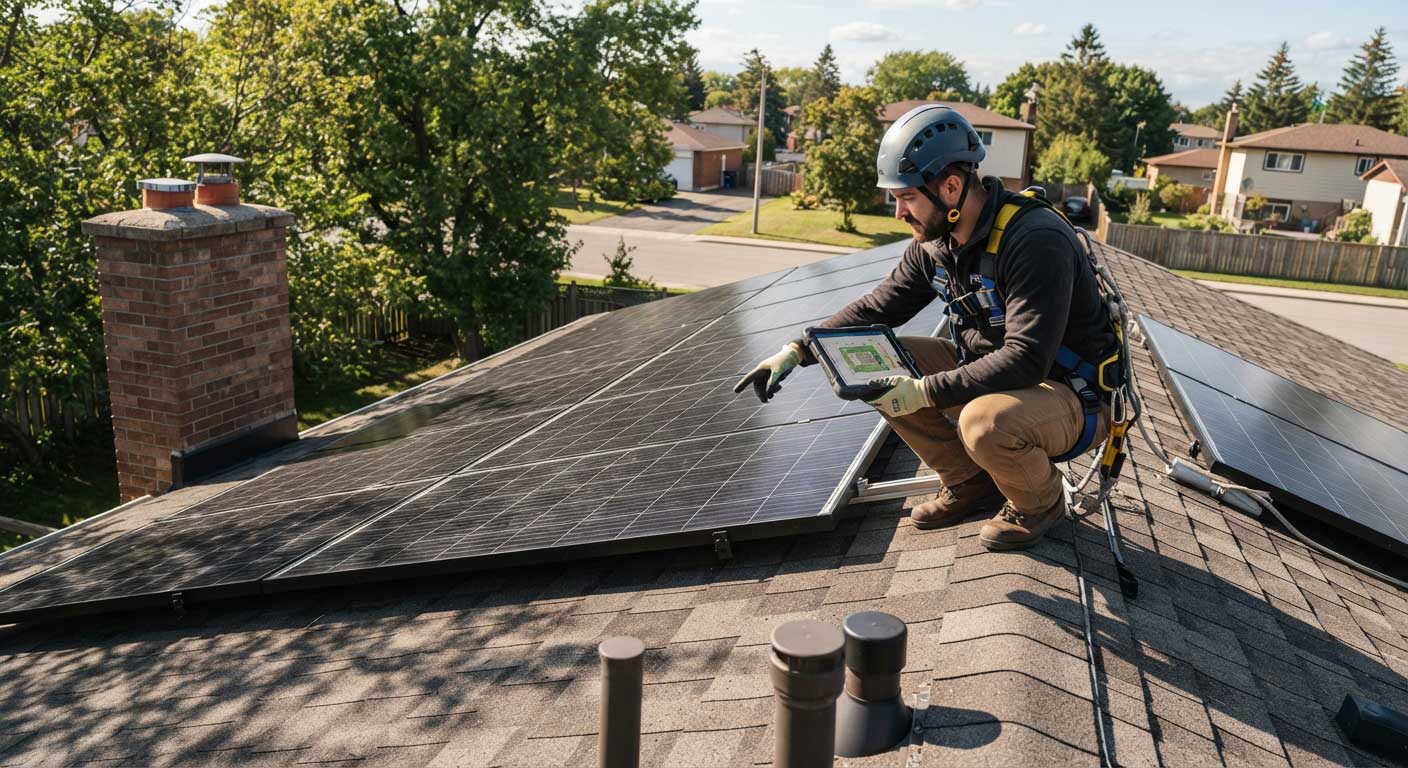
You do not always need a completely unobstructed installation to use solar power. The key is to identify where shadows fall, how long they remain, and whether the electrical layout can accommodate the conditions.
Here are practical steps to consider:
- Observe the installation site. Check the roof or mounting area in the morning, around midday, and in the afternoon. Repeat the observation in different seasons if possible.
- Identify recurring obstructions. Look for tree branches, roof vents, air conditioners, antennas, masts, and nearby structures.
- Review the panel layout. Avoid placing all panels in a configuration where one frequently shaded section unnecessarily limits the rest of the array.
- Check the electrical design. Ask the installer whether bypass diodes, separate strings, microinverters, or power optimizers are appropriate for the site.
- Monitor actual production. Compare system output under similar weather and sunlight conditions rather than judging performance from a single cloudy day.
- Keep the panel surface clear. Dirt, leaves, and debris can further reduce the sunlight reaching the cells.
The Australian Government recommends considering both current shading and potential future obstructions, including growing trees and planned developments. It also advises discussing shading with a solar retailer or installer when designing a system.
Do Solar Panels Work in the Shade for RVs and Off-Grid Systems?
Yes, they can still generate electricity, but shading deserves particular attention in mobile and off-grid applications.
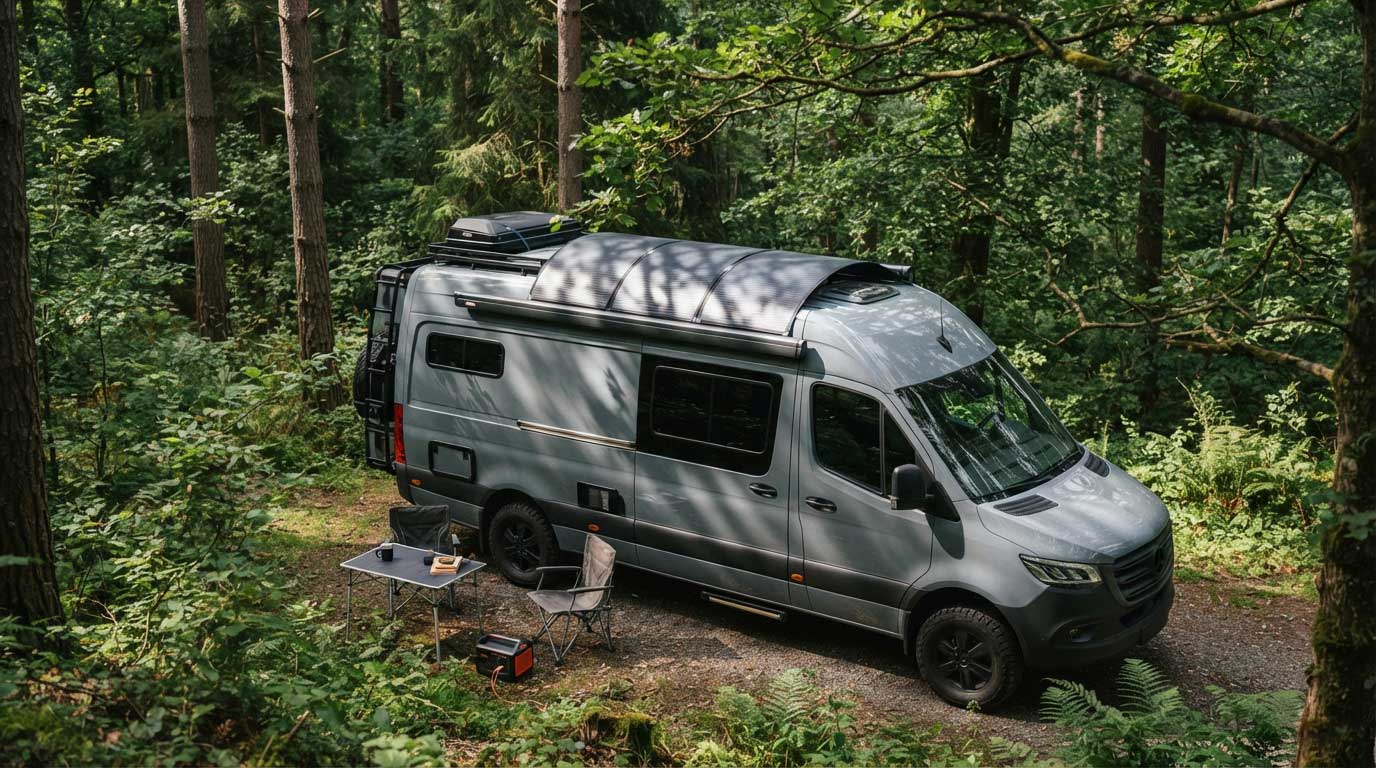
An RV may be parked beneath trees for comfort, while roof-mounted equipment such as air conditioners and antennas can create shadows that move throughout the day. On a boat, masts, rigging, and other equipment can obstruct sunlight as the sun changes position.
For these applications, consider:
- Where the vehicle or boat will usually be parked or anchored.
- Whether portable panels can be positioned in a sunnier location.
- Whether the panel layout suits the expected pattern of shade.
- Whether the charge controller and other components are compatible with the panel configuration.
- How much energy the system must supply when sunlight is limited.
Bright Solar’s L Series flexible solar panels are intended for applications including RVs, campers, outdoor power, and certain marine and off-grid uses. Their lightweight construction and flexible design can be relevant when evaluating mounting options, but flexibility alone does not eliminate shading losses.
For B2B projects, OEM configurations, or bulk procurement, panel selection should be based on the actual installation requirements and verified product specifications.
FAQ About Do Solar Panels Work in the Shade?
Do solar panels work in the shade?
Yes. Solar panels can generate electricity in partial shade and diffuse light, but their output generally decreases when sunlight is obstructed. The reduction depends on the amount and pattern of shade and the system’s electrical design.
Do solar panels work on cloudy days?
Yes. Photovoltaic panels can convert diffuse sunlight into electricity on cloudy days. Generation is generally lower than under clear, direct sunlight, and the actual output depends on cloud conditions and the installation.
How much power do solar panels lose in the shade?
There is no single percentage that applies to every solar panel. A small shadow can sometimes cause a disproportionate power reduction because of cell connections and bypass-diode behavior. A reliable estimate requires information about the module, system configuration, and shading pattern.
Do bypass diodes prevent shading losses?
No. Bypass diodes can help current flow around affected cell groups, reducing some shading-related effects. However, activating a bypass diode reduces the module’s available voltage, so the panel may still produce less power.
Can a solar panel charge a battery in the shade?
Yes, if the panel produces sufficient electrical output and the charge controller is compatible with the system. Charging may be slower, and heavy shade can reduce production enough that the panel cannot meet the battery’s charging needs.
Are flexible solar panels better in the shade?
Not automatically. Flexibility relates to a panel’s physical form and mounting possibilities, not immunity to shading. Shade performance depends on cell technology, electrical layout, and system design. Compare verified specifications and installation requirements before choosing a panel.
Should I install solar panels on a shaded roof?
It depends on how much shade the roof receives, when it occurs, and the system’s expected energy requirements. Assess the site throughout the day and discuss the findings with a qualified installer before deciding on the layout.
Conclusion
Do solar panels work in the shade? Yes, but the amount of electricity they generate depends on the available sunlight, the shading pattern, and the system’s electrical design.
For residential, RV, marine, and off-grid applications, assessing the installation site and choosing a suitable panel configuration can help manage shading-related losses. Bright Solar supports B2B solar panel projects with flexible panel options and customization capabilities for different installation requirements.
The prev: Do Solar Panels Work in the Night?The next: Does Cold Weather Affect Solar Panels?
Related recommendations
-

How Much Power Can One Solar Panel Generate?
241How much power can one solar panel generate? Learn solar panel output factors, wattage calculations, energy production data, and expert insights from Bright Solar.
View details -
how to mount portable solar panels?
27Mount portable solar panels on stable supports, position them toward direct sunlight, and secure them against movement. Always follow manufacturer instructio...
View details -
how to mount flexible solar panels to rv roof?
276Learn how to mount flexible solar panels to RV roof surfaces safely using adhesives, airflow spacing, and waterproof cable routing. Expert RV solar tips from Bright Solar.
View details -
How Often Do Solar Panels Need to Be Replaced?
280How often do solar panels need to be replaced? Learn solar panel lifespan, replacement signs, warranty details, and expert maintenance tips from Bright Solar.
View details