How to clean solar panels on a roof?
How to clean solar panels on a roof? Clean solar panels by removing dust, dirt, leaves, and debris with soft water, a non-abrasive brush, and gentle cleaning methods. Avoid harsh chemicals or high-pressure washing to protect panel surfaces and maintain energy output.
Solar panels are designed to operate outdoors for decades, but environmental buildup can gradually affect performance. Dust, pollen, bird droppings, salt deposits, and air pollution can create a layer on the panel surface that reduces sunlight reaching the solar cells.
At Bright Solar, we have worked with flexible solar panels installed on RVs, marine equipment, and outdoor systems where maintenance conditions vary significantly. One thing we have noticed is that cleaning requirements depend heavily on location. A solar panel installed near the coast may collect salt residue, while a rooftop system in a dry area may accumulate fine dust.Visit the product page:Flexible Solar Panels
The question is not only how to clean solar panels, but also when cleaning is actually necessary.
Why Solar Panel Cleaning Matters
Many homeowners ask: “Should I clean my solar panels?”
The answer depends on the environment.
Solar panels are naturally cleaned to some extent by rainfall, but rain does not remove all types of dirt. Sticky substances such as bird droppings, pollen, and oily pollution can remain on the surface.
According to the National Renewable Energy Laboratory (NREL), soiling losses can affect photovoltaic system performance, and the impact varies depending on climate, location, and cleaning frequency.
Source: https://www.nrel.gov/pv/
In some areas, regular cleaning can improve energy production, while in locations with frequent rainfall and low dust levels, manual cleaning may not provide significant benefits.
Do Solar Panels Need to Be Cleaned?
The answer depends on several factors:
| Environment | Cleaning Frequency |
|---|---|
| Dry and dusty areas | More frequent cleaning may be needed |
| Coastal areas | Regular inspection for salt deposits |
| Heavy pollution areas | Periodic cleaning recommended |
| Rainy climates | Natural cleaning may reduce frequency |
| Residential rooftops | Usually occasional maintenance |
The main signs that your panels may need cleaning include:
- Visible dirt or stains
- Bird droppings covering cells
- Lower-than-usual energy production
- Dust buildup after long dry periods
At Bright Solar, we recommend checking the panel surface before scheduling cleaning. Many customers clean too frequently, while others wait until performance has already dropped.
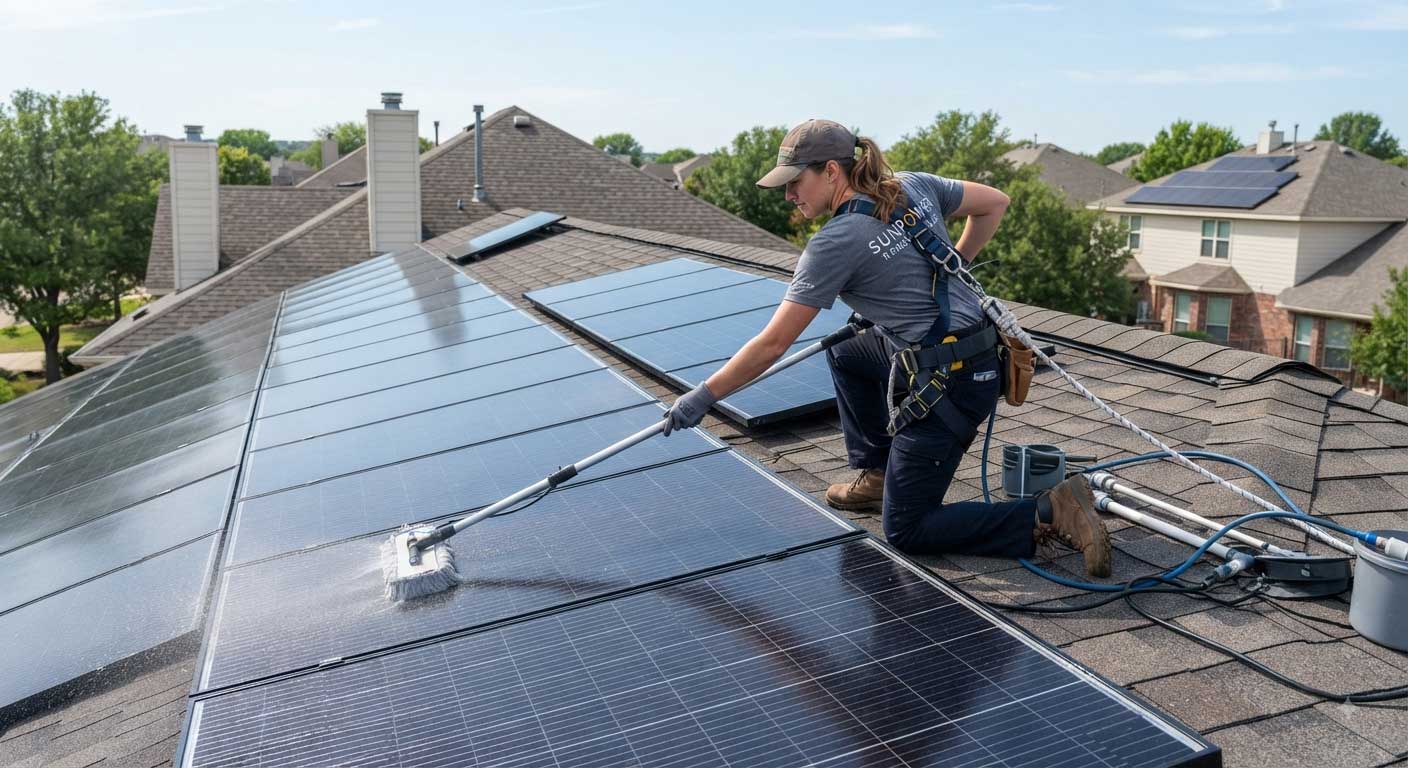
How to Clean Solar Panels Safely on a Roof
Step 1: Check Safety Before Cleaning
Roof work always comes first with safety.
Before washing solar panels, consider:
- Roof slope
- Weather conditions
- Access equipment
- Electrical connections
- Personal safety equipment
Never walk directly on solar panels. Flexible solar panels are lightweight and durable, but they are still photovoltaic devices with sensitive surfaces.
Step 2: Choose the Right Cleaning Tools
A simple cleaning setup usually includes:
- Soft sponge or microfiber cloth
- Soft-bristle brush
- Clean water
- Mild soap if necessary
- Hose with gentle water flow
Avoid:
- Abrasive scrubbers
- Strong detergents
- Solvent-based cleaners
- Pressure washers
High-pressure water can damage seals, connectors, or mounting areas.
Step 3: Clean During the Right Time
The best time for solar panel cleaning is usually:
- Early morning
- Late afternoon
- Cooler weather conditions
Cleaning hot panels with cold water may create thermal stress because the glass surface temperature can change quickly.
Common Mistakes When Washing Solar Panels
Many solar owners unintentionally damage their systems by using incorrect methods.
Using Hard Brushes
Scratches may reduce light transmission through the panel surface.
Using Tap Water With High Mineral Content
Hard water can leave mineral deposits after drying, creating additional residue.
Cleaning Without Checking Output
Before and after cleaning, checking system production can help determine whether maintenance actually improved performance.
How Often Should Solar Panels Be Cleaned?
There is no universal cleaning schedule for every solar installation. The right frequency depends on where the panels are installed and what type of dirt accumulates.
For many residential systems, checking panels once or twice a year is enough. However, some environments require more attention:
- Desert areas with frequent dust storms
- Coastal locations with salt deposits
- Farms with pollen or organic debris
- Cities with heavy air pollution
- Areas with bird activity
According to research from the National Renewable Energy Laboratory (NREL), photovoltaic soiling losses vary significantly by location. Some areas experience only minor losses, while dusty regions can see much larger reductions in annual energy production.
A mistake we often see is cleaning based on the calendar instead of actual conditions. A rooftop panel covered with visible dirt after three dry months may need attention, while another panel exposed to regular rainfall may continue performing well.
How to Improve Solar Panel Cleaning Results
Proper solar panel cleaning is not about using more force. It is about removing contamination without creating new problems.
A practical cleaning process:
1. Turn Off the System When Required
Before maintenance, follow the manufacturer’s shutdown instructions.
Solar panels generate electricity whenever exposed to sunlight, so electrical safety should always come first.
2. Remove Loose Debris First
Start with:
- Leaves
- Dust
- Small branches
- Surface particles
A soft brush or gentle water rinse is usually enough for loose materials.
3. Clean Stubborn Dirt Carefully
For harder deposits:
- Use clean water
- Apply mild soap if needed
- Wipe gently with a soft cloth
Avoid scraping because small scratches can reduce light transmission over time.
Should I Clean My Solar Panels or Let Rain Do It?
Many homeowners assume rainfall completely cleans solar panels.
That is only partly true.
Rain can remove loose dust, but it may not remove:
- Bird droppings
- Dried pollen
- Salt residue
- Sticky pollution particles
NREL research has shown that rainfall may not always remove pollen buildup effectively, and performance losses can remain until proper cleaning occurs.
At Bright Solar, we usually recommend inspecting first rather than automatically scheduling cleaning. Maintenance should solve a real performance issue, not become unnecessary work.
Bright Solar Experience: Cleaning Flexible Solar Panels in Real Conditions
Flexible solar panels often operate in places where traditional rooftop systems are not used.
Examples:
- RV travel
- Marine equipment
- Outdoor electronics
- Portable solar systems
These environments create unique cleaning challenges.
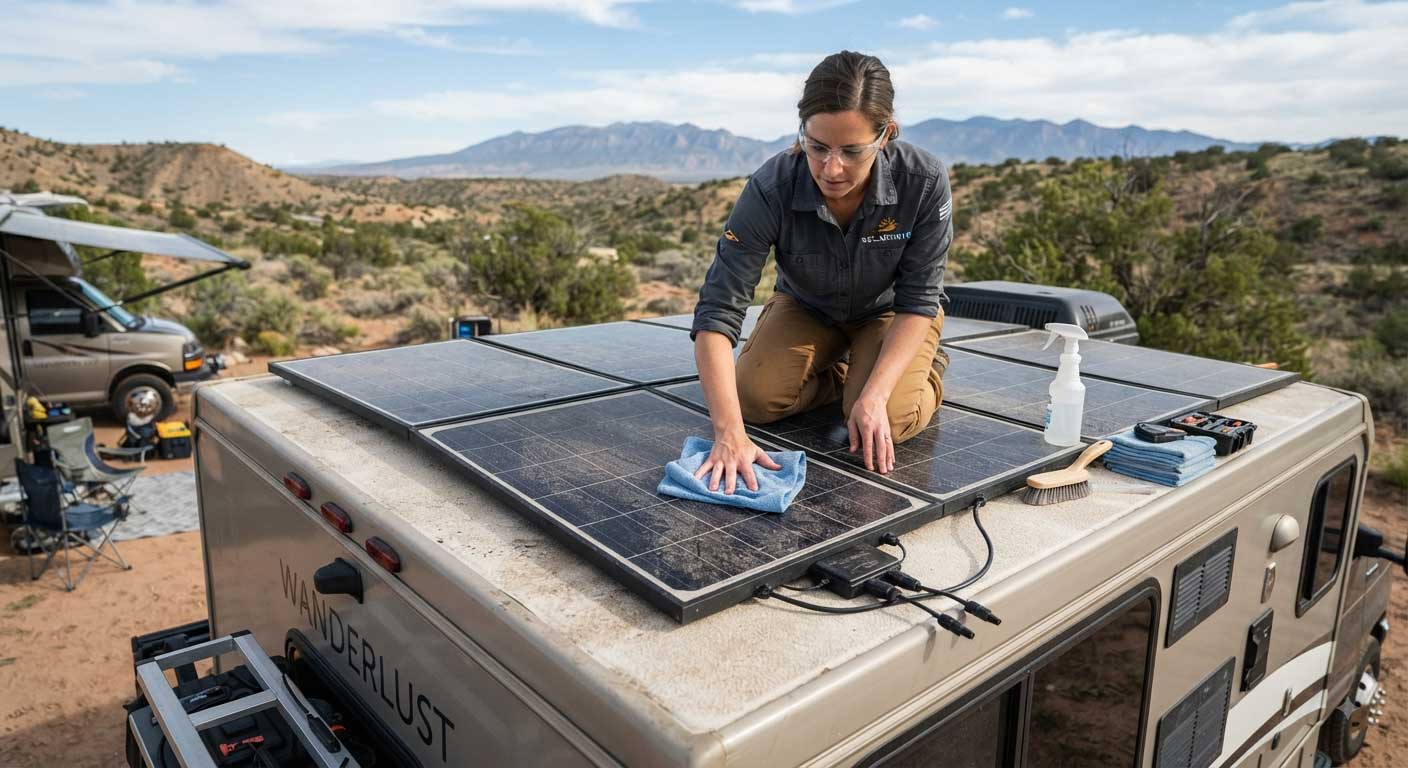
A marine solar panel may collect salt spray. An RV panel may collect road dust and insects. A portable panel used outdoors may face mud, sand, and moisture.
During field applications, we have found that simple maintenance habits make a noticeable difference:
- Inspect panels after long trips
- Remove visible contamination early
- Avoid aggressive cleaning methods
- Protect cable connections during maintenance
The goal is not making the panel look perfect. The goal is keeping sunlight reaching the photovoltaic cells.
FAQ About How to Clean Solar Panels on a Roof?
How to clean solar panels on a roof safely?
Use soft cleaning tools, clean water, and gentle methods. Avoid walking on panels or using abrasive materials that may damage the surface.
Should I clean my solar panels?
Yes, if visible dirt, bird droppings, pollen, or dust buildup affects sunlight exposure. However, cleaning frequency depends on your location and environment.
Do solar panels need to be cleaned regularly?
Solar panels do not always require frequent cleaning, but periodic inspection helps identify buildup that may reduce performance.
Can I use a pressure washer for solar panel cleaning?
No. High-pressure water can damage seals, connectors, and protective components. Gentle cleaning is safer.
How often should solar panels be cleaned?
Many residential systems only need occasional cleaning, often once or twice per year. Dusty or coastal environments may require more frequent maintenance.
Does cleaning solar panels increase energy production?
Cleaning can improve output when dirt or debris blocks sunlight. The improvement depends on the amount and type of soiling present.
Can rain clean solar panels?
Rain can remove some loose dust but may not remove stubborn contamination such as pollen, salt, or bird droppings.
Final Thoughts: How to Clean Solar Panels on a Roof?
How to clean solar panels on a roof? Use gentle cleaning methods, inspect the surface regularly, and remove dirt only when necessary to maintain reliable solar performance.
Solar panels are designed for outdoor durability, but smart maintenance helps protect their long-term output.
At Bright Solar, we believe effective solar maintenance is about balance. Cleaning too aggressively can create unnecessary risks, while ignoring visible buildup can reduce energy production.
A properly maintained solar system can continue producing clean energy efficiently for many years.
The prev: How long do solar panels take to install?The next: how to hook up solar panels?
Related recommendations
-

How Many KW Does a Solar Panel Produce?
178How many kw does a solar panel produce? Learn real solar panel output, watt-to-kW conversion, energy production factors, and expert insights from Bright Solar.
View details -
How much energy can a solar panel produce?
263How much energy can a solar panel produce? Learn solar output calculations, daily kWh production, influencing factors, and real-world examples.
View details -
How Much Electricity Does a Solar Panel Make?
195How much electricity does a solar panel make? Learn solar panel energy output, wattage factors, daily production estimates, and expert insights from Bright Solar.
View details -
how much to have solar panels installed?
151Find out how much to have solar panels installed, including average costs, installation factors, incentives, and expert tips to reduce your solar investment with Bright Solar.
View details