How Much Does A Solar System For A House Cost?
How Much Does A Solar System For A House Cost?
A solar system for a house typically costs between $15,000 and $30,000 before incentives, depending on system size, equipment, installation complexity, and location. A smaller home system may cost less, while larger systems with battery storage can require a higher investment.
The question how much does a solar system for a house cost is usually the first concern homeowners have before switching to renewable energy.
However, the price of a residential solar system is not determined by solar panels alone. The final investment includes multiple parts working together, such as photovoltaic modules, inverters, mounting structures, electrical equipment, labor, and permits.
At Bright Solar, I have reviewed different residential solar applications where the same panel capacity produced completely different project costs. A simple rooftop installation on a new house can be straightforward, while an older home may require roof repairs, electrical upgrades, or additional installation work.
The real cost comes from designing a system that matches the home’s energy requirements.
What Is the Average Cost of a Home Solar System?
The average cost of a residential solar system depends mainly on electricity consumption and system capacity.
Most homeowners install systems between:
- 3kW and 10kW
- Around 10 to 25 solar panels
- Grid-connected systems with an inverter
According to the National Renewable Energy Laboratory (NREL), residential photovoltaic system costs include hardware, installation labor, permitting, and other balance-of-system expenses.
Source:
https://www.nrel.gov/
Typical price ranges before incentives:
| Solar System Size | Estimated Cost Range |
|---|---|
| 3kW home solar system | $9,000–$13,000 |
| 5kW home solar system | $14,000–$20,000 |
| 7kW home solar system | $18,000–$27,000 |
| 10kW home solar system | $25,000–$35,000 |
The final quotation depends on local labor rates, equipment selection, and installation conditions.
What Factors Affect the Cost of a Solar System for a House?
1. System Size and Electricity Usage
The size of the solar system has the biggest impact on overall cost.
A home using more electricity requires:
- More solar panels
- Higher-capacity inverter
- Additional mounting materials
- More installation labor
For example:
A small energy-efficient house may only need a 4kW system, while a larger home with air conditioning, electric heating, and electric vehicle charging may require 8kW or more.
A common mistake is choosing system size based only on available roof space. The better approach is calculating annual electricity consumption first.
2. Solar Panel Technology
Solar panels represent an important part of the total system cost.
Different technologies have different price levels.
| Solar Panel Type | Features |
|---|---|
| Monocrystalline panels | High efficiency and popular for homes |
| Bifacial panels | Capture sunlight from both sides |
| Flexible solar panels | Lightweight and suitable for special surfaces |
| Premium modules | Higher output with limited space |
At Bright Solar, I often explain that panel efficiency matters when roof area is limited.
A higher-efficiency module may reduce the number of panels needed, which can improve installation flexibility.
How Much Do Solar Panels and Equipment Cost?
A complete home solar system includes more than photovoltaic modules.
The main components include:
| Component | Purpose |
|---|---|
| Solar panels | Convert sunlight into electricity |
| Inverter | Changes DC electricity into AC power |
| Mounting system | Secures panels to the roof |
| Monitoring equipment | Tracks energy production |
| Electrical components | Connects the system safely |
A typical cost breakdown:
| Item | Approximate Percentage |
|---|---|
| Solar panels | 20–30% |
| Inverter | 10–15% |
| Mounting equipment | Around 10% |
| Labor and installation | 25–35% |
| Permits and design | 10–15% |
| Electrical work | 10–15% |
These percentages can vary depending on project conditions.
For example, a new home with modern electrical infrastructure may require fewer upgrades than an older property.
Does Battery Storage Increase Solar System Cost?
Yes. Adding battery storage increases the initial investment but provides additional benefits.
A battery system allows homeowners to:
- Store excess solar electricity
- Use solar power at night
- Reduce dependence on the grid
- Improve backup power capability
However, not every homeowner needs batteries.
A grid-connected system without storage may be more economical for households that already have reliable utility service.
The correct choice depends on:
- Electricity prices
- Backup power needs
- Local regulations
- Energy consumption habits
How Can Homeowners Reduce Solar System Costs?
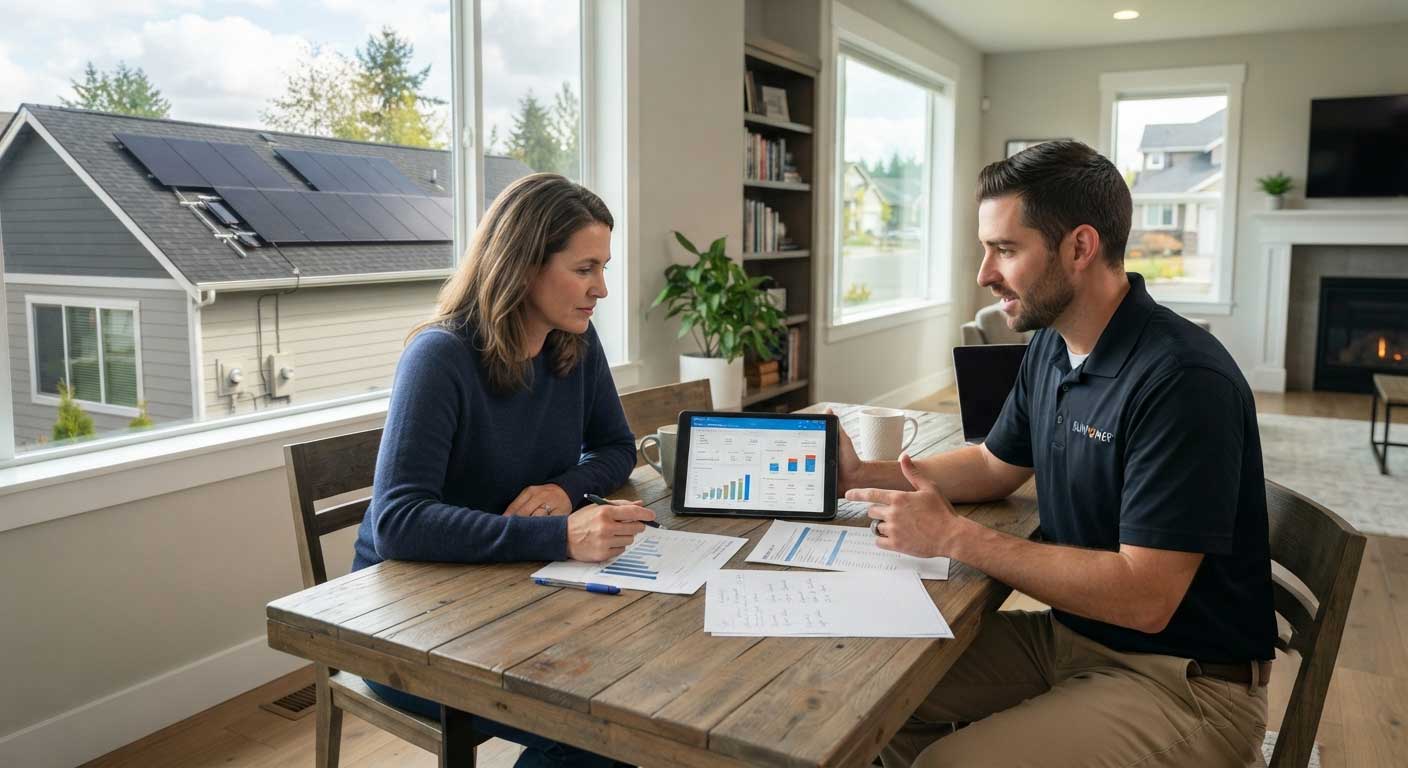
When homeowners ask how much does a solar system for a house cost, they often focus on finding the lowest initial price. However, reducing the total cost is usually about making better design decisions rather than simply selecting cheaper equipment.
Several strategies can help control the investment:
1. Install the Right Solar System Size
A larger system is not always the best choice.
Oversizing a solar system may increase upfront costs without providing meaningful additional benefits.
A properly designed system should consider:
- Current electricity consumption
- Future energy requirements
- Roof space availability
- Local sunlight conditions
For example, a homeowner who plans to purchase an electric vehicle in the next few years may need additional solar capacity compared with a household with stable electricity usage.
2. Compare Complete Installation Proposals
Solar quotations should be compared by total value, not only by price.
A complete proposal should include:
- Solar panel specifications
- Inverter brand and efficiency
- Installation warranty
- Expected annual energy production
- Maintenance support
During solar project reviews, I have seen large price differences between installers because one quotation included complete electrical upgrades while another only covered basic panel installation.
A cheaper quotation may not always represent the lowest long-term cost.
3. Use Available Solar Incentives
Government incentives, rebates, and tax programs can reduce the final cost of residential solar systems.
In the United States, eligible homeowners may benefit from solar incentives such as the federal Investment Tax Credit (ITC), depending on current regulations.
Because incentive programs vary by location and year, homeowners should verify the latest requirements before making a purchase decision.
How Long Does It Take to Install a Home Solar System?
The physical installation of solar panels is usually completed within a few days, but the entire project timeline can take longer because of permits and approvals.
A typical residential solar process includes:
| Stage | Typical Time |
|---|---|
| Home energy assessment | 1–7 days |
| System design | Several days |
| Permit approval | Days to weeks |
| Panel installation | 1–3 days |
| Inspection and activation | Several days |
The installation itself is often the fastest part.
In many cases, the waiting period comes from administrative procedures rather than construction work.
Is a Solar System for a House Worth the Investment?
For many homeowners, solar can provide long-term financial and environmental benefits.
The value depends on several factors:
- Local electricity prices
- Amount of sunlight available
- Installation cost
- System efficiency
- Length of ownership
A solar system is generally considered a long-term energy investment.
During the early years, homeowners recover the installation cost through electricity savings. After the system reaches its payback period, the remaining operational years can provide lower-cost electricity.
What Additional Costs Should Be Considered?
Many homeowners calculate only the solar panel price and overlook supporting expenses.
Additional costs may include:
- Roof repair before installation
- Electrical panel replacement
- Battery storage
- Permit fees
- Monitoring systems
- Maintenance services
For example, if a roof needs replacement soon, installing solar panels before completing roof work may create additional removal and reinstallation costs later.
A professional site evaluation helps identify these issues before construction begins.
How Much Electricity Can a Home Solar System Generate?
The electricity production of a solar system depends on:
- System capacity
- Solar panel efficiency
- Geographic location
- Daily sunlight hours
- Installation angle
Example:
A 6kW solar system receiving around 5 peak sun hours per day may theoretically generate:
6kW × 5 hours = 30kWh per day
Actual production will vary because of:
- Weather conditions
- Temperature losses
- Shading
- Inverter efficiency
The International Energy Agency (IEA) reports that solar photovoltaic technology has become one of the fastest-growing sources of renewable electricity worldwide due to technology improvements and declining costs.
Source:
https://www.iea.org/
FAQ About How Much Does A Solar System For A House Cost?
How much does a solar system for a house cost?
A residential solar system usually costs around $15,000–$30,000 before incentives. The final price depends on system size, equipment, installation difficulty, and location.
How many solar panels does a house need?
Most homes require approximately 10–25 solar panels, depending on electricity usage, panel wattage, roof size, and sunlight conditions.
Does installing solar increase home value?
Solar systems may increase property value because they provide long-term energy savings and renewable power benefits.
Is solar cheaper than buying electricity from the grid?
In many areas, solar can reduce long-term electricity costs, especially where electricity prices are high and solar resources are strong.
Do solar panels require regular maintenance?
Solar panels generally require minimal maintenance. Periodic cleaning and performance checks can help maintain energy production.
Can I add batteries to my solar system later?
Yes. Many homeowners install solar panels first and add battery storage later if their energy needs change.
How Much Is A Solar Panel For House?
A single solar panel for a house usually costs between $100 and $500, depending on wattage, technology, and brand. However, a complete home solar system requires multiple panels, inverters, mounting equipment, and installation services.Learn more about “How Much Is A Solar Panel For House“
How Much Solar System Cost for Home?
How much solar system cost for home? A complete residential solar system usually costs between $15,000 and $30,000 before incentives, depending on system size, location, equipment quality, installation complexity, and electricity demand. Smaller systems may start near $9,000, while larger homes can exceed $35,000.Learn more about “How Much Solar System Cost for Home“
How Much Are Solar Panels for House?
Solar panels for a house typically cost $15,000–$30,000 before incentives for a complete residential system. The final price depends on electricity usage, system size, panel efficiency, installation conditions, location, and equipment selection.Learn more about “How Much Are Solar Panels for House“
How Much Is a Solar System for a House?
How much is a solar system for a house? A complete residential solar system usually costs between $15,000 and $30,000 before incentives, with final pricing depending on system size, electricity usage, equipment selection, roof conditions, installation complexity, and location.Learn more about “How Much Is a Solar System for a House“
Conclusion
The answer to how much does a solar system for a house cost depends on more than the number of panels installed.
A complete solar investment includes equipment selection, installation requirements, electrical conditions, permits, and long-term energy goals.
From my experience working with Bright Solar projects, the most successful residential solar systems are not always the cheapest at the beginning. They are the systems designed correctly for the homeowner’s actual energy usage and future plans.
A properly designed solar system can provide decades of clean electricity, reduce dependence on traditional energy sources, and create long-term value for homeowners.
Before choosing a solar solution, evaluate your energy consumption, roof condition, available incentives, and expected future needs. The right system design can make solar a practical and reliable investment.
Related recommendations
-

Do Solar Panels Work in the Shade?
131Yes. Solar panels can still generate electricity in partial shade and diffuse light, but output usually decreases as sunlight is obstructed.
View details -
how durable are flexible solar panels?
317How durable are flexible solar panels? Learn their real lifespan, heat resistance, weather performance, and what causes early failure in RV and marine use.
View details -
Can You Recycle Solar Panels?
223Yes. Solar panels can be recycled through specialist facilities that recover materials such as glass, aluminum, silicon, and metals.
View details -
do solar panels cause cancer?
262do solar panels cause cancer? Learn what science says about solar panels, electromagnetic fields, toxic metals, radiation, and everyday health and safety risks.
View details