How Many Watts Are Solar Panels?
How Many Watts Are Solar Panels?
Solar panels commonly range from 50 watts to over 700 watts, depending on their size, technology, and application. Residential solar panels are usually between 350W and 450W, while portable and flexible panels often use lower wattage designs.
The question how many watts are solar panels appears simple, but wattage is only one part of understanding solar performance.
At Bright Solar, we work with residential, RV, portable, and customized solar applications. From our experience, many customers initially choose panels only by watt numbers. However, the right panel depends on where it will be installed and how much energy the system needs to generate.
A 500W panel is not automatically better than a 400W panel.
The actual value depends on:
- Available installation space
- Solar efficiency
- Daily sunlight conditions
- System design
- Energy requirements
Solar panel wattage tells you the maximum power output under standard testing conditions. Real-world electricity generation changes with weather, temperature, and installation factors.
Understanding Solar Panel Wattage
What Does Solar Panel Watt Mean?
A watt (W) measures electrical power.
For solar panels, wattage represents the maximum electricity output under laboratory testing conditions.
For example:
- A 100W solar panel can produce up to 100 watts under ideal conditions.
- A 400W solar panel can produce up to 400 watts under ideal conditions.
- A 600W solar panel can produce up to 600 watts under ideal conditions.
However, this does not mean a 400W panel produces 400 watts every hour of the day.
Solar production changes throughout the day.
A typical pattern:
| Time | Solar Output |
|---|---|
| Morning | Lower output |
| Midday | Highest output |
| Afternoon | Decreasing output |
| Night | No production |
The National Renewable Energy Laboratory (NREL) explains that photovoltaic system performance depends on solar radiation, temperature, system design, and operating conditions.
Source:
https://www.nrel.gov/solar/
Common Solar Panel Wattages
Different Solar Panel Sizes And Applications
Solar panels are available in many wattage ranges because different users have different energy needs.
| Solar Panel Wattage | Common Application |
|---|---|
| 50W–100W | Portable chargers, small devices |
| 100W–200W | Camping, RV accessories |
| 200W–300W | RV solar systems, small off-grid systems |
| 350W–450W | Residential rooftops |
| 500W–700W | Commercial and utility projects |
The best wattage depends on the available space and required energy output.
For example:
A homeowner with a large roof may prefer several high-power modules.
An RV owner may prefer multiple lightweight flexible panels to maximize available roof space.
How Many Watts Is A Typical Residential Solar Panel?
Residential Solar Panel Wattage Explained
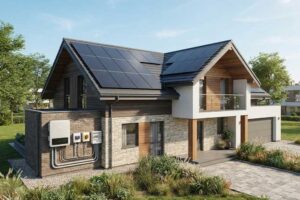
Modern residential solar panels commonly range between 350W and 450W.
A typical home installation may include:
- 10–25 solar panels
- 4kW–10kW system capacity
- Rooftop mounting structure
- Inverter system
Example:
A home using twenty 400W solar panels:
400W × 20 panels = 8,000W
The system capacity is approximately:
8kW
However, actual electricity production depends on:
- Location
- Roof direction
- Shading
- Seasonal sunlight
A solar system in Arizona and a system in Northern Europe with the same wattage may produce very different annual energy.
Solar Panel Wattage vs Actual Energy Output
Why Watts Do Not Equal Daily Electricity
One common misunderstanding is confusing wattage with energy production.
Watts measure power.
Kilowatt-hours (kWh) measure energy produced over time.
Example:
A 400W solar panel operating under strong sunlight:
400W × 5 sunlight hours
= 2,000Wh
= 2kWh
Real production may be lower because of:
- Cloud cover
- Heat losses
- Dirt accumulation
- Cable losses
- Inverter efficiency
The U.S. Department of Energy notes that photovoltaic system performance depends on multiple environmental and technical conditions.
Source:
https://www.energy.gov/eere/solar/solar-photovoltaic-technology-basics
Factors That Affect Solar Panel Wattage Selection
1. Available Installation Space
Space is often the first limitation.
A smaller roof or RV surface may require higher-efficiency panels.
Example:
Limited roof space:
- Higher wattage panels
- Higher efficiency modules
Large available area:
- More standard panels
- Flexible system design
2. Energy Requirements
The required wattage depends on electricity consumption.
Examples:
Small applications:
- Phone charging
- LED lighting
- Small electronics
Large applications:
- Home appliances
- Refrigerators
- Air conditioning
- Electric vehicles
A solar system should be designed according to actual energy usage.
How Many Watts Are Flexible Solar Panels?
Flexible Solar Panel Wattage Options
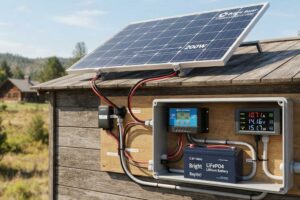
Flexible solar panels are designed for applications where traditional rigid panels are difficult to install.
Common flexible panel wattages include:
| Flexible Panel Size | Typical Usage |
|---|---|
| 50W–100W | Portable applications |
| 100W–200W | Camping and RV systems |
| 200W–300W | Larger mobile systems |
| 300W–400W+ | Advanced RV and off-grid setups |
Flexible solar panels are commonly selected because of:
- Lightweight design
- Easy transportation
- Curved surface compatibility
- Lower installation limitations
At Bright Solar, we often recommend selecting flexible solar panels based on the available installation area rather than simply choosing the highest wattage option.
A well-matched 300W flexible solar system may perform better for an RV than a larger rigid panel system that cannot fit properly.
How To Calculate Required Solar Panel Watts
Choosing The Right Solar Panel Power Size
Before purchasing solar panels, it is important to estimate how many watts your system actually needs.
A simple calculation method:
Daily Energy Consumption (Wh) ÷ Average Sun Hours = Required Solar Panel Watts
For example:
A camper uses:
- LED lights: 100Wh/day
- Refrigerator: 600Wh/day
- Devices: 200Wh/day
Total:
900Wh/day
If the location receives around 5 peak sunlight hours:
900Wh ÷ 5 hours = 180W
Considering system losses, a practical choice would be around:
220W–250W solar capacity
This is why wattage selection should start with energy demand, not just the available panel size.
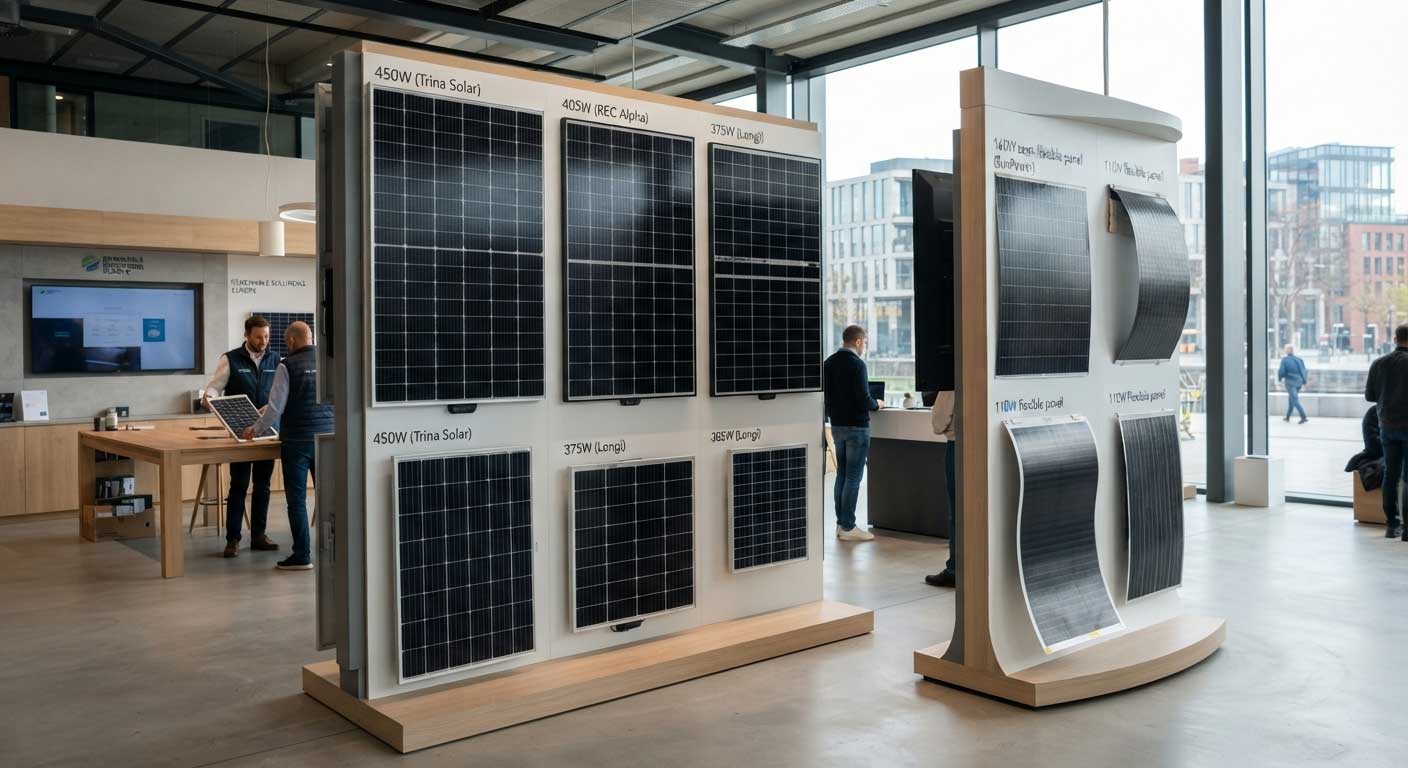
400W vs 500W vs 600W Solar Panels
Comparing High Wattage Solar Modules
Higher wattage panels have become increasingly common because manufacturers are improving cell efficiency and panel size.
| Panel Wattage | Typical Use | Advantages |
|---|---|---|
| 400W | Homes, RVs, small systems | Balanced size and performance |
| 500W | Commercial projects, larger rooftops | Higher output per panel |
| 600W+ | Utility-scale projects | Maximum power generation |
A 600W solar panel may generate more power per module, but it is also usually larger and heavier.
For many residential or mobile applications, a 400W panel can be a more practical choice because:
- Easier installation
- Better roof compatibility
- Lower structural requirements
The right choice depends on the project.
Real Experience From Bright Solar Projects
Why Application Matters More Than Watt Numbers
During solar product discussions with customers, we often see the same situation: buyers compare wattage first and installation conditions later.
One RV customer originally planned to install the highest wattage rigid panels available. After checking the roof layout, weight limitation, and available mounting area, a flexible solar solution became the better option.
The final system was not the largest wattage design.
It was the design that used the available space more efficiently.
This experience shows an important point:
Solar panel wattage should serve the application, not control the application.
At Bright Solar, our H Series flexible solar panels are developed for situations where weight, space, and installation flexibility are important factors.
Solar Panel Wattage Performance In Different Conditions
Why Real Output Changes Outdoors
The watt rating shown on a solar panel label is measured under Standard Test Conditions (STC):
- Solar irradiance: 1000W/m²
- Cell temperature: 25°C
- Air mass: 1.5
Real outdoor environments rarely match laboratory conditions.
Performance can decrease because of:
- High temperatures
- Partial shading
- Dust accumulation
- Installation angle
- Seasonal sunlight changes
For example, a 400W panel may not continuously deliver 400W during normal operation.
Instead, output changes throughout the day depending on environmental conditions.
FAQ About How Many Watts Are Solar Panels?
How many watts are solar panels normally?
Most residential solar panels are between 350W and 450W. Portable and flexible solar panels usually range from 50W to 300W depending on their application.
Is a higher watt solar panel always better?
No. Higher wattage does not always mean better performance. The best panel depends on installation space, energy requirements, efficiency, and system design.
How many watts does a 400W solar panel produce per day?
A 400W solar panel may produce around 1.5–2.5kWh per day depending on sunlight conditions, location, temperature, and installation angle.
How many watts of solar panels do I need for an RV?
Many RV solar systems use 200W–800W of solar capacity depending on appliances, battery size, travel habits, and available roof space.
Are flexible solar panels lower wattage than rigid panels?
Not necessarily. Flexible solar panels are available in various wattages, including 200W, 300W, and higher models. Their main advantage is installation flexibility and lower weight.
Can solar panels produce their rated watts all day?
No. Solar panels only reach their rated output under ideal test conditions. Actual production changes with sunlight intensity, temperature, weather, and system losses.
How Much Energy Will a Solar Panel Produce?
A modern residential solar panel typically produces between 1.2 and 2.5 kWh of electricity per day, or roughly 400 to 900 kWh per year, depending on its wattage, local sunlight conditions, installation angle, temperature, and overall system efficiency.Learn more about “How Much Energy Will a Solar Panel Produce“
Conclusion: How Many Watts Are Solar Panels?
How many watts are solar panels? Solar panels are available from small 50W portable models to powerful 700W+ modules, while most residential panels operate between 350W and 450W.
The correct wattage depends on:
- Energy demand
- Installation location
- Available space
- Solar technology
- Long-term usage goals
At Bright Solar, we believe choosing solar panels starts with understanding the application. A properly matched system can deliver better performance than simply selecting the highest wattage available.
Whether for homes, RVs, marine projects, or off-grid systems, the right solar panel wattage creates a more reliable renewable energy solution.
The prev: How Much To Purchase Solar Panels?The next: How Much Is Solar Panels for a House?
Related recommendations
-

do solar panels give off radiation?
198do solar panels give off radiation? Learn whether solar panels produce harmful radiation, electromagnetic fields, and what science says about solar energy safety.
View details -
How many amps 200 watt solar panel?
335How many amps 200 watt solar panel produces depends on voltage and conditions. Learn current calculations, charging performance, and solar system sizing tips.
View details -
Can You Recycle Solar Panels?
223Yes. Solar panels can be recycled through specialist facilities that recover materials such as glass, aluminum, silicon, and metals.
View details -
how much to have solar panels installed?
151Find out how much to have solar panels installed, including average costs, installation factors, incentives, and expert tips to reduce your solar investment with Bright Solar.
View details