How Are Solar Panels Produced?
How are solar panels produced? Solar panels are manufactured through a multi-step process that transforms raw silicon into photovoltaic cells, assembles them into modules, and tests them for long-term energy performance.
When people look at a finished solar panel installed on a rooftop, they usually see only the glass surface and aluminum frame. The manufacturing process behind that panel is much more complex. At Bright Solar, our experience working with flexible and traditional photovoltaic products has shown that material selection, cell technology, and production control directly influence reliability over decades.
A solar panel is not simply a collection of silicon pieces. It is an engineered energy device designed to convert sunlight into electricity while surviving heat, moisture, wind, and outdoor exposure.
Solar Panel Manufacturing Process: From Silicon to Finished Module
1. Producing High-Purity Silicon Material
The first stage of solar panel production begins with silicon, one of the most abundant elements found on Earth. However, solar-grade silicon requires extremely high purity.
Manufacturers typically start with quartz sand and process it into metallurgical-grade silicon. Through additional purification steps, the silicon purity is increased to levels suitable for photovoltaic applications.
According to the International Energy Agency (IEA), crystalline silicon technology dominates the global solar market, accounting for the vast majority of installed photovoltaic capacity.
The quality of silicon matters because impurities can reduce the efficiency of solar cells.
2. Creating Silicon Wafers
After purification, silicon is melted and formed into large crystal blocks called ingots.
These ingots are then:
- Cut into thin wafers
- Cleaned to remove surface damage
- Treated to improve light absorption
Modern wafer production requires precision equipment because even small defects can affect electrical performance.
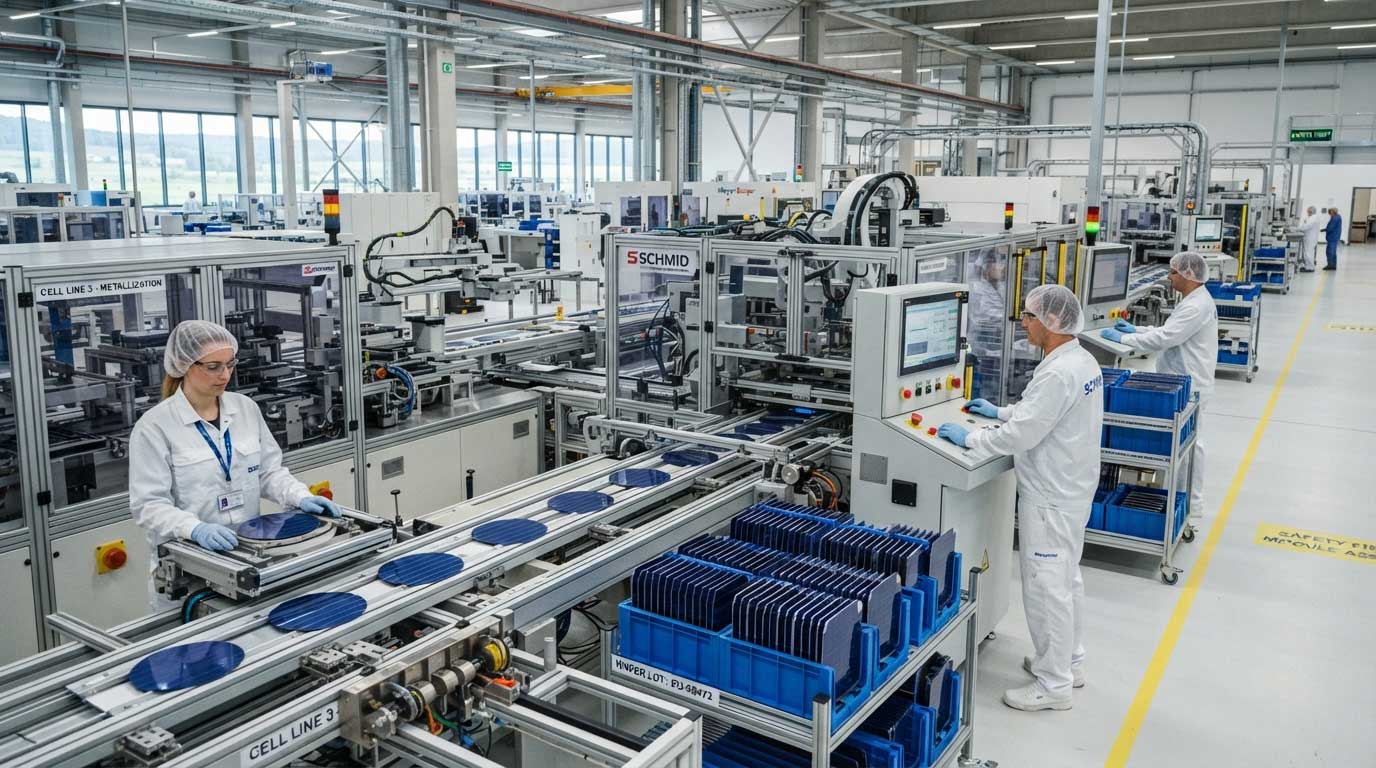
During factory inspections, one detail that stands out is the attention given to wafer handling. Workers cannot simply touch and move cells like ordinary materials. The surface must remain extremely clean because microscopic contamination can reduce output.
3. Manufacturing Photovoltaic Cells
Silicon wafers become solar cells after several technical processes.
Manufacturers add controlled chemical treatments to create a semiconductor structure. This allows the cell to generate electrical current when sunlight hits the surface.
Common solar cell technologies include:
| Cell Type | Main Characteristics |
|---|---|
| Monocrystalline | Higher efficiency, premium performance |
| Polycrystalline | Lower cost, traditional technology |
| TOPCon | Improved efficiency with advanced structure |
| HJT | High performance and better temperature response |
The photovoltaic cell is the heart of every solar panel. Without this conversion layer, sunlight cannot become usable electricity.
How Solar Cells Become Complete Solar Panels
4. Solar Cell Interconnection and Module Assembly
After solar cells are produced, manufacturers connect multiple cells together using thin conductive ribbons.
These connected cells are arranged into a larger panel structure.
A typical solar module contains:
- Tempered protective glass
- Encapsulant layers (usually EVA or POE)
- Photovoltaic cells
- Backsheet or rear protection layer
- Aluminum frame
- Junction box
Each layer has a specific purpose.
The glass protects against weather exposure. The encapsulation material prevents moisture damage. The frame provides mechanical strength and helps with installation.
In flexible solar panels, the structure changes significantly. Instead of a heavy glass layer, manufacturers use lightweight materials such as ETFE coatings and flexible substrates. This allows installation on curved surfaces like RV roofs, boats, and specialty applications.
5. Lamination and Protection
Once solar cells are arranged, the entire module passes through a lamination process.
During lamination:
- Layers are compressed together
- Air bubbles are removed
- Materials bond permanently
- The module becomes weather-resistant
This step is critical because solar panels operate outdoors for decades.
A poorly laminated panel may experience problems such as moisture penetration, delamination, or reduced electrical performance.
According to the National Renewable Energy Laboratory (NREL), photovoltaic modules are designed for long operational lifetimes, with many manufacturers providing performance warranties of 25 years or more.
6. Solar Panel Testing and Quality Inspection
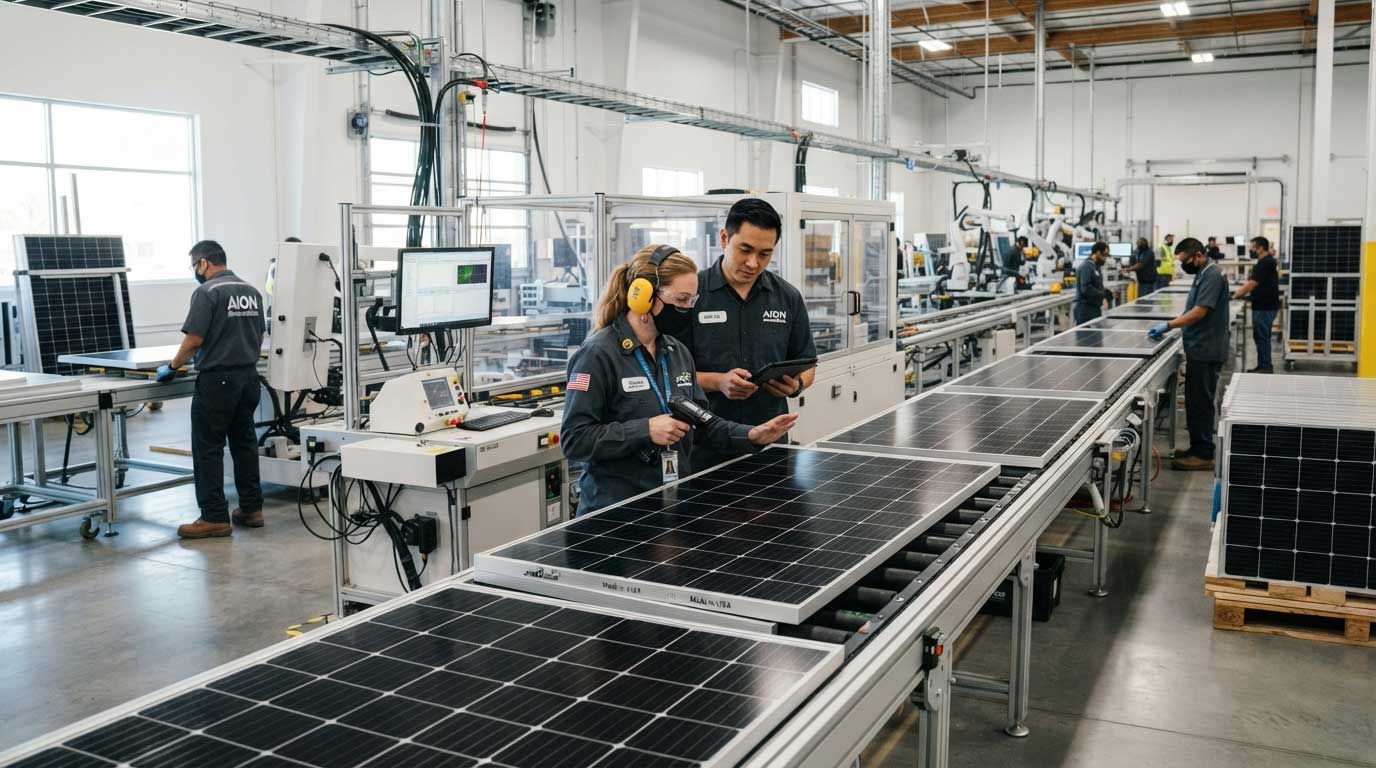
After lamination and frame installation, every solar panel goes through multiple testing procedures before leaving the factory.
Solar manufacturing is not finished when the panel looks complete. A panel must prove that it can deliver stable electricity output under different environmental conditions.
Common quality tests include:
| Testing Process | Purpose |
|---|---|
| Electroluminescence (EL) Testing | Detects hidden cracks and cell defects |
| Flash Testing | Measures actual power output |
| Insulation Testing | Checks electrical safety |
| Thermal Cycling Test | Simulates temperature changes |
| Humidity Freeze Test | Evaluates durability in harsh climates |
During factory quality checks, one of the most important observations is that many defects cannot be seen by the human eye. A solar cell may appear perfect but contain microscopic cracks that reduce performance over time. EL testing helps manufacturers identify these problems before shipment.
For Bright Solar, production quality is not only about achieving a rated wattage number. A reliable solar module must maintain performance after years of exposure to sunlight, rain, temperature changes, and transportation stress.
How Long Does the Solar Panel Production Process Take?
The production time depends on the technology, factory capacity, and quality requirements.
A simplified timeline looks like this:
| Manufacturing Stage | Approximate Time |
|---|---|
| Silicon processing | Several days to weeks |
| Wafer production | Hours to days |
| Cell manufacturing | Several production steps |
| Module assembly | Usually within one production cycle |
| Testing and inspection | Same production stage |
Large-scale factories use automated equipment to produce thousands of modules daily. According to data from the International Renewable Energy Agency (IRENA), solar photovoltaic manufacturing capacity has expanded rapidly as global demand for renewable energy continues increasing.
However, speed cannot replace quality control. A faster production line is only valuable when every panel still meets performance standards.
What Materials Are Used to Produce Solar Panels?
The materials inside a solar panel are carefully selected for durability and energy efficiency.
Main Components of a Solar Panel
Silicon Solar Cells
Silicon is the main electricity-producing material. It absorbs sunlight and creates an electrical current through the photovoltaic effect.
Glass Layer
Most rigid solar panels use tempered glass because it provides:
- Impact resistance
- Weather protection
- Long-term transparency
Encapsulation Material
Materials such as EVA or POE protect solar cells from moisture and mechanical stress.
Aluminum Frame
The frame provides structural support and allows panels to be mounted securely.
Junction Box
The junction box manages electrical connections between the solar module and the external system.
For flexible solar panels, manufacturers replace traditional glass and aluminum structures with lightweight alternatives. This reduces weight while maintaining durability for applications where standard panels are unsuitable.
Why Solar Panel Manufacturing Quality Matters
A solar panel is expected to generate electricity for decades. The manufacturing process determines how well it performs throughout its lifetime.
Important quality factors include:
- Cell efficiency
- Material durability
- Temperature resistance
- Waterproof protection
- Electrical stability
- Mechanical strength
A common mistake when purchasing solar products is focusing only on the lowest price per watt.
From our experience working with solar applications, the cheapest module is not always the most economical choice. A small efficiency loss or early degradation problem can create larger costs over many years.
A high-quality manufacturing process protects the original investment.
How Are Solar Panels Produced at Bright Solar?
At Bright Solar, solar production combines advanced photovoltaic technology with application-focused design.
Our manufacturing approach focuses on:
- Selecting reliable photovoltaic materials
- Maintaining strict production inspection
- Developing flexible solar solutions
- Testing products for real-world environments
For flexible solar panels especially, production requires additional attention because lightweight designs must balance flexibility, efficiency, and durability.
Applications such as RV solar systems, marine solar solutions, and portable energy products require panels that can handle movement, vibration, and outdoor conditions.
The manufacturing goal is not simply creating a solar panel. It is creating a product that performs reliably in the environments where customers actually use it.
FAQ About How Are Solar Panels Produced?
How are solar panels produced from raw materials?
Solar panels are produced by refining silicon, creating wafers, manufacturing photovoltaic cells, assembling cells into modules, and testing the finished products for electrical and mechanical performance.
What material are most solar panels made from?
Most solar panels use crystalline silicon because it provides reliable efficiency and long-term stability. Other materials include glass, aluminum, encapsulation films, and electrical components.
How long does it take to manufacture a solar panel?
The module assembly process can be completed quickly in automated factories, but the full supply chain from silicon production to finished panels involves multiple manufacturing stages.
Are flexible solar panels manufactured differently?
Yes. Flexible solar panels use lightweight substrates and protective coatings instead of traditional heavy glass structures. This makes them suitable for curved surfaces and mobile applications.
Where are most solar panels produced?
Solar panels are manufactured globally, with major production capacity located in Asia, Europe, and North America.
How long can manufactured solar panels last?
Most quality solar panels are designed to operate for 25 years or longer. Proper materials and manufacturing controls help maintain performance over time.
how are solar panels made?
how are solar panels made through a multi-step industrial process involving silicon purification, wafer slicing, photovoltaic cell production, module assembly, and quality testing. Each panel is engineered under controlled factory conditions to ensure durability, efficiency, and long-term energy conversion performance.Learn more about “how are solar panels made“
Final Conclusion: Understanding How Solar Panels Are Produced
How are solar panels produced? The answer involves a combination of advanced materials science, precision manufacturing, and strict quality control.
From purified silicon and photovoltaic cells to final testing and shipment, every production stage affects the reliability of the finished product.
After years of working with solar applications, one lesson remains clear: solar performance begins long before installation. The factory process determines how efficiently a panel converts sunlight today and how reliably it continues producing energy years later.
Bright Solar continues to focus on manufacturing solar solutions designed for real-world energy needs, helping customers access dependable renewable power for homes, vehicles, marine systems, and portable applications.
The prev: how much do solar panels save?The next: How Much for One Solar Panel?
Related recommendations
-

How to Dispose of Solar Panels?
249Learn how to dispose of solar panels safely, recycle old photovoltaic modules, reduce solar energy waste, and understand solar panel recycling options.
View details -
how to fix flexible solar panel on roof?
257Learn how to fix flexible solar panel on roof surfaces securely using proven adhesive and fastening methods. Expert installation advice, real-world experience, and durability tips from Bright Solar.
View details -
do solar panels work on cloudy days?
302Discover do solar panels work on cloudy days with real performance data, field-tested output rates, and Bright solar engineering insights from global installations.
View details -
How to Install Flexible Solar Panel on RV Roof?
228Learn how to install flexible solar panel on RV roof safely and correctly. Discover real-world installation tips, mounting methods, wiring advice, and common mistakes to avoid.
View details