how can i tell if my solar panels are working?
how can i tell if my solar panels are working? Check your solar inverter, monitoring app, electricity production data, and utility bill trends. A working solar system should show daily energy generation when sunlight is available and no major system warnings appear.
How Can I Tell If My Solar Panels Are Producing Electricity?
The easiest way to confirm your solar panels are working is to check the system’s energy production data.
A solar panel can look perfectly normal from the outside while having an electrical issue that is not visible.
This is something I have seen repeatedly when reviewing solar installations. Homeowners often inspect the panels themselves, looking for dirt, cracks, or physical damage, but the real answer is usually found in the inverter or monitoring system.
A functioning solar system normally has:
- Active inverter operation
- Daily power production
- Stable monitoring data
- Normal electricity savings
During daylight hours, your system should show electricity generation unless conditions prevent production, such as:
- Heavy cloud cover
- Deep shading
- Snow coverage
- Equipment shutdown
The National Renewable Energy Laboratory (NREL) explains that photovoltaic system monitoring is important for tracking performance and identifying issues that affect energy production.
Source:
https://www.nrel.gov/
The key is not whether the panels look clean.
The key is whether the system is converting sunlight into usable electricity.
Check Your Solar Inverter Display
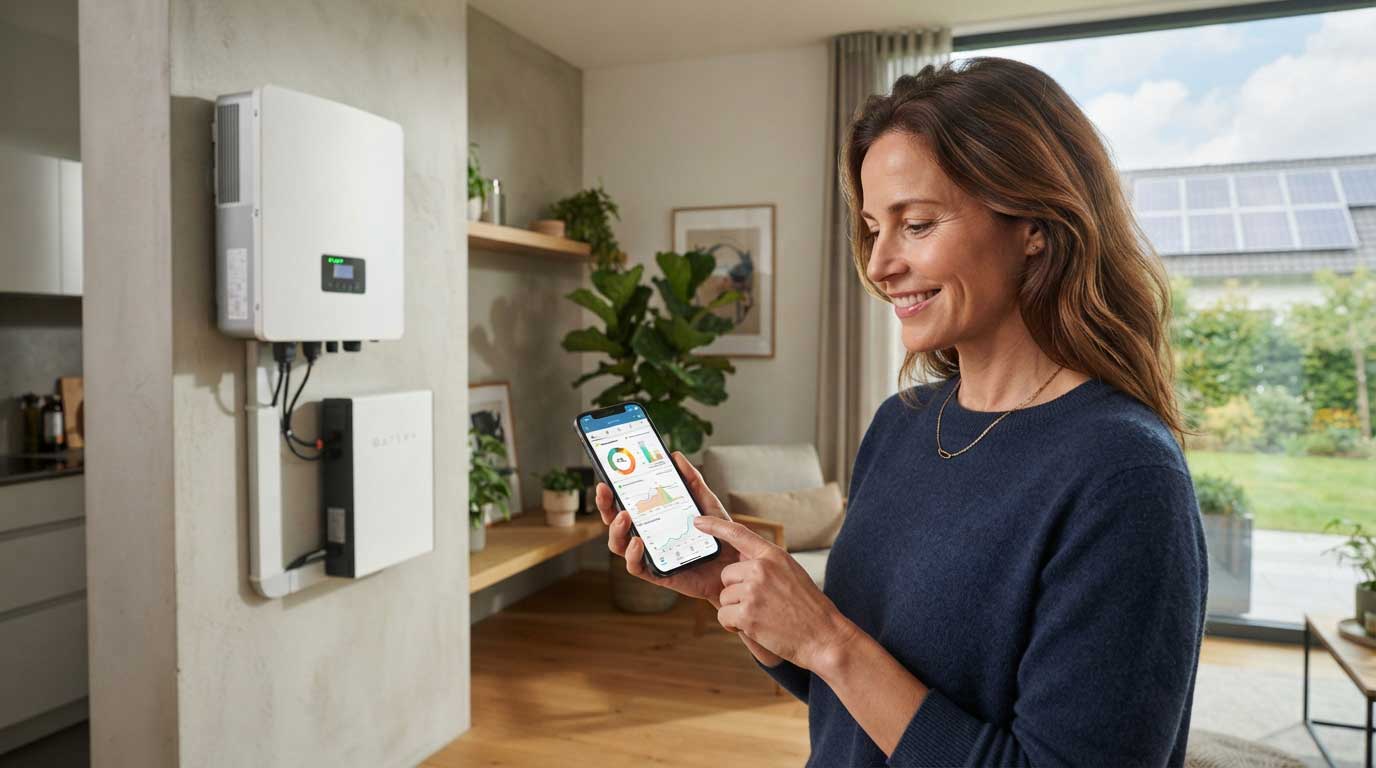
The inverter is one of the fastest ways to check whether your solar system is operating.
The inverter converts DC electricity from your solar panels into AC electricity used by your home.
Most residential inverters display:
- Current power output
- Daily energy production
- Lifetime energy production
- Warning messages
- Error codes
A normal inverter usually shows:
- Green operating light
- Active production status
- No error alerts
Possible warning signs include:
| Inverter Status | Possible Meaning |
|---|---|
| Green light | Normal operation |
| No display | Possible power issue |
| Red warning light | System fault |
| Error code | Requires inspection |
However, inverter displays vary by manufacturer.
Some systems may temporarily stop production because of:
- Grid problems
- High temperatures
- Communication errors
Do not immediately assume the solar panels are damaged.
The inverter often provides the first clue.
Use Your Solar Monitoring App
Modern solar systems often include online monitoring platforms.
These apps allow homeowners to see:
- Real-time production
- Daily generation
- Monthly trends
- Historical performance
A monitoring system is especially useful because solar output changes naturally.
For example:
A sunny summer day may produce much more electricity than:
- A cloudy winter day
- A rainy afternoon
- A heavily shaded morning
Looking at one single day can be misleading.
I usually recommend comparing:
- Same month from previous years
- Similar weather conditions
- Seasonal production patterns
A gradual decline may indicate:
- Increasing shade
- Dirt buildup
- Equipment aging
- Inverter problems
Check Your Electricity Bill
Your electricity bill can also reveal whether your solar panels are working.
A properly operating solar system should usually reduce the amount of electricity purchased from the grid.
Compare:
- Previous electricity bills
- Current energy usage
- Solar production reports
- Seasonal changes
However, electricity bills alone are not always enough.
Your energy consumption may change because of:
- New appliances
- Electric vehicles
- Heating or cooling usage
- Family lifestyle changes
A higher bill does not automatically mean your solar panels stopped working.
Look For These Signs Your Solar Panels Are Working
A working solar system often shows several obvious signs.
Your Inverter Shows Production
The inverter reports electricity generation during daylight hours.
Your Monitoring System Has Recent Data
A connected monitoring platform should update regularly.
Your Electricity Usage Drops
Solar production should reduce grid electricity consumption.
No Warning Messages Appear
Normal systems operate without persistent alerts.
Panels Receive Sunlight
The panels should have reasonable exposure without major shading problems.
Signs Your Solar Panels May Not Be Working
Sometimes a solar system stops producing electricity without obvious physical damage.
Common warning signs include:
Sudden Production Drop
If output suddenly decreases compared with normal weather conditions, investigate.
Inverter Error Messages
Errors may indicate:
- Wiring problems
- Communication failure
- Component faults
No Energy Production During Sunny Weather
A sunny afternoon with zero production is unusual.
Monitoring System Offline
Communication problems can hide actual performance issues.
Unexpected Electricity Bills
Higher-than-normal bills may indicate reduced solar generation.
How Much Electricity Should Solar Panels Produce?
Solar production depends on:
- Panel size
- Location
- Weather
- Roof direction
- Tilt angle
- Shading
For example:
A 400W solar panel does not produce 400 watts every hour.
The rated output is measured under laboratory conditions.
Actual production changes throughout the day.
Typical production pattern:
| Time | Solar Output |
|---|---|
| Early morning | Low |
| Late morning | Increasing |
| Midday | Highest |
| Afternoon | Decreasing |
| Night | None |
The U.S. Department of Energy explains that solar energy production varies depending on location, system design, and available sunlight.
Source:
https://www.energy.gov/
How To Test Solar Panel Output Yourself
For homeowners who want a deeper check, several methods are available.
Review Monitoring Data
The simplest method.
Check:
- Daily kWh production
- Monthly trends
- System alerts
Inspect The Inverter
Look for:
- Operating status
- Error codes
- Communication problems
Check Physical Conditions
Inspect from the ground:
- Dirt buildup
- Fallen leaves
- Visible damage
- Shade changes
Avoid climbing onto the roof unless you have proper safety equipment.
Compare Expected Production
Solar installers can estimate expected output using:
- Location data
- Panel specifications
- Historical weather information
Can Dirty Solar Panels Stop Working?
Usually, dirty solar panels do not completely stop working.
However, dirt can reduce energy production.
Common contaminants include:
- Dust
- Bird droppings
- Leaves
- Pollution
The impact depends on:
- Climate
- Rainfall
- Panel angle
- Cleaning frequency
In dry regions, dust accumulation can become a noticeable performance issue.
Regular inspection helps maintain output.
Do Solar Panels Need Professional Inspection?
Not every performance question requires a technician.
Simple checks:
- Monitoring app
- Inverter display
- Electricity data
can solve many problems.
Professional inspection may be needed when:
- Production drops significantly
- Error codes appear
- Wiring problems are suspected
- Physical damage exists
A qualified solar installer can test:
- Electrical connections
- Panel voltage
- Current output
- Inverter operation
FAQ About how can i tell if my solar panels are working?
how can i tell if my solar panels are working?
Check your inverter, monitoring app, and electricity production data. A working system should show energy generation during daylight hours.
How do I know if my solar inverter is working?
Check the inverter display or status lights. Normal operation usually shows active production without error messages.
Should solar panels produce electricity every day?
Solar panels produce electricity whenever enough sunlight reaches them. Output changes with weather and seasons.
Why are my solar panels not producing power?
Possible causes include inverter problems, shading, wiring issues, communication failures, or severe weather conditions.
Can solar panels work but still save little money?
Yes. Low energy savings may result from high electricity usage, system size, or reduced solar production.
How often should I check my solar system?
Monthly monitoring is recommended, with additional checks if production changes unexpectedly.
Do solar panels stop working after many years?
Solar panels gradually lose efficiency over time but are designed for long-term operation, often 25 years or more.
Conclusion
how can i tell if my solar panels are working comes down to monitoring actual energy production, not just looking at the panels.
The most reliable checks are:
- Inverter status
- Solar monitoring data
- Electricity production history
- Professional testing when needed
A solar system is a combination of hardware, software, and electrical performance.
At Bright Solar, we believe understanding your solar output is just as important as installing the panels themselves.
When you know what normal performance looks like, problems become easier to identify and fix.
Related recommendations
-

How Much Solar Panel Can Produce Energy?
189How much solar panel can produce energy? Learn how solar panel wattage, sunlight hours, efficiency, and location determine daily and annual electricity generation with Bright Solar.
View details -
How Do Solar Panels Work at Night?
132How do solar panels work at night? Learn how solar systems use batteries, grid power, and energy storage solutions to provide electricity after sunset.
View details -
How to Attach Flexible Solar Panel?
253Learn how to attach flexible solar panel systems safely on RVs, boats, and roofs. Discover mounting methods, airflow tips, and expert installation advice.
View details -
How to Wire Solar Panels in Series?
238How to wire solar panels in series correctly? Learn step-by-step wiring methods, voltage calculations, safety tips, and real-world installation insights from Bright Solar.
View details