How large is a solar panel?
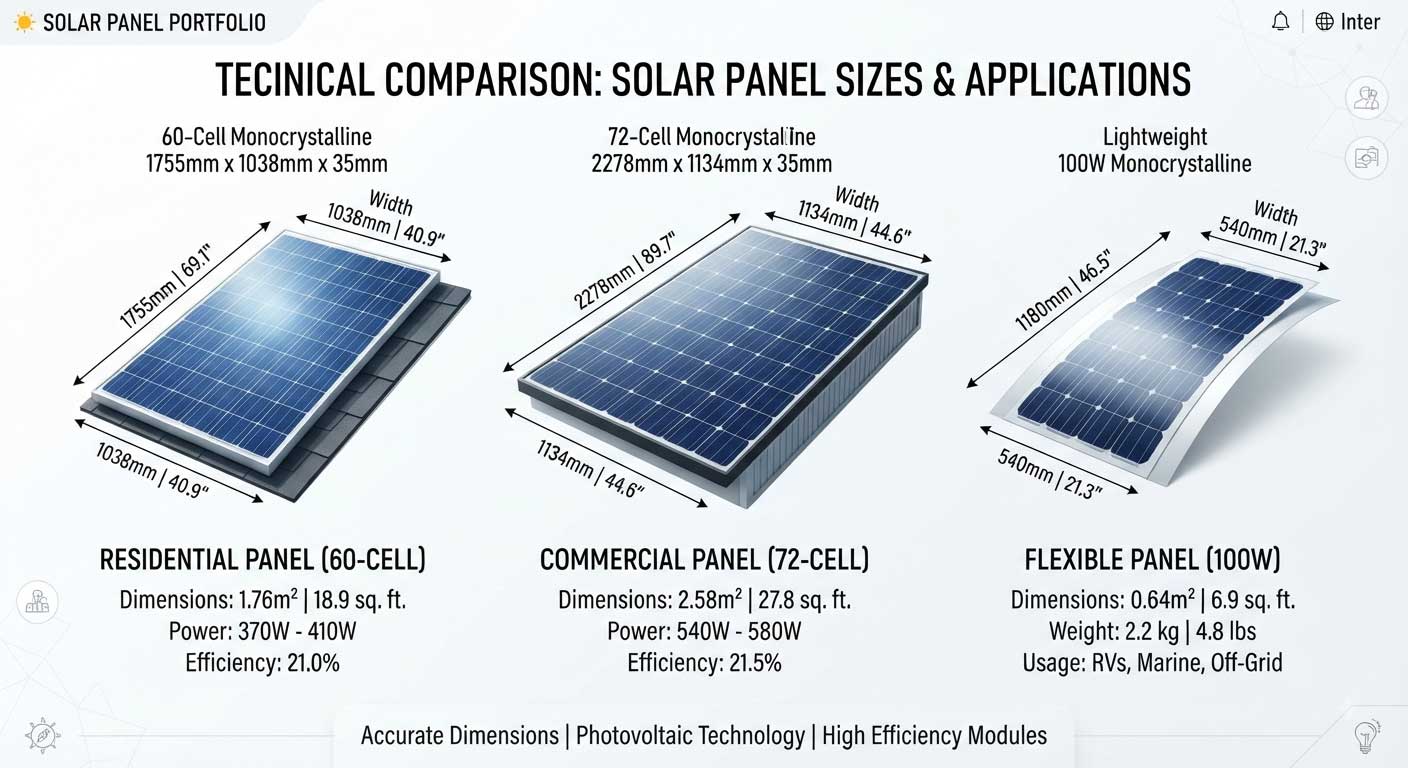
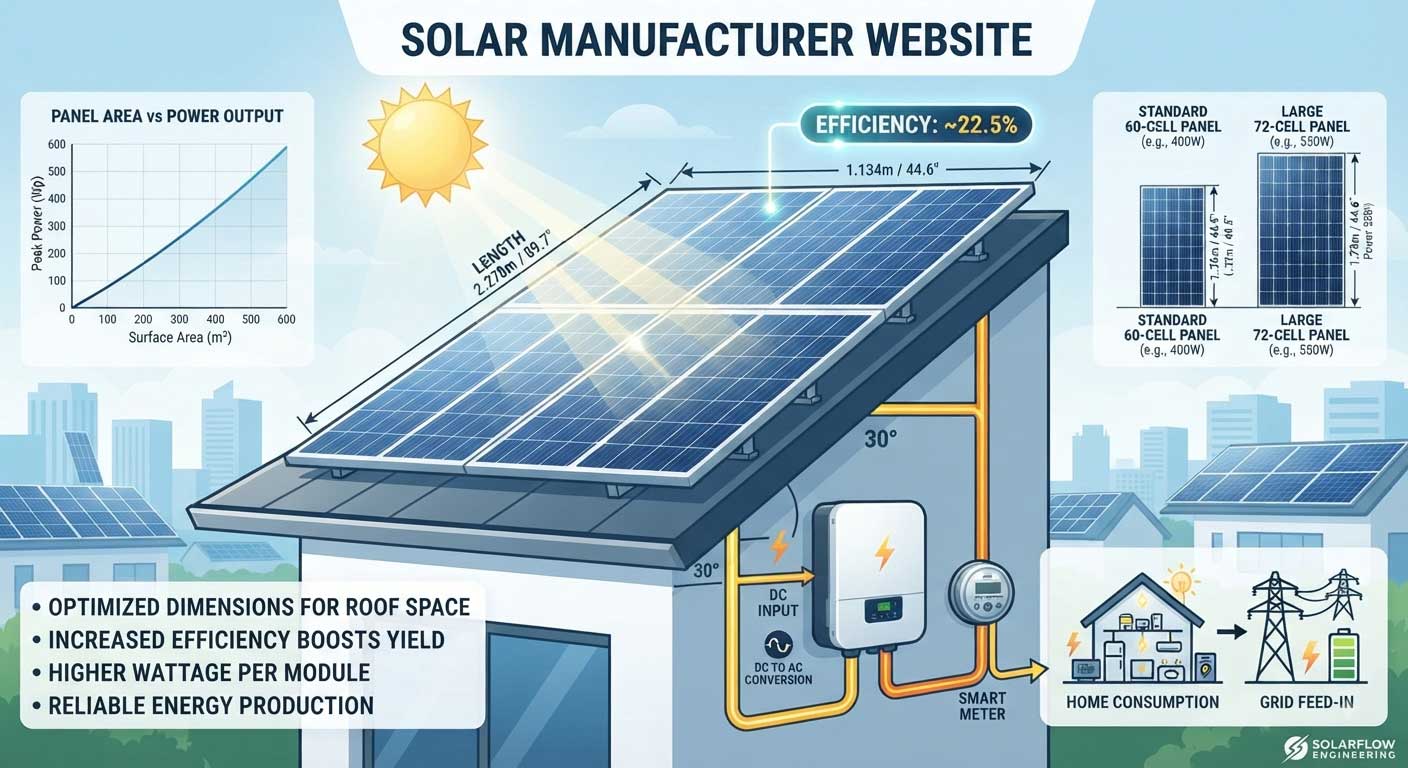
How large is a solar panel? A standard solar panel is typically about 65–72 inches long and 39 inches wide, with residential models commonly producing 300W–450W of power. Actual size depends on cell technology, wattage, and application requirements.
Solar panel size is one of the first questions customers ask before designing a photovoltaic system. However, physical dimensions and energy output are two different things. A larger panel does not always mean better performance. The right choice depends on available installation space, electricity demand, and system design.
At Bright Solar, we have worked with flexible solar panels for RVs, marine applications, portable systems, and customized projects where every centimeter matters. In many real installations, especially on curved roofs or limited surfaces, the question is not simply “how large is the panel?” but “how much energy can this available area produce?”Visit the product page:Flexible Solar Panels
Understanding Solar Panel Dimensions
The term solar panel dimensions usually refers to the length, width, and thickness of a photovoltaic module.
Most traditional residential solar panels currently follow similar size standards:
| Solar Panel Type | Typical Dimensions | Common Power Range |
|---|---|---|
| Residential panel | Around 65 × 39 inches | 300W–400W |
| Larger residential panel | Around 72 × 40 inches | 400W–450W |
| Commercial panels | Around 78 × 40 inches or larger | 450W+ |
| Flexible solar panels | Customized sizes available | Depends on design |
According to the National Renewable Energy Laboratory (NREL), photovoltaic module performance depends on multiple factors including module design, technology type, operating temperature, and installation conditions. Panel size alone does not determine actual energy production.
Source: https://www.nrel.gov/pv/
A common misunderstanding is that increasing physical size automatically increases efficiency. In practice, manufacturers improve output through better solar cells, improved layouts, and advanced materials.
For example, two panels with similar dimensions may have different wattage ratings because one uses higher-efficiency cells.
How Big Are Solar Panels Compared With Real Installation Space?
Residential Solar Panel Size
For a typical home installation, most solar panels require approximately:
- 17–22 square feet per panel
- 10–25 panels for many residential systems
- Around 300–500 square feet for a medium-sized rooftop array
The exact number depends on electricity consumption.
A homeowner asking how many solar panels do I need should first calculate:
- Annual electricity usage
- Average sunlight hours
- Roof orientation
- Panel wattage
- Local weather conditions
The U.S. Department of Energy explains that solar system size depends on electricity consumption, location, roof conditions, and available sunlight rather than panel quantity alone.
Source: https://www.energy.gov/energysaver/solar
How Many Solar Panels Do I Need?
The answer varies from one property to another.
A simple example:
A home uses approximately 900 kWh per month.
A 400W solar panel producing around 1.5 kWh per day may generate:
- 1.5 kWh × 30 days = about 45 kWh/month per panel
Estimated requirement:
900 ÷ 45 = around 20 panels
This is only a basic estimate. Actual production changes because temperature, shading, inverter losses, and installation angle affect the final solar panel output.
During Bright Solar projects, we often see customers overestimate or underestimate their needs because they focus only on panel size. A smaller customized flexible panel system can sometimes perform better when it covers more usable surface area.
Solar Panel Output vs Physical Size
Why Bigger Panels Are Not Always Better
Solar panel output depends on:
- Solar cell efficiency
- Panel wattage rating
- Sunlight availability
- Temperature coefficient
- Installation angle
- System losses
A compact high-efficiency panel may generate more electricity per square meter than a larger low-efficiency model.
This is especially important for:
- RV roofs
- Boats
- Tiny homes
- Portable solar systems
- Industrial equipment
For flexible solar solutions, Bright Solar designs panels around available space rather than forcing customers to adapt their installation area to standard module sizes.
How Many Solar Panels to Power a House?
One of the most common questions after asking how large is a solar panel is: “How many panels are actually needed for my home?”
The answer depends on energy consumption, not house size alone.
A small home with energy-efficient appliances may require fewer panels than a larger home with high electricity usage. The calculation usually considers:
- Monthly electricity consumption (kWh)
- Local sunlight availability
- Solar panel wattage
- Roof direction and shading
- System efficiency losses
A typical modern residential solar panel measures around 65–72 inches long and about 39–40 inches wide, with many current residential modules producing approximately 350W–450W.
For example:
| Home Electricity Usage | Estimated Solar Capacity | Approximate Panel Quantity |
|---|---|---|
| Low usage home | 3kW system | 7–10 panels |
| Average home | 5kW system | 12–15 panels |
| High usage home | 8–10kW system | 20–25 panels |
These numbers are estimates only. A home in Arizona with strong sunlight may need fewer panels than the same home in a cloudy region.
At Bright Solar, we usually start system planning from the energy requirement first, then select panel size. This avoids a common mistake: choosing panels that physically fit but cannot produce enough energy.
Flexible Solar Panel Size: When Standard Dimensions Are Not Enough
Traditional solar panels are designed around fixed dimensions. However, many real-world applications have unusual surfaces.
Examples include:
- RV curved roofs
- Boat decks
- Tiny homes
- Portable power systems
- Industrial equipment
This is where flexible solar panels become useful.
A flexible panel may not match the size of a standard residential module, but it can use space that rigid panels cannot. During several RV solar projects, we found that covering more usable roof area with lightweight flexible modules often produced a better overall energy solution than installing fewer high-wattage rigid panels.
The key measurement is not only:
“How big are solar panels?”
The better question is:
“How much solar panel output can this available area generate?”
Factors That Affect Solar Panel Output
Physical dimensions influence installation, but several other factors determine actual energy production.
1. Solar Cell Efficiency
Higher-efficiency cells generate more electricity from the same surface area.
For limited spaces, such as RV roofs, efficiency becomes more important because there is less room to add extra panels.
2. Temperature Conditions
Solar panels generally produce less power as temperatures rise.
A panel installed on a hot metal roof may perform differently from the same panel installed with better ventilation.
3. Installation Angle and Direction
A correctly positioned panel receives more sunlight throughout the day.
Factors include:
- Roof angle
- Panel orientation
- Seasonal sunlight changes
- Nearby obstacles
4. System Design
Solar output is affected by the entire system:
- Inverter efficiency
- Cable losses
- Charge controller performance
- Battery storage efficiency
A large solar array with poor system design may produce less usable energy than a smaller optimized system.
FAQ About How Large Is a Solar Panel?
How large is a solar panel for a home?
Most residential solar panels are around 65–72 inches long and 39–40 inches wide. Larger high-power modules may have slightly bigger dimensions depending on cell design and wattage.
How many solar panels do I need for my house?
The number depends on electricity usage, sunlight conditions, and panel output. A professional calculation should consider your annual energy consumption instead of only roof size.
How big are solar panels compared with roof space?
A typical residential panel requires about 17–22 square feet of roof area. A complete home system may require several hundred square feet depending on energy demand.
Does a bigger solar panel produce more power?
Not always. A larger panel may produce more watts, but efficiency, cell technology, and sunlight conditions also determine actual output.
What size solar panel is best for an RV?
RV solar panel size depends on available roof space and power requirements. Flexible solar panels are often preferred because they are lightweight and can fit curved surfaces.
How much solar panel output can I expect?
Output depends on panel wattage, sunlight hours, temperature, and installation quality. A 400W panel may generate around 1–2kWh per day in favorable conditions.
Can Bright Solar customize solar panel dimensions?
Yes. Bright Solar provides customized flexible solar panel solutions for applications where standard panel dimensions are not suitable, including portable, marine, and mobile energy systems.
Final Thoughts: How Large Is a Solar Panel?
How large is a solar panel? Standard solar panels are typically around 65–72 inches long and 39–40 inches wide, but the ideal size depends on energy needs, installation space, and application requirements.
Choosing the right solar panel is not simply about finding the biggest module available. The most effective system balances physical dimensions, solar panel output, efficiency, and long-term reliability.
At Bright Solar, we design flexible solar solutions around real installation challenges. Whether the project involves an RV roof, marine application, or custom off-grid system, the goal remains the same: maximize available space and generate dependable solar power.
The prev: How effective are solar panels?The next: How long do solar panels take to install?
Related recommendations
-

how to hook up solar panels?
252Learn how to hook up solar panels safely for home solar systems. Compare series and parallel wiring, inverter connections, voltage limits, and installation basics.
View details -
How Many Solar Panels Will I Need?
123How many solar panels will I need? Learn how to calculate the right number based on your electricity usage, roof space, panel efficiency, and local sunlight with Bright Solar's expert guide.
View details -
how to prepare solar panels?
228Learn how to prepare solar panels before installation with expert tips, inspection steps, tools, and Bright solar guidance for better performance.
View details -
How Much Do Flexible Solar Panels Cost?
277How much do flexible solar panels cost in 2026? Discover real pricing, cost per watt, installation factors, and buying tips from Bright Solar experts.
View details