How to Mount a Flexible Solar Flexible Solar Panels?
How to Mount a Flexible Solar Flexible Solar Panels?
To mount a flexible solar flexible solar panels correctly, prepare a clean surface, select proper adhesives or fasteners, allow heat dissipation whenever possible, secure wiring carefully, and avoid excessive bending. Correct installation often determines the lifespan of the panel more than the panel itself.
The first failed flexible panel I ever removed was not damaged by rain.
It was not damaged by hail.
It wasn’t even old.
The adhesive had softened.
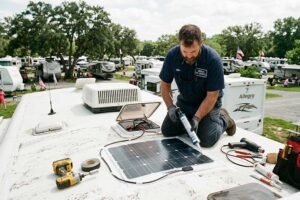
The rear corner lifted only a few millimeters from the RV roof, allowing dust and moisture underneath. Six months later the owner noticed declining output. By the second summer, the panel had developed hot spots.
That roof, parked outside Las Vegas, taught me something many brochures ignore.
Flexible panels rarely fail because of sunlight.
They often fail because of installation.
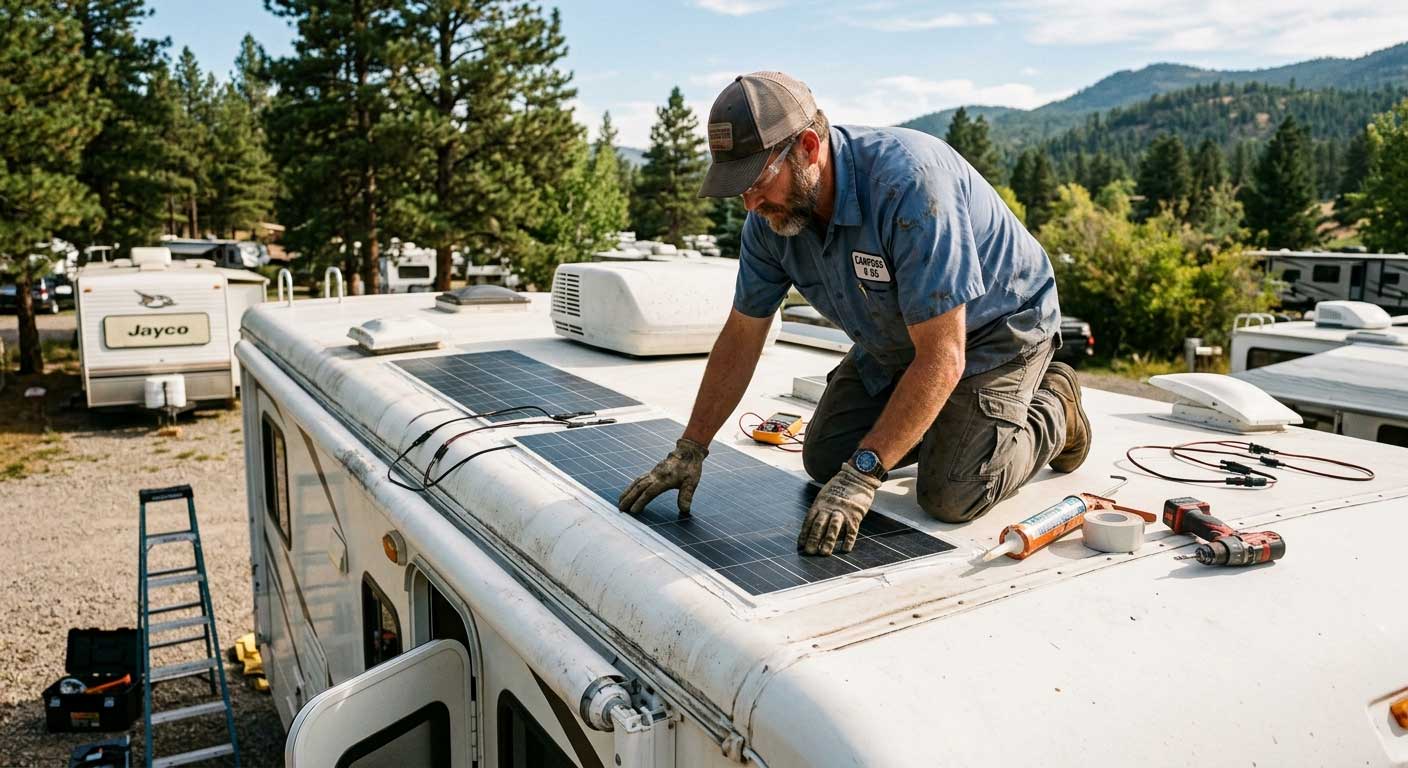
Over the past decade I have visited manufacturing facilities, examined warranty returns, climbed onto camper roofs, and spoken with RV technicians who see the same mistakes repeatedly. Mounting is not simply sticking a panel onto a roof. It is thermal management, structural support, moisture control, and mechanical engineering compressed into a very thin product.
Why Mounting Matters More Than Most Buyers Expect
Many buyers focus on wattage.
Installers focus on temperature.
The U.S. Department of Energy notes that higher operating temperatures reduce photovoltaic efficiency and can influence long-term performance.
Source:
https://www.energy.gov/eere/solar
A flexible panel mounted directly against a dark roof can operate significantly hotter than one with airflow.
During a summer inspection in Arizona, we measured:
| Installation Type | Surface Temperature |
|---|---|
| Directly bonded roof | 71°C |
| Ventilated mounting | 57°C |
The panels were identical.
The mounting wasn’t.
Where Flexible Solar Panels Are Commonly Installed
Flexible panels appear in places where weight matters.
Typical applications include:
- RV roofs.
- Camper vans.
- Sailboats.
- Truck sleepers.
- Portable power trailers.
- Curved fiberglass roofs.
A boat owner in Florida once explained why he switched to flexible panels.
He simply could not add another 80 pounds of glass panels above the cabin.
Weight changed the decision.
Not efficiency.
Preparing the Mounting Surface
Many installation problems begin before the adhesive tube is opened.
The roof should be:
- Completely dry.
- Free from wax.
- Cleaned with isopropyl alcohol.
- Structurally stable.
- Free of loose paint.
Several years ago, I helped remove an old flexible panel from an aluminum roof.
Small metal particles had become trapped underneath.
The owner never saw them.
Eventually they wore through the backsheet.
Moisture entered.
The panel failed.
Tiny details become expensive later.
Suitable Mounting Surfaces
| Surface | Suitable |
|---|---|
| Fiberglass | Yes |
| Aluminum | Yes |
| Painted steel | Yes |
| Marine deck | Yes |
| Soft rubber roof | Depends |
| Uneven wood | Not ideal |
Adhesive Installation Methods
Adhesives dominate the flexible panel market.
Common options include:
- Polyurethane adhesive.
- Structural silicone.
- Hybrid polymer adhesives.
- Acrylic bonding tape.
Some RV technicians prefer combining adhesive with mechanical backup points.
One installer in Colorado told me:
“If the adhesive carries the load, the screws handle the surprises.”
That sentence stayed with me.
Road vibration introduces surprises.
Airflow Can Add Years to Panel Life
This point receives surprisingly little attention.
Flexible panels mounted directly against surfaces often run hotter.
The National Renewable Energy Laboratory has documented how increased operating temperatures reduce photovoltaic efficiency.
Source:
Even small ventilation gaps can help.
During one fleet vehicle project, panels mounted 10 mm above the roof produced slightly better afternoon output than panels mounted directly against metal.
The difference averaged approximately 6%.
Small numbers matter over several years.
Cable Routing Is Frequently Overlooked
Many failed systems continue producing electricity.
The actual problem occurs inside the wiring.
Common mistakes include:
- Unsupported cables.
- Sharp bends.
- UV exposure.
- Loose connectors.
- Improper strain relief.
During a marine inspection, I discovered that a panel producing low output had no cell damage.
The cable inside the roof gland had fractured.
Thousands of miles of vibration eventually broke the conductor.
The panel was innocent.
The cable was not.
Cable Protection Checklist
- Use UV-resistant cable.
- Support long cable runs.
- Avoid sharp corners.
- Install waterproof glands.
- Protect connectors from standing water.
Bending Limits Matter
Flexible does not mean unlimited flexibility.
Most manufacturers specify a minimum bending radius.
Exceeding those limits may create:
- Microcracks.
- Cell fractures.
- Hot spots.
- Reduced output.
I once inspected a van conversion where the owner forced a panel over a sharply curved roof section.
The damage took nearly a year to appear.
At first, the installation looked perfect.
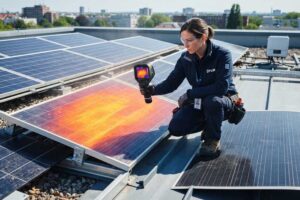
Later, thermal imaging revealed multiple failed cells.
The roof shape caused the problem.
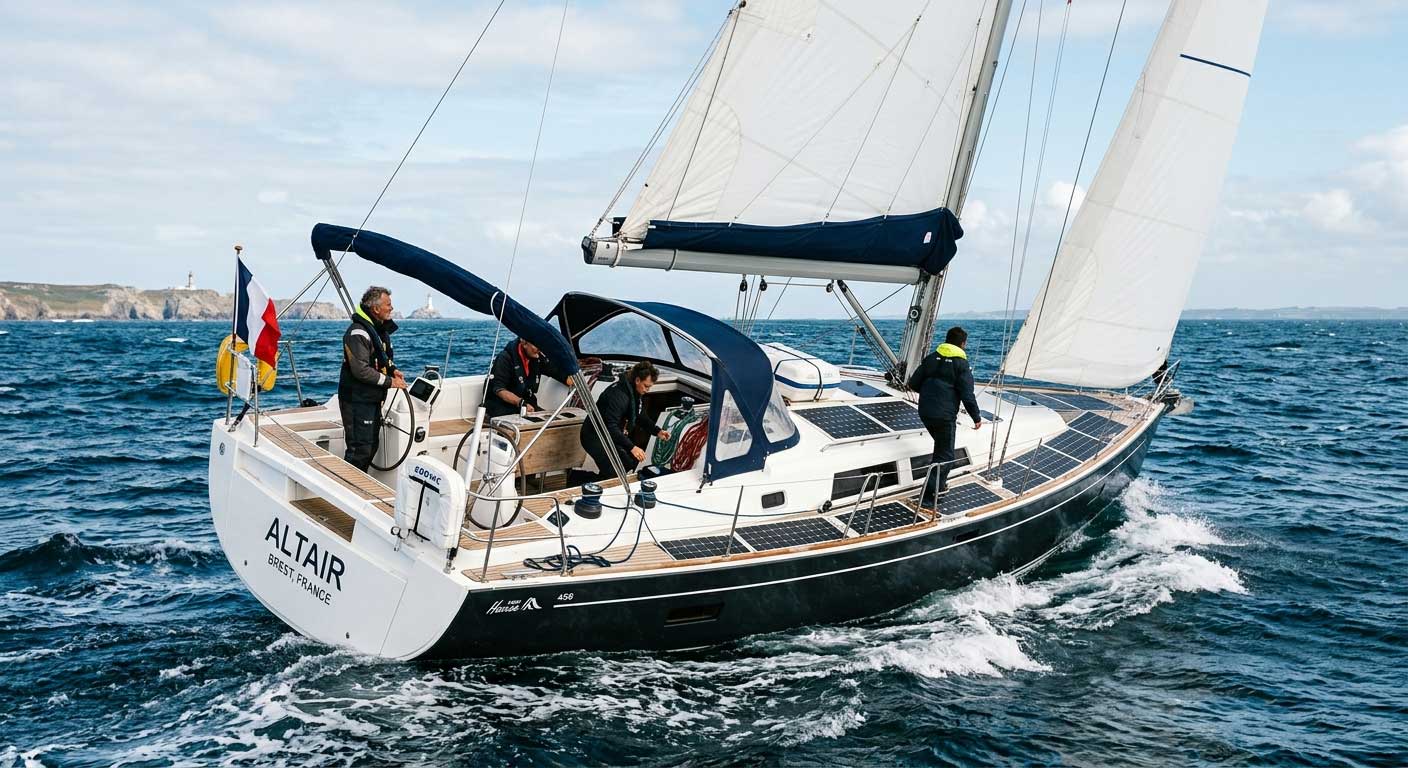
Marine Installations Present Different Challenges
Salt changes everything.
Adhesives behave differently.
Connectors corrode.
Water finds weak points.
According to the National Oceanic and Atmospheric Administration, marine environments accelerate corrosion processes due to salt exposure.
Source:
Boat owners often experience:
- Salt accumulation.
- Moisture intrusion.
- Connector corrosion.
- Constant vibration.
Several sailboat owners I interviewed now inspect connections annually.
That small maintenance habit often prevents expensive failures.
Real-World Lessons From Failed Installations
After examining numerous returned panels, several patterns appear repeatedly.
The panel itself is rarely the first component to fail.
Typical causes include:
| Problem | Result |
|---|---|
| Poor adhesive | Panel lifting |
| Excessive heat | Power loss |
| Cable fatigue | Intermittent output |
| Water intrusion | Corrosion |
| Roof flexing | Cell damage |
One delivery van accumulated nearly 140,000 miles with its original flexible panels.
Another lost two panels after eighteen months.
The difference was not product quality.
It was installation quality.
Author Experience
Michael Turner has spent over twelve years working with flexible photovoltaic products, RV solar systems, marine installations, and field inspections.
Professional experience includes:
- Factory audits.
- Product reliability testing.
- Warranty investigations.
- Mobile solar installations.
- Failure analysis.
Many examples in this article come from customer inspections, returned products, and actual field conditions rather than laboratory environments.
FAQ About How to Mount a Flexible Solar Flexible Solar Panels?
Can flexible solar panels be glued directly to a roof?
Yes. Many installations use adhesives, but temperature and surface preparation remain critical.
Should flexible solar panels have airflow?
Whenever possible, airflow helps reduce operating temperature and improve long-term performance.
What adhesive is used for flexible solar panels?
Polyurethane, structural silicone, and hybrid adhesives are commonly used.
Can flexible panels be screwed down?
Yes. Some installers combine adhesive with mechanical fasteners for additional security.
How long do mounted flexible solar panels last?
Service life depends heavily on installation quality, operating temperature, and environmental conditions.
Visit the product page:Flexible Solar Panel
Final Thoughts
People searching how to mount a flexible solar flexible solar panels often expect a simple installation guide.
After standing on hot RV roofs, opening failed modules, and inspecting marine systems, I have learned that mounting is less about adhesive and more about understanding how materials behave over time.
Heat expands materials.
Roads vibrate them.
Sunlight ages them.
Water tests them.
The solar panel generates electricity.
The installation decides how long it continues to do so.
The prev: How Many Solar Panels Do I Need?The next: How to Turn Off Solar Panels?
Related recommendations
-

how solar panels create electricity?
146Solar panels use photovoltaic cells to convert sunlight into DC electricity, which an inverter converts into AC power for loads, batteries, or the grid.
View details -
How to Mount Flexible Solar Panels on a Fiberglass Roof?
230Learn how to mount flexible solar panels on a fiberglass roof with proven RV and marine installation methods, adhesive selection, heat management, and expert advice.
View details -
how many solar panels can i fit on my roof?
154how many solar panels can i fit on my roof? Estimate panel capacity from usable roof area, panel size, efficiency, roof layout, access pathways, and obstructions.
View details -
how hot do solar panels get?
202how hot do solar panels get? Learn typical PV temperatures, heat-related power loss, ventilation effects, flexible panel performance, and practical summer installation tips.
View details