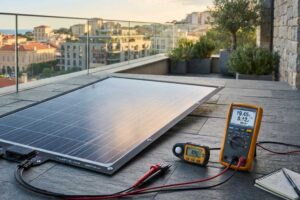
how much do solar panels save?
Core Answer :
how much do solar panels save depends on your electricity usage, local energy prices, system size, and sunlight conditions. Most homeowners can reduce electricity costs significantly, with annual savings often reaching hundreds or thousands of dollars when solar production replaces purchased grid power.
Real Solar Savings Experience from Bright solar Projects
The first question many homeowners ask before installing solar is simple:
“Will these panels actually save me money?”
After reviewing residential and commercial solar projects, I found that the answer is not only about panel wattage. The financial result comes from the relationship between energy consumption, electricity prices, and system design.
I have seen two homes with almost identical rooftop systems produce different savings. One homeowner reduced monthly electricity costs dramatically because local electricity rates were high. Another achieved slower savings because the utility price was much lower.
Solar savings are location-specific.
According to the U.S. Department of Energy, solar panels can reduce electricity expenses by generating power directly at the point of use, decreasing dependence on electricity purchased from the grid.
Source: https://www.energy.gov/eere/solar
how much do solar panels save on electricity bills?
Solar panels save money by replacing electricity you would normally purchase from your utility company.
The basic calculation is:
Solar energy generated × electricity rate = potential savings
For example:
| Situation | Monthly Cost |
|---|---|
| Before solar installation | $220 electricity bill |
| After solar installation | $50 remaining electricity cost |
| Potential monthly savings | Around $170 |
Annual savings:
$170 × 12 = approximately $2,040
Actual savings vary depending on:
- Solar system size
- Roof direction
- Local weather
- Electricity prices
- Utility policies
Factors that affect how much solar panels save
1. Electricity rates in your area
Electricity price is one of the strongest factors influencing solar savings.
A solar system produces the same amount of electricity, but the financial value changes depending on what you would have paid for that electricity.
Example:
A system producing 10,000 kWh per year:
- At $0.12/kWh = $1,200 annual value
- At $0.30/kWh = $3,000 annual value
The same solar production creates different savings.
2. Solar system size and energy consumption
A properly sized system creates better financial performance.
Common residential systems:
| Solar Size | Typical Home Application |
|---|---|
| 3kW | Small energy users |
| 5kW | Average households |
| 8–10kW | Larger homes |
Installing more panels does not always mean better savings.
A system should match:
- Household electricity demand
- Available roof area
- Future energy plans
3. Sunlight availability
Solar panels generate electricity from sunlight, so location matters.
The National Renewable Energy Laboratory (NREL) provides solar resource data showing that solar production varies significantly across geographic regions.
Source: https://www.nrel.gov/gis/solar-resource-maps.html
A home in Arizona and a home in Washington may install the same panels but receive different yearly output.
How much money can solar panels save over 25 years?
Solar should be viewed as a long-term investment.
A quality solar panel system is commonly designed to operate for 25 years or longer.
Example calculation:
Initial system cost:
$20,000
Annual electricity savings:
$2,000
25-year savings:
$50,000
Estimated net benefit:
$30,000 before considering maintenance, financing, incentives, and changing electricity prices.
The final number depends on the project details.Visit the product page: Flexible Solar Panel

A typical homeowner example:
Before solar:
- Electricity bill: $250/month
- Annual electricity expense: $3,000
After solar:
- Remaining grid electricity: $70/month
- Annual expense: $840
Estimated annual savings:
About $2,160
Over several years, these savings can offset the original installation investment.
How incentives increase solar savings
Solar savings are not only created by electricity reduction.
Financial incentives can improve the return on investment.
Possible incentives include:
- Federal tax credits
- State rebates
- Utility programs
- Net metering benefits
The U.S. Internal Revenue Service provides information about the Residential Clean Energy Credit, which may allow eligible homeowners to claim qualified solar installation expenses.
Source: https://www.irs.gov/credits-deductions/residential-clean-energy-credit
What affects your actual solar savings?
From Bright solar project discussions, many customers focus only on the panel price.
However, the biggest savings differences often come from:
Installation quality
Poor installation can reduce long-term energy production.
System monitoring
Tracking production helps identify performance problems early.
Equipment selection
A reliable inverter and quality components influence lifetime output.
Maintenance
Solar panels require little maintenance, but keeping the system clean and inspected improves reliability.
Solar savings are not the same for every homeowner
A common mistake is comparing solar savings using someone else’s project.
Your savings depend on:
| Question | Why It Matters |
|---|---|
| Where do you live? | Determines sunlight availability |
| How much electricity do you use? | Determines system size |
| What is your electricity rate? | Determines financial value |
| Does your utility offer net metering? | Affects excess energy value |
A solar quote without these details cannot accurately predict savings.
Bright solar Expert Insight
After years working with solar products and customers, one pattern is clear:
The best solar investment is not always the cheapest system.
The strongest financial results usually come from balancing:
- Reliable components
- Correct system sizing
- Professional installation
- Long-term energy planning
Solar savings are created every day the system produces electricity.
FAQ: how much do solar panels save?
How much can solar panels save per month?
Savings vary, but many homeowners reduce electricity bills by dozens to hundreds of dollars per month depending on system size and energy rates.
Do solar panels completely eliminate electricity bills?
Not always. Some homeowners still pay grid connection fees or use electricity when solar production is unavailable.
How long does it take to see solar savings?
Savings begin after the system starts producing electricity, but recovering the full investment usually takes several years.
Do solar panels save money in cloudy areas?
Yes. Solar panels still generate electricity in cloudy conditions, although production may be lower.
Are bigger solar systems always better?
No. The best system matches your energy needs, roof conditions, and budget.
How long will solar savings continue?
Most quality solar systems can generate electricity for 25 years or more.
Can batteries increase solar savings?
Yes. Battery storage can help use more solar energy during evenings and reduce reliance on grid electricity.
Final Thoughts from Bright solar
how much do solar panels save depends on more than the number printed on a solar quote.
The real value comes from years of electricity production, reduced utility expenses, and better energy independence.
A well-designed solar system turns sunlight into measurable financial savings over time.
The prev: How much is it to install a solar panel?The next: How Are Solar Panels Produced?
Related recommendations
-

How Long Do Flexible Solar Panels Last?
353How long do flexible solar panels last in real outdoor use? Learn the true lifespan, degradation rates, maintenance tips, and durability facts from Bright Solar.
View details -
How Much Electricity Does a Solar Panel Make?
194How much electricity does a solar panel make? Learn solar panel energy output, wattage factors, daily production estimates, and expert insights from Bright Solar.
View details -
How Many Volts Should a 100 Watt Solar Panel Produce?
302How many volts should a 100 watt solar panel produce? Learn normal voltage ranges, open circuit voltage, operating voltage, and solar testing insights.
View details -
How Does Solar Power Make Electricity?
260How does solar power make electricity? Learn how sunlight becomes usable energy through photovoltaic cells, solar technology, and expert insights from Bright Solar.
View details