Folding Solar Panel Charger: How to Choose and Use a Portable Solar Charger
A folding solar panel charger converts sunlight into electricity for phones, tablets, cameras, and compatible portable power stations. Choose the right output, connectors, and panel size to match your devices and available sunlight.
For campers, RV travelers, boat owners, and outdoor equipment brands, portability is only part of the decision. A panel that folds neatly into a backpack may be convenient, but its real value depends on how much energy it produces, how easily it connects to your equipment, and whether it can withstand repeated outdoor use.
Bright Solar provides flexible solar panel solutions for B2B customers seeking portable and customized solar power products. When evaluating a folding solar panel charger, it is important to distinguish a complete folding charging kit from a flexible solar module designed for integration into a larger product. They can serve related markets, but they are not interchangeable.
What Is a Folding Solar Panel Charger?
A folding solar panel charger is a portable photovoltaic system that uses hinged or foldable sections to capture sunlight and supply electricity to compatible devices or a battery system. Depending on its design, it may include USB outputs, a DC connector, a charge controller, or a connection for a portable power station.
Unlike a conventional rigid solar panel, a folding model is designed to become more compact for transport and storage. Most products use several solar sections joined by flexible hinges or fabric-covered connections. When unfolded, those sections provide a larger collection area; when packed, they take up less room.
There are two common product configurations:
- Direct-device charging panels: Designed to charge compatible USB devices, such as smartphones and small electronics. Some include built-in voltage regulation and multiple output ports.
- Portable power station charging panels: Designed to feed a compatible power station through a specified DC or proprietary connector. The power station then supplies electricity to connected devices.
Some products support both options, but buyers should verify the output specifications rather than assume that every panel can charge every device.
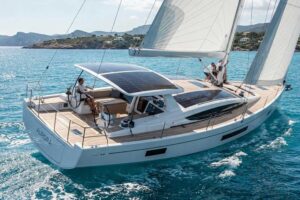
A folding charger also differs from a flexible solar panel. Folding products typically use articulated sections, whereas flexible solar panels bend within their permitted limits and may be mounted on suitable curved surfaces. For an RV roof, boat deck, or integrated OEM application, a lightweight flexible module may be a more appropriate solution than a portable folding kit.
How Much Power Can a Folding Solar Panel Charger Produce?
The rated wattage indicates the panel’s nominal power under specified test conditions. It does not tell you exactly how much electricity the charger will deliver over an afternoon.
The U.S. Department of Energy’s Solar Energy Technologies Office explains photovoltaic electricity generation and the role of sunlight in solar power systems. Standard photovoltaic module ratings are measured under defined conditions, so real-world output changes with irradiance, temperature, orientation, and shading.
Source: U.S. Department of Energy — Solar Photovoltaic Technology Basics.
Typical Wattage and Practical Uses
The following examples are illustrative categories, not specifications for a particular Bright Solar product. Actual charging performance depends on the selected model and operating conditions.
| Rated panel power | Potential applications | Important consideration |
|---|---|---|
| 10–30W | Phones, small USB electronics | Limited energy during cloudy or short winter days |
| 40–80W | Phones, tablets, cameras, small battery packs | Connector compatibility and positioning matter |
| 100–120W | Camping equipment and compatible portable power stations | Requires adequate sunlight and suitable input ratings |
| 160–200W or more | Larger portable power stations and higher energy demands | Heavier equipment and greater setup area may be required |
These wattage bands are practical examples of common product categories, not a guarantee of market-wide availability or charging speed.
Estimate Daily Solar Energy
A useful first estimate is:
Daily energy (Wh) ≈ rated power (W) × equivalent peak sun hours × system derating factor
Suppose a 100W folding solar panel receives four equivalent peak sun hours, and a planning factor of 0.75 is used to account for system losses.
100W × 4 hours × 0.75 = 300Wh per day
This is an estimate, not a guaranteed output. The 0.75 factor is an illustrative planning assumption, not a universal efficiency rating. Actual results may be lower when the panel is shaded, poorly oriented, overheated, or connected to equipment with conversion losses.
For more location-specific estimates, the National Renewable Energy Laboratory provides the PVWatts Calculator.
Source: NREL PVWatts Calculator.
A practical lesson for buyers: choose wattage based on daily energy demand, not simply the largest number printed on the panel. A compact charger may be sufficient for a phone, while a power station running a refrigerator or other substantial load may require a larger array and battery storage.
Key Benefits of a Folding Solar Panel Charger
A folding solar charger solves a practical problem: carrying enough solar collection area to produce useful electricity without permanently installing a panel on a vehicle, boat, or building.
Portable Power Without Permanent Installation
A folding design can be packed into a vehicle trunk, camping storage compartment, or equipment bag. It is particularly useful for people who move between campsites or need to position a panel away from a parked RV.
Portability does come with a trade-off. The panel must be unfolded, positioned, connected, and secured each time it is used. For a fixed daily energy requirement, a permanently mounted system may be more convenient.
Flexible Placement in Changing Sunlight
A portable panel can be moved as the sun changes position. This is helpful at campsites where trees, awnings, vehicles, or nearby hills create partial shade.
One important detail: shade on one section can reduce output more than its covered area suggests, depending on the electrical layout and bypass-diode design. When setting up a charger, keep the full panel exposed to sunlight where possible.
Useful for Off-Grid Electronics
A compatible folding charger can help supply energy to:
- Smartphones and tablets
- GPS units and outdoor communication devices
- Cameras and rechargeable accessories
- Portable power stations
- Selected 12V equipment through an appropriate regulated system
Check the required voltage, current, connector, and charging protocol before connecting a device. A USB port, for example, does not automatically guarantee compatibility with every fast-charging standard.
How to Use a Folding Solar Panel Charger Correctly
A well-designed charger is straightforward to operate, but setup decisions affect the energy available at the end of the day. Use the following process as a practical starting point, then follow the manufacturer’s instructions for your specific model.
Step 1 — Check the Device’s Power Requirements
Read the device or battery manufacturer’s input specifications before connecting anything.
Record these details:
- Input voltage range
- Maximum permitted input current or power
- Required connector and polarity, where applicable
- Supported USB charging protocols
- Whether a dedicated charge controller is required
For a portable power station, check its maximum solar input wattage and voltage range. A panel with a nominal rating below the station’s maximum is not automatically compatible; its open-circuit voltage must also remain within the permitted input range.
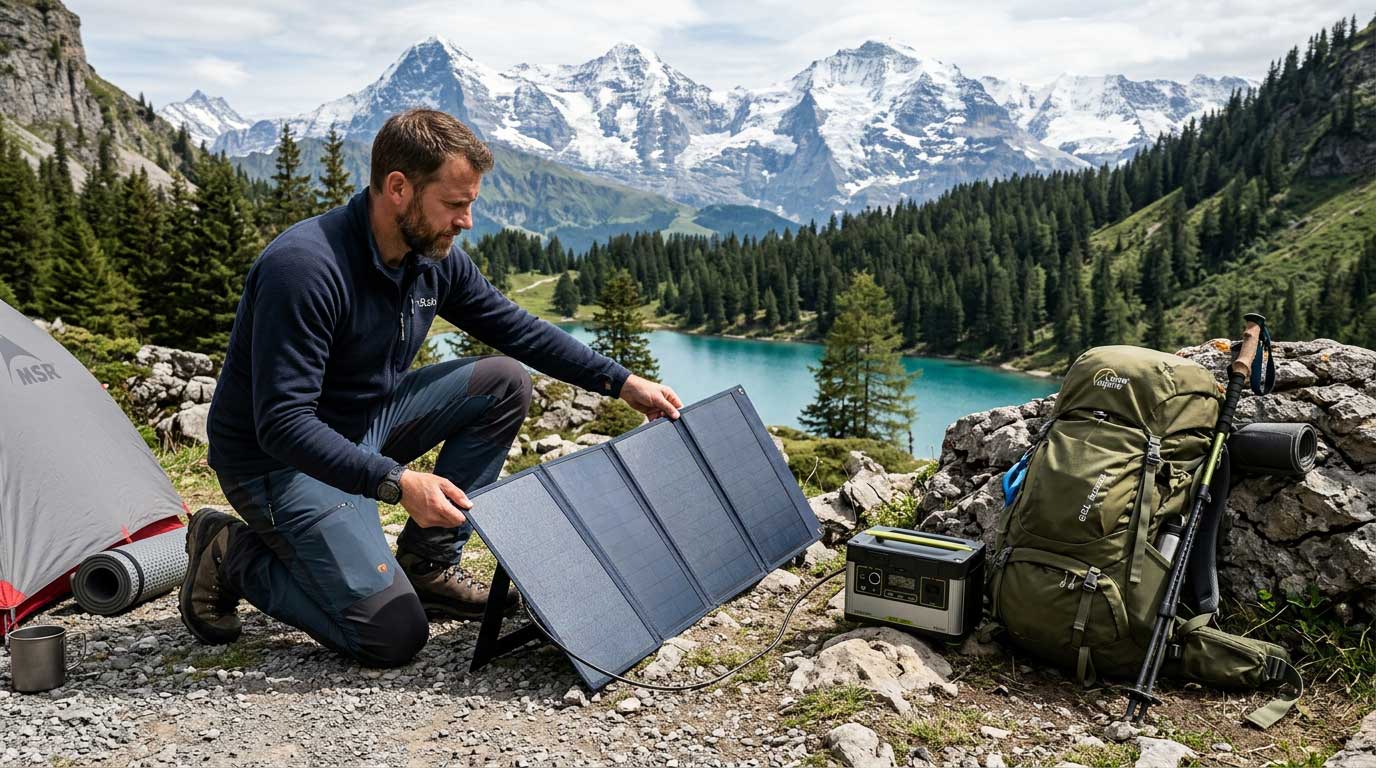
Step 2 — Unfold the Panel on a Stable Surface
Choose a clear, stable area that receives direct sunlight. Extend all panel sections according to the manufacturer’s instructions, and position the support legs or stands so the panel does not collapse in the wind.
Avoid placing the panel where people will walk over it or where vehicle doors, tent lines, or loose equipment could damage the cells and connecting wires.
For boating, use only a setup appropriate for the marine environment. Wind, salt spray, movement, and water exposure introduce risks that an ordinary camping setup may not be designed to handle.
Step 3 — Connect the Correct Charging Input
Connect the panel to the approved device input using the specified cable. If a controller is required, use the correct controller and battery configuration.
Do not assume that a panel’s nominal voltage is its actual operating voltage. Photovoltaic modules have different values for maximum-power voltage (Vmp) and open-circuit voltage (Voc). Both matter when choosing a controller or power station.
If the equipment does not begin charging, disconnect it safely and check the connector, polarity, sunlight exposure, and input limits. Do not improvise an adapter that changes voltage or bypasses protection circuitry.
Step 4 — Reposition the Panel and Monitor Output
Place the panel so that its active surface faces the sun as directly as practical. If the output falls, check for shadows from branches, roof racks, chairs, and other objects before assuming the panel is defective.
A simple field check is to compare the displayed charging power at different panel angles while keeping other conditions similar. This helps identify whether positioning, rather than the equipment itself, is limiting output.
Step 5 — Disconnect and Store It Properly
Follow the manufacturer’s shutdown sequence, particularly when a charge controller or battery is involved. Disconnect the equipment using the prescribed procedure, allow the panel to dry if necessary, and fold it along its intended hinges.
Do not fold a panel while cables are trapped between sections. Store it without sharp objects pressing against the cells, and inspect connectors and seams periodically for wear.
What to Look for When Buying a Folding Solar Panel Charger
The best product is the one that fits the intended load, operating environment, and transport requirements. A higher wattage rating is useful only when the rest of the charging system can accept the output.
| Buying factor | What to check | Why it matters |
|---|---|---|
| Rated power | Nominal output in watts | Helps estimate potential charging capacity |
| Solar cell technology | Cell type and documented module specifications | Affects conversion performance and product design |
| Output connections | USB-A, USB-C, DC, or proprietary connectors | Determines device compatibility |
| Voltage range | Voc, Vmp, and supported input range | Prevents incompatible connections |
| Folded dimensions | Packed size and carrying format | Determines storage convenience |
| Weight | Complete kit weight, including cables where relevant | Matters for hiking and mobile use |
| Weather protection | Documented IP rating and operating limitations | Helps assess suitability for outdoor conditions |
| Construction | Hinge, fabric, cable, and connector quality | Affects handling and long-term reliability |
| Warranty | Written terms and exclusions | Clarifies support for product defects |
Do Not Confuse Water Resistance With Waterproofing
An IP rating applies to the specific product and configuration tested. A rating on one component does not automatically establish that the entire charger, including connectors and accessories, has the same protection.
Read the actual datasheet. Avoid leaving connectors exposed to rain unless the manufacturer explicitly permits it, and never assume a portable charger can be submerged.
Consider Flexible Solar Panels for Integrated Applications
Folding chargers are well suited to temporary power. For a manufacturer developing an RV accessory, marine product, or customized off-grid system, however, a flexible solar panel may offer a different route.
Bright Solar focuses on flexible solar panel solutions, including products intended for RVs, campers, outdoor power, and selected marine applications. Its L Series is designed for applications requiring a lightweight, bendable module. The series has a stated maximum bending capacity of up to 30%; this should not be interpreted as permission to bend every panel to any radius or repeatedly flex it without limits.
For B2B buyers, the appropriate choice depends on the finished product: a ready-to-use portable charger, a folding kit sourced for resale, or a solar module integrated into a custom system. Product dimensions, electrical parameters, connector arrangements, and mounting requirements should be confirmed against the exact model specification.
A Practical Example: Planning Solar Charging for a Weekend Trip
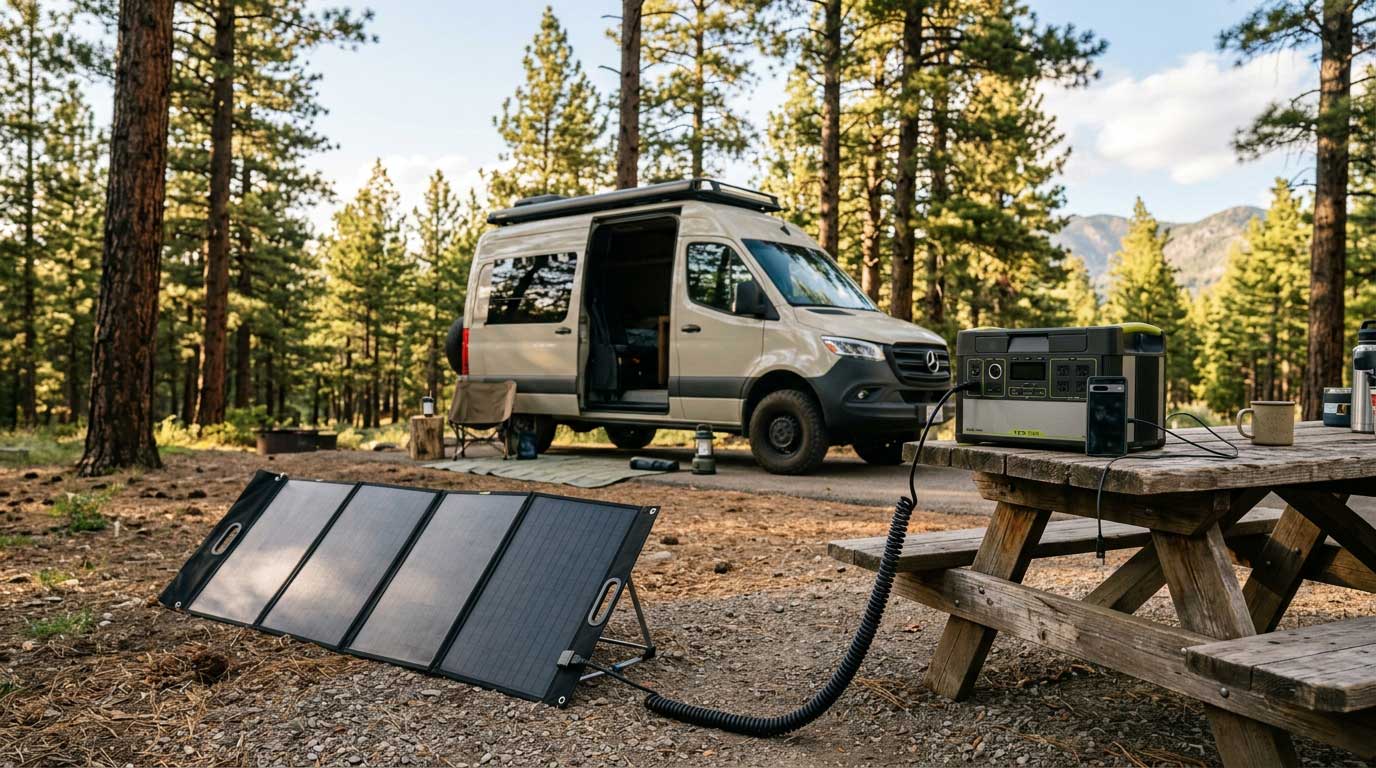
Consider a hypothetical two-night camping trip with a 100W folding solar panel and a compatible portable power station. The traveler wants to charge a phone, a camera battery, and other small electronics.
Instead of assuming the panel will deliver 100W continuously, the traveler estimates daily energy using expected peak sun hours and system losses.
| Planning item | Example value |
|---|---|
| Panel rated power | 100W |
| Equivalent peak sun hours | 4 hours |
| Illustrative system derating factor | 0.75 |
| Estimated daily solar energy | 300Wh |
| Estimated energy over two similar days | 600Wh |
The 600Wh figure assumes comparable sunlight on both days, adequate storage capacity, and no significant additional losses beyond the planning factor. It is not a field-test result or a guarantee.
Now imagine the first morning is clear, but the second is cloudy and the campsite is partially shaded. The second day’s energy production could be substantially lower. The traveler should prioritize essential charging, keep the panel clear of shadows, and avoid relying on solar alone for equipment that must remain powered overnight.
This example illustrates an important distinction: panel wattage describes rated power, while watt-hours describe energy accumulated over time. A charger with a higher rating may collect energy faster under favorable conditions, but battery capacity, conversion losses, and weather determine how useful that energy will be.
For a real project, record the power station’s input reading and the accumulated watt-hours over several days. Those measurements provide a much better basis for choosing equipment than a single midday wattage reading.
Common Mistakes When Using a Folding Solar Panel Charger
A few small oversights can make an otherwise suitable charger perform poorly.
- Choosing wattage without calculating demand. Estimate the energy required by your devices before purchasing a panel.
- Ignoring input voltage limits. Verify Voc and the supported operating range of the receiving equipment.
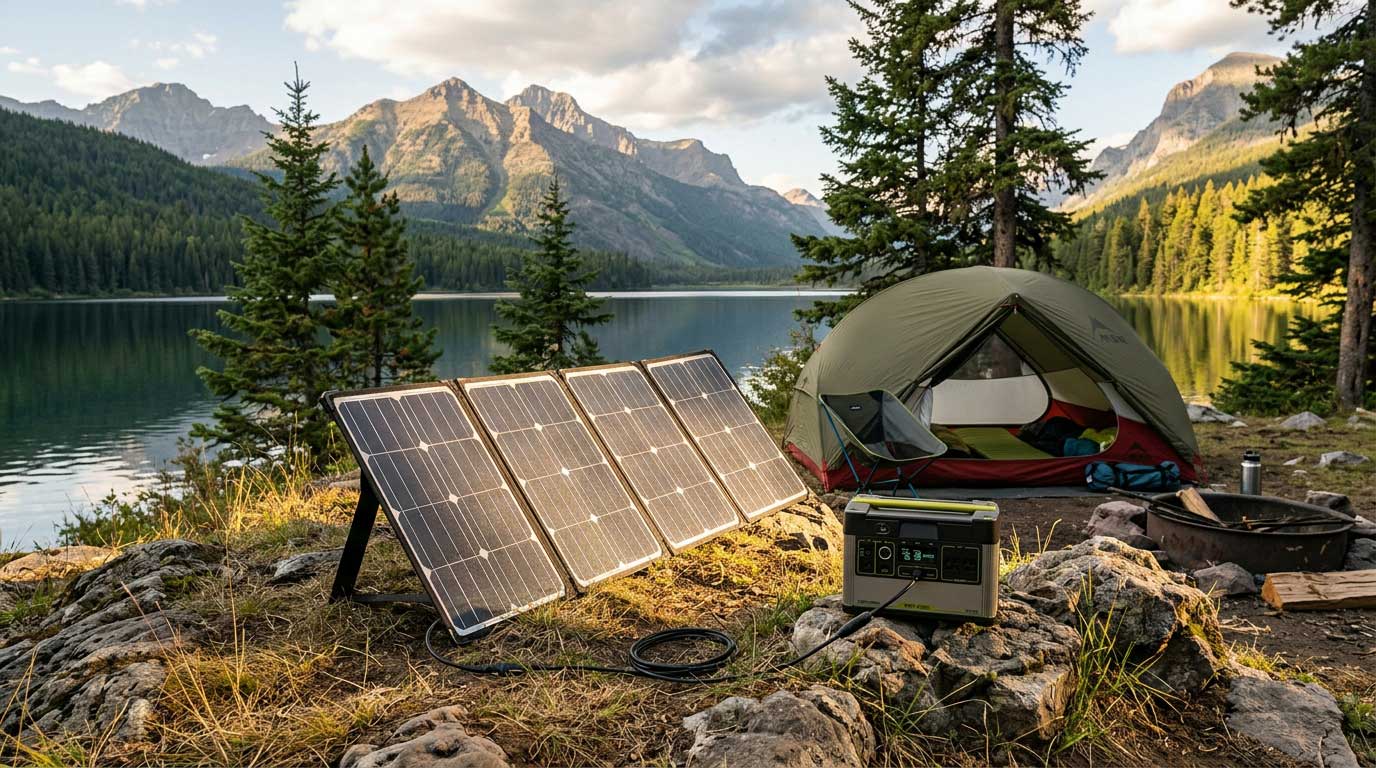
- Leaving part of the panel shaded. Move chairs, bags, branches, or other obstructions whenever possible.
- Expecting rated power throughout the day. Rated power is measured under specified conditions; outdoor irradiance and cell temperature change.
- Using unsuitable adapters. A connector that physically fits may still have the wrong polarity, voltage, or electrical rating.
- Treating every outdoor panel as waterproof. Confirm the protection rating of the complete product and its exposed connections.
- Folding the panel carelessly. Protect the cells, hinges, cables, and connectors during packing and transport.
For manufacturers and distributors, another frequent mistake is comparing products using wattage alone. Folded dimensions, complete-kit weight, output interfaces, and the quality of the supporting electronics can be equally important to the end user.
FAQ About Folding Solar Panel Chargers
Can a folding solar panel charger charge a phone directly?
Yes. A folding solar panel charger with a compatible, regulated USB output can charge supported phones directly. Confirm the output voltage, current, and charging protocol required by the phone. Some panels require a power bank or controller to stabilize charging when sunlight fluctuates.
How long does a folding solar panel charger take to charge a device?
Charging time depends on the panel’s actual output, the device’s battery capacity, conversion losses, and sunlight conditions. A 100W panel does not continuously deliver 100W outdoors. Use the manufacturer’s specifications and measured output to estimate charging time rather than relying on rated wattage alone.
Does a folding solar panel charger work on cloudy days?
Yes, photovoltaic panels can generate electricity under cloudy skies, but output generally decreases as the available sunlight falls. Dense clouds, shade, and poor positioning can reduce production substantially. Keep essential devices charged when conditions are favorable and consider battery storage for overnight use.
Can I use a folding solar panel charger with a portable power station?
Yes, if the panel’s electrical specifications and connector are compatible with the power station’s solar input. Check maximum input voltage, supported power range, connector type, and any required controller. Never exceed the manufacturer’s voltage limit, even if the panel’s rated wattage appears suitable.
Is a folding solar panel charger waterproof?
Not necessarily. Weather resistance varies by product, and the panel, fabric hinges, controller, connectors, and cables may have different protection levels. Check the manufacturer’s documented IP rating and instructions before using the charger in rain or around water.
Is a folding solar panel better than a flexible solar panel?
Neither is universally better. Folding panels suit temporary charging and mobile outdoor use, while flexible panels can suit applications requiring a lightweight module on an appropriately designed curved surface. Choose according to mounting requirements, transport needs, electrical compatibility, and the intended operating environment.
How do I choose the right folding solar panel charger for camping?
Start with the daily energy requirements of your devices, then consider panel wattage, expected sunlight, battery storage, connectors, folded dimensions, weight, and weather protection. For a portable power station, verify the solar input specifications before buying. A realistic energy estimate is more useful than choosing a panel solely by its maximum wattage.
Technical References and Editorial Information
The technical explanations and energy estimates in this article draw on the following public resources:
- U.S. Department of Energy — Solar Photovoltaic Technology Basics: Explains how photovoltaic cells convert sunlight into electricity and how cells are assembled into modules. Read the DOE guide.
- U.S. Department of Energy — Solar Photovoltaic Performance and Efficiency Basics: Explains conversion efficiency and the effects of temperature, reflection, and cell design. Read the DOE performance guide.
- National Renewable Energy Laboratory — PVWatts Calculator: Provides a tool for estimating photovoltaic energy production using location and system inputs. Explore PVWatts.
Editorial note: Prepared for Bright Solar by its solar-content team. The article uses published technical references and explicitly identified illustrative calculations. No personal field-test results or customer case studies are claimed. Product-specific electrical parameters should always be checked against the manufacturer’s current datasheet.
Related recommendations
-

200W Flexible Solar Panels: Lightweight Off-Grid Power for RVs, Boats, and Van Life
204Explore how 200W flexible solar panels provide lightweight, reliable off-grid energy for RVs, boats, vans, and portable solar systems.
View details -
Marine Flexible Solar Panels: Lightweight Solar Power Solutions for Boats and Yachts
286Marine flexible solar panels provide lightweight solar power for boats, yachts, and offshore systems. Explore installation methods, durability, and real marine applications.
View details -
300 W Solar Panel Performance Guide for RV, Battery and Off-Grid Systems
333Discover how a 300 w solar panel performs for RVs, boats, cabins, batteries, and off-grid systems. Learn output, applications, sizing, and real-world performance.
View details -
flexible solar panels for rv (Real Field Engineering Guide from Bright Solar)
139flexible solar panels for rv explained with real installation cases, durability insights, RV roof design tips, and off-grid performance data for travelers.
View details