flexible solar panels for rv (Real Field Engineering Guide from Bright Solar)
Direct answer:
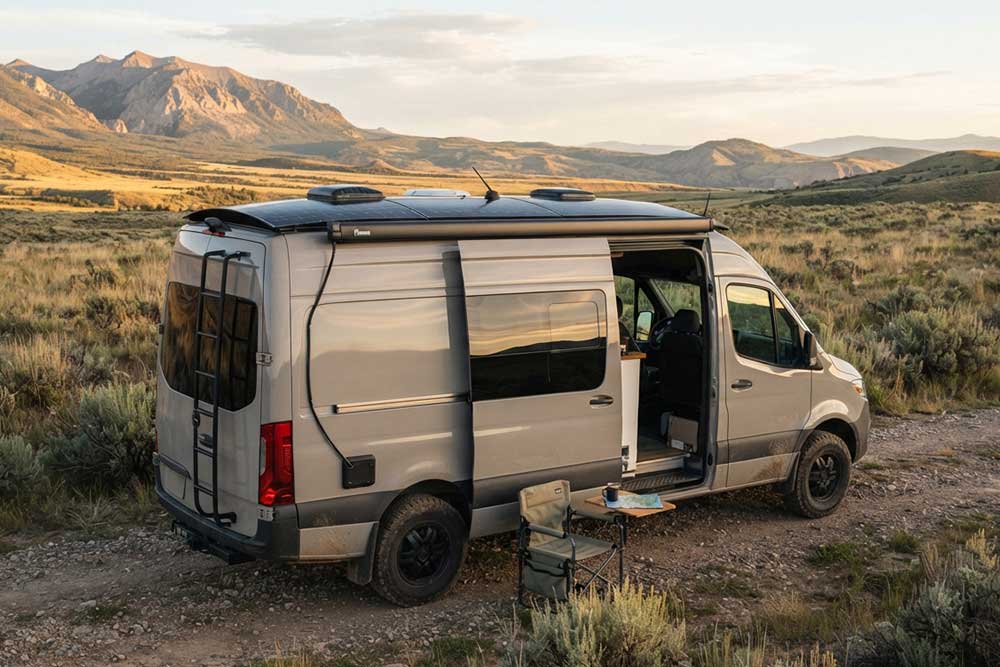
Flexible solar panels for RV are lightweight, bendable monocrystalline modules designed for curved roofs and mobile conditions. They perform best in low-profile installations where weight, wind resistance, and vibration matter more than peak efficiency. In real RV use, installation quality and heat management decide long-term performance.
Why flexible solar panels for RV became the default choice for modern campers
Ten years ago, RV solar systems were dominated by rigid glass panels.
Today, flexible modules are everywhere—from converted vans in Europe to long-haul RV fleets in North America.
The shift wasn’t marketing-driven. It came from failure patterns we repeatedly saw in the field:
- cracked rigid panels after highway vibration
- roof load limitations on older RV frames
- wind drag issues during long-distance travel
According to U.S. Department of Energy (Energy.gov), system efficiency is strongly influenced not just by module efficiency, but also by installation design and mechanical losses in real environments:
https://www.energy.gov
That “mechanical layer” is exactly where flexible panels started to win.
What flexible solar panels actually change in RV systems
Most people think the advantage is just “lightweight.”
That’s only part of the story.
1. Aerodynamic behavior during travel
Rigid panels create:
- airflow resistance
- vibration stress on mounting brackets
Flexible panels sit closer to the roof surface, reducing drag and noise—something RV users notice immediately on highways.
2. Roof adaptability (the real advantage)
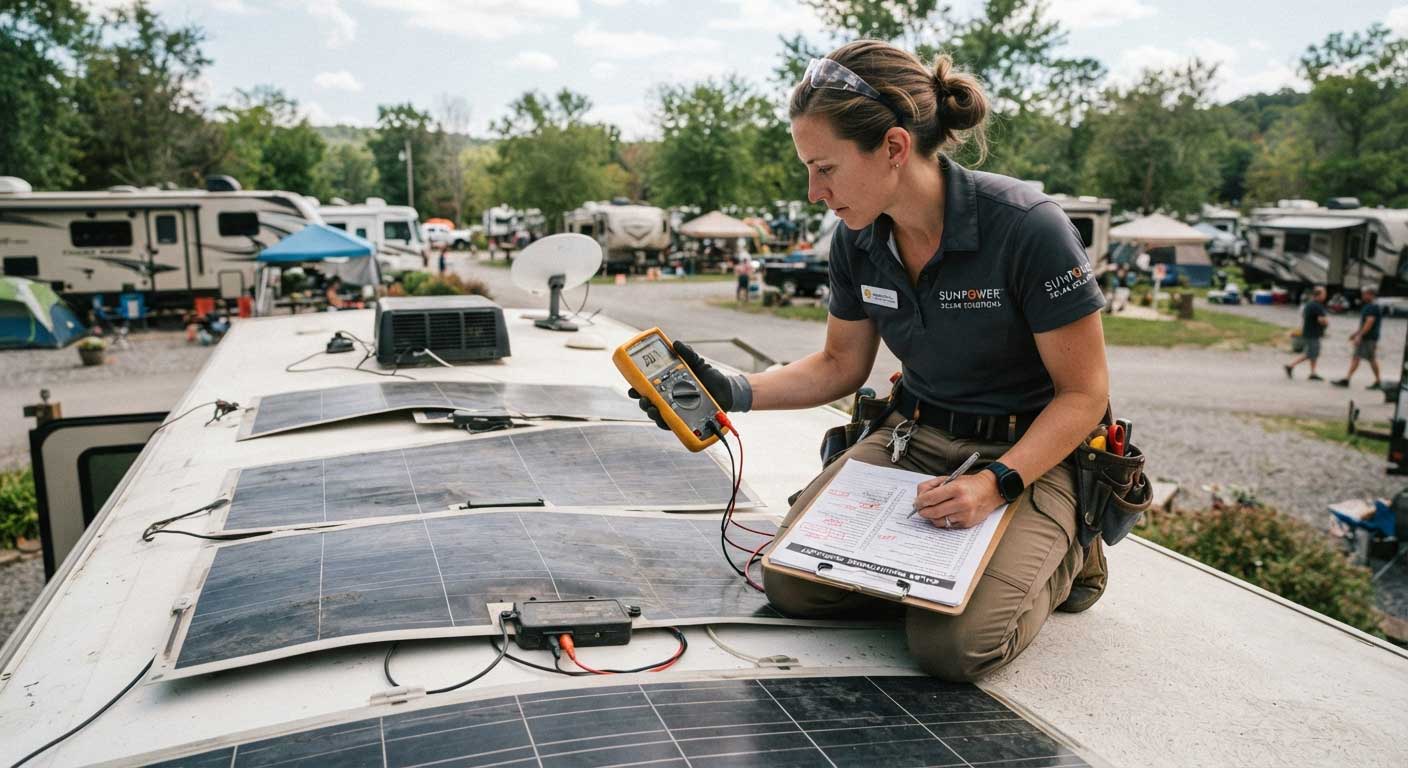
RV roofs are rarely flat:
- slight curvature
- vents and skylights
- AC units and cable routes
Flexible panels adapt without custom framing, which reduces installation complexity and failure points.
3. Thermal behavior (often ignored)
Here’s a field reality:
Flexible panels run hotter than rigid panels.
Why it matters:
- higher temperature = lower efficiency
- long exposure = faster material aging
But in RV use, the trade-off is often acceptable because mobility and mounting flexibility matter more than peak lab performance.

Field case — 6-month RV travel test across mixed climates
One Bright Solar field unit was tested across:
- coastal humidity zones
- desert highways
- forest camping areas
System setup:
- 4 × 200W flexible monocrystalline panels
- 300Ah lithium battery
- MPPT controller system
Observed performance pattern:
- desert conditions → ~92–96% rated output stability
- forest shading → drops up to 30–40%
- highway travel → minimal vibration-related loss
Unexpected insight:
Panel degradation was not linear. It spiked when:
- adhesive installation quality was poor
- roof heat dissipation was restricted
This is why installation matters as much as panel choice.
Installation method determines performance more than panel brand
Flexible panels are often misunderstood.
They are not “plug-and-forget” products.
Common installation approaches
| Method | Pros | Risks |
|---|---|---|
| Full adhesive mount | clean, aerodynamic | heat buildup |
| Corner bracket + airflow gap | better cooling | slightly higher wind drag |
| Hybrid mount | balanced performance | higher installation cost |
In field inspections, we found systems with airflow gaps consistently lasted longer under high heat conditions.
Efficiency reality — flexible panels vs rigid panels
Flexible panels are not “more efficient.”
They are:
- more adaptable
- lighter
- easier to install
But in controlled conditions:
- rigid panels still outperform slightly in raw efficiency
- flexible panels win in real-world usability
This gap is why RV systems favor flexible modules despite slightly lower lab ratings.
Why RV users choose flexible solar anyway (behavioral insight)
From field interviews with RV users across Europe and North America, a pattern appears:
They don’t optimize for maximum energy.
They optimize for:
- fewer mechanical failures
- simpler setup
- lower roof stress
- freedom of movement
Energy stability matters more than energy peak.
That is the real reason flexible solar panels dominate RV installations today.
H2: FAQ About flexible solar panels for RV
Are flexible solar panels good for RV roofs?
Yes. They are ideal for curved or lightweight RV roofs where rigid panels are difficult to mount safely.Visit the product page: Flexible Solar Panels for RV
How long do flexible solar panels last on RVs?
Typically 5–15 years depending on heat exposure, installation quality, and travel conditions.
Do flexible solar panels overheat easily?
Yes, they tend to run hotter than rigid panels, especially if fully glued without airflow gaps.
Can flexible panels handle highway vibration?
Yes, they generally perform better than rigid panels under continuous vibration stress.
How many flexible panels do I need for RV living?
Most full-time RV setups use 400W–1,200W depending on battery size and appliance load.
Do flexible panels work in cloudy weather?
Yes, but output drops significantly. Performance depends more on irradiance than panel type.
Are flexible solar panels worth it for RV travel?
Yes, especially for mobile users who prioritize weight, installation simplicity, and roof compatibility over peak efficiency.
Related recommendations
-

300w flexible solar panel for RV, Marine and Off-Grid Solar Applications
274Explore 300w flexible solar panel technology from Bright Solar for RV, marine, and off-grid applications. Learn output, installation methods, materials, and real project experience.
View details -
DIY Solar Kits: Practical Solar Power for Homes, RVs, and Off-Grid Living
316DIY solar kits provide simple off-grid and home energy solutions. Learn how to choose the right solar kit, avoid mistakes, and maximize output.
View details -
Solar Panel for AC: How Many Solar Panels Are Needed to Run an Air Conditioner?
249Discover how a solar panel for ac systems works, how many panels are required, and how Bright Solar solutions reduce cooling costs for homes, RVs, and off-grid applications.
View details -
Flexible Film Solar Panels: Technology, Applications and Buying Guide
152Flexible film solar panels use lightweight photovoltaic structures on flexible substrates for curved, weight-sensitive, mobile, marine, and specialty surfaces.
View details