best solar panels for rv (Real Off-Grid Field Guide from Bright Solar)
Direct answer :
The best solar panels for RV are high-efficiency monocrystalline or flexible panels rated 200W–400W per module, optimized for curved roofs and partial shading. In real RV use, durability, vibration resistance, and charging stability matter more than peak lab efficiency, especially for off-grid camping and long-distance travel.
What “best solar panels for RV” really means in practice
On paper, RV solar looks simple: pick watts, mount panels, connect battery.
In reality, RV environments are unstable systems—movement, shading from trees, parking angles, and weather shifts all constantly change input conditions.
At Bright Solar, we’ve seen systems that look “perfect” on specification sheets underperform badly on highways across Australia and North America because:
- partial shading from roof racks
- inconsistent tilt during parking
- heat buildup under stationary conditions
According to the U.S. National Renewable Energy Laboratory (NREL), PV output can drop significantly under partial shading conditions, sometimes exceeding 20–40% loss depending on module layout and bypass diode behavior.
Source: https://www.nrel.gov
That’s why RV solar design is less about “best panel” and more about “best behavior under chaos.”
RV solar reality — why lab efficiency numbers don’t tell the story
Most buyers compare:
- 22% vs 24% efficiency
- 300W vs 400W panels
But in RV use, those numbers flatten out fast.
What actually matters in RV environments
We repeatedly prioritize:
- vibration resistance (road stress)
- flexible mounting compatibility
- low-light performance
- heat tolerance
- partial shading resilience
A panel that performs slightly lower in lab conditions but holds output under tree shade often wins in real camping scenarios.
Field observation — RV solar behavior on long-distance travel routes
During field testing with RV fleets in coastal Europe and desert regions of the U.S., we observed something consistent:
- stationary RV camping → stable solar curve
- highway travel → intermittent shading spikes
- forest camping → up to 35% variability in daily output
The system is not “sun-driven” anymore—it becomes movement-driven energy harvesting.
That changes everything about panel selection.
Choosing the best solar panels for RV (engineering logic, not marketing)
1. Monocrystalline panels (high stability baseline)
Most RV systems rely on monocrystalline because:
- higher efficiency per area
- better low-light response
- stable long-term degradation curve
But rigid panels require flat mounting surfaces.
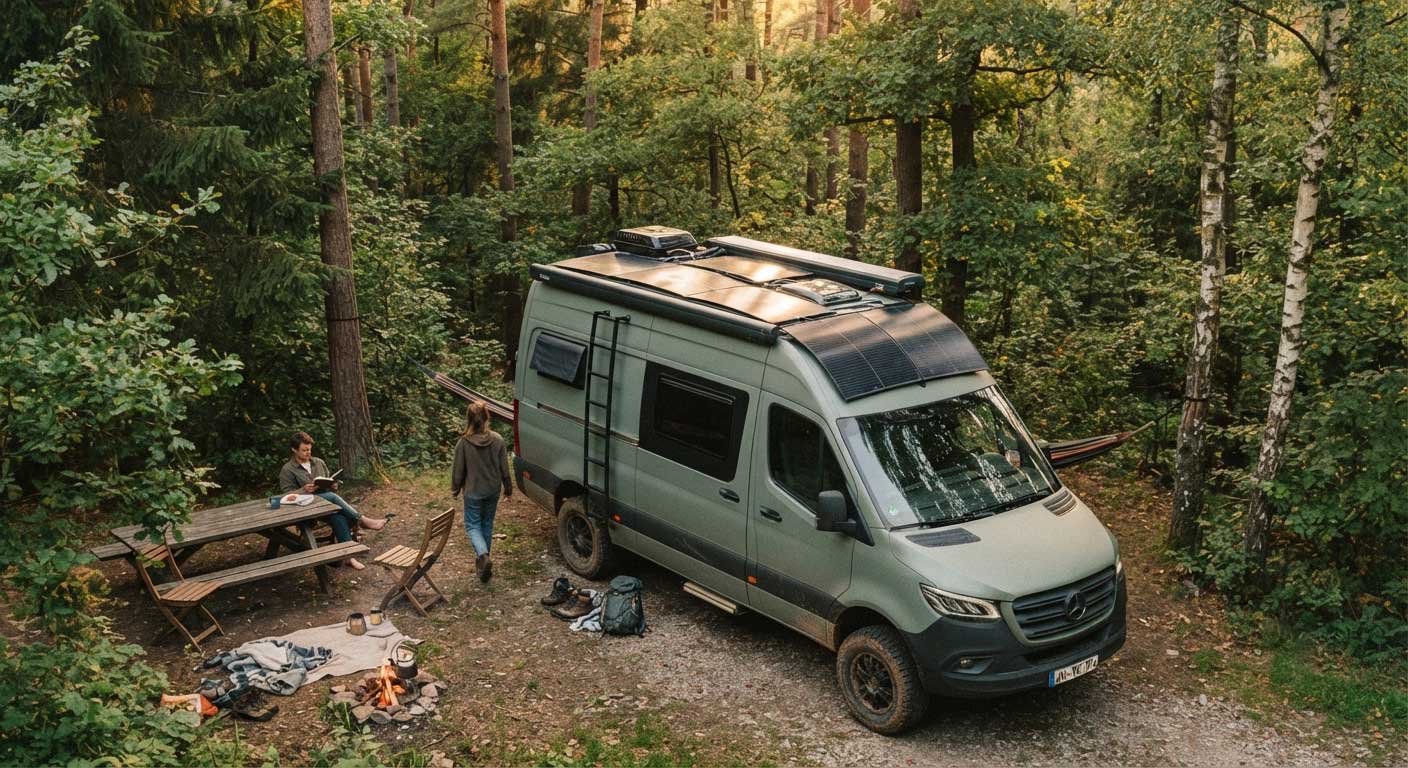
2. Flexible solar panels (RV-specific advantage)
Flexible panels are increasingly used in modern RV builds.
Key advantages:
- conform to curved roofs
- lower wind resistance
- lighter weight (critical for fuel efficiency)
Trade-off:
- slightly higher degradation rate over time
- heat dissipation limitations
Still, for mobile systems, flexibility often outweighs absolute efficiency.
3. Power rating reality (200W–400W sweet spot)
In real RV deployments:
- 200W–300W → weekend camping
- 300W–600W → extended off-grid travel
- 600W+ → full-time RV living systems
But more watts ≠ better system if battery storage is weak.
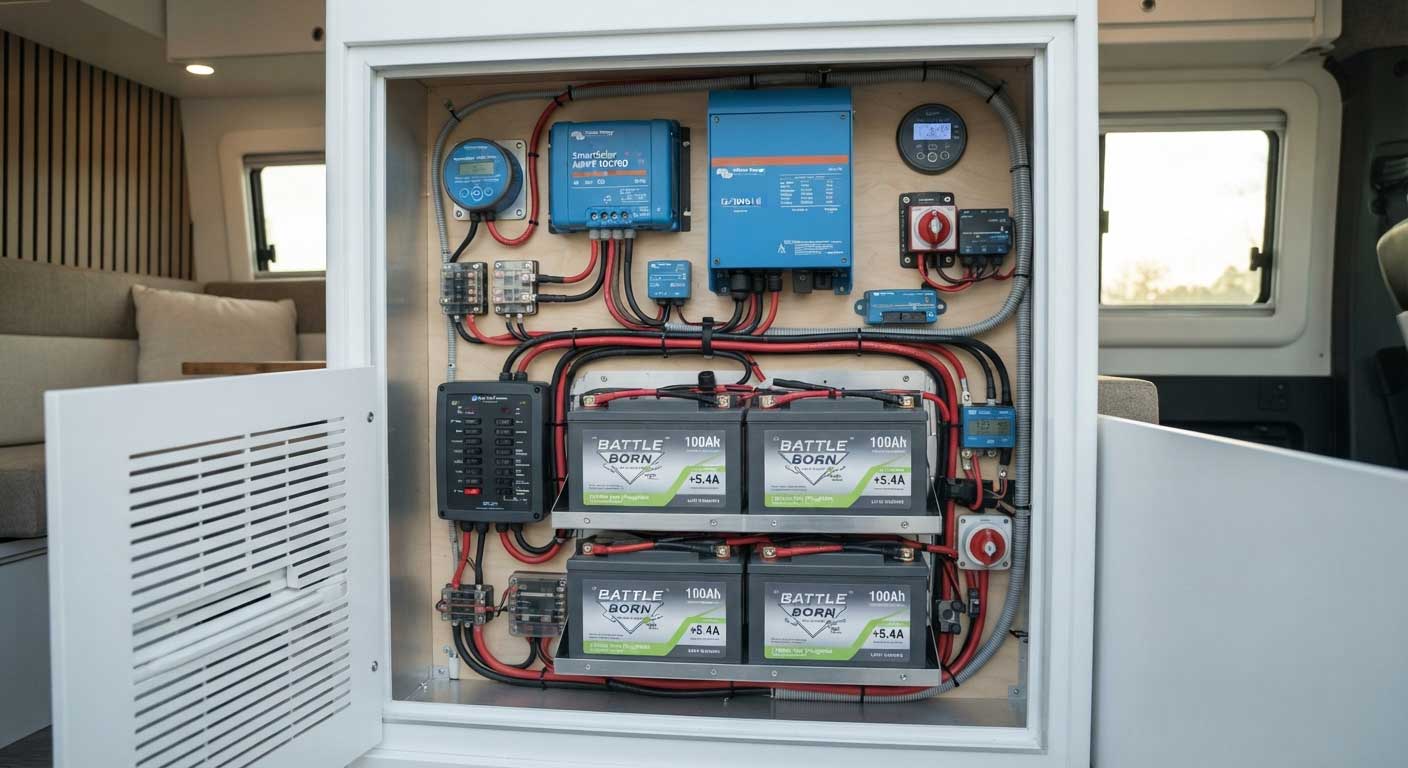
Real case study — 4-week RV desert + forest hybrid trip
A Bright Solar field test RV system in mixed terrain conditions:
System setup:
- 2 × 350W flexible monocrystalline panels
- 200Ah lithium battery bank
- 1,500W inverter
Observations:
- desert zones → peak efficiency stable (~90–95% rated output)
- forest zones → output dropped to ~60–70% due to shading
- parking angle variation → ±12% daily fluctuation
Key insight:
Energy consistency mattered more than peak output.
Users did not feel “low efficiency”—they felt unstable power supply.
That distinction defines RV solar quality.
Common RV solar mistakes (seen in field installations)
Mistake 1 — oversizing panels, undersizing battery
System imbalance leads to:
- wasted solar generation
- frequent power dropouts
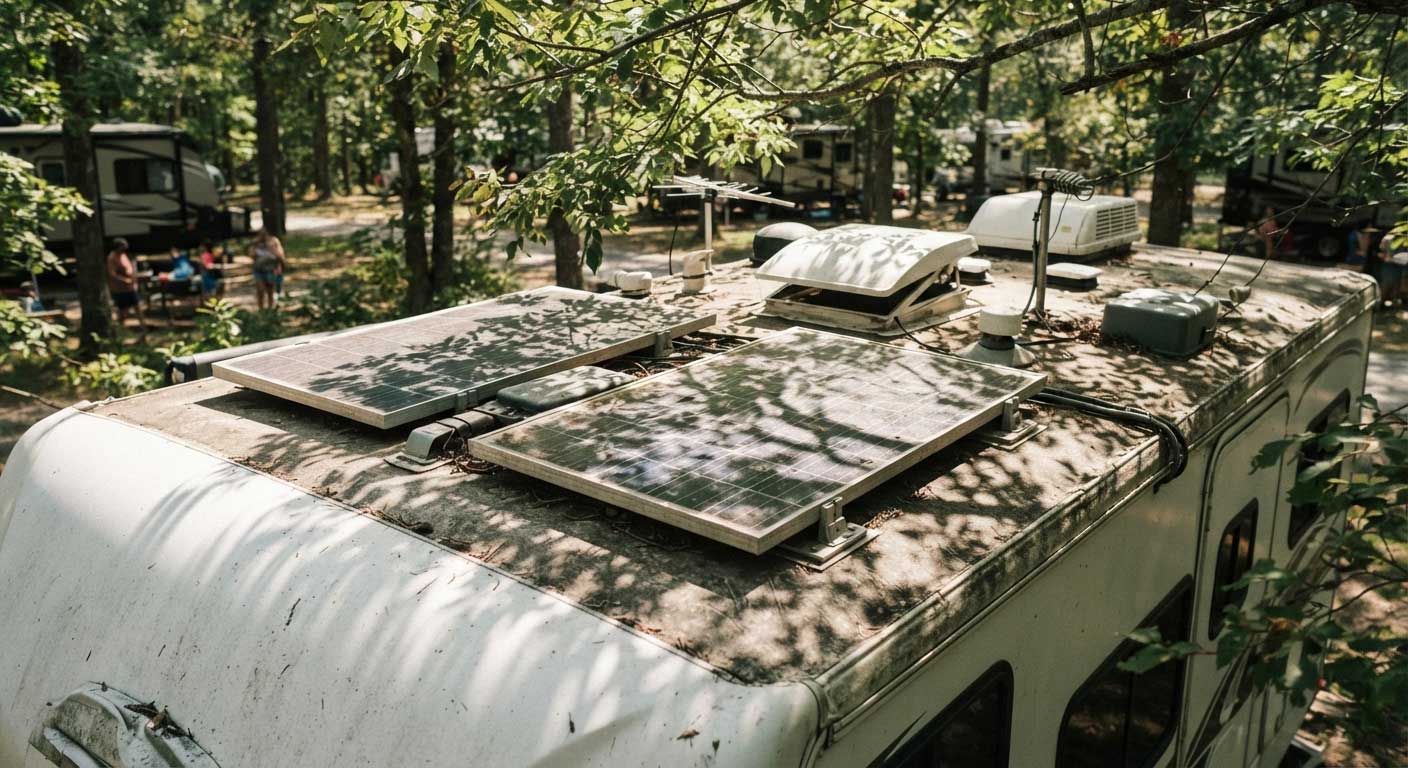
Mistake 2 — ignoring shading from roof accessories
Even small objects:
- vents
- AC units
- luggage racks
can reduce output disproportionately.
Mistake 3 — rigid panels on vibrating roofs
Long-term vibration causes:
- micro-cracks
- reduced lifespan
- output degradation over time
Engineering insight from Bright Solar field work
After multiple RV deployments across different climates, one pattern is consistent:
RV solar success is not determined by panel wattage, but by system tolerance to inconsistency.
That includes:
- shading variability
- motion instability
- temperature swings
- load unpredictability
The “best solar panels for RV” are therefore not the highest-rated ones—but the ones that fail least gracefully under real-world conditions.

FAQ — best solar panels for rv (Practical Answers from Field Use)
Below are the most common questions we get from RV owners, travelers, and off-grid users during real system design and post-installation checks.
No theory-only answers here—these come from actual RV deployments and troubleshooting cases.
What are the best solar panels for RV in real use?
The best solar panels for RV are monocrystalline or high-grade flexible panels (200W–400W each) designed for vibration resistance, partial shading tolerance, and low-light performance. In practice, durability and stable output matter more than peak efficiency ratings.
How many watts of solar do I need for an RV?
It depends on your usage pattern:
- Light camping (weekends): 200W–300W
- Medium off-grid travel: 400W–800W
- Full-time RV living: 800W–1,200W+
Real field data shows RV users often underestimate consumption from:
- fridge cycles
- water pumps
- laptops and routers
- air circulation systems
We’ve seen systems fail not from lack of panels—but from underestimated nighttime load.
Are flexible solar panels better for RV roofs?
Flexible panels are often better for RV roofs because they:
- conform to curved surfaces
- reduce wind resistance while driving
- reduce mounting weight
However, they:
- run hotter under direct sun
- may degrade slightly faster over long-term exposure
In field use, they are preferred for mobile RVs, while rigid panels are better for stationary or hybrid setups.Visit the product page: Flexible Solar Panel
Do RV solar panels work on cloudy days?
Yes, but output drops significantly.
Based on irradiance behavior data referenced by the U.S. National Renewable Energy Laboratory (NREL), PV systems can experience 30–80% reduction in output depending on cloud density and duration.
Source: https://www.nrel.gov
In RV systems, this means:
- lights still work
- electronics still charge slowly
- heavy loads (like heating or AC) are usually not supported
Battery storage becomes critical during these periods.
Is 200W solar enough for an RV?
200W is enough only for:
- weekend trips
- minimal device usage
- light LED lighting and phone/laptop charging
In real camping conditions, 200W systems often struggle when:
- fridge runs continuously
- multiple cloudy days occur
- travel stops in shaded forests
It is a starting point, not a full independence solution.
What is better: MPPT or PWM controller for RV solar?
MPPT (Maximum Power Point Tracking) is strongly recommended.
Field comparison shows:
- MPPT: up to 20–30% higher energy harvest in variable conditions
- PWM: cheaper but less efficient in changing sunlight environments
Since RV conditions constantly change (shade, movement, tilt), MPPT consistently performs better.
How long do RV solar panels last?
Typical lifespan:
- Monocrystalline rigid panels: 20–25 years
- Flexible panels: 5–15 years (depending on heat exposure and installation quality)
In RV environments, lifespan is often reduced by:
- constant vibration
- thermal cycling (hot sun → cold nights)
- roof curvature stress
Proper installation can extend lifespan significantly.
Final field insight — what actually defines “best RV solar”
After multiple real-world RV system evaluations across different climates, one conclusion stays consistent:
The best solar panels for RV are not the most powerful ones—they are the most reliable under unpredictable travel conditions.
That means:
- stable output under shade
- resistance to vibration and heat
- compatibility with storage systems
- predictable long-term behavior
In RV life, consistency is worth more than peak performance.
Related recommendations
-

Solar Energy for Mobile Homes: What Homeowners Need to Know Before Investing
200Discover how solar energy for mobile homes reduces electricity bills, improves energy independence, and delivers long-term savings. Learn system sizing, costs, installation tips, and real-world examples.
View details -
200 Watt Flexible Solar Panels: Lightweight Power Solution for RV, Marine and Off-Grid Applications
162200 watt flexible solar panels deliver lightweight and powerful solar energy for RVs, boats, camping, and off-grid systems. Explore Bright Solar solutions today.
View details -
Car Roof Solar Panel: How It Works and What to Know
306Explore car roof solar panel options for EVs and conventional vehicles. Learn sizing, energy output, flexible PV, installation, shading, safety, and real-world limits.
View details -
Solar Panel Voltage vs Current Explained: Understanding Volts, Amps, and Power
302Understand solar panel voltage vs current explained with clear examples of volts, amps, watts, series and parallel wiring to design efficient solar systems.
View details