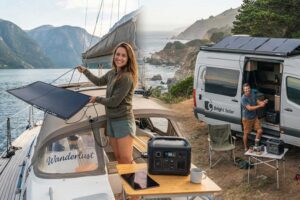
solar panel for travel trailer (Real Off-Grid Engineering Guide from Bright Solar)
Direct answer :
A solar panel for travel trailer is a rooftop or portable photovoltaic system designed to power lighting, appliances, and battery charging during off-grid travel. In real use, 400W–1200W systems with lithium storage deliver stable performance, but efficiency depends more on usage habits and shading than panel wattage alone.
What a solar panel for travel trailer really does in real camping conditions
On paper, it looks simple: mount panels, charge battery, run appliances.
On the road, it behaves differently.
Travel trailers are constantly exposed to:
- changing parking angles
- partial shading from trees or buildings
- vibration during transport
- uneven energy consumption cycles
At Bright Solar, field installations across North America and Australia consistently show that system performance is not determined by panel rating alone—but by how the trailer is actually used day to day.
According to the U.S. National Renewable Energy Laboratory (NREL), real-world photovoltaic output can vary significantly due to shading and orientation losses, sometimes exceeding 20–40% efficiency reduction in partial shading environments.
Source: https://www.nrel.gov
That variability is exactly what travel trailer systems must survive.
How travel trailer solar systems actually behave in real environments
1. Stationary camping vs highway travel
A travel trailer solar system does not operate in a fixed environment.
We typically see three modes:
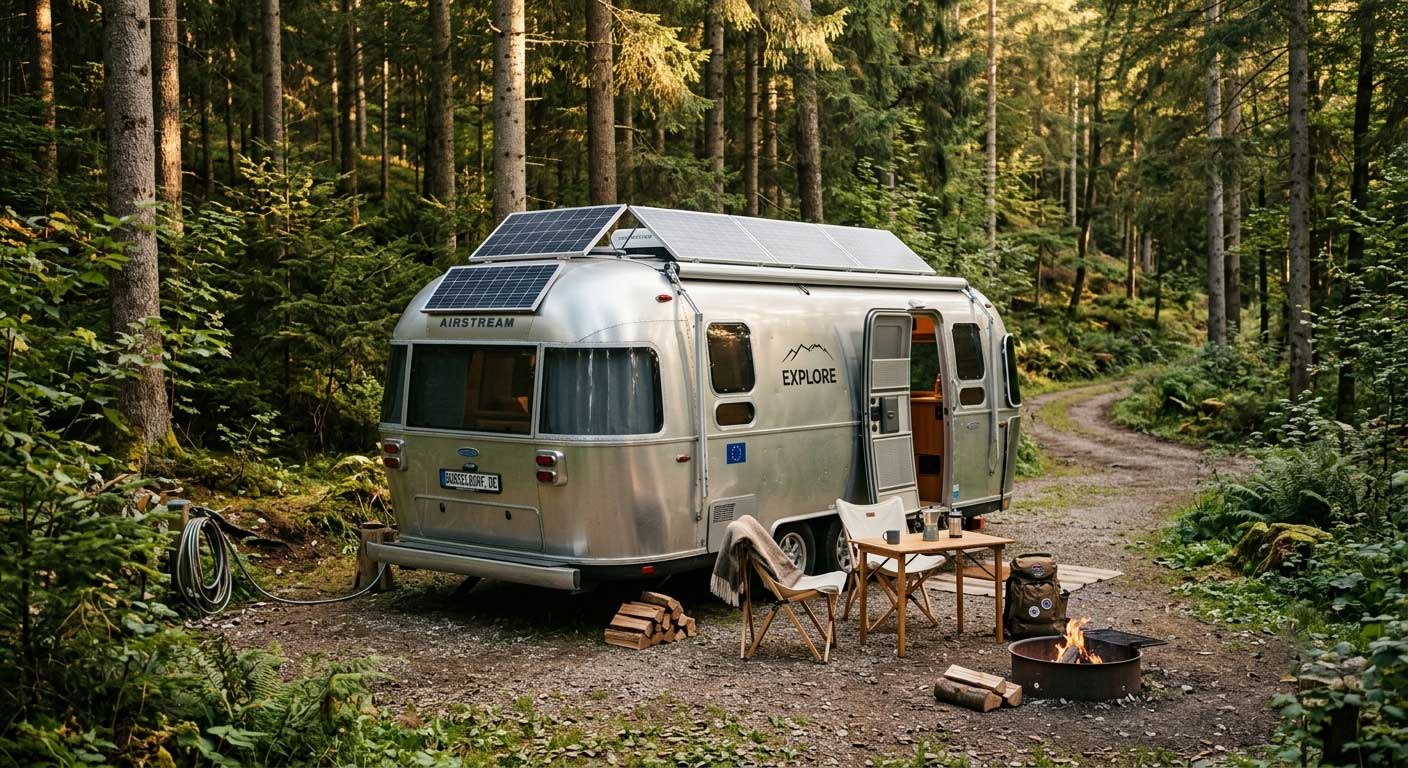
- Stationary camping (forest/lake): stable but often shaded
- Desert/high exposure sites: high output, thermal stress
- Transit on highway: no generation but battery discharge continues
This cycling behavior is why system design must include buffer capacity—not just panel size.
2. Load patterns are uneven (and often misunderstood)
Typical travel trailer energy loads include:
- refrigerator cycling (continuous low draw)
- water pump bursts
- lighting and ventilation
- phone/laptop charging
- optional AC units (high surge load)
In field audits, we often find users underestimate night consumption by 25–35%, leading to morning energy shortages even when solar input is sufficient.
System sizing — how many watts you actually need
There is no universal number, but field data shows stable ranges:
| Usage type | Solar size | Battery storage |
|---|---|---|
| Weekend trips | 200W–400W | 100Ah–200Ah |
| Medium travel | 400W–800W | 200Ah–400Ah |
| Full off-grid living | 800W–1200W+ | 400Ah–800Ah lithium |
Why oversizing doesn’t always help
More panels do not automatically solve energy shortages.
If battery storage is small, excess solar energy is lost or underutilized. In some cases, system imbalance leads to:
- wasted midday production
- unstable nighttime supply
- inverter inefficiency cycles
Real case study — 3-week cross-state travel trailer test
A Bright Solar field configuration was tested across mixed terrain:
- coastal campsites
- desert highways
- forest shaded parks
System setup:
- 600W rigid + flexible hybrid solar array
- 300Ah lithium battery bank
- MPPT charge controller
Observations:
- desert zones → 90–95% output stability
- forest zones → 60–70% output due to shading
- highway travel → zero generation, steady consumption
Key insight:
Energy predictability mattered more than peak power.
Users reported “comfort stability” rather than “maximum output” as the deciding factor for satisfaction.
Installation quality matters more than panel brand
Travel trailer solar failures rarely come from panels.
They come from installation choices:
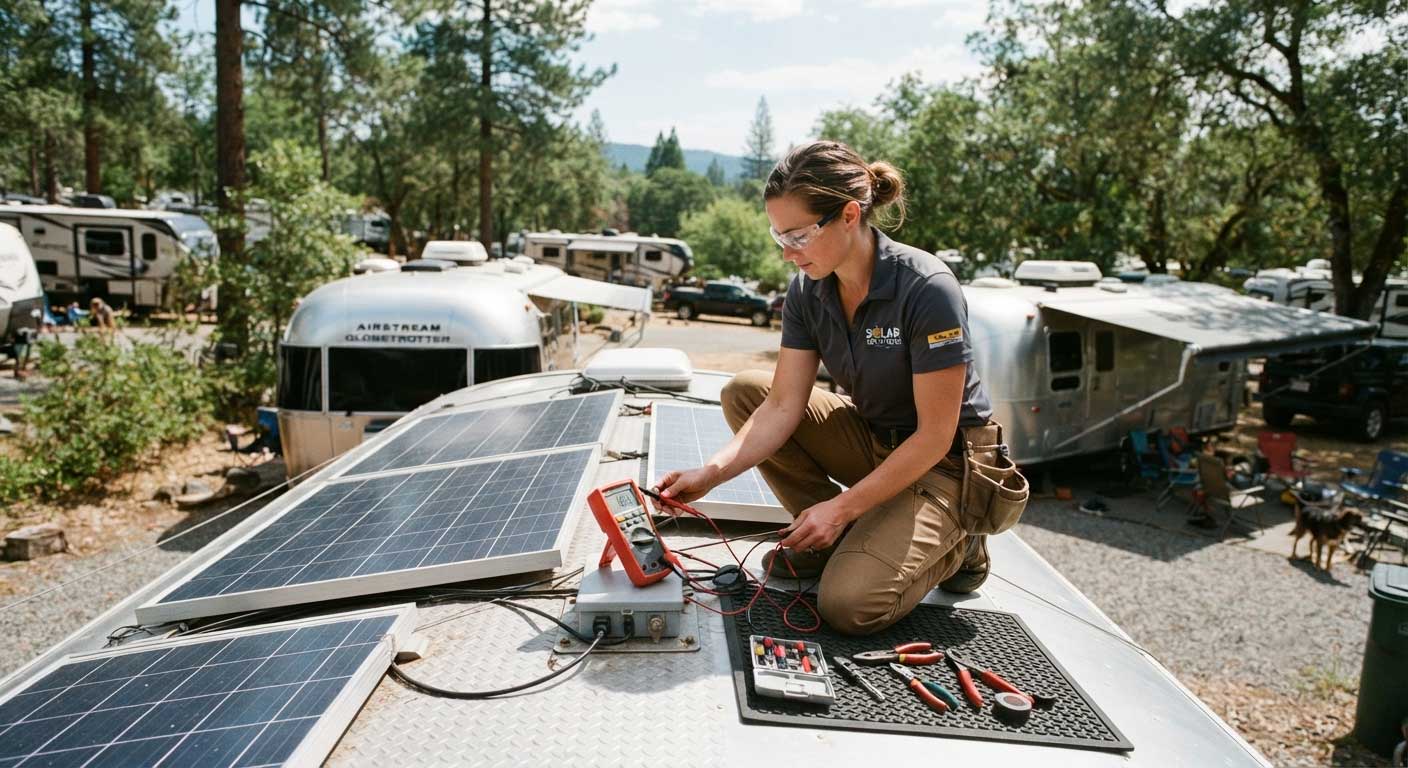
Common field issues
- poor roof sealing causing water leakage
- shading from roof vents or AC units
- improper cable routing causing voltage loss
- lack of airflow leading to overheating
Even premium panels underperform if mounted incorrectly.
Engineering insight — what actually defines a good system
After multiple deployments and audits, one pattern stays consistent:
A successful travel trailer solar system is not defined by maximum wattage, but by stability under changing conditions.
That includes:
- shading tolerance
- battery depth management
- heat handling
- consumption matching
Systems that ignore these variables tend to fail in user experience—even if they perform well in lab specs.

FAQ — solar panel for travel trailer (Real-world answers from field use)
These are the questions that actually come up after installation—when people start camping, not when they are still comparing specs online.
How many solar panels do I need for a travel trailer?
Most travel trailers need 400W to 1200W depending on usage.
- Light weekend travel: 200W–400W
- Regular off-grid camping: 400W–800W
- Full-time living: 800W–1200W+
In real field conditions, consumption habits matter more than panel count. A small system used efficiently can outperform a large poorly managed one.
Can a solar panel fully power a travel trailer?
Yes, but only under balanced conditions:
- sufficient solar input
- properly sized lithium battery bank
- efficient appliance usage
In real-world testing, full independence is usually achieved only when solar + battery systems are designed together, not separately.
Do travel trailer solar panels work on cloudy days?
Yes, but output drops significantly.
Based on data from the U.S. National Renewable Energy Laboratory (NREL), photovoltaic systems can experience 30% to 80% output reduction depending on cloud density and duration.
Source: https://www.nrel.gov
In practical travel use:
- lights still operate
- charging slows down
- high-load appliances may need battery support
What type of solar panel is best for a travel trailer?
There are three common types:
- Monocrystalline rigid panels → highest efficiency, long lifespan
- Flexible panels → lightweight, easier installation, better for curved roofs
- Portable foldable panels → flexible positioning, good for temporary setups
In field deployments, most stable systems use a hybrid combination depending on roof space and travel behavior.Visit the product page:Flexible Solar Panel
How long do solar panels last on a travel trailer?
Typical lifespan:
- rigid panels: 20–25 years
- flexible panels: 5–15 years depending on heat and installation quality
However, in mobile environments, lifespan is often affected more by:
- vibration during travel
- thermal cycling (hot sun vs cold nights)
- installation adhesion quality
Do I need a battery with my travel trailer solar system?
Yes, absolutely.
Without a battery:
- energy is only available in real-time sunlight
- night usage becomes impossible
- system becomes unstable for appliances
Most practical systems use lithium batteries because of:
- deeper discharge capability
- faster charging
- lighter weight compared to lead-acid systems
Is it worth installing solar panels on a travel trailer?
Yes, especially for:
- frequent campers
- long-distance travelers
- off-grid lifestyle users
Field feedback consistently shows improvements in:
- energy independence
- reduced generator usage
- lower long-term fuel cost for charging alternatives
However, the value depends heavily on installation quality and realistic energy expectations.
Field insight — what actually makes a travel trailer solar system successful
After multiple real-world installations across different climates, one conclusion stays consistent:
Success is not about maximum solar power—it is about predictable energy availability.
Systems that perform best are not always the largest, but the ones that:
- manage shading properly
- match battery capacity with solar input
- avoid installation mistakes
- maintain stable daily energy cycles
In travel environments, unpredictability is the real challenge—not lack of sunlight.
Related recommendations
-

48V Solar Panel: Complete Guide for Modern Off-Grid Power Systems
316Discover how a 48V solar panel improves efficiency, reduces cable loss, and powers modern off-grid systems. Learn sizing, applications, costs, and installation tips.
View details -
350 watt solar panels: Output, Size and Installation Guide
280350 watt solar panels provide 350W of rated DC power under STC, while actual daily output depends on sunlight, temperature, shading, orientation, wiring, and...
View details -
Flexible 100 Watt Solar Panel for RV, Marine and Off-Grid Applications
124Discover flexible 100 watt solar panel solutions from Bright Solar. Learn efficiency, applications, installation tips, and why lightweight solar fits RV, marine, and off-grid energy needs.
View details -
Black Flexible Solar Panel: Design, Performance, and Applications
108A black flexible solar panel combines a dark photovoltaic surface with lightweight construction for controlled curved-surface installations. Selection should...
View details