flexible solar panels for marine use: Lightweight Solar Power Solution for Boats and Yachts
Flexible solar panels for marine use provide lightweight, durable, and adaptable solar energy solutions for boats, yachts, and offshore equipment. They are designed to generate clean power in challenging marine environments where space and weight are limited.
At Bright Solar, we develop flexible photovoltaic solutions based on real application requirements from marine users. Unlike residential rooftops, boats operate in a constantly changing environment where vibration, saltwater exposure, limited installation areas, and weight restrictions directly affect solar system performance.
During discussions with yacht owners and marine equipment suppliers, one issue appears repeatedly: traditional solar panels are often too heavy or difficult to install on curved marine surfaces.
This is where flexible solar technology becomes valuable.
A successful marine solar system is not only about adding more watts. It is about finding the right balance between:
- Weight
- Power generation
- Installation space
- Weather resistance
- Long-term reliability
What are flexible solar panels for marine use?
Flexible solar panels for marine use are photovoltaic modules specifically designed for boats, yachts, sailing vessels, and offshore applications where lightweight construction and adaptable installation are important.
Unlike conventional glass solar panels, flexible marine solar panels use lightweight materials and protective layers to withstand outdoor conditions.
Typical construction includes:
| Component | Function |
|---|---|
| Monocrystalline solar cells | Convert sunlight into electricity |
| ETFE surface layer | Protect against UV and weather damage |
| Flexible backing material | Allows installation on curved surfaces |
| Waterproof encapsulation | Protect internal circuits |
| Marine-grade connectors | Improve electrical reliability |
Marine environments create unique challenges:
- Salt spray corrosion
- Strong sunlight exposure
- Continuous movement
- Temperature changes
- Limited flat surfaces
A solar panel designed for a house roof may not perform equally well on a moving vessel.
Why choose flexible solar panels for marine use?
Marine solar applications require different priorities compared with land-based solar installations.
A boat owner usually cares about:
- Available deck space
- Weight impact
- Wind resistance
- Appearance
- Maintenance requirements
Flexible solar panels address these challenges through their unique structure.
Lightweight design for boats and yachts
Weight is one of the most important factors in marine applications.
Every additional kilogram affects:
- Fuel consumption
- Sailing performance
- Equipment balance
Traditional solar panels often include:
- Thick glass
- Aluminum frames
- Heavy mounting brackets
Flexible solar panels remove many of these weight limitations.
Advantages include:
- Lower overall system weight
- Easier transportation
- Reduced installation complexity
- Better compatibility with smaller vessels
For sailing boats, reducing unnecessary weight can directly improve efficiency.
Installation on curved marine surfaces
Boats rarely provide perfectly flat mounting areas.
Common installation locations include:
| Marine Location | Advantage |
|---|---|
| Cabin roof | Stable installation area |
| Bimini top | Uses unused space |
| Deck surface | Direct sunlight exposure |
| Yacht canopy | Large available area |
Flexible panels can follow curved surfaces, making them suitable for modern yacht designs.
This is especially useful for:
- Sailing boats
- Catamarans
- Fishing boats
- Small yachts
How do flexible solar panels for marine use work?
The working principle is similar to traditional photovoltaic systems.
The process:
- Solar cells absorb sunlight
- Photovoltaic effect generates DC electricity
- Charge controller regulates power
- Battery stores energy
- Marine equipment uses stored electricity
A typical marine solar system includes:
Flexible Solar Panel → MPPT Controller → Marine Battery → Electrical Equipment
Common marine equipment powered by solar energy
Flexible marine solar systems can support:
| Equipment | Typical Usage |
|---|---|
| Navigation lights | Night sailing |
| GPS systems | Navigation |
| Communication devices | Offshore communication |
| Refrigerators | Food storage |
| Cabin lighting | Daily comfort |
| Battery charging | Energy backup |
Solar energy helps reduce dependence on:
- Shore power
- Fuel generators
- Engine charging
Marine challenges that flexible solar panels must handle
Marine environments are among the most demanding conditions for solar products.
Saltwater corrosion protection
Saltwater can damage ordinary materials over time.
Marine solar panels need:
- Sealed electrical connections
- Corrosion-resistant components
- Durable protective surfaces
At Bright Solar, material selection focuses on improving outdoor durability for demanding environments.
UV exposure resistance
Boats often remain under direct sunlight for long periods.
Solar panels must withstand:
- Strong UV radiation
- High surface temperatures
- Seasonal exposure
Protective coatings help maintain:
- Light transmission
- Surface durability
- Long-term performance
Movement and vibration resistance
Unlike stationary rooftop systems, boats constantly move.
Solar equipment experiences:
- Engine vibration
- Wave impact
- Wind movement
Flexible structures provide advantages because they can better adapt to changing conditions.
How much power can flexible solar panels for marine use generate?
Actual marine solar output depends on:
- Panel wattage
- Geographic location
- Weather
- Installation angle
- Battery efficiency
Example:
A 200W marine solar system:
200W × 5 peak sunlight hours × 80% efficiency
≈800Wh daily energy production
This may support:
- Navigation systems
- Lighting
- Communication equipment
- Battery charging
According to the National Renewable Energy Laboratory (NREL), photovoltaic output depends on solar resource availability, system design, and environmental conditions.
For marine applications, proper system sizing is more important than simply choosing the largest panel.
Bright Solar flexible solar panels for marine use development experience
Bright Solar develops flexible solar solutions for applications where standard solar products are difficult to install.
Our marine-oriented design considerations include:
- Lightweight construction
- Weather-resistant materials
- Flexible installation options
- Customized specifications
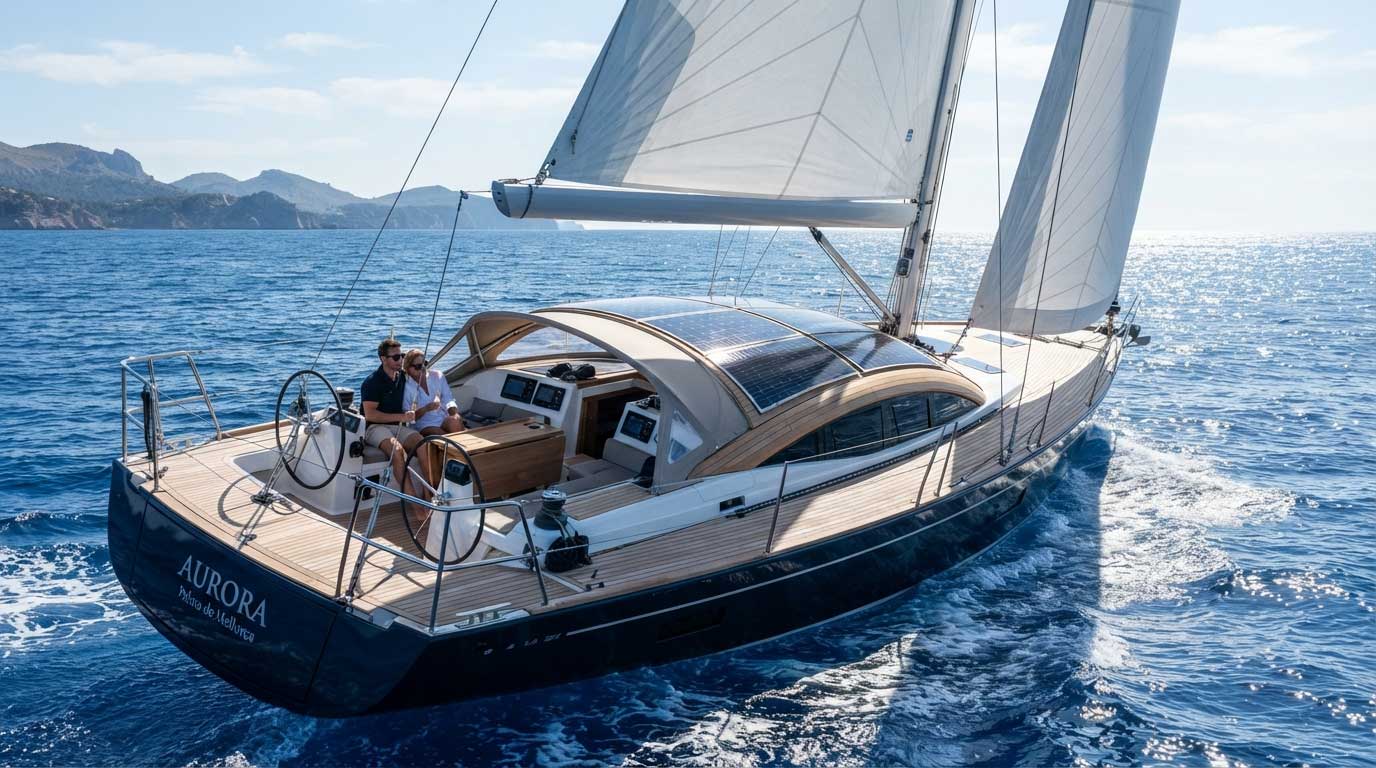
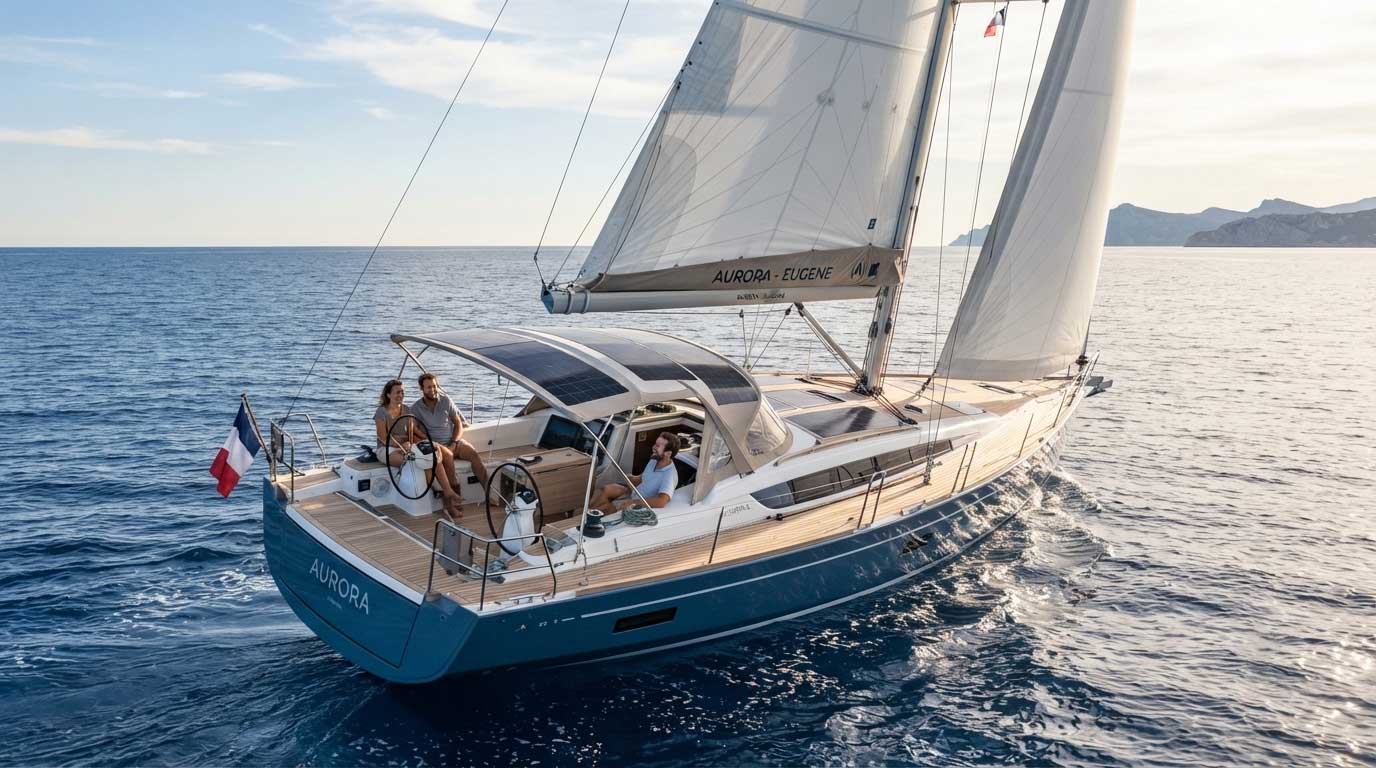
Real customer application: Solar upgrade for a sailing yacht
A European sailing enthusiast contacted Bright Solar because his yacht had limited space for traditional solar modules.
The main problems were:
- Curved cabin surface
- Limited roof area
- Concern about additional weight
The previous rigid solar solution required complex mounting hardware.
After switching to a flexible marine solar solution:
- Installation became simpler
- Roof appearance remained cleaner
- Available solar area increased
The owner mainly used the system for:
- Navigation equipment
- Cabin lighting
- Battery charging
The project demonstrated that marine solar performance depends heavily on installation design, not only panel specifications.
Applications of flexible solar panels for marine use
Sailing boats
Sailboats benefit from flexible panels because:
- Space is limited
- Weight matters
- Surfaces are curved
Yachts
Luxury yachts often require solar solutions that maintain appearance.
Flexible panels provide:
- Cleaner integration
- Low-profile installation
- Additional energy generation
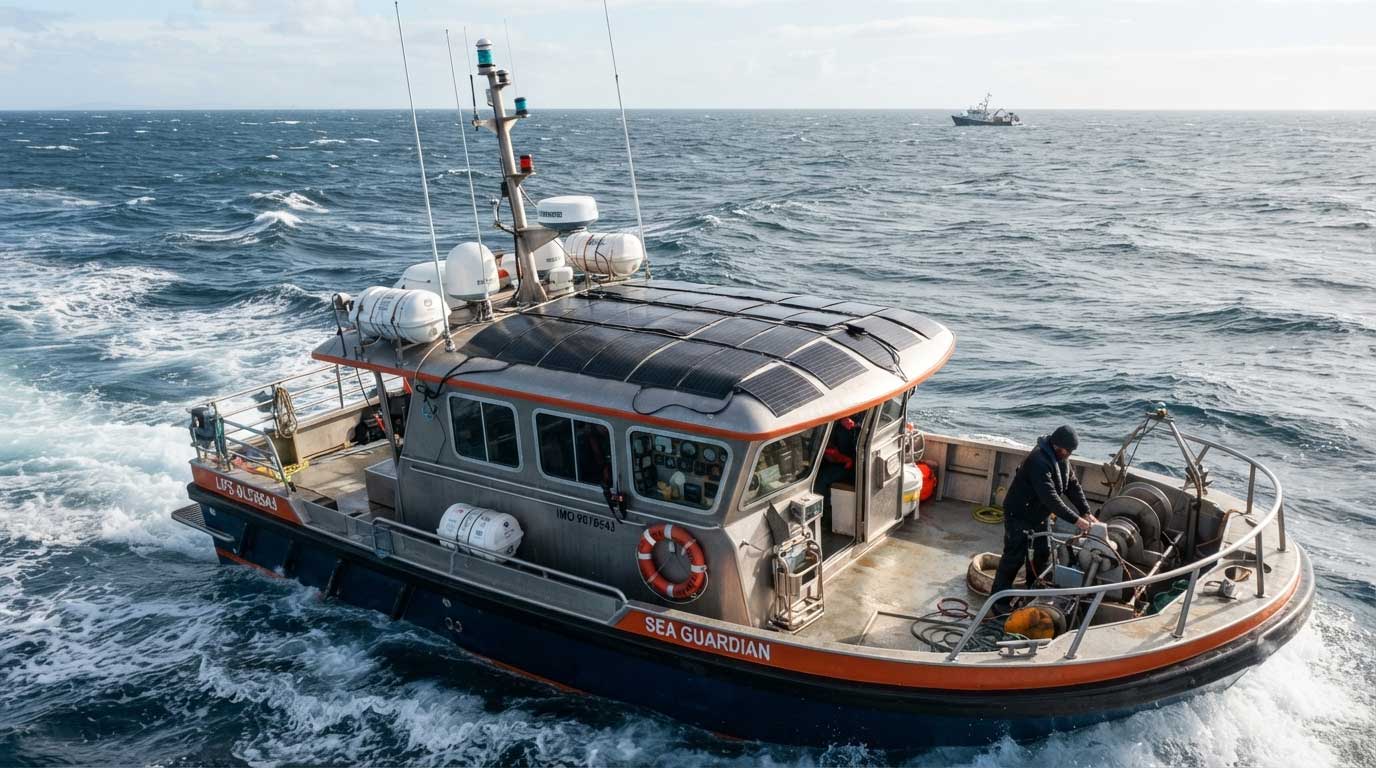
Fishing and work boats
Commercial marine users need reliable power for:
- Communication
- Equipment
- Lighting
Solar reduces fuel consumption and generator usage.
How to install flexible solar panels for marine use?
Installing flexible solar panels for marine use requires more attention than standard outdoor solar installation because boats experience movement, vibration, and continuous exposure to harsh weather conditions.
At Bright Solar, we have found that marine solar performance depends on three key factors:
- Correct installation location
- Reliable attachment method
- Proper electrical protection
A high-quality solar panel can still underperform if installation details are ignored.
Step 1: Select the best mounting location
The first step is identifying an area with maximum sunlight exposure.
Common marine installation locations include:
| Location | Advantages | Considerations |
|---|---|---|
| Cabin roof | Stable and protected | Possible shadow from mast |
| Bimini top | Large sunlight area | Requires lightweight design |
| Deck surface | Direct sunlight | Avoid walking areas |
| Yacht canopy | Good visibility | Needs secure attachment |
Before installation, check:
- Daily sunlight exposure
- Possible shading
- Available surface size
- Cable routing distance
A common mistake is selecting the largest available space without considering shading.
A smaller panel in direct sunlight can sometimes produce more usable energy than a larger panel partially covered by shadows.
Step 2: Prepare the marine surface
Surface preparation directly affects installation reliability.
For adhesive mounting:
Clean the surface
Remove:
- Salt deposits
- Dust
- Oil
- Moisture
Inspect the surface
Check for:
- Damaged fiberglass
- Loose coatings
- Uneven areas
Confirm placement
Before final attachment:
- Position the panel
- Check cable direction
- Confirm access to electrical connections
Marine environments are unforgiving. A small installation mistake can become a maintenance issue months later.
Step 3: Attach flexible solar panels securely
There are two common installation methods.
Adhesive mounting
This method is widely used for marine flexible solar panels.
Advantages:
- No drilling
- Lower weight
- Cleaner appearance
- Reduced leakage risk
Suitable for:
- Sailing boats
- Catamarans
- Small yachts
Important considerations:
- Use marine-compatible adhesive
- Follow surface preparation requirements
- Allow sufficient curing time
Mechanical mounting
Mechanical mounting uses brackets or support frames.
Advantages:
- Easier replacement
- Adjustable angle
- Suitable for larger systems
Disadvantages:
- More hardware
- Added weight
- More installation complexity
For many recreational boats, adhesive installation provides a better balance between performance and simplicity.
Electrical connection of flexible solar panels for marine use
A marine solar system requires proper electrical design.
The typical connection:
Flexible Solar Panel → MPPT Controller → Marine Battery → Boat Equipment
Choosing the right solar controller
An MPPT controller is commonly recommended because marine conditions change frequently.
Factors affecting solar output:
- Cloud movement
- Boat angle
- Weather changes
- Partial shading
An MPPT controller can help maximize available solar energy.
Marine wiring protection
Electrical connections should be protected against:
- Saltwater exposure
- Humidity
- Temperature changes
Recommended practices include:
- Waterproof connectors
- Proper cable insulation
- Secure cable routing
- Fuse protection
The weakest part of a marine solar system is often not the solar panel but the electrical connection.
Flexible solar panels for marine use vs traditional marine solar panels
Both solutions can generate renewable energy, but they serve different needs.
| Feature | Flexible Marine Solar Panels | Traditional Marine Solar Panels |
|---|---|---|
| Weight | Lightweight | Heavier |
| Installation | Easier on curved surfaces | Requires stronger support |
| Appearance | Low-profile | More visible |
| Wind resistance | Lower profile | Higher structure |
| Replacement | Application dependent | Easier standard replacement |
Flexible panels are especially valuable when:
- Space is limited
- Weight reduction matters
- Boat appearance is important
Traditional framed panels may still be suitable for large vessels with dedicated solar mounting areas.
How much do flexible solar panels for marine use cost?
The cost depends on:
- Solar output
- Material quality
- Waterproof design
- Custom requirements
- Installation method
Typical pricing:
| Product Type | Estimated Cost |
|---|---|
| 100W flexible marine solar panel | $120–$250 |
| 200W flexible marine solar panel | $250–$450 |
| Custom yacht solar system | Depends on design |
Marine solar products generally cost more than standard portable solar panels because they require additional protection against harsh environments.
The total investment includes:
- Solar panel
- Controller
- Battery connection
- Marine wiring
- Installation materials
A lower initial price does not always mean lower total cost.
A reliable marine solar system should reduce future maintenance problems.
How Bright Solar designs flexible solar panels for marine use
Bright Solar focuses on developing solar products for challenging environments.
Marine applications require more than standard photovoltaic technology.
Our design considerations include:
- Lightweight structure
- Outdoor durability
- Flexible installation
- Customized specifications
Material selection for marine environments
Marine solar products must balance:
- Flexibility
- Strength
- Weather resistance
Important material considerations include:
Protective surface
Provides resistance against:
- UV exposure
- Scratches
- Outdoor aging
Encapsulation technology
Protects:
- Solar cells
- Electrical connections
- Internal components
Connector reliability
Ensures stable electricity transmission.
Customized marine solar solutions
Different boats have different requirements.
Bright Solar can support customized solutions for:
- Sailing yachts
- Fishing boats
- Catamarans
- Marine equipment suppliers
Customization options include:
- Panel dimensions
- Cable length
- Connector type
- Power output
- Surface materials
How to choose the best flexible solar panels for marine use?
Before purchasing marine solar panels, consider these factors.
1. Understand your energy requirements
Calculate your daily power consumption.
Consider:
- Navigation equipment
- Lighting
- Refrigeration
- Communication devices
- Battery charging needs
A correctly sized system performs better than an oversized system installed incorrectly.
2. Check marine durability
A suitable marine solar panel should provide:
- Waterproof protection
- UV resistance
- Durable materials
- Reliable electrical components
Marine products need to perform in environments where repair opportunities are limited.
3. Consider installation limitations
Ask:
- Is the mounting surface curved?
- Is drilling acceptable?
- Is weight restricted?
- Is appearance important?
The right solar solution depends on the vessel design.
FAQ About flexible solar panels for marine use
Are flexible solar panels suitable for boats?
Yes. Flexible solar panels are widely used for boats because they are lightweight and can fit curved marine surfaces where traditional panels may be difficult to install.
Can flexible solar panels handle saltwater environments?
Marine flexible solar panels are designed with protective materials to improve resistance against moisture, UV exposure, and outdoor conditions.
How many flexible solar panels does a boat need?
The required number depends on energy consumption, battery capacity, available installation area, and sailing conditions.
Can flexible solar panels charge marine batteries?
Yes. When connected with a suitable charge controller, flexible solar panels can charge compatible marine battery systems.
Are flexible solar panels better than rigid solar panels for yachts?
They are often better for yachts where weight, appearance, and installation flexibility are important. Large vessels may still use rigid systems depending on design requirements.
Can flexible marine solar panels be walked on?
Most flexible solar panels are not designed for frequent foot traffic unless specifically manufactured as walkable marine panels.
How long do flexible solar panels for marine use last?
Lifespan depends on material quality, installation, and environmental exposure. High-quality marine solar panels are designed for long-term outdoor operation.
Conclusion: Why choose flexible solar panels for marine use?
Flexible solar panels for marine use provide a practical renewable energy solution for boats, yachts, and offshore applications where weight, space, and installation flexibility matter.
Marine solar technology is no longer limited to large vessels with dedicated solar structures.
Today, smaller boats and sailing enthusiasts can also benefit from:
- Lightweight solar power
- Cleaner installation
- Reduced generator dependence
- Greater energy independence
At Bright Solar, we focus on developing flexible solar solutions that match real marine conditions.
The best marine solar system is not simply the one with the highest wattage. It is the one that fits the vessel, survives the environment, and delivers reliable energy when it is needed most.
Related recommendations
-

Foldable Portable Solar Panel: How to Choose and Use One
37Foldable portable solar panels provide mobile electricity for camping, RV travel, outdoor electronics, and off-grid applications. Their actual output depends...
View details -
Car Roof Solar Panel: How It Works and What to Know
306Explore car roof solar panel options for EVs and conventional vehicles. Learn sizing, energy output, flexible PV, installation, shading, safety, and real-world limits.
View details -
400 Watt Solar Panels for Reliable Off-Grid and Residential Energy
296400 watt solar panels deliver reliable off-grid and residential energy with high efficiency, durable design, and long-term savings. Explore Bright Solar solutions.
View details -
12 Volt Flexible Solar Panels: Lightweight Solar Power for RV, Marine and Off-Grid Systems
17412 volt flexible solar panels provide lightweight solar power for RVs, boats, camping, and off-grid battery systems. Discover Bright Solar solutions for reliable energy.
View details