Flexible CIGS Solar Panel: Efficiency, Uses and Buying Guide
A flexible CIGS solar panel uses copper indium gallium diselenide thin-film technology to produce lightweight, bendable modules. It is particularly useful for curved roofs, vehicles, portable structures, and B2B applications where low weight and flexible installation matter.
What Is a Flexible CIGS Solar Panel?
A flexible CIGS solar panel is a photovoltaic module based on copper indium gallium diselenide (CIGS), a thin-film semiconductor technology that can be deposited on a flexible substrate.
CIGS stands for:
- Cu — Copper
- In — Indium
- Ga — Gallium
- Se — Selenium
Unlike conventional crystalline-silicon modules, CIGS does not require the photovoltaic absorber to be built as a conventional silicon wafer. DOE explains that thin-film PV is produced by depositing thin layers of photovoltaic material onto a supporting substrate such as glass, plastic, or metal. CIGS is one of the principal thin-film PV technologies used commercially.
That manufacturing approach is what makes flexible CIGS interesting for applications where a rigid glass module is simply inconvenient.
The word flexible, however, needs some qualification.
A CIGS cell can be deposited on a flexible substrate, but the finished solar panel still depends on its substrate, encapsulation, electrical interconnections, protective layers, and mechanical design. A panel that can conform to a curved roof is not necessarily designed to be folded repeatedly.
For B2B buyers, that distinction matters during product selection and OEM development.
How Flexible CIGS Solar Panels Work
CIGS is a thin-film photovoltaic absorber.
When sunlight reaches the active semiconductor layers, photons generate electrical charge carriers. Internal electrical fields separate those carriers, allowing current to be collected through the module’s electrical contacts.
The important difference is the physical construction.
A crystalline-silicon panel normally relies on individual silicon wafers interconnected within a rigid module structure. A thin-film CIGS module can instead be produced by depositing functional layers directly onto a substrate.
DOE describes thin-film solar cells as thin photovoltaic layers deposited on substrates including glass, plastic, or metal. The same DOE resource identifies CIGS as one of the two principal thin-film semiconductor types currently used commercially, alongside CdTe.
That opens up a different engineering envelope.
A flexible CIGS module can potentially be:
- Lightweight
- Thin
- Conformable
- Manufactured in unusual dimensions
- Integrated into curved surfaces
- Used where rigid glass creates excessive structural weight
The trade-off is that thin-film products require careful protection against environmental exposure. DOE specifically notes that CIGS and CdTe require more protection than conventional silicon to enable long-lasting outdoor operation.
That is why encapsulation should never be treated as a cosmetic layer on a flexible CIGS product.
Flexible CIGS Solar Panel Efficiency
CIGS has a strong research record among thin-film technologies.
NREL‘s continuously updated efficiency chart tracks confirmed research-cell efficiencies across photovoltaic technologies. Its July 2025 chart shows CIGS as an established high-performing thin-film technology, while also making an important distinction between research-cell efficiency and commercial module performance.
This distinction is essential when evaluating products.
A laboratory cell is not the same thing as a finished flexible solar panel.
The finished module has:
- Interconnection losses
- Active-area limitations
- Encapsulation
- Substrate
- Electrical contacts
- Thermal behavior
- Manufacturing tolerances
- Mechanical requirements
NREL itself emphasizes that efficiency is only one part of evaluating photovoltaic cells, alongside voltage, current and other performance parameters.
Why CIGS Is Attractive for Flexible PV
The appeal of CIGS is not simply the efficiency number.
Its combination of thin-film construction and flexible substrates has made it an important candidate for lightweight photovoltaic applications.
A DOE review of vehicle-integrated photovoltaics identifies CIGS modules as attractive for vehicle applications because of their flexibility and ability to integrate with existing vehicle surfaces. The same review also highlights the engineering trade-off between high efficiency and the flexibility required by curved vehicle surfaces.
That is a much more useful way to evaluate CIGS than calling it simply “high efficiency.”
In a compact installation with only a small usable surface, efficiency may dominate the decision.
On a large curved surface where every kilogram matters, the calculation changes.
Flexible CIGS vs. Monocrystalline Solar Panels
The choice between CIGS and monocrystalline silicon is usually an application decision rather than a material contest.
| Feature | Flexible CIGS | Flexible Monocrystalline Silicon |
|---|---|---|
| PV technology | Thin-film CIGS | Crystalline silicon |
| Flexible construction | Yes, with suitable substrate | Yes, with suitable module construction |
| Weight potential | Very low | Low to moderate |
| Curved surfaces | Strong application potential | Possible |
| Power density | Product-dependent | Generally high |
| Rigid glass required | No | No for flexible versions |
| Thin-film architecture | Yes | No |
| Unusual shapes | Suitable for custom development | Also possible |
| Main consideration | Encapsulation, durability, available area | Weight, flexibility, power density |
DOE describes silicon as offering a combination of high efficiency, low cost and long lifetime, while CIGS offers thin-film characteristics and high laboratory efficiencies but presents manufacturing complexity because four elements must be combined consistently.
For a B2B buyer, the right comparison should therefore include the complete module specification rather than the cell material alone.
Where Flexible CIGS Solar Panels Are Used
CIGS is especially interesting when the physical shape of the installation is part of the problem.
RVs and Campervans
RV roofs are one of the clearest examples.
A conventional rigid solar panel creates a defined footprint, adds mounting hardware, and changes the roof profile. A flexible CIGS panel can follow a suitable roof curvature and reduce the visual and mechanical profile.
But there is a practical limitation.
RV roofs are rarely simple rectangles.
You may have:
- Air-conditioning units
- Roof vents
- Skylights
- Antennas
- Satellite equipment
- Roof rails
- Curved sections
- Service access points
The useful solar area can therefore be considerably smaller than the overall roof area.
A flexible CIGS module can make better use of awkward sections, but the installer still needs a proper roof layout before choosing the module dimensions.

Flexible CIGS Solar Panels for Marine Applications
Marine environments create a more demanding installation.
A yacht or boat roof can offer a large usable surface, but the surface may be curved, exposed to salt spray and subject to vibration.
A rigid glass module may not be ideal for every marine design.
CIGS can be attractive where:
- Low weight is important
- The mounting surface is curved
- A low profile is preferred
- The available area has an irregular shape
- Conventional frames interfere with the vessel design
DOE’s vehicle-integrated PV research identifies vibration, impact, UV exposure, temperature, curvature, installation and standards compliance as important considerations for flexible PV systems. Many of those concerns are equally relevant when photovoltaic modules are integrated into marine equipment.
For marine OEM projects, ask for environmental and mechanical test information instead of relying on the phrase “marine solar panel.”
Flexible CIGS for Off-Grid and Portable Power
CIGS is also relevant to lightweight off-grid equipment.
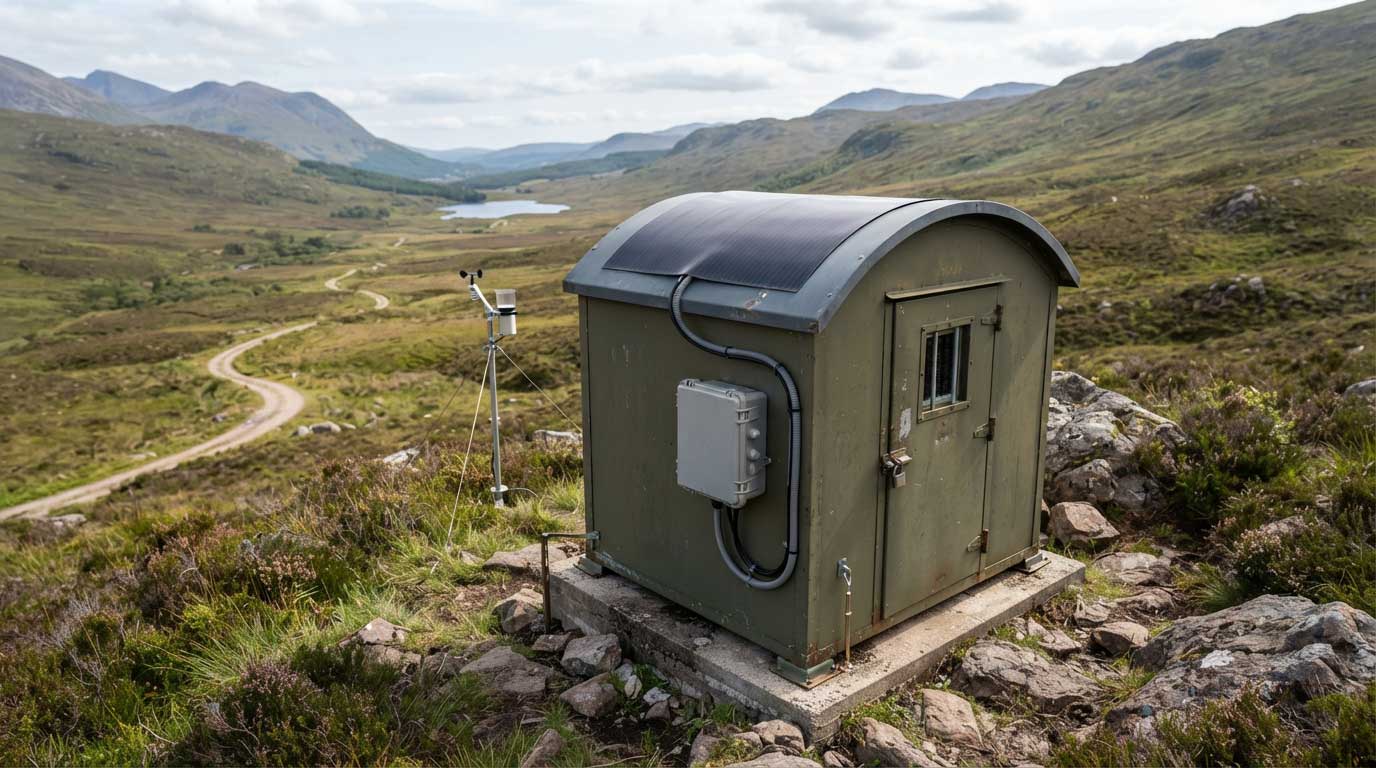
A remote monitoring station, communications enclosure or temporary field shelter may have a roof or external surface that cannot easily support conventional framed modules.
In these cases, the engineering priorities may be:
- Low module weight
- Compact shipping
- Flexible installation
- Adequate power from available area
- Weather resistance
- Simple electrical integration
- Easy maintenance
The panel is only one part of the system.
Battery capacity, charge-controller selection, wiring losses, shading and actual solar resource still determine whether the complete system meets its energy requirement.
NREL provides PVWatts and other PV modeling tools specifically because real-world energy production depends on location and system conditions rather than nameplate wattage alone.
Flexible CIGS Solar Panel Installation Guide
Flexible construction makes installation easier in some situations, but it does not eliminate engineering requirements.
Step 1 — Measure the Surface
Start with the actual usable area.
Do not measure from edge to edge and assume the entire surface can accept photovoltaic material.
Record:
- Length
- Width
- Curvature
- Obstacles
- Drainage
- Existing equipment
- Cable exit points
- Maintenance access
For an OEM project, provide the supplier with a drawing or CAD file whenever possible.
Step 2 — Check the Curvature
A flexible CIGS panel should be installed within the manufacturer’s specified bending limits.
Do not create a sharp crease.
Do not assume that repeated bending is permitted.
Do not use a panel designed for one-axis conformity on a compound curve without confirming its mechanical specification.
The difference between “flexible” and “foldable” is particularly important here.
Step 3 — Prepare the Surface
For bonded installations, inspect the surface before applying the mounting system.
The surface should be:
- Clean
- Dry
- Stable
- Free of loose coatings
- Compatible with the selected adhesive
Dust and silicone contamination can create problems that are invisible on installation day but become obvious after thermal cycling and weather exposure.
Step 4 — Dry Fit Before Permanent Installation
Position the panel without permanent bonding.
Check:
- Cable length
- Connector direction
- Panel alignment
- Roof obstacles
- Bending radius
- Drainage
- Service access
Then mark the final position.
This is one of the least glamorous steps in solar installation, but it is where many avoidable installation mistakes are caught.
Step 5 — Complete Electrical Connections
Verify the panel’s:
- Voc
- Vmp
- Isc
- Imp
- Connector type
- Maximum system voltage
- Charge-controller compatibility
For series connections, confirm that cold-weather Voc remains within the controller or inverter’s maximum input voltage.
For parallel connections, verify current handling and appropriate protection.
The manufacturer’s electrical datasheet should always take precedence over a generic online wiring diagram.
What to Check Before Buying a Flexible CIGS Solar Panel
For a residential buyer, a product photograph and wattage may be enough to begin comparison.
For B2B procurement, they are not.
Electrical Specifications
Ask for:
| Specification | Why It Matters |
|---|---|
| Rated power | Determines nominal output |
| Voc | Important for controller/inverter voltage limits |
| Vmp | Used for system operating-point matching |
| Isc | Determines current and protection requirements |
| Imp | Helps match operating current |
| Efficiency | Useful when installation area is limited |
| Temperature coefficient | Indicates temperature-related power behavior |
| Connector | Ensures system compatibility |
| Maximum system voltage | Important for array design |
Mechanical Specifications
Also request:
- Length and width
- Thickness
- Weight
- Bending radius
- Substrate material
- Encapsulation
- Junction-box location
- Cable length
- Mounting method
- Operating temperature
- Storage temperature
Durability and Environmental Protection
CIGS flexible modules rely heavily on their protective construction.
Ask about:
- Moisture protection
- UV resistance
- Thermal cycling
- Humidity exposure
- Mechanical loading
- Adhesion
- Junction-box protection
- Outdoor durability testing
DOE specifically notes that CIGS requires more protection than silicon for long-lasting outdoor operation.
That makes encapsulation a procurement specification, not merely a manufacturing detail.
CIGS Flexible Solar Panel Efficiency: What the Numbers Really Mean
One of the easiest mistakes is mixing three different numbers:
Research-cell efficiency
Module efficiency
Real-world system output
They are not interchangeable.
NREL’s efficiency chart records the highest confirmed research-cell efficiencies across technologies. The 2025 chart shows how far CIGS research has progressed, but those laboratory records should not be used as the expected efficiency of a commercial flexible module.
A commercial buyer should instead ask:
What is the rated efficiency of the actual production module?
Then ask how that value was measured.
The module’s area also matters.
A lower-efficiency panel with a much larger usable installation area may deliver more total energy than a high-efficiency panel that cannot fit the available surface.
That sounds obvious on paper.
On a real RV roof covered with vents and air-conditioning equipment, it becomes very practical.
A Practical OEM Case: Curved Vehicle Roof
Consider a hypothetical European specialty-vehicle manufacturer developing an electric service van.
The roof has a shallow compound curve and several fixed roof components. The engineering team needs photovoltaic generation for auxiliary electrical loads but does not want a heavy framed solar assembly.
The first design uses a rigid module.
It works electrically.
It does not work mechanically.
The module footprint conflicts with the roof equipment, and the mounting frame adds unnecessary height.
The engineering team then evaluates flexible CIGS.
The new design process focuses on:
- Available roof area
- Required daily energy
- Panel weight
- Curvature
- Temperature
- Vibration
- UV exposure
- Cable routing
- Repair access
- Module durability
This is a more realistic CIGS selection process than starting with “What is the highest-efficiency panel?”
DOE’s vehicle-integrated PV work similarly identifies the limited surface area of vehicles, high-efficiency requirements, flexibility, curvature, UV resistance, vibration and impact as interconnected design considerations.

CIGS vs. Other Flexible Solar Technologies
CIGS is not the only flexible photovoltaic technology.
A B2B product developer may also encounter:
- Flexible monocrystalline silicon
- Amorphous silicon
- Organic photovoltaics
- Emerging perovskite technologies
Each has a different balance of efficiency, flexibility, durability, manufacturing maturity and cost.
CIGS vs. Amorphous Silicon
Both are thin-film technologies.
Amorphous silicon generally has lower efficiency, while CIGS has achieved substantially higher research and commercial performance levels. DOE identifies both as thin-film photovoltaic approaches but describes CIGS as having high laboratory efficiencies.
CIGS is therefore often considered when a flexible product needs stronger power density than traditional amorphous-silicon thin film can provide.
CIGS vs. Flexible Monocrystalline
Flexible crystalline-silicon panels can deliver high power density, making them attractive when surface area is scarce.
CIGS can become interesting when:
- Weight is particularly important
- Curved surfaces are difficult
- A very low-profile module is required
- Unusual form factors are being developed
There is no universal winner because the installation constraint changes the calculation.
Common Mistakes When Choosing Flexible CIGS Solar Panels
Mistake 1 — Comparing Only Efficiency
Efficiency matters, but so do dimensions, weight, usable surface area and durability.
Mistake 2 — Using Research-Cell Efficiency as a Product Specification
A record laboratory cell does not represent the output efficiency of a finished commercial module. NREL’s research-efficiency chart is specifically a record of research-cell performance.
Mistake 3 — Assuming All CIGS Panels Have the Same Flexibility
Substrate and encapsulation construction can change the mechanical behavior significantly.
Mistake 4 — Ignoring Moisture Protection
CIGS requires appropriate protection for long-term outdoor operation.
Mistake 5 — Designing the Electrical System After Installation
Voltage and current should be matched before the panels are permanently mounted.
Mistake 6 — Assuming Flexible Means Maintenance-Free
Flexible construction does not eliminate inspection requirements.
Cable connections, surface condition, adhesion, junction boxes and environmental exposure still need to be considered.
Bright Solar Flexible CIGS Solar Panel Solutions
Bright Solar focuses on flexible and semi-flexible solar panel solutions for B2B applications including RVs, campers, outdoor power, selected marine applications and off-grid systems.
For an OEM or ODM project requiring CIGS technology, the engineering discussion should begin with the application.
A useful project specification includes:
- Target wattage
- Module dimensions
- Installation surface
- Required curvature
- Weight limit
- Cell technology
- Encapsulation requirements
- Electrical output
- Connector configuration
- Environmental conditions
- Expected quantity
- Custom shape or size requirements
Bright Solar can evaluate flexible solar panel requirements around the complete module rather than treating the cell technology as an isolated specification.
For buyers comparing CIGS with flexible crystalline silicon, the most useful sample-testing process is straightforward: compare the actual modules under the same illumination, temperature, dimensions and electrical measurement conditions.
That produces a much better purchasing decision than comparing two product-page efficiency numbers generated under different assumptions.
FAQ About Flexible CIGS Solar Panels
What is a flexible CIGS solar panel?
A flexible CIGS solar panel is a thin-film photovoltaic module using copper indium gallium diselenide as the absorber material and a flexible construction suitable for appropriate curved or lightweight installations.
Are flexible CIGS solar panels efficient?
CIGS has achieved high research-cell efficiencies and is one of the established thin-film photovoltaic technologies. Commercial module efficiency is lower than individual laboratory records and must be checked from the manufacturer’s actual datasheet.
Are CIGS solar panels better than monocrystalline panels?
They serve different engineering requirements. Monocrystalline silicon generally provides strong power density, while CIGS can provide advantages in thin-film construction, flexibility and lightweight applications. The appropriate choice depends on the installation.
Can flexible CIGS solar panels be used on RVs?
Yes. CIGS is particularly relevant to vehicle-integrated PV because flexible thin-film construction can conform to suitable curved surfaces. DOE identifies CIGS as an attractive technology for vehicle-integrated photovoltaic applications.
Are flexible CIGS solar panels waterproof?
A CIGS photovoltaic layer itself should not be treated as automatically waterproof. The finished module requires appropriate encapsulation and environmental protection. DOE specifically notes the importance of additional protection for CIGS modules intended for long-term outdoor operation.
Can CIGS solar panels be customized?
CIGS flexible modules can be developed in application-specific formats depending on the manufacturer’s production process, substrate, electrical design and tooling capabilities. B2B buyers should confirm the allowable dimensions and customization range with the manufacturer.
What should I request from a CIGS solar panel manufacturer?
Request the production-module datasheet, rated power, efficiency, Voc, Vmp, Isc, Imp, dimensions, weight, bending specification, substrate and encapsulation information, environmental testing, warranty and applicable certification documents.
Conclusion
A flexible CIGS solar panel is valuable because it changes the physical possibilities of photovoltaic installation. CIGS thin-film technology can be built into lightweight, low-profile modules that are suited to applications where rigid glass panels create problems with curvature, weight or available space.
The strongest CIGS applications are not defined by one efficiency number. They are defined by the relationship between the photovoltaic module and the surface it has to occupy.
For an RV, that may mean fitting around roof equipment.
For a marine project, it may mean reducing weight and following a curved deck.
For an OEM vehicle, it may mean integrating PV without adding a conventional framed structure.
For an off-grid system, it may mean turning an otherwise difficult surface into usable generation area.
For B2B buyers, the most reliable specification process starts with the actual module, actual installation geometry and actual operating requirements.
flexible CIGS solar panel technology is therefore best evaluated as a complete product and application solution—not simply as a thin-film alternative to crystalline silicon.
Related recommendations
-

RV Solar Panel Installation: Complete Guide for Off-Grid RV Power
121Learn rv solar panel installation with our complete guide covering solar panel selection, wiring, mounting, costs, and tips for reliable off-grid RV power with Bright Solar.
View details -
Solar Panel Foldable 100W: Output, Uses and Buying Guide
45A 100W foldable solar panel provides portable electricity for camping, RV travel, and small off-grid needs. Its actual energy output depends on sunlight, ori...
View details -
Bifacial Flexible Solar Panel: Design, Performance, and Applications
197A bifacial flexible solar panel generates power from both sides when rear-side light is available. Its value depends on clearance, reflectivity, curvature, t...
View details -
Jinko Solar Signed a Supply Agreement with Datang Group for About 1 GW of n-type Tiger Neo Components
224Jinko Solar signed a supply agreement with Datang Group for about 1 GW of n-type tiger Neo components, supplying 560W Tiger Neo n-type TOPCon modules to Datang Group’s large ground-mounted projects in China, including agricultural-PV and rocky des...
View details