does a solar panel need direct sunlight?
does a solar panel need direct sunlight? No, solar panels do not require direct sunlight to produce electricity, but direct sunlight provides the highest energy output. Panels can still generate power under cloudy skies, indirect light, and changing weather conditions.
Do Solar Panels Need Direct Sunlight To Work?
A common assumption is that solar panels only work when the sun is shining brightly.
That is not exactly correct.
Solar panels need light, not necessarily direct sunlight.
Photovoltaic cells generate electricity when photons hit the semiconductor material inside the panel. Strong direct sunlight produces more photons and higher energy output, but diffused sunlight on cloudy days can still activate the cells.
During solar installation projects I have reviewed, one of the first questions homeowners ask is usually:
“What happens when there are clouds?”
The answer depends on system design, location, panel technology, and shading conditions.
A cloudy day does not mean zero solar production.
The National Renewable Energy Laboratory (NREL) explains that photovoltaic systems continue producing electricity under cloudy conditions, although output decreases compared with clear-sky conditions.
Source:
https://www.nrel.gov/
The important point is this:
Solar panels perform best with direct sunlight, but they are designed to operate with available daylight.
How Much Sunlight Do Solar Panels Need?
Solar panels do not need a specific number of hours of direct sunlight to function.
Instead, solar professionals evaluate something called peak sun hours.
A peak sun hour represents one hour when solar irradiance averages 1,000 watts per square meter.
The amount varies significantly by location.
For example:
| Location | Approximate solar resource |
|---|---|
| Arizona, USA | High solar exposure |
| California, USA | Above average |
| Germany | Lower sunlight but successful solar adoption |
| Northern Europe | Lower intensity but still viable |
Germany is a good example.
Despite having less sunlight than many southern regions, Germany has developed one of the world’s largest solar markets.
This proves that solar energy is not only about strong sunshine.
It is about:
- Panel efficiency
- System design
- Orientation
- Tilt angle
- Weather patterns
- Energy consumption
A well-designed solar system can perform effectively even in areas with moderate sunlight.
Do Solar Panels Work On Cloudy Days?
Yes, solar panels still work on cloudy days.
Clouds reduce the amount of sunlight reaching the panel, but they do not block all solar radiation.
On cloudy days:
- Light becomes more scattered
- Solar output decreases
- Panels continue generating electricity
The exact reduction depends on cloud thickness and weather conditions.
A thin cloud layer may reduce production slightly, while heavy storm clouds can significantly lower output.
The National Renewable Energy Laboratory has studied photovoltaic performance under different weather conditions and confirms that solar generation continues under diffuse sunlight conditions.
Source:
https://www.nrel.gov/
From practical experience, I have seen solar systems in regions with frequent cloudy weather still produce valuable energy throughout the year. The annual production number matters more than one cloudy afternoon.
Can Solar Panels Work Without Direct Sunlight?
Yes, solar panels can work without direct sunlight.
They can generate electricity from:
- Cloudy daylight
- Morning sunlight
- Evening sunlight
- Reflected sunlight
- Indirect sunlight
However, production levels are different.
A panel facing strong midday sunlight may produce close to its rated output.
The same panel under weak indirect light may produce only a fraction of that amount.
For example:
| Condition | Expected output |
|---|---|
| Clear midday sun | Highest production |
| Light clouds | Moderate production |
| Heavy clouds | Reduced production |
| Shade | Significantly reduced production |
| Night | No production |
The panel is still working.
It simply receives less available energy.
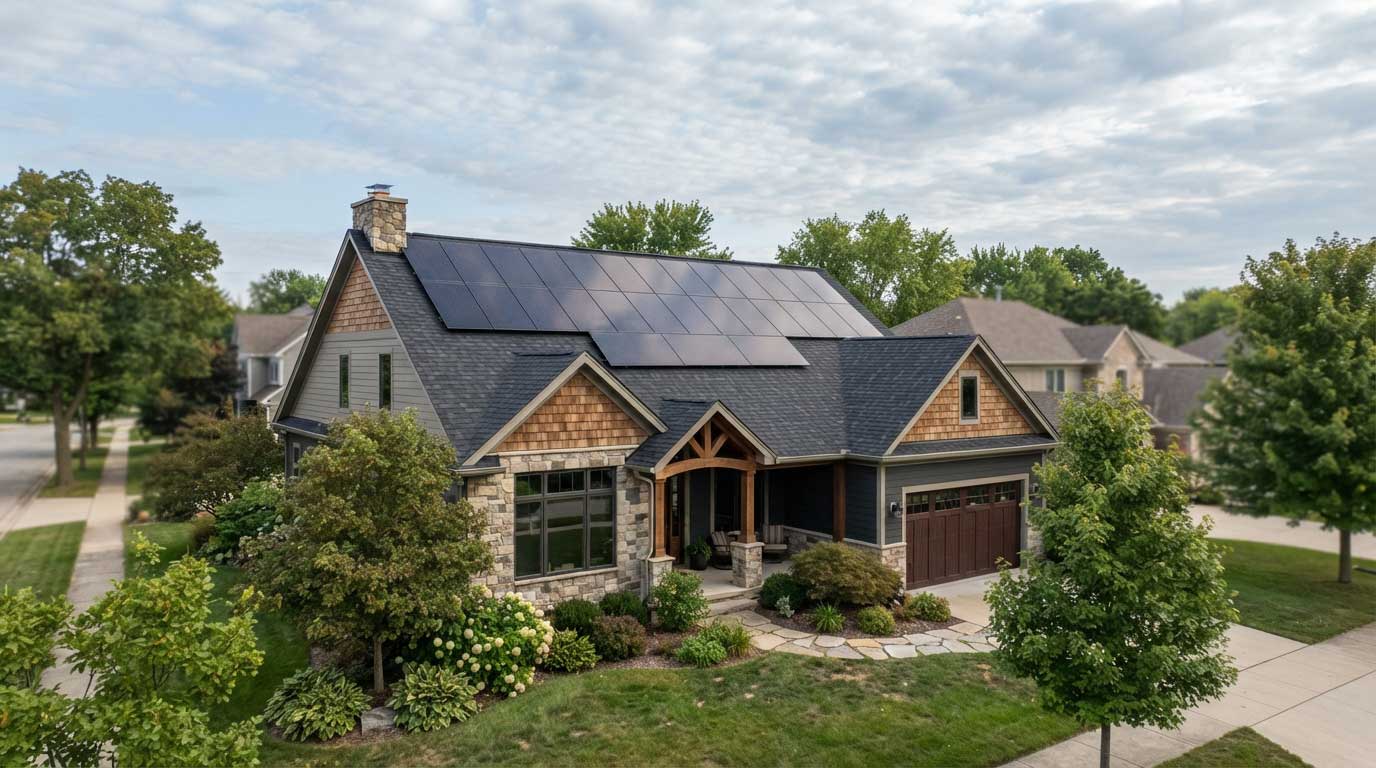
Does Shade Affect Solar Panel Performance?
Yes, shade can significantly reduce solar panel output.
Unlike clouds, which spread light across a large area, shade blocks sunlight from reaching specific cells.
Common sources of shading include:
- Trees
- Buildings
- Chimneys
- Roof structures
- Nearby objects
Modern solar panels often include bypass diodes that help reduce the impact of partial shading.
However, shading remains one of the biggest factors affecting system performance.
During site evaluations, professional installers check:
- Sun path throughout the year
- Nearby trees
- Roof obstacles
- Seasonal shadows
A roof that looks sunny in July may have afternoon shading in December.
This is why professional solar design uses solar analysis tools rather than simple visual inspection.
Do Solar Panels Need Sunlight All Day?
No.
Solar panels do not need sunlight all day to produce useful energy.
They generate electricity whenever sufficient light reaches the photovoltaic cells.
Typical production follows this pattern:
| Time | Solar production |
|---|---|
| Early morning | Low |
| Midday | Highest |
| Afternoon | Moderate to high |
| Evening | Low |
| Night | None |
The goal of a solar system is not constant production.
The goal is matching energy generation with yearly consumption.
Battery storage and grid connections help balance periods when solar production is lower.
How To Improve Solar Panel Performance With Limited Sunlight
If your location receives less direct sunlight, system design becomes even more important.
Several improvements can increase energy output:
Choose Higher Efficiency Panels
Higher-efficiency modules produce more electricity from the same available sunlight.
Optimize Panel Orientation
Correct direction and tilt help capture more sunlight throughout the year.
Reduce Shading
Removing unnecessary shading obstacles can improve annual production.
Use Proper System Sizing
Oversizing or undersizing a system can reduce financial performance.
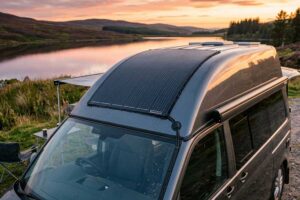
At Bright Solar, flexible solar panel solutions are often considered for applications where traditional rigid installations are difficult, such as RVs, boats, and off-grid systems.
Does Solar Panel Type Affect Low-Light Performance?
Yes.
Different solar technologies perform differently under low-light conditions.
Common solar panel types include:
| Panel type | Low-light performance |
|---|---|
| Monocrystalline | Excellent efficiency |
| Polycrystalline | Good but lower efficiency |
| Thin-film | Can perform well in some conditions |
| Flexible solar panels | Depends on cell technology |
Modern monocrystalline panels are widely used because they provide high efficiency and reliable performance in changing weather.
Why Direct Sunlight Still Matters
Although solar panels can work without direct sunlight, direct sunlight remains important.
More direct sunlight means:
- More photons reaching cells
- Higher electrical current
- Greater energy production
This is why solar designers consider:
- Roof direction
- Tilt angle
- Local climate
- Seasonal sunlight
A well-positioned panel can often outperform a higher-rated panel installed in a poor location.
FAQ About does a solar panel need direct sunlight?
does a solar panel need direct sunlight?
No. Solar panels do not require direct sunlight, but direct sunlight provides the highest electricity production.
Do solar panels work on cloudy days?
Yes. Solar panels continue producing electricity from diffused sunlight during cloudy weather.
Can solar panels work in shade?
Yes, but shade reduces output. Heavy shading can significantly decrease energy production.
Do solar panels work in winter?
Yes. Solar panels can work in winter as long as daylight reaches the cells. Cold temperatures can even improve electrical efficiency.
How many hours of sunlight do solar panels need?
Solar panels generate power whenever light reaches them. System performance depends on annual sunlight availability rather than a fixed daily requirement.
Do solar panels work at night?
No. Solar panels require light to generate electricity. Energy stored in batteries can provide power after sunset.
Are solar panels effective in cloudy countries?
Yes. Countries with frequent cloudy weather successfully use solar energy because annual solar production remains valuable.
Conclusion
does a solar panel need direct sunlight? No, direct sunlight is not required, but it delivers the highest performance. Solar panels can still generate electricity using cloudy, indirect, and diffused sunlight.
The real performance of a solar system depends on more than sunshine alone.
Panel technology, installation angle, shading control, and system design determine how much energy a solar installation produces.
At Bright Solar, we focus on designing solar solutions that work in real-world conditions—not only perfect sunny days.
Solar energy works because photovoltaic technology captures available light efficiently, wherever the system is installed.
The prev: do solar panels give off radiation?The next: do solar panels store energy?
Related recommendations
-

How Long Does Solar Panels Last?
223How long does solar panels last? Discover the average lifespan, degradation rates, maintenance tips, and expert insights to maximize solar performance with Bright Solar.
View details -
How to Mount Flexible Solar Panel?
275Learn how to mount flexible solar panel systems safely on RVs, vans, boats, and curved roofs. Expert installation tips, mistakes to avoid, and real-world mounting advice from Bright Solar.
View details -
How long do solar panels take to install?
125How long do solar panels take to install? Learn solar installation timelines, preparation steps, and factors affecting project completion with Bright Solar.
View details -
How Much Power Do Solar Panels Produce?
114A modern residential solar panel typically has a 400–460W rated output. Actual energy production depends on sunlight, temperature, shading, orientation, and ...
View details