do solar panels give off radiation?
do solar panels give off radiation? No, solar panels do not give off harmful radiation. They convert sunlight into electricity through photovoltaic cells and only produce low-level non-ionizing electromagnetic fields from electrical components such as wiring and inverters.
Do Solar Panels Give Off Radiation?
The word “radiation” often creates unnecessary concern because it covers many different types of energy.
Not all radiation is dangerous.
Sunlight, radio waves, heat, and visible light are all forms of radiation. The important difference is their energy level and biological effects.
Solar panels do not produce ionizing radiation.
Ionizing radiation includes:
- X-rays
- Gamma rays
- Nuclear radiation
- High-energy particles
These forms of radiation have enough energy to remove electrons from atoms and potentially damage DNA.
A photovoltaic panel works differently.
Inside the solar cell, photons from sunlight transfer energy to semiconductor materials, usually silicon. This movement creates an electrical current. The process does not create radioactive materials or high-energy radiation.
The National Renewable Energy Laboratory (NREL) explains that photovoltaic technology generates electricity by converting sunlight directly into electrical energy through semiconductor materials.
Source:
https://www.nrel.gov/
After years working with solar products and reviewing PV system designs, I have noticed that many customers are not actually concerned about the panel itself. Their questions usually focus on the invisible things they cannot see—radiation, electromagnetic fields, and long-term health effects.
Understanding the difference between these concepts is the first step.
What Type of Radiation Comes From Solar Panels?
Solar panels do not emit ionizing radiation.
The energy involved in a solar system mainly comes from:
| Energy type | Produced by solar panels? | Health concern |
|---|---|---|
| Visible light | No, panels absorb sunlight | No |
| Ultraviolet radiation | No | Comes from sunlight |
| X-rays | No | Not produced |
| Gamma rays | No | Not produced |
| Electromagnetic fields | Yes, from electrical current | Non-ionizing |
The solar panel is an energy converter, not a radiation generator.
A common misunderstanding is that because solar panels interact with sunlight, they somehow create stronger radiation.
That is not how photovoltaic technology works.
The panel receives energy from the sun and converts part of that energy into electricity. It does not amplify radiation or release dangerous energy back into the environment.
The American Cancer Society explains that non-ionizing radiation does not have enough energy to directly damage DNA in the same way ionizing radiation can.
Source:
https://www.cancer.org/
Do Solar Panels Emit Electromagnetic Fields?
Yes, solar panels and their electrical components produce electromagnetic fields, but these are low-frequency, non-ionizing fields.
Any device carrying electricity creates electromagnetic fields.
Examples include:
- Home wiring
- Refrigerators
- Computers
- Phone chargers
- Electrical appliances
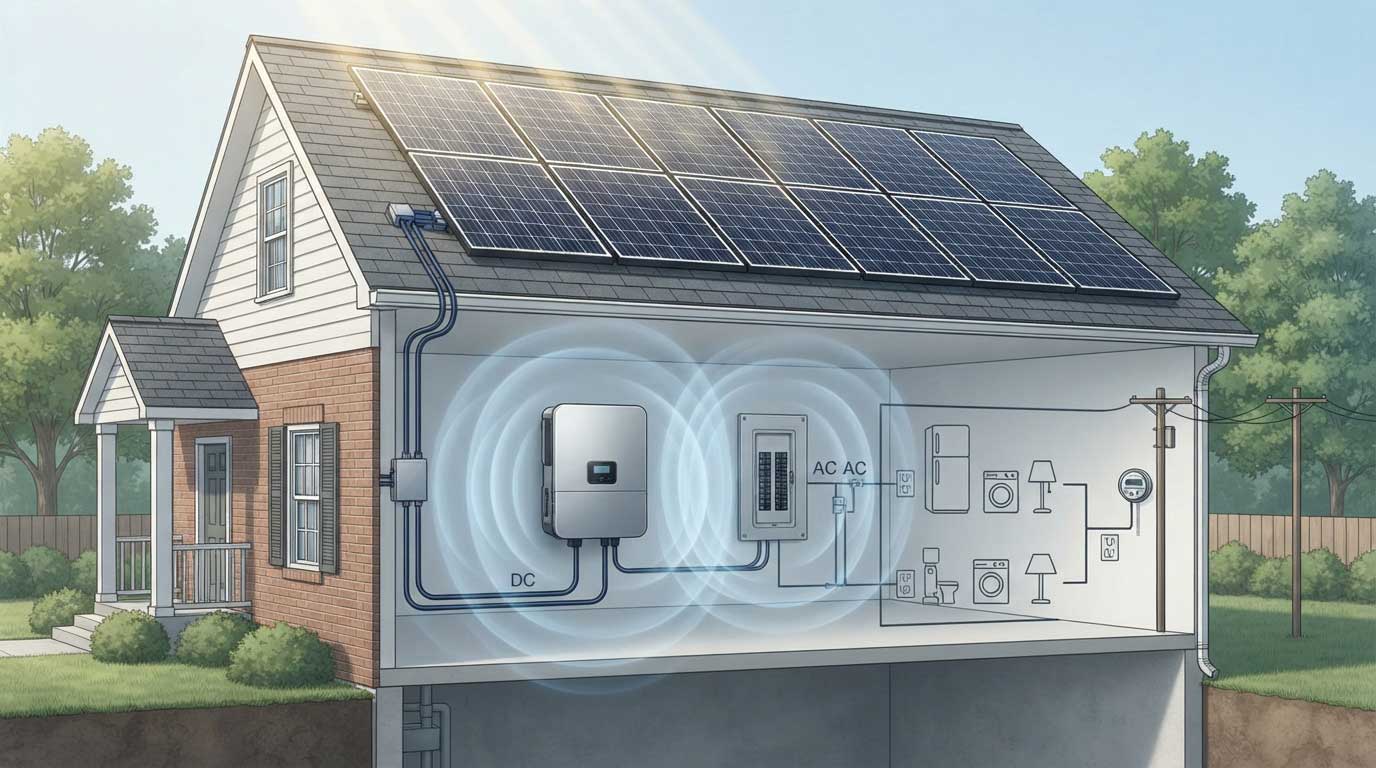
A solar system includes:
- Solar modules
- DC cables
- Inverter
- AC wiring
- Electrical distribution equipment
Among these components, the inverter usually creates the strongest electromagnetic field because it converts direct current (DC) electricity into alternating current (AC) electricity.
However, these fields are fundamentally different from radiation types such as X-rays or gamma rays.
The American Cancer Society states that extremely low-frequency electromagnetic fields have been studied extensively, but current research has not established that ordinary household exposure causes cancer.
From an installation perspective, equipment placement matters.
A professional installer considers:
- Inverter location
- Cable routing
- Electrical separation
- Ventilation
- Local electrical codes
Good system design reduces unnecessary exposure while improving safety and reliability.
Do Solar Panels Give Off UV Radiation?
No, solar panels do not create ultraviolet radiation.
The ultraviolet radiation people associate with solar energy comes from the sun itself.
Solar panels absorb sunlight, including some ultraviolet wavelengths, and convert available solar energy into electricity.
They do not generate additional UV radiation.
The glass surface of a photovoltaic module protects the internal cells from weather conditions and helps control how sunlight reaches the solar cells.
The American Cancer Society identifies ultraviolet radiation from sunlight as a known risk factor for skin cancer. However, this risk comes from direct exposure to sunlight, not from solar panels installed on buildings.
Source:
https://www.cancer.org/cancer/risk-prevention/sun-and-uv/uv-radiation.html
This distinction is important:
The sun produces radiation.
The solar panel captures energy.
The solar panel does not become a radiation source.
Are Solar Panels Safe To Have On Your Roof?
Yes, properly installed solar panels are considered safe for residential use.
Millions of homes worldwide use rooftop solar systems, and there is no established evidence showing that solar panels create harmful radiation exposure.
The actual safety considerations of a rooftop solar system are engineering-related:
Electrical Safety
Solar panels generate electricity whenever sunlight reaches them.
Important safety points include:
- Correct wiring
- Proper grounding
- Certified electrical components
- Qualified installation
Structural Safety
A solar system adds weight to a roof.
Installers evaluate:
- Roof structure
- Wind loads
- Snow loads
- Attachment methods
Equipment Safety
Modern solar systems include:
- Overcurrent protection
- Disconnect switches
- Monitoring systems
- Safety controls
The U.S. Department of Energy emphasizes that photovoltaic systems should follow proper design and installation practices to ensure reliable operation.
Source:
https://www.energy.gov/
Do Solar Inverters Give Off Radiation?
Solar inverters do not give off harmful radiation.
They do produce electromagnetic fields because they contain electronic circuits and switching components.
The inverter’s job is simple:
Solar panels produce DC electricity → inverter converts it → home uses AC electricity
This process involves electrical activity, but not radioactive energy.
Similar electromagnetic fields exist around:
- Laptop chargers
- Microwave ovens
- Power adapters
- Home electrical panels
The difference is that solar equipment is specifically designed to operate within electrical safety standards.
A properly installed inverter should have:
- Manufacturer-approved installation
- Correct ventilation
- Safe mounting location
- Professional electrical connections
Can Solar Panels Cause Health Problems?
Current scientific evidence does not show that solar panels cause health problems because of radiation exposure.
Most concerns fall into three areas:
Radiation
Solar panels do not create ionizing radiation.
Electromagnetic Fields
Solar systems create low-frequency electromagnetic fields, similar to many electrical devices.
Materials
Some solar technologies contain materials such as lead or cadmium compounds.
However, these materials are sealed inside the panel structure.
The U.S. Environmental Protection Agency (EPA) explains that solar panels are generally safe during normal operation because potentially hazardous materials are encapsulated within the module.
Source:
https://www.epa.gov/hw/solar-panel-frequent-questions
The concern is mainly related to recycling and disposal at the end of a panel’s life—not normal use on a roof.
Why Do People Think Solar Panels Give Off Radiation?
There are several reasons this question appears frequently online.
Confusion Between Sunlight and Solar Panels
The sun produces radiation.
Solar panels collect that energy.
They do not create extra radiation.
Confusion Between Electricity and Radiation
Electricity creates electromagnetic fields.
That does not mean it creates dangerous radiation.
Confusion Around Invisible Energy
People often associate anything invisible with danger.
However, engineering evaluates:
- Energy level
- Frequency
- Exposure amount
- Biological effects
Not simply whether something cannot be seen.
How Are Solar Panels Tested for Safety?
Solar panels undergo extensive testing before commercial use.
Typical testing includes:
- Electrical insulation testing
- Weather resistance testing
- Temperature cycling
- Mechanical load testing
- Durability testing
International standards such as IEC 61215 and IEC 61730 evaluate photovoltaic module performance and safety requirements.
For Bright Solar products, safety evaluation focuses on practical performance:
- Long-term outdoor reliability
- Electrical protection
- Material quality
- Mechanical durability
A solar panel should survive decades outdoors while maintaining safe operation.
FAQ About do solar panels give off radiation?
do solar panels give off radiation?
No. Solar panels do not give off harmful radiation. They convert sunlight into electricity and produce only low-level electromagnetic fields from electrical components.
Do solar panels emit radioactive energy?
No. Solar panels do not contain radioactive fuel and do not produce nuclear radiation.
Do solar panels create electromagnetic fields?
Yes. Like all electrical devices, solar systems create electromagnetic fields from current flow.
Can solar panel radiation cause cancer?
Current scientific evidence does not show that properly installed solar panels cause cancer.
Are solar panels safe near homes?
Yes. Properly installed residential solar systems are considered safe when electrical and installation standards are followed.
Do solar farms emit harmful radiation?
No. Solar farms generate electricity but do not produce ionizing radiation.
Should I worry about solar panels on my roof?
No. The main considerations should be installation quality, roof condition, and electrical safety—not radiation.
Conclusion
do solar panels give off radiation? No, solar panels do not produce harmful radiation. They convert sunlight into electricity using semiconductor technology and create only non-ionizing electromagnetic fields from electrical components.
The science behind solar energy is straightforward: photovoltaic panels capture energy from sunlight; they do not create dangerous radiation.
At Bright Solar, safe solar design means focusing on real engineering factors—quality materials, certified technology, correct installation, and long-term reliability.
Solar panels are designed to collect energy from the sun, not release harmful radiation.
The prev: do solar panels emit radiation?The next: does a solar panel need direct sunlight?
Related recommendations
-

how many solar panels needed for a house?
165how many solar panels needed for a house? Estimate your panel count using energy use, sunlight, panel wattage, roof space, and real-world solar production.
View details -
How to Install Flexible Solar Panels to TPO Roof?
237Learn how to install flexible solar panels to TPO roof surfaces safely. Real RV installation experience, mounting methods, adhesive selection, and long-term durability tips from Bright Solar.
View details -
how much do solar panels save?
100Learn how much do solar panels save with real examples, electricity bill reductions, and long-term financial benefits from Bright solar experts.
View details -
how to set up a portable solar panel system?
92Set up a portable solar panel system by positioning the panel in direct sunlight, connecting it to a compatible controller or power station, and checking vol...
View details