Does Cold Weather Affect Solar Panels?
Does cold weather affect solar panels? Yes, cold weather affects solar panels, but low temperatures do not necessarily reduce their electricity output. Solar panels generally operate more efficiently in cool conditions when sunlight is available. Snow cover, shorter winter days, cloud cover, and shading can reduce energy production, while extreme cold can create additional installation and electrical-design considerations.
For homeowners, RV users, and off-grid system designers, the important distinction is between temperature and available sunlight. A cold, clear winter day can provide productive solar conditions, whereas a warmer but heavily overcast day may deliver less energy.
How Does Cold Weather Affect Solar Panel Performance?
Solar panels convert sunlight into electricity. Their output depends on several conditions, including solar irradiance, cell temperature, shading, and the electrical characteristics of the module.
For conventional crystalline-silicon panels, lower cell temperatures generally improve voltage and can increase power output relative to operation at higher temperatures, assuming comparable sunlight and other conditions.
This does not mean winter automatically produces more electricity. Days are often shorter, the sun sits lower in the sky, and snow or cloud cover can reduce the sunlight reaching the cells. These factors can outweigh the benefit of cooler operating temperatures.
Why Solar Panels Can Be More Efficient in Cold Conditions
Photovoltaic cells respond to temperature as well as sunlight. As crystalline-silicon cells heat up, their voltage typically decreases. Cooler cells can therefore operate at a higher voltage under comparable irradiance.
The U.S. Department of Energy explains that solar panels can be more efficient in colder temperatures, while emphasizing that sunlight availability remains essential to electricity generation.
For system designers, this creates a useful distinction:
- Efficiency: How effectively a panel converts the sunlight it receives into electricity.
- Energy production: The total electricity generated over a period of time.
A panel may operate more efficiently on a cold day but still generate less total energy if the day is short, cloudy, or heavily shaded.
Do Solar Panels Work in Snow and Freezing Temperatures?
Yes. Solar panels can generate electricity in freezing weather, provided sunlight reaches their photovoltaic cells and the system operates within its specified limits.
Snow introduces a different problem: coverage. A layer of snow that blocks the cells can substantially reduce or temporarily stop production from the covered portion of a panel. Light snow that slides away or melts may have a much smaller effect.
Snow can also reflect sunlight. Under suitable conditions, reflected light may contribute to generation, but this does not make a snow-covered panel more productive overall. The amount of exposed cell area and the actual irradiance still matter.
What Happens to Solar Panels During Winter?
| Winter condition | Potential effect |
|---|---|
| Cold, sunny weather | Cool cells can support favorable electrical efficiency. |
| Snow covering the cells | Production can fall substantially until the cells are exposed. |
| Overcast skies | Diffuse sunlight can still produce electricity, usually at a reduced level. |
| Frost or thin ice | The effect depends on how much of the active surface is obstructed. |
| Short winter days | Fewer daylight hours can reduce daily energy generation. |
| Strong winds and freezing temperatures | Mechanical mounting, wiring, and equipment ratings become important considerations. |
Actual results vary with module construction, site conditions, and system design.
What Temperature Is Too Cold for Solar Panels?
There is no single outdoor temperature at which all solar panels stop working. The operating temperature range depends on the module and its datasheet. Many photovoltaic modules are designed for outdoor use across a wide range of environmental conditions, including freezing temperatures.
However, minimum operating temperature and maximum system voltage are not the same thing. Cold weather can increase a module’s open-circuit voltage (Voc). If a system is designed without accounting for this increase, the voltage may exceed the charge controller or inverter’s permitted input limit.
The U.S. Department of Energy recommends selecting and designing PV equipment to withstand the weather conditions expected throughout its service life. Its winter-weather guidance also discusses module load ratings, snow accumulation, ice, and mounting structures.
Why Cold-Weather Voltage Matters
When planning a solar array for a cold climate, installers should check:
- The module’s temperature coefficient of Voc.
- The lowest expected site temperature.
- The number of modules connected in series.
- The maximum DC input voltage of the inverter or charge controller.
- The voltage and temperature limits specified by the equipment manufacturers.
For example, a string of panels may have an acceptable operating voltage on a mild day but exceed the equipment’s maximum input voltage when the cells become much colder. The system must be checked using the manufacturer’s specifications and the applicable design requirements.
This is especially relevant to off-grid systems using batteries and charge controllers. A panel’s wattage rating alone is not enough to establish electrical compatibility.
Does Winter Weather Damage Solar Panels?
Cold temperatures alone do not automatically damage a properly specified solar panel. The more significant concerns are severe weather loads, installation quality, water ingress, and repeated environmental stresses.
Heavy snow can accumulate unevenly, placing additional pressure on modules and mounting structures. Ice can add weight, while freeze-thaw conditions may expose weaknesses in unsuitable components or poorly protected electrical connections.
The Department of Energy identifies snow and ice as potential sources of PV system damage and recommends designing the modules, mounting system, and supporting structure for local conditions.
What Research Says About Solar Panels in Cold Climates
A 2025 peer-reviewed study, Long-Term Photovoltaic System Performance in Cold, Snowy Climates, examined performance degradation in cold-climate PV systems.
The researchers reported:
- An average degradation rate of 0.45% per year across the cold-climate data they reviewed.
- A median degradation rate of 0.33% per year.
- A distribution concentrated around annual degradation rates of approximately 0.1% to 0.2%, while some systems degraded more quickly.
The study included reported results from cold-climate systems and newly analyzed sites in subarctic North America. Its authors noted that the available sample of reported degradation rates was limited, so the findings should not be treated as a guarantee for every installation.
The useful takeaway is that cold climates are not inherently incompatible with photovoltaic systems. Long-term performance depends on the equipment, installation, weather exposure, and maintenance—not simply the thermometer reading.
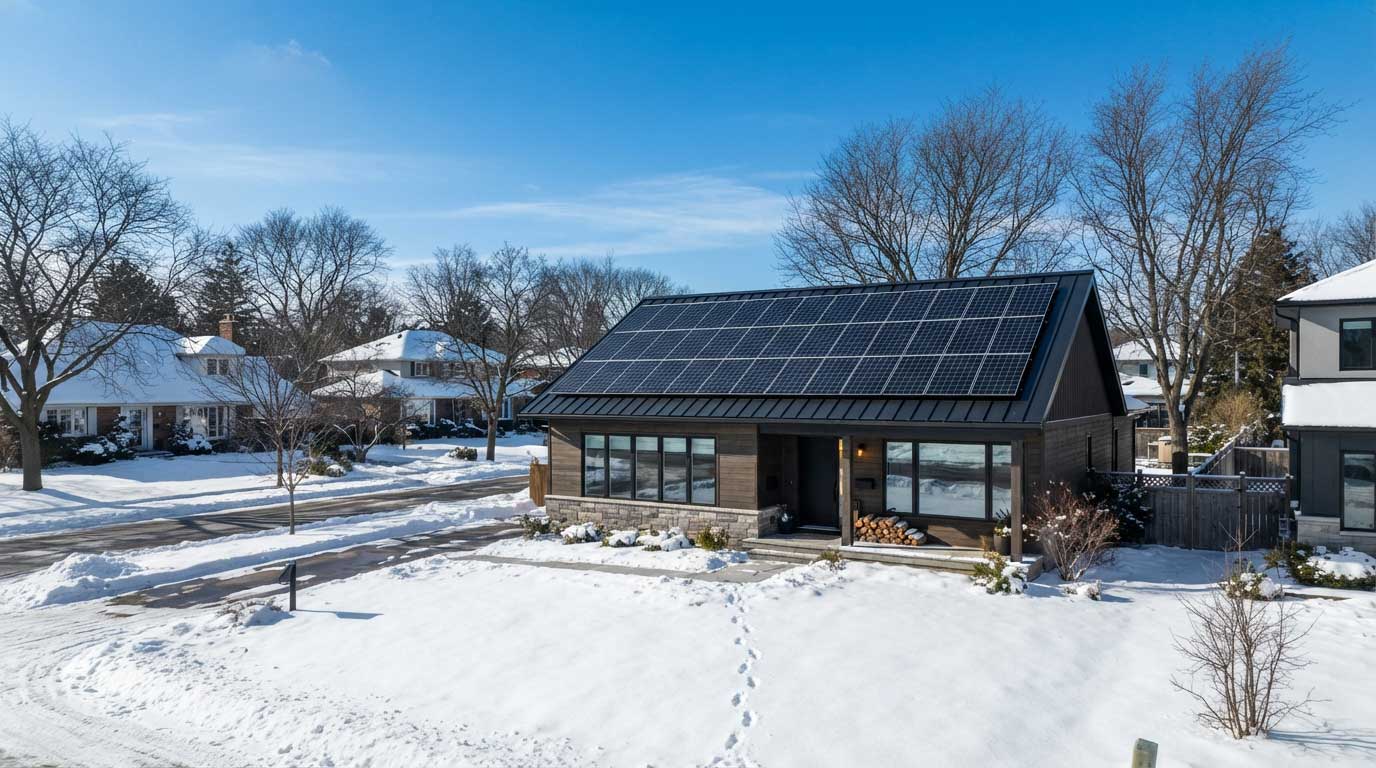
How to Protect Solar Panels During Winter
A winter-ready solar installation starts with suitable equipment and mounting—not improvised fixes after the first snowfall.
Consider these measures:
- Check the datasheet. Confirm the module’s operating temperature range, voltage characteristics, and mechanical load ratings.
- Account for local snow loads. Ensure the roof, mounting hardware, and modules are appropriate for the expected snow and wind conditions.
- Review the tilt and layout. Panel angle can affect how readily snow slides off, but the design must also account for wind loads and the site’s solar resource.
- Protect electrical components. Use equipment and enclosures suitable for the environment, and ensure wiring is secured and protected against water and ice.
- Monitor the system. A sudden drop in production may indicate snow coverage, a fault, or another issue that deserves investigation.
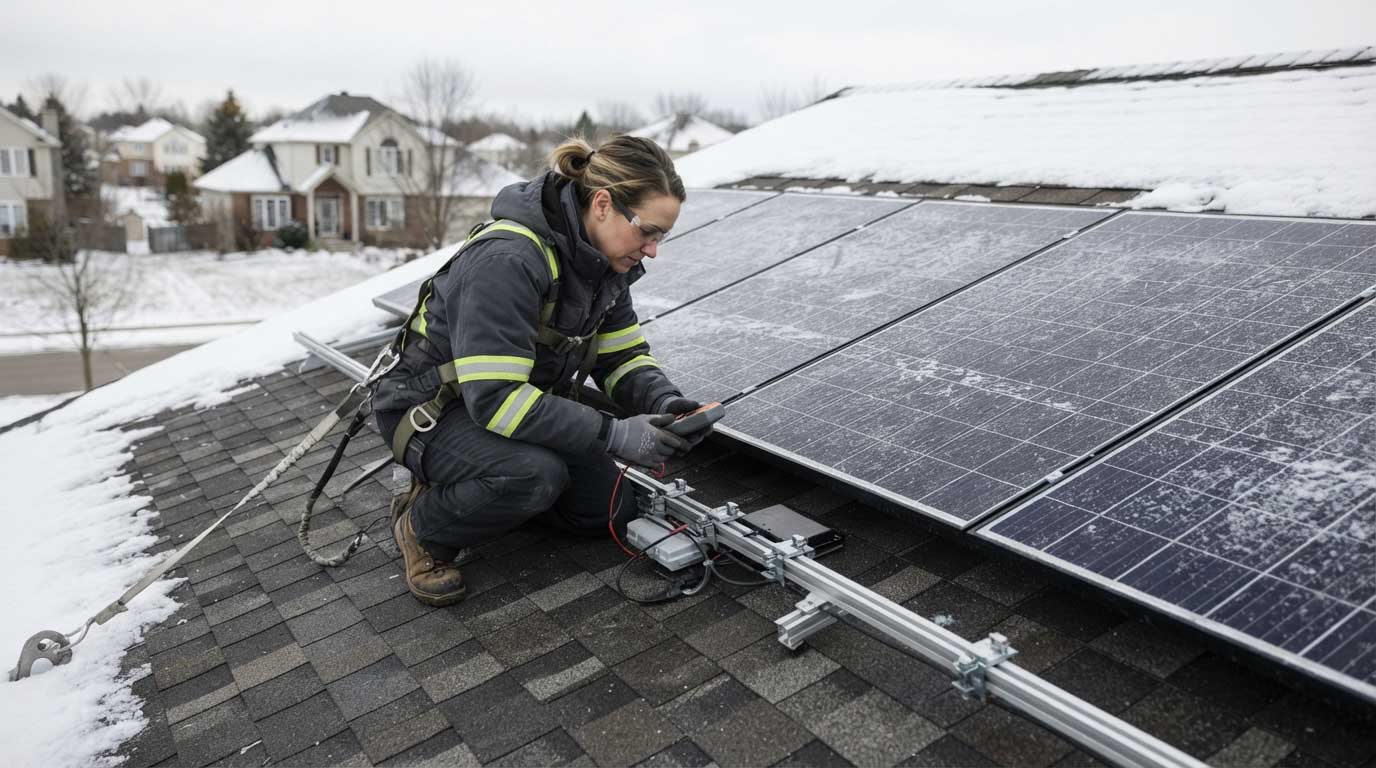
- Follow safe maintenance practices. Avoid walking on panels or scraping them with hard tools. If snow removal is necessary, follow the manufacturer’s instructions and use a qualified professional where access or electrical hazards are involved.
The Department of Energy advises careful consideration of module loading, mounting arrangements, snow shedding, and electrical protection in regions exposed to severe winter weather.
FAQ About Does Cold Weather Affect Solar Panels?
Does cold weather affect solar panels?
Yes, but not always negatively. Lower cell temperatures can improve the electrical efficiency of many crystalline-silicon panels. Snow, cloud cover, shorter days, and system-design limitations can still reduce total energy production.
Do solar panels work in freezing temperatures?
Yes. Solar panels can generate electricity below freezing when sunlight reaches their cells and the system operates within its specified limits. Check the datasheet and system voltage limits for the installation.
Do solar panels produce more electricity in winter?
Not necessarily. Cooler temperatures can improve efficiency under comparable sunlight, but winter often brings fewer daylight hours and lower solar irradiance. Snow coverage and cloud conditions can further reduce daily production.
Can snow damage solar panels?
Heavy snow can place significant loads on modules and mounting structures. Whether damage occurs depends on the snow load, module ratings, support design, and installation quality. Systems in snowy regions should be designed for local conditions.
Should I remove snow from my solar panels?
Do not climb onto panels or use shovels, sharp tools, or forceful scraping. Snow removal may create fall, electrical, or equipment-damage hazards. Follow the manufacturer’s guidance and consult a qualified professional if removal is necessary.
Does cold weather affect flexible solar panels?
Yes. Flexible Solar Panels are still photovoltaic modules, so their electrical performance is affected by cell temperature and available sunlight. Their permitted operating conditions and mechanical limitations depend on the specific product. Verify the datasheet before using a flexible panel in a cold or snowy environment.
Can cold weather damage solar batteries or charge controllers?
It can affect system operation, but the risks and limits vary by battery chemistry and equipment model. Check the battery’s permitted charging and discharging temperatures, the controller’s specifications, and the system manufacturer’s instructions. Do not assume that a panel’s cold-weather capability means every connected component has the same limits.
Conclusion
Does cold weather affect solar panels? Yes, but cold temperatures are not necessarily a disadvantage. Solar panels can operate efficiently in cold conditions, and well-designed PV systems can provide electricity in winter. The main considerations are sunlight availability, snow and ice accumulation, voltage changes, and equipment ratings.
For Bright Solar customers planning residential, RV, marine, or off-grid installations, selecting panels according to the actual operating environment is essential. Review the product datasheet, system voltage limits, and mounting requirements before installation.
The prev: Do Solar Panels Work in the Shade?The next: How do solar panels work simple explanation?
Related recommendations
-

how often do solar panels need to be cleaned?
197Most solar panels need cleaning once or twice a year, but dusty, agricultural, coastal, or polluted sites may require monthly monitoring or more frequent cle...
View details -
How long do solar panels take to install?
153How long do solar panels take to install? Learn solar installation timelines, preparation steps, and factors affecting project completion with Bright Solar.
View details -
How to Attach Flexible Solar Panel to RV Roof?
253Learn how to attach flexible solar panel to RV roof safely using adhesive, screws, and proper sealing methods. Expert RV solar installation tips from Bright Solar.
View details -
How Long Do Solar Panels Last on a House?
271How long do solar panels last on a house? Learn the average lifespan, degradation rates, maintenance factors, and what affects residential solar panel performance with Bright Solar.
View details