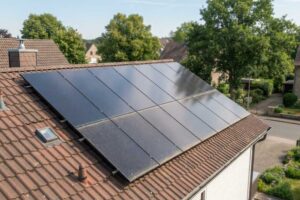
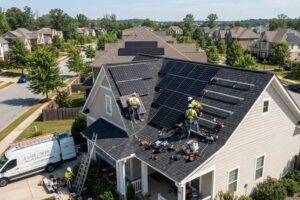
do solar panels emit radiation?
do solar panels emit radiation? No, solar panels do not emit harmful ionizing radiation such as X-rays or gamma rays. They convert sunlight into electricity through photovoltaic cells and only produce low-level non-ionizing electromagnetic fields from electrical components.
Do Solar Panels Give Off Radiation?
This question often comes from a misunderstanding of the word “radiation.”
Radiation is not always dangerous.
The term simply describes energy moving through space or materials. Visible light, radio waves, heat, and sunlight are all forms of radiation. The important difference is the energy level.
Solar panels interact with sunlight, but they do not create dangerous radiation during normal operation.
A photovoltaic module works by absorbing photons from sunlight and converting that energy into electrical current. The process happens inside semiconductor materials, usually silicon, without generating nuclear radiation or high-energy particles.
The National Renewable Energy Laboratory (NREL) explains that photovoltaic systems convert sunlight directly into electricity through semiconductor materials and do not involve radioactive processes.
Source: https://www.nrel.gov/
From my experience reviewing solar system designs and PV product specifications, the biggest confusion usually comes from mixing solar radiation, electromagnetic fields, and electrical safety into one topic. They are different engineering issues.
What Type of Radiation Comes From Solar Panels?
Solar panels do not emit ionizing radiation.
Ionizing radiation includes:
- X-rays
- Gamma rays
- High-energy particles
These forms of radiation have enough energy to remove electrons from atoms and potentially damage DNA.
Solar panels do not operate in this category.
Instead, a working solar system involves:
- Sunlight
- Electrical current
- Low-frequency electromagnetic fields
- Heat generated by electrical resistance
These are non-ionizing forms of energy.
The American Cancer Society explains that non-ionizing radiation does not carry enough energy to directly damage DNA in the same way that ionizing radiation can.
Source: https://www.cancer.org/
The distinction matters.
A solar panel on a roof is not producing a new radiation source. It is simply converting the sunlight already reaching the surface into usable electricity.
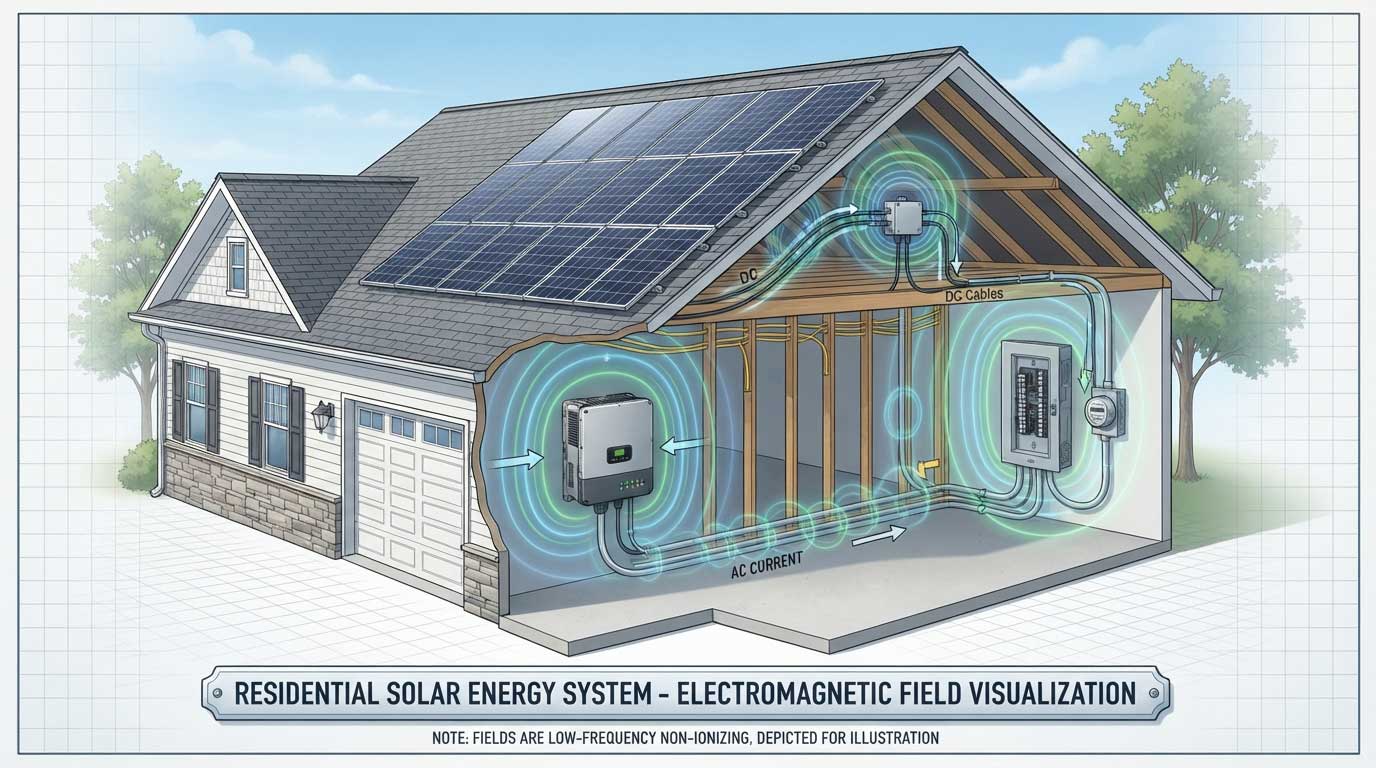
Do Solar Panels Emit Electromagnetic Fields?
Yes, but at very low levels similar to many household electrical devices.
Whenever electricity flows through a conductor, electromagnetic fields exist.
Solar systems contain:
- PV modules
- DC cables
- Inverters
- AC wiring
- Electrical panels
The inverter is usually the strongest source because it processes electrical power and converts DC electricity into AC electricity used by homes.
However, these fields are classified as extremely low-frequency (ELF) electromagnetic fields, not ionizing radiation.
The American Cancer Society notes that ELF electromagnetic fields have been studied extensively, but current scientific evidence has not established that normal household exposure causes cancer.
A practical observation from solar installations:
The distance between a person and the equipment matters.
An inverter mounted in a garage or utility area is different from a device placed directly beside a living space. Professional installation considers equipment location, wiring routes, ventilation, and electrical codes.
Do Solar Panels Emit UV Radiation?
No.
Solar panels do not create ultraviolet radiation.
The sunlight reaching a solar module already contains ultraviolet radiation from the sun. The panel absorbs a portion of the sunlight and converts available energy into electricity.
It does not amplify UV radiation or release additional UV energy.
In fact, the front glass layer of a solar panel blocks and filters certain wavelengths while protecting the internal photovoltaic cells.
The American Cancer Society identifies ultraviolet radiation from sunlight as a known cause of skin cancer, but this risk comes from direct sun exposure—not from the solar panel itself.
Source:
https://www.cancer.org/cancer/risk-prevention/sun-and-uv/uv-radiation.html
This difference is important when explaining rooftop solar safety.
The panel is a receiver of sunlight, not a radiation generator.
Are Solar Panels Safe To Live Near?
Yes, properly installed solar panels are considered safe for normal residential use.
Millions of homes worldwide use rooftop solar systems without evidence showing that living near solar panels creates a cancer risk.
The main safety considerations for solar installations are practical engineering issues:
| Safety area | Main concern |
|---|---|
| Electrical | High DC and AC voltage |
| Installation | Proper mounting and wiring |
| Fire safety | Correct components and protection |
| Structure | Roof loading and attachment |
| Maintenance | Damaged cables or equipment |
Solar panels should be installed according to electrical standards and manufacturer requirements.
The U.S. Department of Energy emphasizes that photovoltaic systems must follow appropriate installation, electrical, and safety practices.
Source:
https://www.energy.gov/
For Bright Solar projects, safety starts with engineering decisions: reliable components, correct wiring, certified materials, and professional installation.
Do Solar Inverters Produce Radiation?
Solar inverters produce electromagnetic fields because they contain electrical circuits and switching components.
However, they do not produce ionizing radiation.
An inverter works by changing the form of electrical energy:
DC electricity from solar panels → AC electricity for household use
The electromagnetic fields produced are similar in category to those from many common electrical devices.
Examples include:
- Refrigerators
- Computers
- Chargers
- Household wiring
- Electrical appliances
The key difference is location and exposure level.
A properly installed inverter should have:
- Correct mounting distance
- Adequate ventilation
- Proper electrical protection
- Compliance with installation standards
Can Solar Panels Cause Health Problems?
Current scientific evidence does not show that solar panels cause health problems through radiation exposure.
The concerns usually fall into three categories:
1. Radiation Exposure
Solar panels do not produce ionizing radiation.
2.Electromagnetic Fields
Solar systems produce low-level electromagnetic fields from electrical components. Current research has not established normal residential solar exposure as a cause of cancer.
3.Materials Inside Panels
Some solar technologies contain materials such as lead or cadmium compounds.
However, these materials are sealed inside the module structure.
The U.S. Environmental Protection Agency (EPA) explains that solar panels are generally safe during normal operation because potentially hazardous materials are encapsulated within the module.
Source:
https://www.epa.gov/hw/solar-panel-frequent-questions
The situation changes when panels are damaged, dismantled, or disposed of improperly.
What Materials Block Radiation in Solar Panels?
Solar panels are built with multiple protective layers.
A typical crystalline silicon module includes:
- Tempered glass
- Encapsulant layer
- Silicon solar cells
- Back sheet
- Aluminum frame
- Junction box
The glass layer protects the photovoltaic cells from weather exposure and provides mechanical protection.
The encapsulant seals the internal components.
These materials are designed for durability, not radiation shielding, because solar panels are not producing dangerous radiation in the first place.
Their purpose is:
- Weather protection
- Electrical insulation
- Mechanical strength
- Long-term reliability
Why Do People Think Solar Panels Emit Radiation?
The confusion usually comes from three misunderstandings.
Confusing Sun Radiation With Panel Radiation
The sun produces radiation.
The solar panel captures that energy.
It does not create additional harmful radiation.
Confusing Electricity With Nuclear Energy
Electricity and nuclear radiation are completely different.
Solar panels generate electrical current through semiconductor physics.
They do not contain radioactive fuel.
Confusing Electromagnetic Fields With Cancer Risk
Many electrical devices produce electromagnetic fields.
The existence of a field does not automatically mean a health hazard.
Scientific evaluation depends on:
- Field strength
- Frequency
- Exposure duration
- Biological effects
FAQ About do solar panels emit radiation?
do solar panels emit radiation?
No. Solar panels do not emit harmful ionizing radiation. They convert sunlight into electricity and produce only low-level electromagnetic fields from electrical components.
Do solar panels give off harmful radiation?
No. Solar panels do not release harmful radiation like X-rays or gamma rays during operation.
Do solar panels emit electromagnetic fields?
Yes. Like all electrical equipment, solar systems produce electromagnetic fields, mainly from wiring and inverters. These fields are non-ionizing.
Can solar panels cause cancer?
Current scientific evidence does not show that properly installed solar panels cause cancer.
Is it safe to sleep under solar panels?
Yes, for normal residential installations. Solar panels mounted on roofs do not create harmful radiation exposure inside the home.
Do solar farms emit radiation?
Solar farms generate electricity but do not produce ionizing radiation. Electrical equipment may create electromagnetic fields similar to other power infrastructure.
Are solar panels safe for children and pets?
Yes. Properly installed solar systems are considered safe. Normal electrical safety precautions should still be followed around equipment.
Conclusion
do solar panels emit radiation? No, solar panels do not emit harmful radiation. They convert sunlight into electricity through photovoltaic technology and produce only non-ionizing electromagnetic fields from electrical components.
The science is straightforward: solar panels are energy converters, not radiation generators.
For Bright Solar, a safe solar installation means focusing on what engineers can control—quality materials, certified equipment, correct wiring, proper installation, and long-term system reliability.
Solar energy works because it captures the power of sunlight, not because it creates dangerous radiation.
The prev: do solar panels damage roof?The next: do solar panels give off radiation?
Related recommendations
-

How Much for One Solar Panel?
195How much for one solar panel? Discover real solar panel prices, wattage options, cost factors, and expert buying advice from Bright Solar.
View details -
How to Compare Marine Flexible Solar Panels?
220Learn how to compare marine flexible solar panels beyond wattage. Discover real-world insights on durability, ETFE materials, saltwater resistance, and lifespan before buying.
View details -
how often do solar panels need to be cleaned?
146Most solar panels need cleaning once or twice a year, but dusty, agricultural, coastal, or polluted sites may require monthly monitoring or more frequent cle...
View details -
How Long Does It Take to Install Solar Panels?
180How long does it take to install solar panels? Learn the complete installation timeline, from site assessment and permits to rooftop installation and grid connection with Bright Solar.
View details