what way should solar panels face?
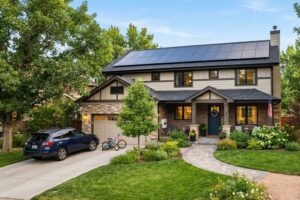
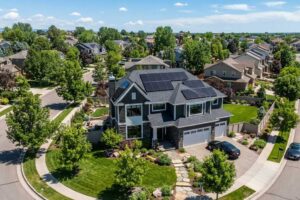
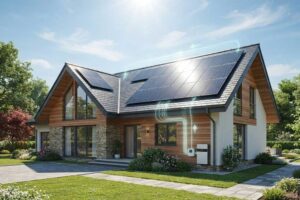
What way should solar panels face? In the Northern Hemisphere, solar panels generally face true south to receive strong sunlight throughout the day. In the Southern Hemisphere, true north is usually the preferred direction. However, roof orientation, shading, seasonal sunlight, and electricity-use patterns can change the most suitable direction for a particular installation.
The direction a solar panel faces affects how much sunlight reaches its surface. But there is a practical detail worth remembering: a panel facing the theoretically ideal direction can still perform poorly if a chimney, nearby building, or tree repeatedly casts a shadow across it.
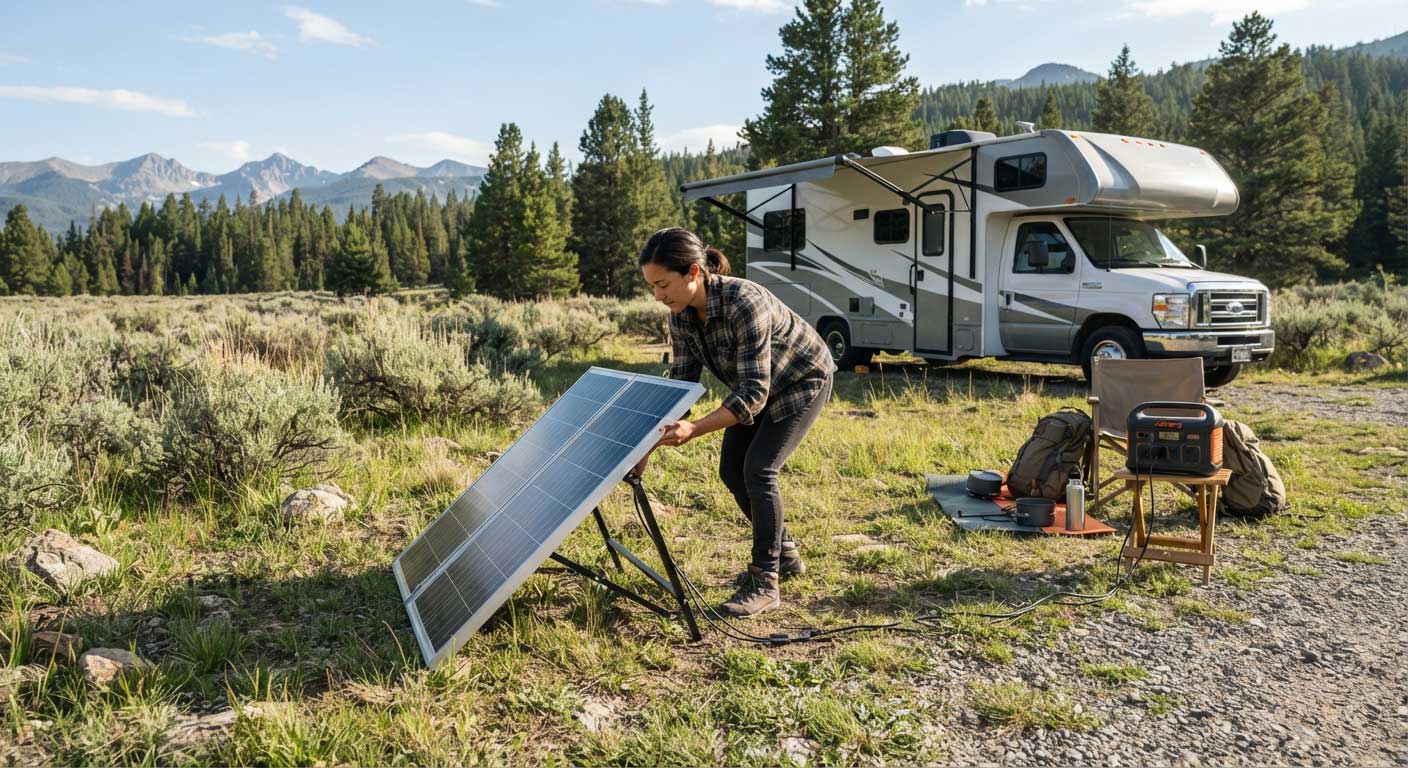
For Bright Solar customers, orientation is especially relevant when planning panels for RVs, boats, portable systems, and off-grid applications. Unlike a fixed rooftop array, a portable panel may be repositioned as the sun moves or as the vehicle changes location.
Which Direction Is Best for Solar Panels?
South-Facing Solar Panels in the Northern Hemisphere
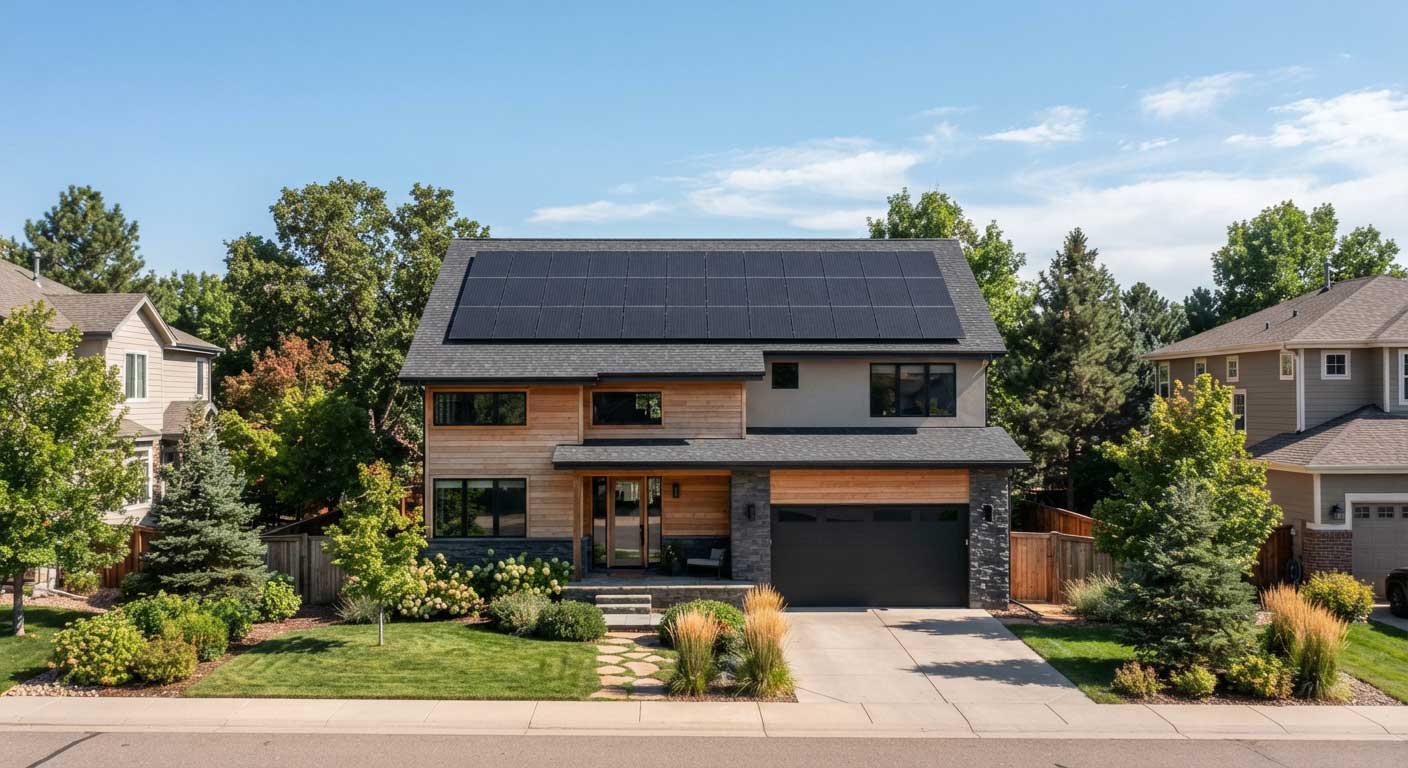
For a fixed solar installation in the Northern Hemisphere, true south is the conventional starting point when the goal is to maximize annual electricity production.
The U.S. Department of Energy recommends south-facing modules with a tilt angle related to local latitude as a general design guideline. Actual results depend on the site and system configuration.
However, true south and magnetic south are not necessarily the same direction. A compass reading can be affected by magnetic declination, so use a reliable site-orientation method when planning a permanent installation.
North-Facing Solar Panels in the Southern Hemisphere
In the Southern Hemisphere, fixed panels generally face true north to receive favorable sunlight over the year.
The National Renewable Energy Laboratory’s System Advisor Model defines the relevant azimuth conventions as 0° for north, 90° for east, 180° for south, and 270° for west. Its fixed-array guidance accounts for the hemisphere when identifying the south-facing or north-facing orientation.
East-Facing vs. West-Facing Solar Panels
East- and west-facing panels can still be useful. Their output is shifted toward different parts of the day:
- East-facing panels: tend to receive stronger direct sunlight earlier in the day.
- West-facing panels: tend to receive stronger direct sunlight later in the afternoon.
- South-facing panels in the Northern Hemisphere: are commonly used to target annual energy production.
- North-facing panels in the Southern Hemisphere: are the corresponding conventional starting point.
A study by the U.S. Energy Information Administration explains that west-facing systems can provide more output during late-afternoon hours, when electricity demand may be higher. That does not mean west-facing panels always produce more total energy; the result depends on the location and objective.
Does Solar Panel Direction Matter More Than Tilt?
Direction and tilt work together. Azimuth describes which compass direction the panel faces, while tilt describes its angle relative to the horizontal.
A panel facing the preferred direction but installed at an unsuitable angle may not produce the expected energy. Conversely, a roof that does not face directly south or north may still be a workable location.
The DOE’s homeowner guidance says south-facing roofs with slopes between 15° and 40° typically perform well in the United States, while noting that other roof orientations may also be suitable. This is a general U.S. guideline, not a universal specification for every latitude or portable panel.
A Realistic Example of Orientation Trade-Offs
NREL’s facility-scale analysis for Boulder, Colorado, found an average maximum-energy orientation of about 37° tilt and an azimuth approximately 9° east of south. The report also notes that production did not decline rapidly with modest changes from that optimum.
This is a useful reminder: a small deviation from the textbook direction does not automatically make a solar installation unsuitable. Roof geometry, wind exposure, shading, wiring, and installation constraints can all matter.
How to Choose the Right Direction for Different Solar Applications
The best direction depends partly on whether the panel stays in one place or moves with the application.
| Application | Orientation considerations |
|---|---|
| Residential rooftop | Roof direction, tilt, shading, and local solar conditions |
| Ground-mounted solar | Greater flexibility to choose azimuth and tilt |
| RV solar panels | Vehicle parking direction, roof layout, and surrounding shade |
| Portable solar panels | Repositioning the panel as sunlight changes |
| Marine solar panels | Vessel layout, available mounting surfaces, and shading |
| Off-grid systems | Energy demand, seasonal sunlight, and battery storage |
For RVs and portable systems, it is not always practical to point the panel toward the ideal compass direction. A portable panel can often be moved to improve sunlight exposure, but the safest position and cable arrangement still matter.
How to Check Solar Panel Orientation Before Installation
Before fixing panels in place, review the site rather than relying on a compass direction alone.
- Identify the true-north or true-south reference appropriate to your hemisphere.
- Check the roof or mounting surface’s direction and tilt.
- Look for shade from trees, chimneys, nearby buildings, and roof features.
- Consider whether energy is needed mainly in the morning, afternoon, or across the day.
- For a fixed system, compare expected production using a location-specific modeling tool.
- For portable panels, test practical positions and monitor the actual charging input.
NREL’s PVWatts tool can estimate solar production for a selected location and system configuration. Comparing different tilt and azimuth settings can help illustrate how orientation changes expected output.
FAQ About What Way Should Solar Panels Face?
Should solar panels face south or west?
In the Northern Hemisphere, south is the conventional direction for maximizing annual production from fixed panels. West-facing panels may provide more electricity later in the day, which can be useful depending on when energy is needed.
Which direction should solar panels face in the Southern Hemisphere?
They generally face true north for favorable annual sunlight exposure. The ideal orientation still depends on location, tilt, shading, and system objectives.
Can solar panels face east?
Yes. East-facing panels can be useful when morning generation is important or when the available roof space faces east. Their daily production profile differs from a south-facing or west-facing array.
Do solar panels have to face directly south?
No. South is a general guideline for fixed installations in the Northern Hemisphere, not an absolute requirement. Other orientations can still generate useful electricity, and site conditions may make them more practical.
Does the angle of solar panels matter?
Yes. Tilt affects how sunlight strikes the panel. The appropriate angle depends on latitude, seasonal conditions, mounting limitations, and the goal of the installation.
Should portable solar panels face the sun directly?
Positioning a portable panel toward the available sunlight can improve exposure. Repositioning it as shadows move may also help, provided the panel remains stable and its cables are safely arranged.
Can solar panels work on a north-facing roof in the Northern Hemisphere?
Yes, they can still generate electricity, but a north-facing roof may receive less favorable direct sunlight than a suitable south-facing roof. The actual outcome depends on location, roof pitch, shading, and local conditions.
Conclusion
When deciding what way should solar panels face, use true south as the conventional starting point in the Northern Hemisphere and true north in the Southern Hemisphere. Then consider tilt, shading, daily energy needs, and the constraints of the mounting location. A modest directional compromise can still be practical when the site is otherwise suitable.
For Bright Solar applications, orientation should be considered alongside panel format and installation conditions. A fixed rooftop array, an RV panel, and a portable ground-mounted module do not necessarily share the same positioning constraints.
Related recommendations
-

How much are residential solar panels?
156Discover how much are residential solar panels and what affects total costs, including panel prices, installation factors, system size, and expert solar insights from Bright Solar.
View details -
How Much Is 1 Solar Panel?
227How much is 1 solar panel? Discover average solar panel prices, cost factors, panel types, and what affects value before you buy. Learn more with Bright Solar.
View details -
how many kwh can a solar panel generate?
291how many kwh can a solar panel generate? Learn solar panel energy output, daily production factors, calculation methods, and ways to maximize solar power.
View details -
how much does a solar panel cost?
265Discover how much does a solar panel cost with real market data, installation breakdowns, and field insights from Bright solar engineers across residential projects.
View details