do solar panels cause cancer?
do solar panels cause cancer? No credible evidence shows that properly installed solar panels cause cancer during normal use. PV modules produce electricity from sunlight and do not emit ionizing radiation; concerns about electromagnetic fields or panel materials need to be considered separately from actual cancer risk.
Do Solar Panels Give Off Radiation?
Solar panels do not produce the kind of ionizing radiation associated with DNA damage and cancer.
A photovoltaic module absorbs sunlight and converts photons into electrical energy. It does not generate X-rays, gamma rays, or other high-energy ionizing radiation during normal operation.
The distinction is important.
The American Cancer Society explains that ionizing radiation has enough energy to damage DNA, while extremely low-frequency electromagnetic fields associated with electrical equipment are non-ionizing and do not have enough energy to directly damage DNA.
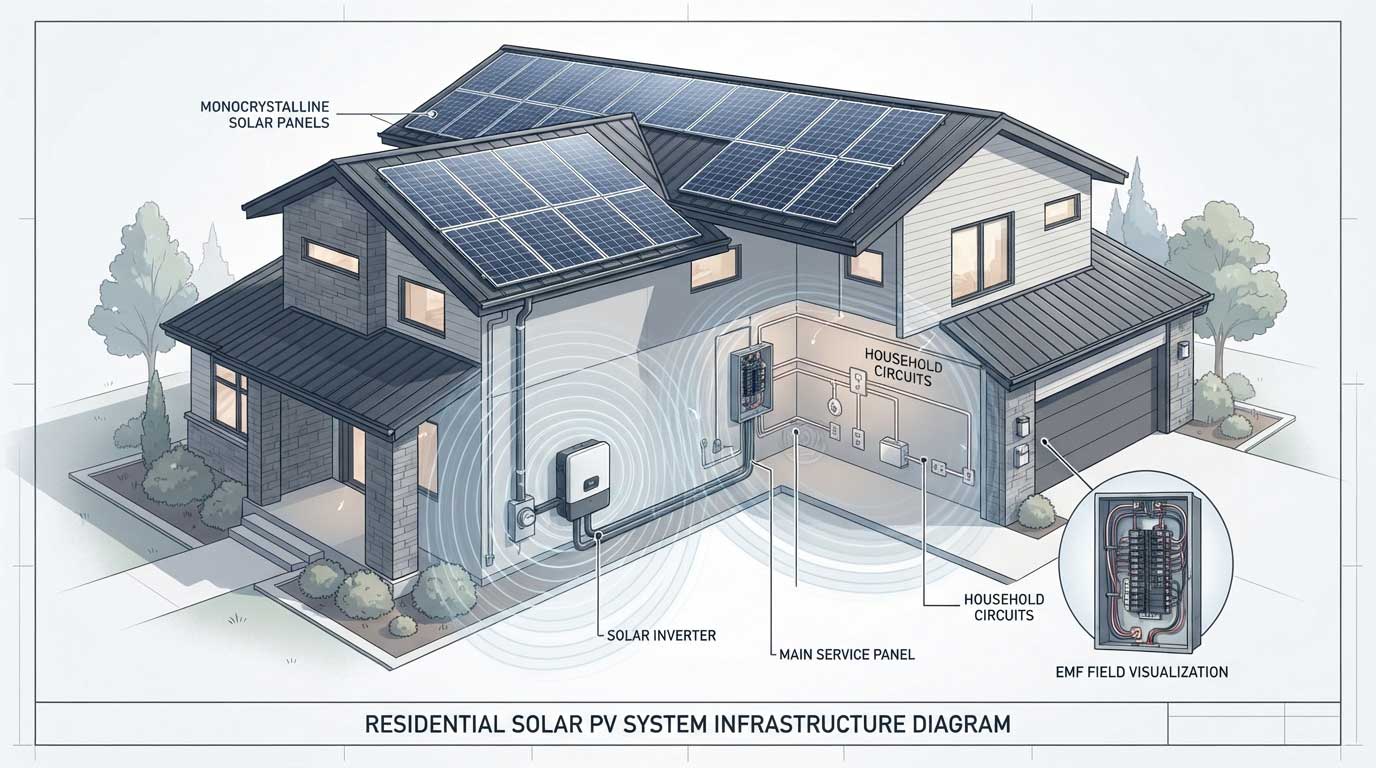
A working solar array does, however, contain energized electrical conductors and inverters. Like household wiring and other electrical equipment, these components can produce low-frequency electric and magnetic fields.
That is an electrical-safety issue—not evidence that the solar panels themselves cause cancer.
Can Solar Panel Electromagnetic Fields Cause Cancer?
This question needs a little more precision.
Solar systems contain electrical equipment that can generate extremely low-frequency (ELF) electromagnetic fields. These fields are also produced by power lines, household wiring, appliances, and other electrical devices.
The American Cancer Society notes that the possible relationship between ELF magnetic fields and cancer has been studied for decades. IARC has classified ELF magnetic fields as “possibly carcinogenic to humans,” while the evidence remains limited and uncertain. The ACS also notes that most studies have not found a clear link between ELF exposure and cancer.
That classification should not be turned into “solar panels cause cancer.”
It doesn’t say that.
It means scientists have identified an area where evidence is insufficient for a definitive conclusion.
For a homeowner evaluating a rooftop PV system, the more relevant question is actual exposure from the installed equipment, particularly around inverters, wiring, and other electrical components.
Do Solar Inverters Cause Cancer?
There is no established evidence that residential solar inverters cause cancer.
An inverter converts the DC electricity generated by the panels into AC electricity used by the home. Because it is electrical equipment, it produces electromagnetic fields while operating.
This is not unique to solar.
Similar low-frequency fields exist around household electrical wiring and appliances.
The American Cancer Society explains that electric current produces electric and magnetic fields and that exposure levels vary according to the source, distance, wiring configuration, and operating conditions.
For Bright Solar system design, I would focus first on correct installation, grounding, cable routing, equipment clearances, manufacturer instructions, and applicable electrical codes.
Those are measurable engineering requirements.
Are Solar Panels Made With Toxic Materials?
Some photovoltaic technologies contain small quantities of metals that can be hazardous under certain conditions, including lead or cadmium.
That does not mean a functioning solar panel is exposing a homeowner to those substances.
The U.S. Environmental Protection Agency states that solar panels are safe during use and explains that working panels generally do not leach toxic metals because the materials are sealed within the module’s construction.
The situation changes when panels are damaged, dismantled, or discarded.
EPA explains that some discarded solar panels may qualify as hazardous waste depending on their composition and whether they exceed regulatory toxicity limits.
So there are two completely different questions:
| Concern | Normal operating condition | End-of-life handling |
|---|---|---|
| Electromagnetic fields | Non-ionizing electrical fields | Not the primary issue |
| Lead/cadmium | Encapsulated inside module | Requires proper recycling/disposal |
| Glass | Protective layer | Broken glass can create physical hazards |
| Electrical voltage | Present during generation | Requires qualified handling |
| Cancer risk | No established causal link | Not a reason to treat working panels as cancer-causing |
That distinction gets lost surprisingly often online.
Does Solar Panel Radiation Cause Cancer?
No evidence shows that radiation from operating PV panels causes cancer.
The sunlight that reaches the module is the energy source. The panel converts part of that sunlight into electricity; it does not transform the sunlight into a new form of cancer-causing radiation.
The American Cancer Society separately identifies ultraviolet radiation from sunlight as a known major risk factor for skin cancer. That risk comes from exposure to the sun itself, not from the photovoltaic panel.
In other words, the roof can be exposed to UV radiation while the solar module is sitting there absorbing it. The module isn’t creating additional UV radiation.
Is It Safe to Live Under Solar Panels?
For normal residential use, properly installed solar panels are not considered a cancer hazard.
The modules are mounted outside the living space and are constructed with protective glass, encapsulants, electrical insulation, and other materials designed for long-term outdoor operation.
The more immediate safety concerns are electrical and structural:
- DC voltage from the PV array
- AC voltage from the inverter
- Damaged or exposed wiring
- Improper grounding
- Roof loading
- Fire-related installation requirements
- Broken glass after severe weather
- Unsafe DIY electrical work
These risks are practical and measurable.
They should not be confused with claims that simply living underneath a solar array causes cancer.
Are Solar Panels Safe for Children?
There is no established evidence that living in a home with properly installed solar panels increases children’s cancer risk.
The American Cancer Society notes that research on electromagnetic fields and childhood cancer has not established a convincing causal relationship. For ELF magnetic fields specifically, the evidence has been mixed, and most studies have not found strong links with childhood cancers.
For families, ordinary electrical safety is the sensible priority.
Children should not have access to exposed electrical equipment, damaged wiring, inverter compartments, or roof-mounted equipment.
The same rule applies whether the electricity comes from solar, the utility grid, or a generator.
What About Lead and Cadmium in Solar Panels?
This is where the conversation becomes more nuanced.
Some PV modules contain small quantities of lead in solder or other components. Certain thin-film technologies, particularly cadmium telluride modules, contain cadmium compounds.
EPA states that some solar panels contain toxic metals such as cadmium, silver, or lead, but working panels generally do not leach those metals because the materials are encapsulated.
EPA’s current solar-panel recycling guidance also confirms that panel chemistry varies and that lead or cadmium can become relevant when panels are discarded and regulated as waste.
This is why I would never recommend breaking apart, burning, or casually disposing of a damaged PV module.
Use an appropriate recycling or disposal route.
What Does the Research Actually Say About Solar Panels and Cancer?
The evidence needs to be separated into three categories.
1. PV Modules
There is no established evidence that properly operating PV modules cause cancer.
2.Electromagnetic Fields
Electrical equipment creates non-ionizing electromagnetic fields. Research on ELF magnetic fields and cancer has produced mixed results, and the ACS describes the evidence as uncertain rather than establishing that solar systems cause cancer.
3.Solar Panel Materials
Some modules contain metals that can be hazardous at sufficient exposure levels, but EPA states that functioning solar panels are safe during use and that their construction prevents normal leaching.
Those three issues should not be bundled into one statement.
What Are the Real Health and Safety Risks of Solar Panels?
For an installed residential system, the realistic concerns are much more straightforward.
Electrical risks
PV modules can produce dangerous DC voltage whenever illuminated. Inverters and AC circuits introduce additional electrical hazards.
Physical risks
Roof work, mounting equipment, falling objects, and damaged glass require appropriate safety procedures.
Fire and equipment risks
Poor installation, damaged wiring, incompatible components, or incorrect electrical protection can create hazards.
End-of-life material handling
Damaged or discarded panels should be handled according to applicable recycling and waste requirements.
EPA specifically notes that some solar panels can meet hazardous-waste criteria when discarded, depending on their composition and test results.
None of these points supports the claim that a properly functioning solar panel is a cancer-causing device.
FAQ About do solar panels cause cancer?
Do solar panels cause cancer?
No established evidence shows that properly installed and normally operating solar panels cause cancer. PV modules do not produce ionizing radiation.
Do solar panels emit radiation?
Solar panels operate with electrical currents and can produce low-frequency electromagnetic fields, but they do not emit ionizing radiation such as X-rays or gamma rays.
Can solar panels cause brain cancer?
There is no established evidence that residential solar panels cause brain cancer. Claims about electromagnetic fields should be distinguished from evidence concerning actual residential PV exposure.
Are solar panels toxic?
Some technologies contain small amounts of metals such as lead or cadmium. However, EPA states that working solar panels are safe during use because these materials are encapsulated within the module.
Are solar panels safe to have on your roof?
Yes, when properly designed and installed. Electrical, structural, fire, and maintenance requirements should be handled according to applicable codes and manufacturer instructions.
Do solar inverters cause cancer?
There is no established evidence that solar inverters cause cancer. Like other electrical equipment, inverters produce low-frequency electromagnetic fields during operation.
Should I worry about living near a solar farm?
A solar farm contains electrical equipment and power infrastructure, so normal electrical and land-use requirements still apply. However, the presence of solar panels itself is not established as a cause of cancer.
Conclusion
do solar panels cause cancer? Current evidence does not establish that properly installed, normally operating solar panels cause cancer. PV modules do not produce ionizing radiation, and their electrical fields are non-ionizing. Some panel technologies contain regulated materials, but EPA states that working panels are safe during use because those materials are encapsulated.
For Bright Solar, the useful distinction is between health claims and measurable engineering risks. A well-designed PV system should be evaluated for electrical safety, grounding, equipment quality, installation practices, storm damage, and responsible end-of-life handling—not treated as a cancer-causing source simply because it generates electricity.
The prev: will hail damage solar panels?The next: do solar panels damage roof?
Related recommendations
-

how much does it cost to install solar panels?
80Find out how much does it cost to install solar panels with real pricing factors, installation details, and expert advice from Bright Solar for your home.
View details -
How Much Solar Panels?
125How much solar panels cost depends on size, efficiency, and application. Discover real solar panel prices, installation costs, and buying tips from Bright Solar.
View details -
Do Solar Panels Work in the Night?
63No. Conventional solar panels do not generate useful electricity at night because they need incoming light. Nighttime solar power requires stored energy from...
View details -
How to Connect Solar Panels in Parallel?
154Parallel solar wiring connects all positive terminals and all negative terminals, keeping voltage unchanged while increasing total current.
View details