
Can You Walk on Solar Panels?
Usually, no—you should not walk on ordinary solar panels. The glass, cells, and internal connections can crack or suffer hidden damage under concentrated foot pressure, even if the panel still appears to work. Only step on a module when its manufacturer explicitly permits it and provides the relevant load limits and walking instructions.
Why Is Walking on Solar Panels Risky?
Solar panels are built to withstand outdoor conditions, including wind, rain, and certain mechanical loads. That does not mean they are designed to support a person standing or walking on them.
A person’s weight is concentrated over a relatively small area beneath their shoes. This can create localized stress on the front glass, solar cells, and internal electrical connections. Damage may be visible as cracked glass, but it can also be difficult to detect immediately.
A panel may continue producing electricity after suffering damage. That does not prove it remains mechanically sound or safe. Cracks can affect performance and may allow moisture to enter, while damaged electrical components can create additional risks.
Possible consequences of stepping on a panel
- Cracked glass: The front surface may fracture under concentrated pressure.
- Cell damage: Solar cells can develop cracks that reduce output or worsen over time.
- Electrical faults: Damaged cells or connections may affect the module’s electrical behavior.
- Water ingress: Damage to protective layers or seals can compromise long-term reliability.
- Personal injury: A person may slip, break through a surface, or be injured by damaged glass.
Are Any Solar Panels Designed to Be Walked On?
Some products are designed for applications where people may need to step on the surface, such as certain marine, vehicle, or specialist installations. However, walkability is a product-specific feature—not a general property of flexible or semi-flexible solar panels.
Do not assume that a panel is walkable because it is thin, flexible, installed on a boat, or marketed for outdoor use. Confirm the exact model’s documentation and permitted loading conditions. If the manufacturer does not explicitly authorize foot traffic, treat the module as non-walkable.
For Bright Solar projects, B2B buyers should confirm the module’s intended application, construction, mounting method, and written load limitations before specifying it for any surface that people may access.
What Do Manufacturers and Field Data Say?
Many conventional module installation manuals explicitly prohibit walking or standing on panels. For example, LONGi’s installation manual warns against standing or walking on modules, while DAS Solar’s lightweight-module manual also prohibits standing, stepping, sitting, walking, or jumping on them. These instructions are product-specific, so the manual for the exact module installed on your roof should always take priority.
The National Renewable Energy Laboratory (NREL) has also documented that mechanical forces—including walking on panels—can cause cell cracks. Its research notes that electroluminescence imaging can reveal cracks that may not be obvious from a normal visual inspection.
This is why a quick glance after someone steps on a module is not a reliable condition check. If accidental loading occurs, arrange an assessment using suitable inspection methods and follow the module manufacturer’s guidance.
What Should You Do Instead of Walking on Solar Panels?
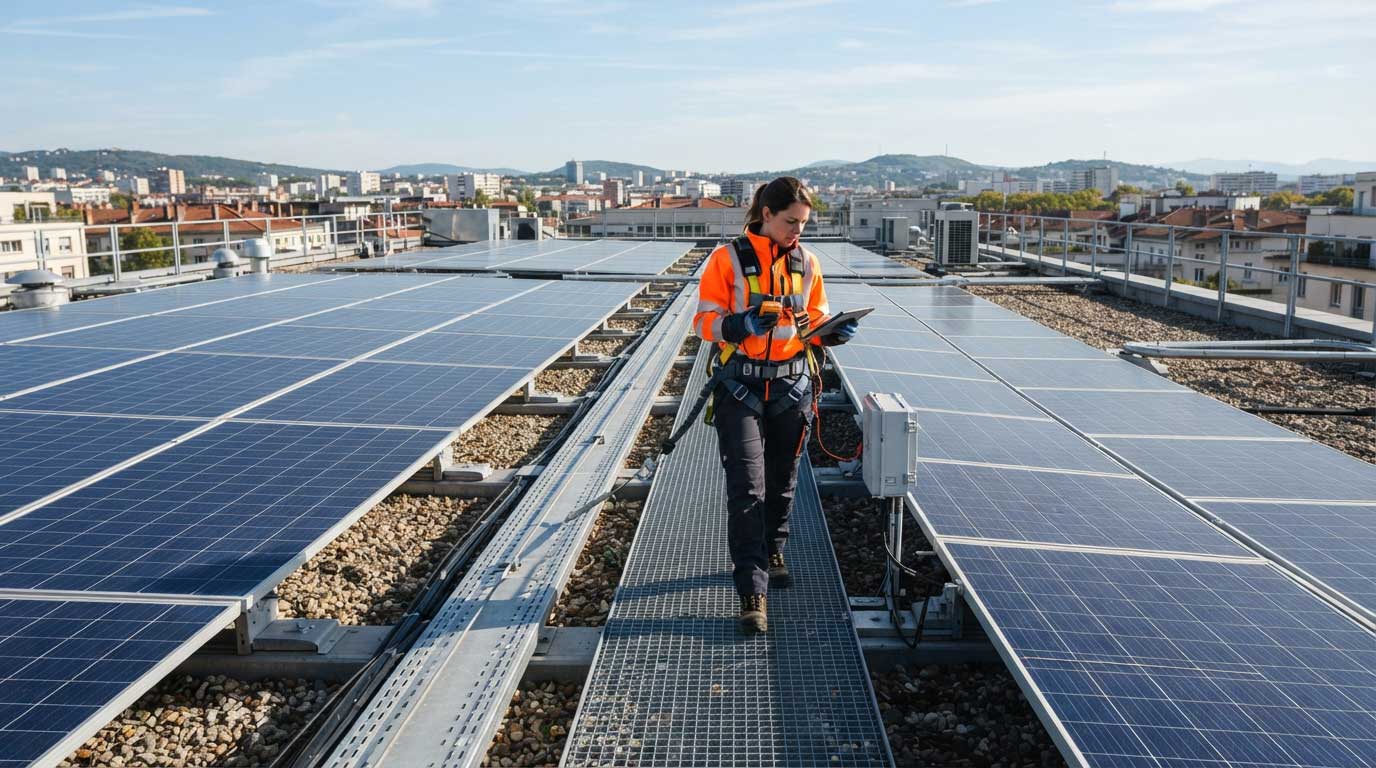
If you need to inspect, clean, or service a solar array, use a safe access method that avoids loading the modules.
- Use designated roof walkways or access paths where provided.
- Have a qualified solar technician inspect the system.
- Follow the roof, mounting-system, and module manufacturers’ access instructions.
- Use suitable fall-protection equipment and comply with local working-at-height rules.
- Do not lean ladders, tools, or other equipment against modules unless the installation instructions explicitly allow it.
- If a panel has been stepped on, report the incident and arrange an appropriate inspection rather than assuming it is undamaged.
FAQ About Can You Walk on Solar Panels?
Can you walk on solar panels?
Generally, no. Most conventional solar panels are not designed for foot traffic. Walking on them can damage glass, cells, or electrical connections. Only walk on a panel if its manufacturer explicitly permits it and specifies the conditions.
Can walking on solar panels damage them even if the glass does not break?
Yes. Mechanical stress can cause cell cracks or other damage that may not be visible during a basic visual check. A panel continuing to produce electricity does not prove it is undamaged.
Are flexible solar panels safe to walk on?
Not necessarily. Flexibility alone does not mean a panel is walkable. Check the exact model’s documentation for permitted use, support requirements, and any restrictions on footwear or loading.
Are there solar panels specifically designed for walking on?
Some specialist modules are marketed for walk-on applications, but their use is subject to product-specific requirements. Confirm the manufacturer’s instructions, including the required backing surface and load limits, before allowing foot traffic.
What should I do if someone accidentally walks on a solar panel?
Keep people away from the affected area and arrange an inspection by a qualified solar professional. Follow the manufacturer’s guidance; do not assume the module is safe simply because there are no visible cracks.
How should solar panels be cleaned or maintained?
Use the cleaning and maintenance methods approved by the module manufacturer. Arrange safe roof access, use designated walkways where available, and have qualified personnel carry out work that involves roof hazards or electrical equipment.
Conclusion
Can you walk on solar panels? For ordinary photovoltaic modules, the answer is generally no. Foot pressure can cause visible or hidden damage, and manufacturers commonly prohibit walking on their products. Specialist walk-on modules may be exceptions, but only when their documentation expressly allows it. Bright Solar recommends confirming the exact module’s permitted use and arranging safe access before any inspection or maintenance work.
The prev: Do I Need to Clean My Solar Panels?The next: Can You Recycle Solar Panels?
Related recommendations
-

how much does it cost to install solar panels?
110Find out how much does it cost to install solar panels with real pricing factors, installation details, and expert advice from Bright Solar for your home.
View details -
How Do Solar Panels Work at Night?
182How do solar panels work at night? Learn how solar systems use batteries, grid power, and energy storage solutions to provide electricity after sunset.
View details -
How Much Does a Solar Panel System Cost?
131How much does a solar panel system cost? Learn residential solar pricing, installation factors, incentives, and real cost insights from Bright Solar experts.
View details -
How do you convert solar energy into electricity?
145How do you convert solar energy into electricity? Learn how solar panels generate power, photovoltaic technology, inverters, and complete solar systems.
View details