How to connect solar panels to battery?
To connect solar panels to a battery, install a solar charge controller between the panel and battery, then connect the positive and negative terminals correctly. The controller regulates charging voltage and protects the battery.
How to connect solar panels to battery step by step
Understanding how to connect solar panels to battery is essential for building reliable off-grid, RV, marine, and portable solar systems. The battery stores solar energy, but the connection requires proper voltage control to avoid overcharging or damaging the storage system.
At Bright Solar, we work with system integrators, RV manufacturers, and outdoor power companies where solar panel and battery matching is part of the design process. During real application reviews, we usually check three things first: panel voltage, battery type, and charge controller compatibility. A panel that works well by itself may not perform correctly when connected to an unsuitable battery system.
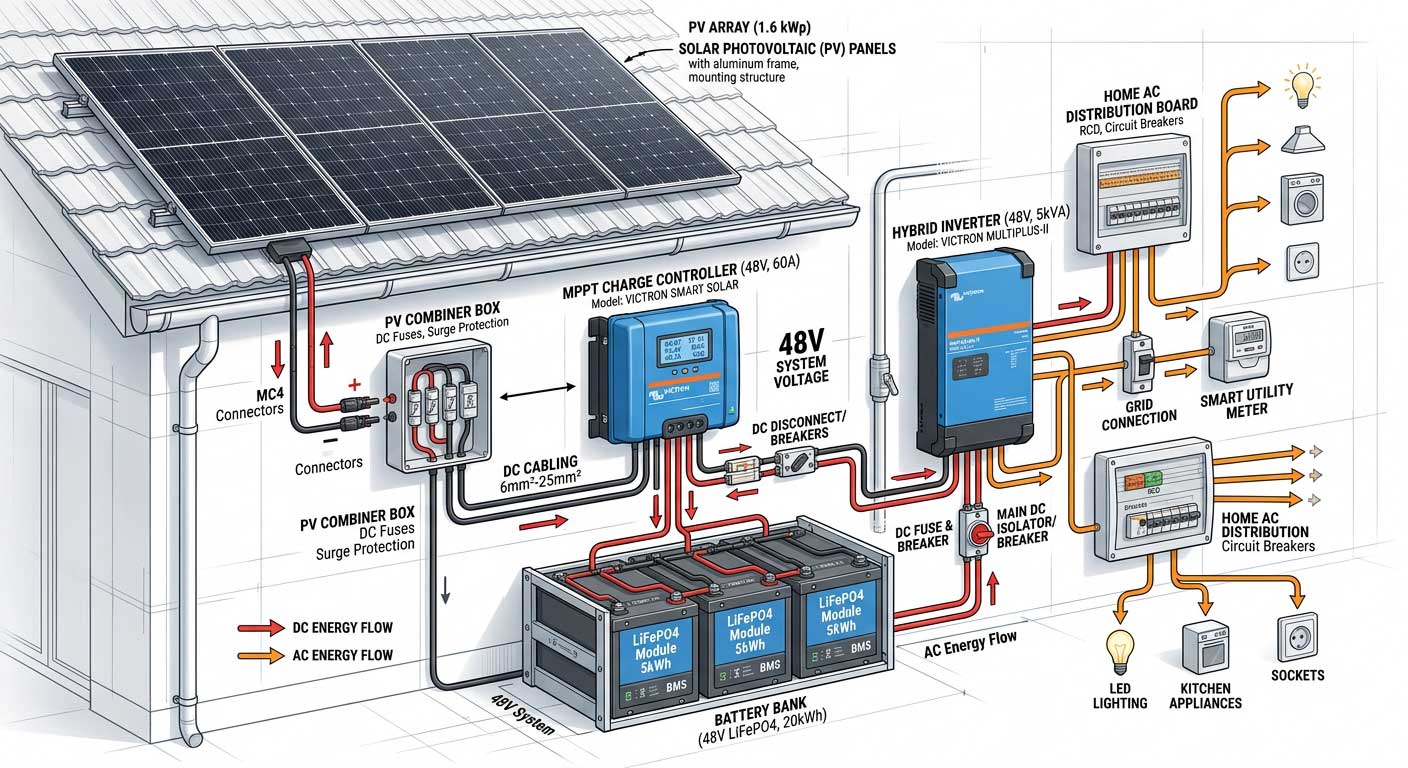
The standard connection path is:
Solar Panel → Charge Controller → Battery → DC Loads/Inverter
The basic installation steps are:
Step 1: Check solar panel and battery specifications
Before wiring, confirm:
- Solar panel voltage and current output
- Battery voltage rating
- Charge controller input and output limits
- Cable size requirements
Common battery systems:
| Battery System | Typical Application |
|---|---|
| 12V battery | RV, camping, small off-grid systems |
| 24V battery | Medium solar systems |
| 48V battery | Residential and larger energy storage |
Step 2: Connect the charge controller to the battery
Most manufacturers recommend connecting the battery first.
Connection order:
- Connect battery positive (+) to controller battery positive terminal
- Connect battery negative (-) to controller battery negative terminal
- Confirm controller recognizes the battery voltage
This allows the charge controller to establish the correct charging parameters.
Step 3: Connect solar panels to the charge controller
After the battery connection is complete:
- Connect solar panel positive (+) cable to controller solar input positive
- Connect solar panel negative (-) cable to controller solar input negative
- Check charging status on the controller display
The controller manages the electricity flow from the solar panel to the battery.
According to the U.S. Department of Energy, charge controllers are important components in off-grid photovoltaic systems because they regulate charging and protect batteries from excessive voltage.
Why do you need a charge controller between solar panels and batteries?
Prevent battery overcharging
Solar panels can produce variable voltage depending on sunlight conditions. Directly connecting a panel to a battery without regulation may cause charging problems.
A charge controller helps:
- Control charging voltage
- Prevent overcharging
- Improve battery lifespan
- Manage energy flow
For example, a 100W solar panel may produce different voltage levels throughout the day depending on temperature and sunlight intensity.
MPPT vs PWM solar charge controllers
There are two common controller types:
| Controller Type | Features | Suitable Applications |
|---|---|---|
| PWM | Simple and lower cost | Small solar systems |
| MPPT | Higher efficiency and better voltage tracking | Larger RV, marine, and off-grid systems |
The National Renewable Energy Laboratory (NREL) identifies maximum power point tracking as an important technology for improving photovoltaic system energy harvesting, especially when operating conditions change.
Bright Solar customers often select MPPT controllers when installation space is limited because extracting more usable energy from each panel can improve overall system performance.
How to match solar panels with battery capacity
Calculate daily energy requirements
Battery selection should start with energy consumption.
Formula:
Daily Energy Consumption (Wh) = Device Power (W) × Usage Time (hours)
Example:
A camper uses:
- LED lights: 50Wh/day
- Refrigerator: 800Wh/day
- Electronics: 150Wh/day
Total:
1,000Wh/day
The solar system must produce enough energy to recharge the battery after daily usage.
Calculate battery size
Battery capacity is usually measured in amp-hours (Ah).
Formula:
Battery Energy (Wh) = Battery Voltage × Battery Capacity (Ah)
Example:
12V × 200Ah battery:
12 × 200 = 2,400Wh
A 12V 200Ah battery stores approximately 2.4kWh of energy before considering usable capacity limits.
Common mistakes when connecting solar panels to batteries
Connecting panels directly to batteries
One common mistake is connecting solar panels directly to batteries without a controller.
Potential problems:
- Battery overcharging
- Reduced battery life
- Unsafe voltage levels
Using incorrect voltage combinations
A solar panel system must match battery voltage requirements.
Examples:
- 12V battery systems need suitable charging voltage
- Multiple panels in series may create excessive voltage
- Incorrect wiring can damage equipment
Ignoring cable size and connection quality
Long cable distances create voltage loss.
Important factors:
- Cable length
- Current level
- Wire thickness
- Connector quality
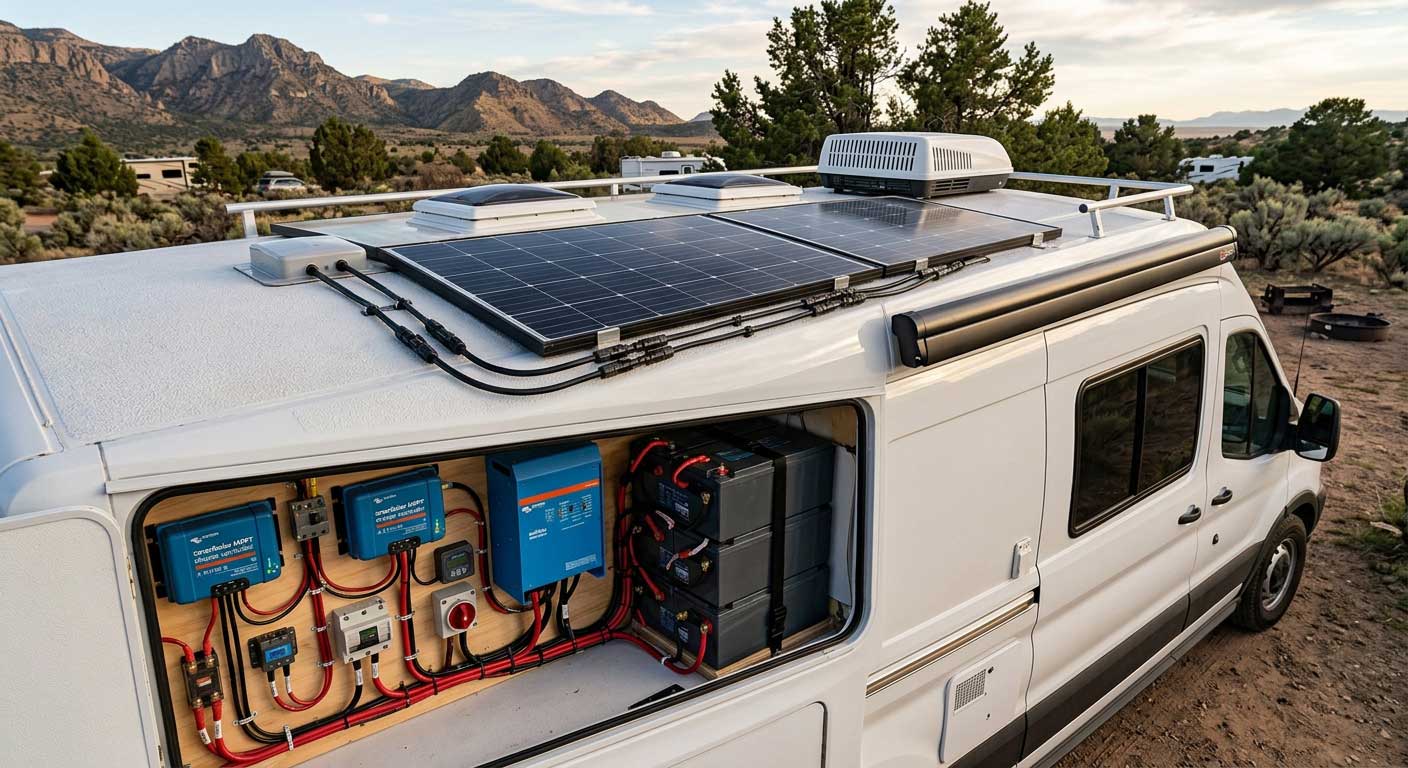
In mobile solar systems, such as RV installations, cable routing is often more challenging than expected. Tight spaces, vibration, and outdoor exposure make connection quality especially important.
Connecting solar panels to batteries for different applications
| Application | Typical Setup |
|---|---|
| RV solar | Flexible panel → MPPT controller → Battery |
| Marine solar | Solar panel → Controller → Marine battery |
| Camping power | Portable panel → Power station battery |
| Off-grid cabin | Solar array → Controller → Battery bank |
| Backup power | Solar system → Battery storage → Inverter |
Bright Solar designs flexible solar panels for applications where installation conditions are different from traditional rooftops. Curved surfaces, limited space, and mobile environments require careful electrical planning.
FAQ About Connecting Solar Panels to Battery
Can I connect solar panels directly to a battery?
No. A solar charge controller should normally be installed between the solar panel and battery to regulate charging.
What connects a solar panel to a battery?
A solar charge controller connects the solar panel and battery while managing voltage and charging current.
Can I connect multiple solar panels to one battery?
Yes. Multiple panels can charge one battery when the total voltage and current remain within controller limits.
Should I connect the battery or solar panel first?
Most installation guides recommend connecting the battery to the charge controller first, then connecting the solar panels.
Can a 100W solar panel charge a 12V battery?
Yes. A 100W solar panel can charge a 12V battery when paired with a suitable charge controller.
What size battery do I need for solar panels?
Battery size depends on daily energy consumption, solar production, desired backup time, and battery chemistry.
Do solar panels charge batteries on cloudy days?
Yes, but charging speed is reduced because solar panels receive less sunlight.
Final Answer: How to connect solar panels to battery?
Knowing how to connect solar panels to battery helps create a safer and more efficient solar energy system. The correct method uses a charge controller between the solar panel and battery, ensuring proper voltage regulation and reliable energy storage.
Bright Solar provides flexible solar panel solutions for RV, marine, portable, and off-grid applications, helping businesses design solar systems based on real installation requirements.
The prev: How to connect solar panels in series?The next: How to draw a solar panel?
Related recommendations
-

how much does solar paneling cost?
147Learn how much does solar paneling cost with real pricing data, installation factors, system examples, and Bright solar insights for smarter solar decisions.
View details -
How to keep snow off solar panels?
8Knowing how to keep snow off solar panels helps maintain winter energy production. Proper installation angles, natural melting, and safe snow removal can red...
View details -
How to Attach Flexible Solar Panel to Van Roof?
306Learn how to attach flexible solar panel to van roof safely using adhesive or screws. Real installation tips, airflow advice, wiring steps, and expert insights from Bright Solar.
View details -
How to Attach Flexible Solar Panel to RV Roof?
253Learn how to attach flexible solar panel to RV roof safely using adhesive, screws, and proper sealing methods. Expert RV solar installation tips from Bright Solar.
View details