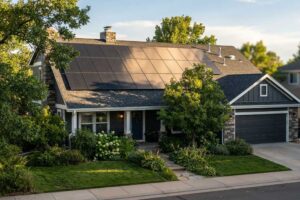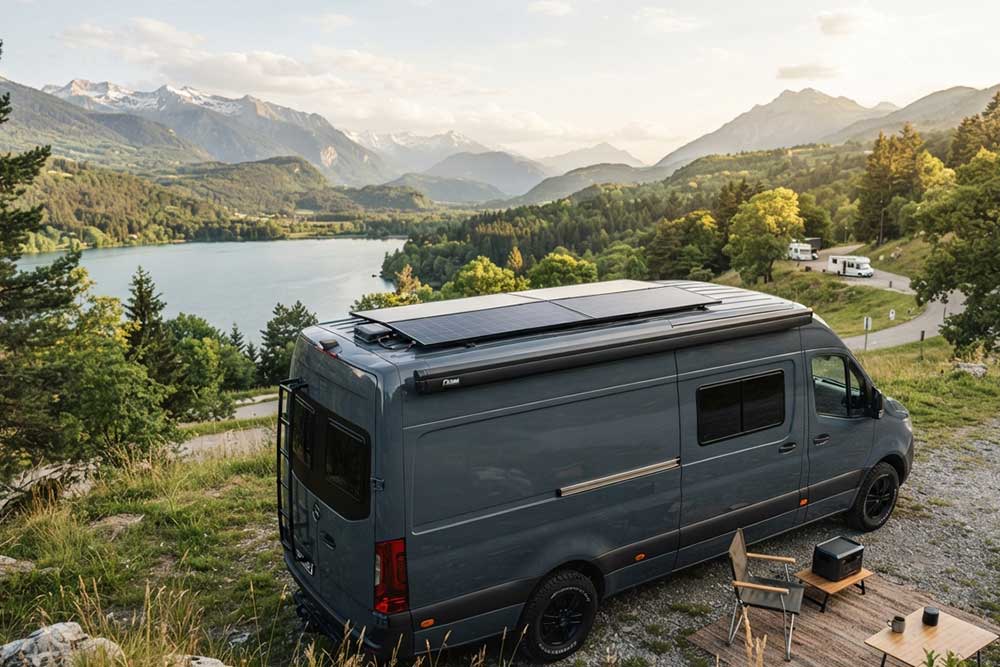
Walkable Solar Panels for Boats, RVs and High-Traffic Surfaces
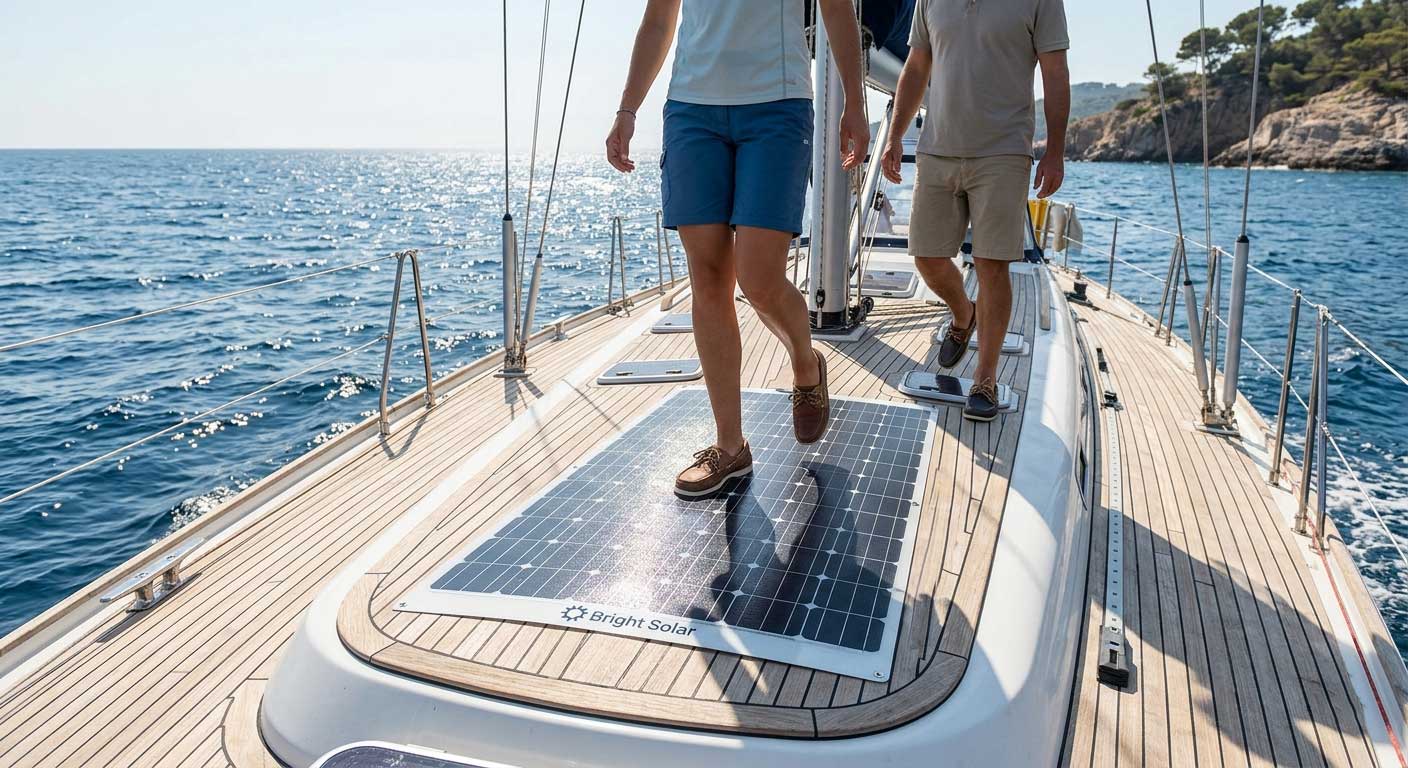
Walkable solar panels are specifically engineered to generate electricity while safely tolerating occasional foot traffic. High-quality walkable solar panels use reinforced cell protection, anti-slip surfaces, and flexible composite construction, making them ideal for boats, RV roofs, camper vans, and marine decks where space is limited and every surface must serve multiple purposes.
As someone who has spent years working with flexible solar installations for marine and mobile applications, I’ve learned that one of the most common mistakes buyers make is assuming all flexible panels are walkable. They aren’t.
I’ve stood on yacht docks in Florida where standard flexible panels failed after only a few seasons because crew members routinely stepped on them during docking operations. I’ve also inspected modern reinforced walkable solar panels still operating efficiently after years of exposure to saltwater, UV radiation, and daily foot traffic.
The difference is significant—and expensive when overlooked.
According to the International Energy Agency (IEA), global solar PV capacity surpassed 1.6 terawatts in 2023, with distributed and mobile solar applications continuing to expand rapidly.
Source:
https://www.iea.org
As solar moves beyond rooftops into boats, RVs, off-grid cabins, and recreational vehicles, demand for walkable solar panels has grown dramatically.
What Are Walkable Solar Panels?
Walkable solar panels are photovoltaic modules designed to withstand human foot traffic without damaging the solar cells underneath.
Unlike conventional rigid glass panels, walkable models typically use:
- ETFE protective surfaces
- Reinforced polymer substrates
- Flexible monocrystalline solar cells
- Anti-slip textured coatings
- Impact-resistant encapsulation layers
The purpose is simple.
People need to walk where the solar panels are installed.
This is especially common on:
- Sailboats
- Catamarans
- Fishing boats
- Yachts
- Camper vans
- RV roofs
- Mobile homes
- Offshore work vessels
Traditional panels were never designed for that environment.
Walkable solar panels were.
Why Walkable Solar Panels Are Becoming Popular
The shift isn’t driven by solar technology alone.
It’s driven by space.
A decade ago, most boat owners treated solar panels as optional accessories.
Today, refrigeration systems, navigation equipment, satellite communications, Starlink terminals, electric trolling motors, battery banks, and onboard electronics all demand power.
Yet deck space remains limited.
I remember boarding a 42-foot cruising sailboat during a marina inspection in Southern California.
The owner had already installed:
- Radar
- Dinghy davits
- Liferaft storage
- Communication antennas
There was almost no remaining space.
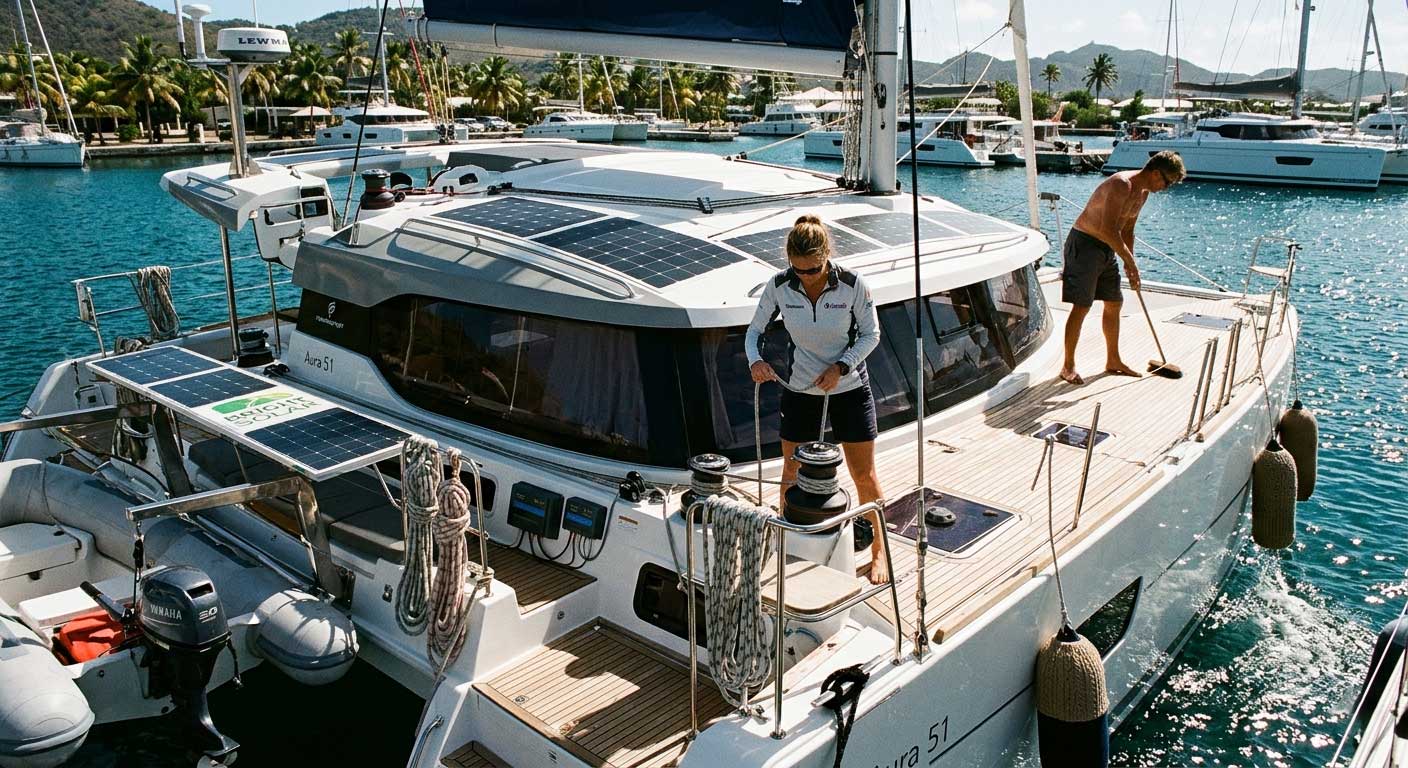
The only viable solution was installing walkable solar panels directly onto unused deck surfaces.
That project transformed areas previously serving a single purpose into productive energy-generating surfaces.
The concept sounds simple.
In practice, it’s changing how mobile solar systems are designed.
Where Walkable Solar Panels Perform Best
Marine Applications
Marine environments remain the largest market.
Boat owners often need solar power without sacrificing deck usability.
Common installations include:
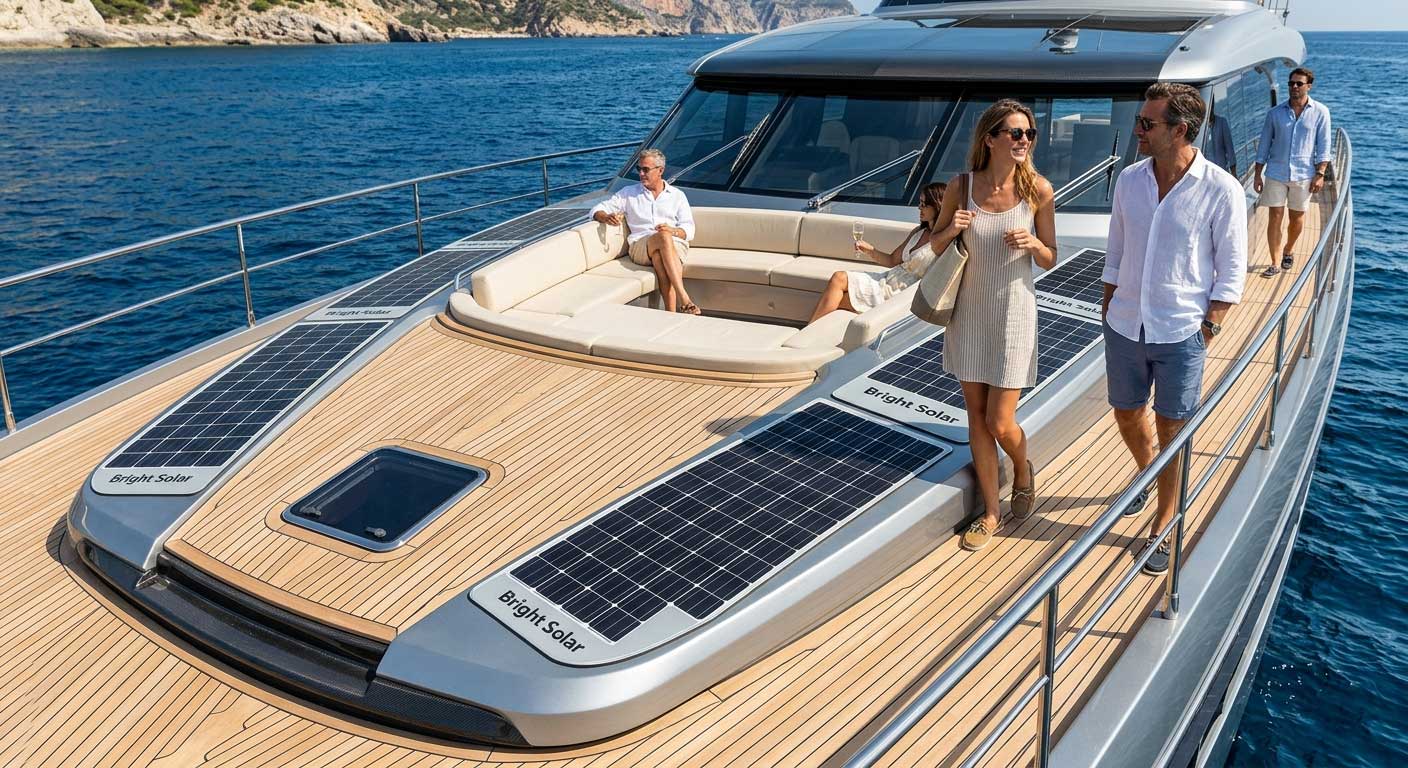
- Foredecks
- Cabin tops
- Cockpit roofs
- Flybridges
- Catamaran trampolines
- Side decks
Unlike rigid glass modules, walkable solar panels conform to curved surfaces.
This creates installation opportunities unavailable with traditional panels.
Recreational Vehicles
RV roofs experience constant maintenance traffic.
Owners regularly climb onto roofs to inspect:
- Air conditioners
- Skylights
- Ventilation systems
- Antennas
- Roof seals
Walkable solar panels reduce concerns about accidental damage during maintenance.
Mobile Homes
Many mobile home roofs have limited structural load capacity.
Flexible walkable solar panels offer a lightweight alternative to glass modules.
Their lower weight often simplifies installation while reducing structural stress.
Commercial Utility Vehicles
Emergency vehicles, service trucks, and mobile command centers increasingly integrate solar systems.
Walkable surfaces allow technicians to access rooftop equipment without compromising solar functionality.
How Much Weight Can Walkable Solar Panels Handle?
This is usually the first technical question buyers ask.
The answer varies by manufacturer.
However, high-quality walkable solar panels commonly tolerate:
| Load Type | Typical Capacity |
|---|---|
| Standing Adult | 80–120 kg |
| Distributed Load | 150–300 kg/m² |
| Maintenance Foot Traffic | Designed for repeated use |
| Marine Crew Movement | Suitable for routine walking |
The critical phrase is distributed load.
A 90 kg person standing flat-footed creates far less stress than concentrating weight on a small point.
This explains why soft-soled marine shoes are recommended.
Even durable walkable panels benefit from proper weight distribution.
The Engineering Behind Walkable Solar Panels
What makes one panel walkable while another fails?
The answer lies beneath the surface.
ETFE Top Layer Technology
ETFE (Ethylene Tetrafluoroethylene) has become the preferred surface material.
Compared with PET coatings, ETFE offers:
- Better UV resistance
- Higher light transmission
- Superior scratch resistance
- Improved lifespan
According to DuPont performance data, ETFE maintains excellent weather resistance under prolonged UV exposure.
Source:
https://www.dupont.com
Reinforced Cell Encapsulation
Solar cells are naturally brittle.
Manufacturers must protect them from:
- Flexing
- Compression
- Vibration
- Impact
Modern walkable solar panels use multilayer lamination systems to absorb mechanical stress before it reaches the cells.
This significantly reduces microcracking.
Microcracks remain one of the leading causes of performance degradation in photovoltaic modules.
According to research published by the National Renewable Energy Laboratory (NREL), microcracks can contribute to long-term power loss in solar modules under mechanical stress.
Source:
https://www.nrel.gov
Walkable Solar Panels vs Standard Flexible Solar Panels
Many buyers assume all flexible panels can be walked on.
That assumption often leads to premature failures.
| Feature | Walkable Solar Panels | Standard Flexible Panels |
|---|---|---|
| Foot Traffic Resistance | High | Limited |
| Anti-Slip Surface | Yes | Usually No |
| Deck Installation | Ideal | Conditional |
| Mechanical Reinforcement | Enhanced | Standard |
| Marine Applications | Excellent | Moderate |
| Lifespan Under Foot Traffic | Longer | Reduced |
I’ve personally inspected installations where ordinary flexible panels developed cell fractures within two years because owners repeatedly stepped on them while docking.
The panels still produced power.
Just far less than originally intended.
Real-World Performance on Boats
One installation continues to stand out.
A customer operating a 38-foot cruising catamaran in Florida installed 600W of walkable solar panels across multiple deck sections.
Before the upgrade:
- Diesel generator runtime averaged 18 hours weekly
- Battery charging required frequent engine use
After installation:
- Generator runtime dropped substantially during summer months
- Daily solar harvest consistently exceeded 2 kWh under favorable conditions
- Battery state-of-charge remained above 80% for longer periods
The owner’s biggest surprise wasn’t power production.
It was convenience.
Nobody had to avoid stepping on the panels.
The deck remained fully functional.
That practical advantage is difficult to quantify on a specification sheet but becomes obvious during everyday use.
#Marine Walkable Solar Panels for Saltwater Conditions
Saltwater destroys equipment faster than most people realize.
Particularly around:
- Electrical connectors
- Aluminum components
- Junction boxes
When selecting marine walkable solar panels, I always recommend evaluating:
- IP protection rating
- Salt mist resistance
- UV stability
- Corrosion-resistant hardware
- Waterproof junction boxes
The marine environment is unforgiving.
Panels that perform well on an RV may not survive years at sea.
#Solar Panels for Boat Decks — Design Considerations Most Buyers Miss
When people shop for walkable solar panels, they usually compare wattage first.
That makes sense.
It is also the wrong place to start.
The first thing I look at is traffic pattern.
Not power output.
On a boat, people rarely walk randomly. They follow the same paths repeatedly.
After examining dozens of sailboats and cruising catamarans, I noticed something interesting. Certain deck sections showed significantly more wear, regardless of the panel brand.
The reason was simple.
Crew members always stepped near:
- Cleats
- Winches
- Mast bases
- Cabin entrances
- Anchor lockers
Those areas experience concentrated traffic.
A 100W panel installed in the wrong location can suffer more mechanical stress than a 200W panel installed elsewhere.
Before calculating energy production, map the walking route first.
The solar design comes second.
Learn more:400 Watt Solar Panel Guide
How Long Do Walkable Solar Panels Last?
This question appears in nearly every customer conversation.
The honest answer is that lifespan depends heavily on how the panel is treated.
According to data from the U.S. Department of Energy, modern photovoltaic technology can maintain useful power production for decades when properly installed and protected.
Source:
However, walkable panels operate under additional mechanical stress.
Based on field observations, high-quality ETFE walkable solar panels commonly achieve:
| Environment | Expected Service Life |
|---|---|
| RV Roof | 10–15 Years |
| Mobile Home Roof | 10–20 Years |
| Sailboat Deck | 8–15 Years |
| Catamaran Cabin Top | 10–15 Years |
| Coastal Marine Use | Depends on maintenance |
Notice that I didn’t provide a single number.
That’s intentional.
A panel installed on a lightly used RV roof in Arizona faces completely different conditions than one installed on a charter catamaran operating year-round in the Caribbean.
Environment matters more than marketing brochures.
Why Anti-Slip Surface Technology Matters
Years ago, many flexible solar panels were extremely smooth.
They generated power well.
They also became slippery when wet.
Marine installers quickly learned that electrical performance isn’t the only concern.
Safety matters too.
Modern walkable solar panels frequently incorporate textured ETFE surfaces that provide:
- Improved grip
- Reduced slip risk
- Better drainage
- Enhanced user confidence
This is particularly important on:
- Fishing vessels
- Sailboats
- Houseboats
- Offshore work platforms
After a rainstorm, the difference becomes obvious.
I’ve watched crew members instinctively avoid older smooth-surface panels while comfortably crossing modern textured installations.
The improvement isn’t theoretical.
It’s visible in real use.
#Flexible Walk On Solar Panels for RV Owners
RV owners often face a different challenge than boat owners.
Weight.
Every additional pound affects:
- Fuel economy
- Payload capacity
- Roof loading
Traditional glass solar modules may weigh 18–25 kg each.
Many flexible walkable solar panels weigh dramatically less.
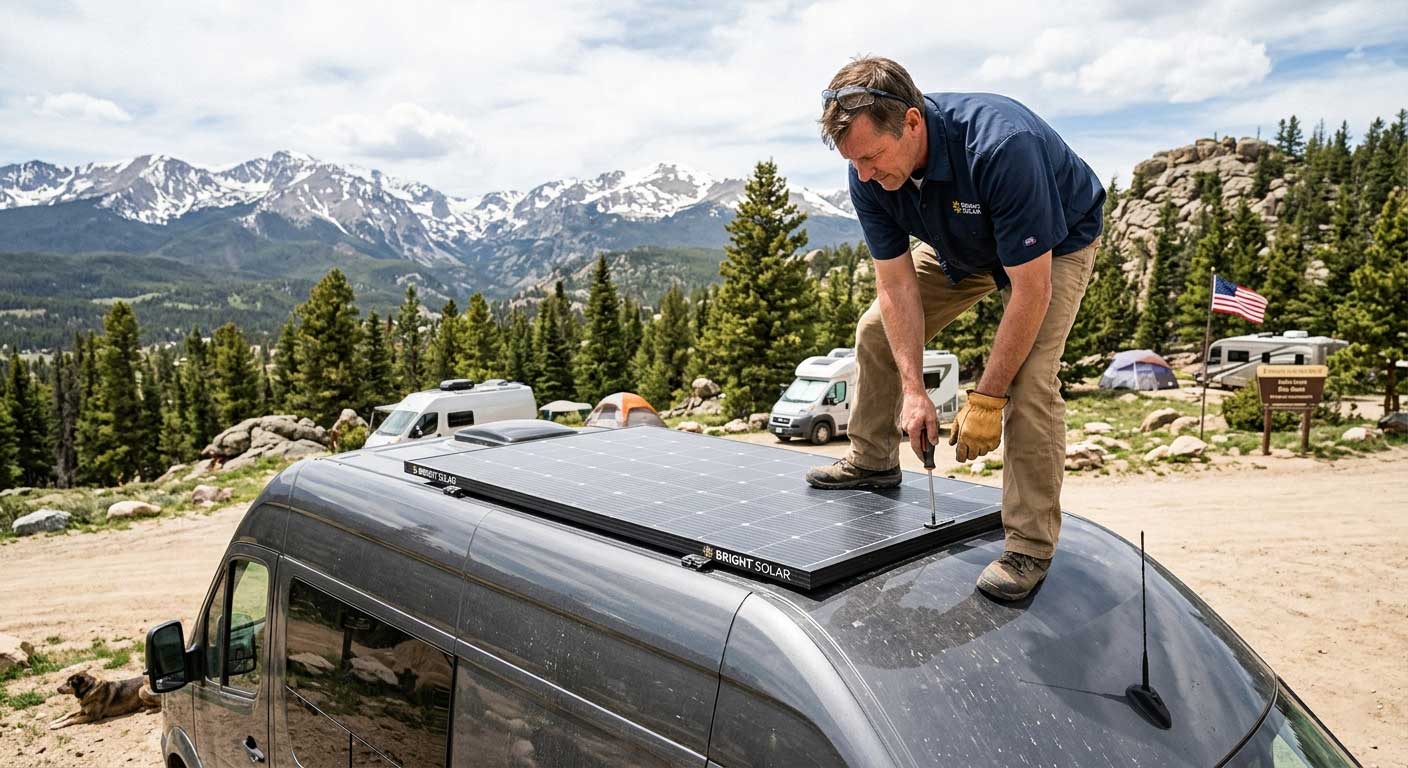
For RV applications, this creates several advantages:
- Easier installation
- Lower roof stress
- Reduced aerodynamic drag
- Simpler maintenance access
One customer in Nevada installed four lightweight walkable panels on a Class B camper van.
His primary goal wasn’t increasing solar production.
He simply wanted to access rooftop equipment without worrying about damaging the solar array.
The energy production became an added benefit.
The convenience was the real victory.
Common Mistakes When Installing Walkable Solar Panels
After reviewing numerous installations, several mistakes appear repeatedly.
Assuming Every Flexible Panel Is Walkable
This remains the biggest mistake.
Many flexible solar panels tolerate minor flexing but are not designed for repeated foot traffic.
Always verify manufacturer specifications.
Ignoring Surface Preparation
The strongest adhesive cannot compensate for poor preparation.
Marine installations should include:
- Thorough cleaning
- Degreasing
- Moisture removal
- Proper curing time
Failure here often causes more problems than the panel itself.
Using the Wrong Footwear
Walkable does not mean indestructible.
Avoid:
- High heels
- Metal cleats
- Sharp objects
- Concentrated point loads
Soft-soled footwear dramatically reduces long-term stress.
Walking Near Unsupported Areas
Some installations include gaps beneath portions of the panel.
These unsupported sections experience higher flex stress.
Weight should remain evenly distributed whenever possible.
Original Insight: The Best Walkable Solar Panels Are Rarely Walked On Constantly
This observation surprises people.
When manufacturers say “walkable,” many customers imagine continuous daily traffic.
In reality, the most successful installations treat walkability as a safety margin.
Think about a boat deck.
You may walk across the panel:
- During docking
- While anchoring
- During maintenance
- During sail handling
That is very different from treating the panel as a permanent walkway.
The best installations balance accessibility and protection.
Walkability should be available when needed, not abused continuously.
Owners who follow this principle consistently report longer service life and better long-term performance.
#Non Slip Solar Panels for Marine Safety
Safety concerns continue to drive adoption.
On marine vessels, slip-and-fall incidents remain one of the most common onboard accidents.
According to guidance from boating safety organizations and marine insurers, maintaining traction on walking surfaces is a critical part of vessel safety management.
For this reason, many modern walkable solar panels now integrate:
- Textured ETFE coatings
- Non-slip surface patterns
- Water-shedding designs
- Enhanced grip zones
The result is a product that contributes both energy production and operational safety.
That combination explains why walkable solar technology continues gaining popularity among boat owners.
FAQ About Walkable Solar Panels
Can you walk on walkable solar panels every day?
Yes, but occasional foot traffic is preferable. Walkable solar panels are designed to tolerate regular use, yet minimizing unnecessary traffic can extend service life.
Are walkable solar panels suitable for boats?
Absolutely. Marine environments represent one of the most common applications for walkable solar panels because deck space is limited and often serves multiple purposes.
Do walkable solar panels produce less electricity?
Not necessarily. High-quality walkable solar panels can achieve performance levels comparable to many conventional flexible solar panels while providing additional durability.
Are walkable solar panels waterproof?
Most marine-grade models are designed for wet environments and feature weather-resistant construction. Always verify the manufacturer’s specifications.
Are walkable solar panels worth the extra cost?
For boats, RVs, camper vans, and mobile applications where surface access is important, the added durability often justifies the investment.
Why Bright Solar Focuses on Walkable Solar Technology
At Bright Solar, we work extensively with mobile and marine energy systems where space is limited and surfaces perform multiple functions.
A roof is not just a roof.
A deck is not just a deck.
Every square foot must work harder.
That reality is driving demand for walkable solar panels across:
- Sailboats
- Catamarans
- Yachts
- RVs
- Camper vans
- Mobile homes
- Off-grid systems
The future of solar isn’t simply generating more power.
It’s making every available surface productive.
Walkable solar panels are one of the clearest examples of that shift.
Related recommendations
-

Solar Panels for Shade: How to Reduce Power Loss
217Solar panels can work in shade, but output decreases as sunlight falls. Proper site assessment, panel placement, bypass diodes, and module-level electronics ...
View details -
Flexible 400 Watt Solar Panel: Output, Uses and Installation
151A flexible 400 watt solar panel can suit selected RV, marine, and off-grid systems, but actual energy output depends on sunlight, temperature, shading, orien...
View details -
400 Watt Flexible Solar Panel for Serious Off-Grid Energy Systems
184Discover how a 400 watt flexible solar panel delivers lightweight, high-output off-grid energy for RVs, boats, vans, and solar battery systems.
View details -
Lightweight Solar Panels: The Smart Choice for Mobile and Off-Grid Power
260Discover how lightweight solar panels reduce roof load, simplify installation, and improve mobile solar performance for RVs, boats, and off-grid systems.
View details