
450 Watt Solar Panels: Output, Sizing and Applications
450 watt solar panels deliver up to 450 watts of rated DC power under standard test conditions, making them a practical choice when you need more energy from limited roof or ground space without moving to a much larger module count.
That 450W figure is useful, but it is not a daily production promise.
PV modules are rated at 1,000 W/m² irradiance and 25°C cell temperature under standard test conditions. Actual sunlight, module temperature, orientation, shading and system losses are different in the field. The U.S. Department of Energy specifically warns that real operating conditions typically involve lower irradiance and higher cell temperatures than STC.
This is the point I pay attention to first when evaluating a solar installation.
A panel that says 450W on its datasheet is only one component of the system. The roof, wiring, controller or inverter, battery, weather and installation angle all affect what eventually reaches the load.
For Bright Solar, the more useful question is not simply “How powerful is a 450W panel?”
It is:
“How much usable energy can this 450W module contribute in the actual application?”
What Are 450 Watt Solar Panels?
A 450 watt solar panel has a rated maximum power output of 450 watts DC when tested under defined laboratory conditions.
Compared with a 300W panel, one 450W module provides 50% more nameplate capacity.
Compared with a 400W panel, the increase is:
450W − 400W = 50W
That sounds small.
Across a large installation, it is not.
For example:
| Solar Array | Number of Panels | Nameplate Capacity |
|---|---|---|
| 400W system | 10 | 4,000W |
| 450W system | 10 | 4,500W |
| Difference | 10 | +500W |
That additional half-kilowatt comes without adding another module to the roof.
This is one reason higher-wattage modules have become attractive for space-constrained installations.
The International Energy Agency reported that global solar PV additions exceeded 600 GW in 2025, bringing cumulative installed solar PV capacity to approximately 2,800 GW worldwide.
The broader solar market is moving toward larger and more capable modules, but module wattage should never be evaluated independently from dimensions and system voltage.
450 Watt Solar Panel Output: How Much Energy Can It Produce?
A 450W solar panel can theoretically produce:
450W × peak sun hours = daily energy before losses
For example:
450W × 4 peak-sun hours = 1,800Wh
or approximately:
1.8kWh/day
That is a planning calculation, not a guaranteed result.
A cloudy day might produce substantially less.
A cool, clear day with excellent orientation may perform much better than a hot day with poor mounting conditions.
NREL‘s PVWatts model is designed specifically to estimate location-based PV production using weather and system information rather than relying on a simple wattage calculation. The current PVWatts version uses updated solar-resource datasets and improved models for PV modules, thermal behavior and inverters.
For an actual project, I would use this approach:
- Determine the installation location.
- Determine usable roof or ground area.
- Select the 450W module.
- Enter the system capacity into PVWatts.
- Account for tilt and azimuth.
- Review monthly production.
- Compare winter and summer output.
- Size the battery or grid connection around the actual load.
That last step gets skipped surprisingly often.
Why 450W Does Not Mean 450W All Day
Imagine a 450W module sitting on an RV roof at noon.
The controller shows 327W.
That does not automatically mean something is wrong.
The module’s 450W rating was established under STC. The actual module may be hotter than 25°C, the irradiance may be below 1,000 W/m², and the panel may not be receiving the same solar angle used in the test environment.
The DOE identifies solar resource, temperature and aging among the factors affecting real PV production. It also notes that PV module efficiency typically degrades at about 0.5% per year, although actual degradation varies by technology and product.
There is another practical point.
NREL’s PVWatts documentation includes losses from soiling, shading, mismatch, wiring, connections, availability and other factors. Its conventional default system-loss assumption is approximately 14%, calculated from combined loss mechanisms rather than simply adding every percentage together.
So when evaluating a 450W module, I would never use:
450W × 24 hours
as an energy estimate.
That number has no engineering value for normal PV production.
450W Solar Panel Specifications to Compare
Two panels can both be rated at 450W and still behave quite differently in an installation.
The datasheet should be reviewed as a complete package.
| Specification | Why It Matters |
|---|---|
| Maximum Power (Pmax) | Rated output |
| Voltage at Maximum Power (Vmp) | Normal operating voltage |
| Open-Circuit Voltage (Voc) | Critical for controller/inverter limits |
| Current at Maximum Power (Imp) | Operating current |
| Short-Circuit Current (Isc) | Protection and system design |
| Module Efficiency | Determines power density |
| Dimensions | Determines physical fit |
| Weight | Important for mobile roofs |
| Temperature Coefficient | Indicates temperature-related power change |
| Maximum System Voltage | Important for series arrays |
| Connector Type | Affects compatibility |
| Mechanical Load Rating | Important for structural mounting |
| Warranty | Indicates manufacturer support |
For large rooftop arrays, dimensions can be just as important as efficiency.
A 450W module that is physically too large for the available roof area is not a better panel.
It is simply the wrong panel.
450 Watt Solar Panels for Home Solar Systems
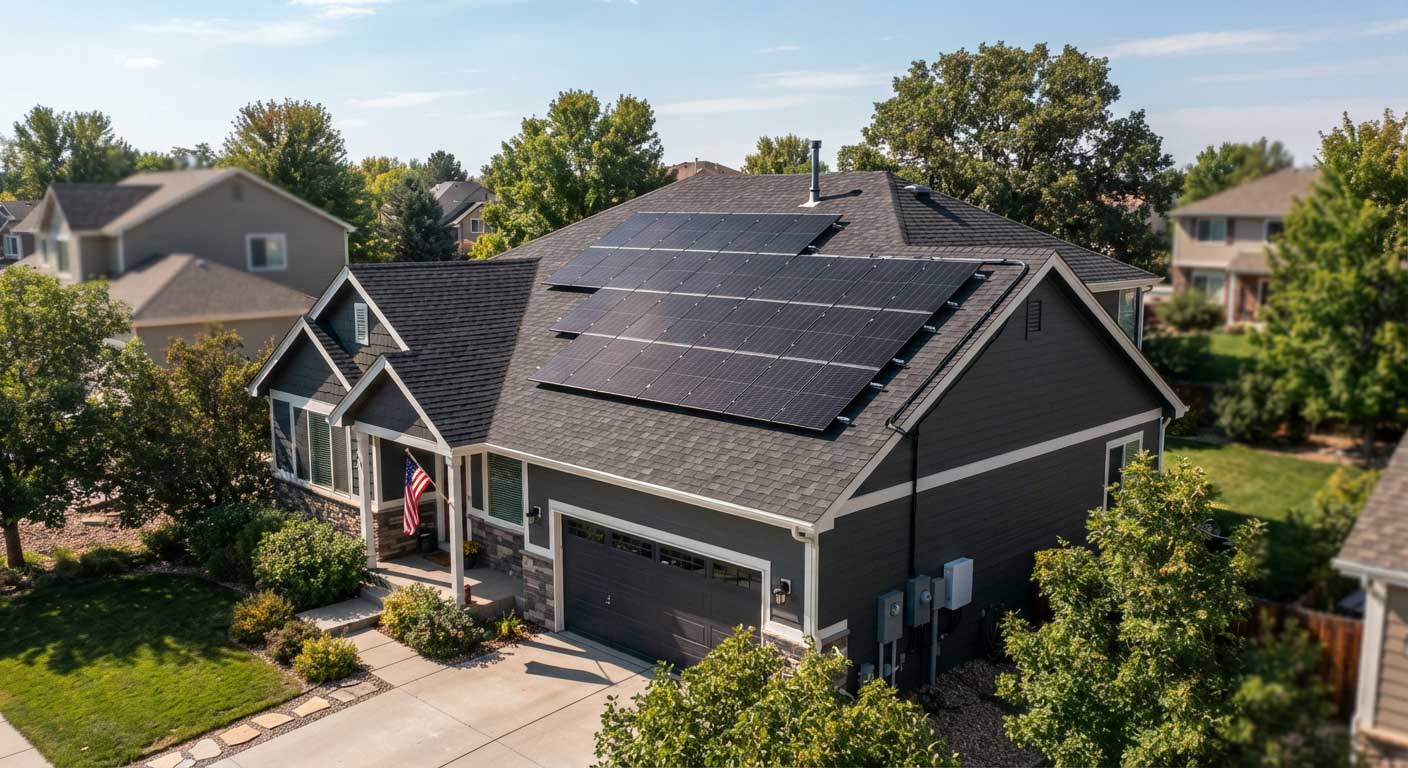
For residential installations, 450W modules can reduce the number of panels needed for a particular DC capacity.
Consider a target of approximately 9kW.
With 450W modules:
9,000W ÷ 450W = 20 panels
With 400W modules:
9,000W ÷ 400W = 22.5 panels
In practice, you cannot install half a panel, so the system would require either 22 panels for 8.8kW or 23 panels for 9.2kW.
This is where higher-wattage modules can simplify roof planning.
Roof Space Is Usually the Real Constraint
A homeowner may have plenty of electricity demand but not enough usable roof.
Chimneys.
Skylights.
Vent pipes.
Dormers.
Roof edges.
Tree shade.
Those details determine the actual array.
If a roof can accommodate 20 suitable 450W modules but only 18 suitable 500W modules, the nominally more powerful 500W panel may produce less total system capacity.
The roof wins the argument.
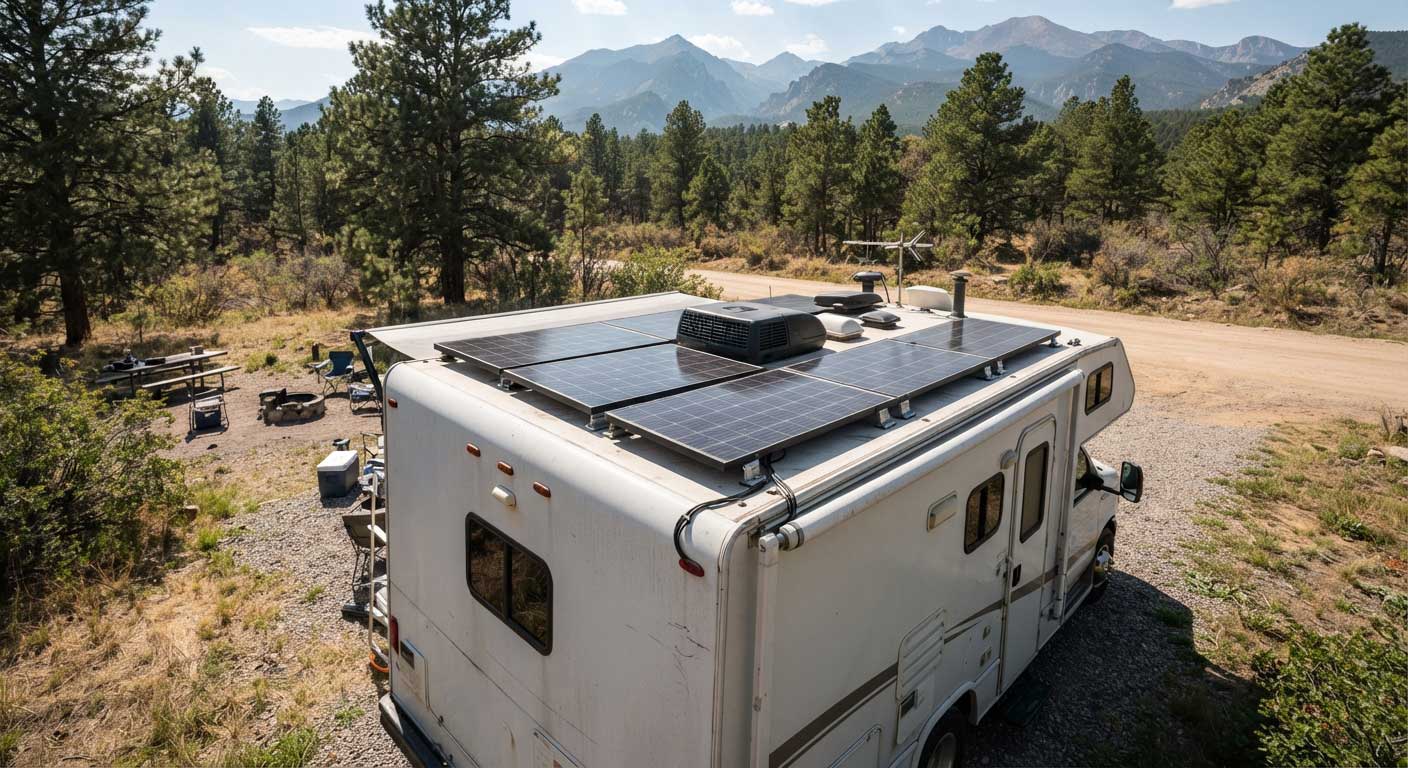
450 Watt Solar Panels for RVs
A 450W panel can be useful for RV solar, but there is an important distinction between high output and easy installation.
A large-format 450W module may be physically difficult to handle on an RV roof.
Weight matters.
Wind exposure matters.
Roof access matters.
And rooftop obstacles matter even more.
A typical RV roof can contain:
- Air-conditioning units
- Roof vents
- Antennas
- Skylights
- Plumbing vents
- Roof racks
- Satellite equipment
A 450W flexible module can be attractive when weight and low-profile installation are priorities.
A conventional framed 450W module may be more appropriate where structural mounting and airflow are available.Visit product page:Flexible Solar Panels
The correct choice depends on the RV, not just the wattage.
450W Solar Panel Dimensions and Roof Planning
There is no universal physical dimension for every 450W solar panel.
That is important.
Panel wattage does not dictate one fixed length and width.
Before designing a roof array, obtain the actual manufacturer’s mechanical drawing.
Measure:
Available roof width × usable roof length
Then subtract:
- Safety clearance
- Roof equipment
- Access paths
- Structural limitations
- Shading zones
Do not design from a product photograph.
Use the dimensional drawing.
A Practical Roof Layout Method
I normally start with a rough roof sketch.
Mark every obstruction.
Then draw the module footprint to scale.
Only after that do I decide whether the modules should be arranged:
- Portrait
- Landscape
- Multiple rows
- Separate subarrays
- East/west orientation
- South-facing orientation where appropriate
It takes less time than moving a bonded or mechanically mounted panel later.
450W Solar Panel Efficiency
Efficiency and wattage are related, but they are not identical.
The simplified relationship is:
Panel efficiency = electrical output ÷ solar energy received by the panel area
A high-efficiency 450W module may produce that output using less surface area than a lower-efficiency 450W module.
That becomes valuable when roof area is limited.
For example, two 450W panels both produce the same rated power.
But if one requires substantially more roof area, it may be less practical for an RV, van or small residential roof.
This is why I prefer comparing:
W/m²
alongside the headline wattage.
The higher the power density, the more output you can potentially install in a fixed physical area.
450W Solar Panel Series vs Parallel Wiring
When multiple 450W panels are connected, series and parallel wiring produce different electrical characteristics.
Series Connection
In series:
Voltage increases
while current remains approximately at the level of one module.
Example:
Two hypothetical 450W modules with:
- Vmp = 40V
- Imp = 11.25A
would produce approximately:
80V × 11.25A = 900W
under the same operating conditions.
This can reduce current through the conductors.
But there is a critical warning:
Check the controller or inverter’s maximum PV input voltage, including cold-weather Voc.
Parallel Connection
In parallel:
Current increases
while voltage remains approximately at the module operating voltage.
Using the same simplified example:
40V × 22.5A = 900W
The cable and protection requirements are different.
Neither connection is universally better.
The correct configuration depends on:
- Module Voc
- Module Imp
- Minimum temperature
- Charge controller
- Inverter
- Battery voltage
- Cable length
- Overcurrent protection
- Number of modules
450W Solar Panel Controller Sizing
For a 12V battery system, a 450W array is already a meaningful charging source.
A simplified calculation gives:
450W ÷ 12V = 37.5A
But this should not be interpreted as the exact controller output.
A real MPPT controller operates at battery charging voltage, not simply nominal battery voltage, and conversion losses also matter.
A controller should therefore be selected from:
- Maximum PV input voltage
- Maximum PV input current
- Maximum charging current
- Battery voltage
- Battery chemistry
- Manufacturer’s array-sizing limits
For a 24V battery system, the same 450W array represents roughly half the current at the battery side compared with a 12V nominal calculation.
That is one reason larger off-grid systems often move toward higher battery-system voltage.
450 Watt Solar Panels for Off-Grid Systems
Off-grid design changes the question.
A grid-connected homeowner can treat solar production and grid electricity as part of one larger energy system.
An off-grid owner cannot.
Every cloudy period matters.
Every battery charging cycle matters.
Every unnecessary inverter load matters.
For example, suppose an off-grid cabin consumes:
| Load | Daily Use |
|---|---|
| LED lighting | 120Wh |
| Refrigerator | 900Wh |
| Internet/router | 240Wh |
| Laptop/electronics | 300Wh |
| Water pump | 150Wh |
| Miscellaneous DC loads | 190Wh |
| Total | 1,900Wh/day |
A 450W array producing 1.8kWh under a simplified four-peak-sun-hour calculation would already be close to the daily load before system losses.
That is too close for comfort.
In real design work, I would increase PV capacity or reduce the load rather than assume every day will resemble the four-hour example.
NREL’s PVWatts model specifically exists because site weather and system configuration matter to production estimates.
Case Study: Why 450W Can Be Better Than Adding More Smaller Panels
Consider a small workshop with a usable roof section measuring roughly 7m by 4m.
The owner wants approximately 8kW of PV capacity.
Using 400W modules:
8,000 ÷ 400 = 20 panels
Using 450W modules:
8,000 ÷ 450 = 17.78
That means the practical design requires:
18 × 450W = 8.1kW
The 450W configuration uses two fewer modules.
That sounds minor until you start working around roof edges, cable routes and maintenance access.
Fewer modules can mean fewer connectors and fewer physical installation points, although the electrical architecture and module dimensions still need to be evaluated.
The interesting part is not that “450W is better.”
It is that higher wattage can reduce module count when the physical layout works.
That is a more useful way to think about module selection.
How Many 450 Watt Solar Panels Do You Need?
The basic calculation is straightforward:
Required system wattage ÷ 450W = number of panels
Examples:
| Target System | Calculation | Approx. Panels |
|---|---|---|
| 2kW | 2,000 ÷ 450 | 5 |
| 3kW | 3,000 ÷ 450 | 7 |
| 5kW | 5,000 ÷ 450 | 12 |
| 6kW | 6,000 ÷ 450 | 14 |
| 8kW | 8,000 ÷ 450 | 18 |
| 10kW | 10,000 ÷ 450 | 23 |
These figures are rounded upward to whole modules.
But the target system size itself needs to be calculated from energy consumption, solar resource and available installation area.
Do not start with “I want 20 panels.”
Start with:
How many kWh do I need?
Then work backward.
450 Watt Solar Panel Maintenance
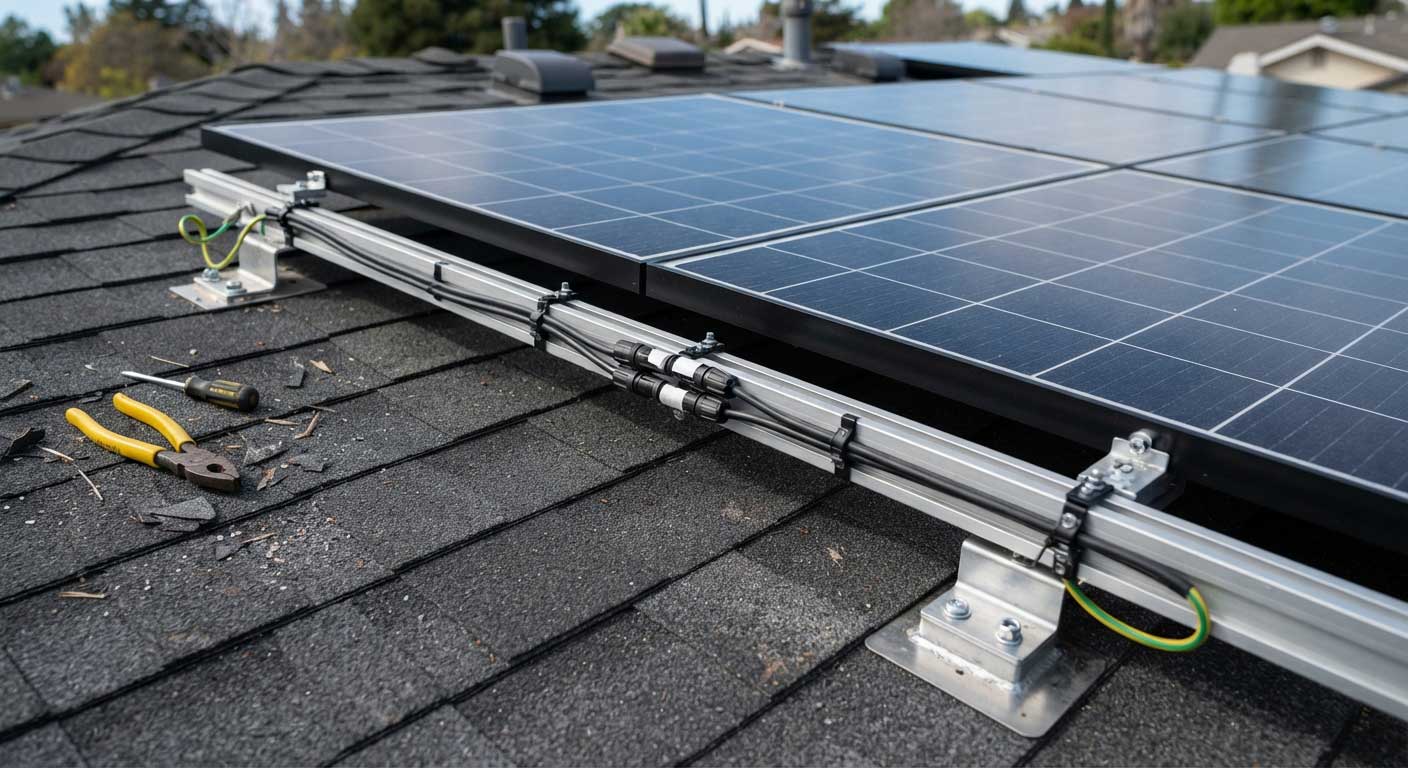
A 450W panel has no moving parts, but the installation still deserves inspection.
At least periodically, check:
- Surface contamination
- Cracked glass or frontsheet damage
- Loose mounting hardware
- Cable abrasion
- Connector condition
- Water intrusion
- Sealant degradation
- Unexpected output reduction
- Nearby shading changes
Trees are easy to overlook.
A branch that was harmless two years ago can now shade a section of the array every afternoon.
The DOE recommends comparing actual PV production against expected performance to identify underperformance.
For commercial installations, monitoring is even more valuable.
A sudden output change often tells you something before a physical inspection does.
450W Solar Panel Advantages and Limitations
Advantages
- Higher output per module
- Fewer modules for a given system capacity
- Useful where roof area is limited
- Can simplify some array layouts
- Suitable for residential and commercial applications
- Can work well in larger off-grid systems when correctly configured
Limitations
- Larger modules can be harder to handle
- Physical dimensions vary significantly
- Higher voltage/current configurations require careful design
- A high wattage rating does not guarantee high daily energy production
- Roof shading can still reduce output
- Controller and inverter compatibility must be checked
- Larger modules may not be suitable for every RV or lightweight structure
The best module is not necessarily the one with the highest wattage.
It is the one that fits the electrical design, physical space and operating environment.
FAQ: 450 Watt Solar Panels
How much power does a 450 watt solar panel produce?
A 450 watt solar panel is rated to produce 450W of maximum DC power under standard test conditions. Actual output varies with sunlight, temperature, shading, orientation and system losses.
How much electricity does a 450W solar panel produce per day?
A simplified estimate is 450W multiplied by the site’s equivalent peak-sun hours. With four peak-sun hours, the theoretical result is 1.8kWh before losses. Actual production varies by location and weather.
Is a 450W solar panel good for an RV?
It can be, especially when high power from limited roof space is important. However, panel dimensions, weight and roof structure must be checked before selecting a 450W module for an RV.
How many 450W panels do I need for a 5kW solar system?
A 5kW target divided by 450W equals 11.11 panels, so a practical configuration would use 12 panels, providing 5.4kW of nameplate capacity.
Can a 450W solar panel charge a 12V battery?
Yes, with a properly sized solar charge controller. The controller must support the panel’s voltage and current and be compatible with the battery chemistry and charging requirements.
Are 450W solar panels better than 400W panels?
Not automatically. A 450W panel provides more rated power per module, but dimensions, efficiency, weight, voltage, current and installation conditions determine whether it is the better choice for a particular system.
Can 450W solar panels be connected in series?
Yes, compatible 450W panels can be connected in series when the resulting operating and open-circuit voltage remain within the controller or inverter’s permitted limits, including cold-temperature Voc.
Conclusion: Choosing 450 Watt Solar Panels
450 watt solar panels are a strong option when the objective is to increase PV capacity without continuously increasing panel count.
Their value becomes particularly clear on roofs where every square meter matters.
A 450W module can mean fewer panels for the same system capacity, but the wattage label is only the starting point. Actual performance depends on solar resource, temperature, orientation, shading, wiring, conversion equipment and installation quality.
For a serious project, compare the complete datasheet rather than the headline number.
Check the dimensions.
Check Voc.
Check Vmp.
Check current.
Check temperature coefficients.
Then put those numbers against the actual roof and electrical system.
Bright Solar focuses on that complete-system approach because a solar panel does not operate in isolation. It operates on a roof, connected to equipment, under weather conditions that change throughout the day and across the year.
That is where the real performance of 450 watt solar panels is decided.
Related recommendations
-

CIGS Flexible Solar Panels: Technology, Benefits and Applications
229CIGS flexible solar panels use thin-film photovoltaic technology on flexible substrates, supporting selected lightweight, curved, mobile, marine, RV, and off...
View details -
100W Flexible Solar Panel: Lightweight Solar Power That Makes Sense Off-Grid
116Discover how a 100W flexible solar panel delivers lightweight, reliable solar charging for RVs, boats, campers, and portable off-grid systems.
View details -
100w Flexible Solar Panel Kit: Lightweight Portable Solar Power Solution
194Explore the 100w flexible solar panel kit from Bright Solar. Learn how lightweight solar technology delivers reliable off-grid power for RVs, boats, camping, and portable energy applications.
View details -
Flexible solar panel 300w: Lightweight Solar Solution for Mobile and Home Applications
216Explore flexible solar panel 300w solutions from Bright Solar. Learn power output, installation methods, real applications, durability, and how 300W flexible solar panels support modern energy needs.
View details