What will a 100 watt solar panel power?
What will a 100 watt solar panel power?
A 100 watt solar panel will power small electronics, LED lighting, mobile devices, cameras, fans, and charge batteries for off-grid applications. Under normal sunlight conditions, it can generate approximately 300–600Wh of electricity per day.
At Bright Solar, I have evaluated small solar systems for RV owners, marine users, and remote power projects. One thing I noticed during real installations is that customers often focus on panel wattage but ignore energy consumption habits. A well-designed 100W solar system can be surprisingly useful when matched with efficient devices.
How much electricity will a 100 watt solar panel produce?
A 100W solar panel is rated to produce 100 watts under ideal laboratory testing conditions. However, outdoor performance depends on:
- Sunlight intensity
- Installation angle
- Temperature
- Weather conditions
- Charge controller efficiency
- Cable losses
According to National Renewable Energy Laboratory (NREL) Photovoltaic Research Program, photovoltaic module output varies depending on environmental conditions and system design.
A practical daily output estimate:
| Average Peak Sun Hours | Expected Daily Energy |
|---|---|
| 3 hours | Around 300Wh |
| 4 hours | Around 400Wh |
| 5 hours | Around 500Wh |
| 6 hours | Around 600Wh |
For example:
A 100W solar panel operating for 5 peak sun hours:
100W × 5 hours = 500Wh/day
This energy can power low-consumption devices directly during daylight or charge a battery for later use.
What devices will a 100 watt solar panel power?
A 100 watt solar panel is best suited for small and efficient electrical devices.
Typical applications include:
| Device | Average Power Requirement | Performance With 100W Solar |
|---|---|---|
| LED lights | 5–20W | Excellent |
| Smartphone charging | 5–15W | Excellent |
| Tablet | 10–30W | Excellent |
| WiFi router | 10–20W | Excellent |
| Security camera | 5–15W | Excellent |
| Small fan | 20–50W | Good |
| Laptop | 40–90W | Possible |
| Portable refrigerator | 40–80W | Possible with battery |
| Microwave | 800W+ | Not suitable |
| Air conditioner | 1000W+ | Not suitable |
In my experience designing solar solutions, the most successful 100W installations are built around realistic energy needs. For example, a camper who needs lighting, communication equipment, and device charging may operate comfortably with 100W, while someone expecting to run household appliances will need a much larger solar array.
Can a 100 watt solar panel power an RV?
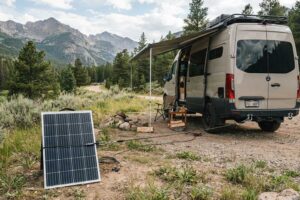
Yes, a 100W solar panel is widely used in RV and camper applications because it provides lightweight and reliable energy for basic electrical needs.
Common RV uses:
LED Lighting
LED lights consume very little electricity.
Example:
Five 5W LED lights:
5 × 5W = 25W
Used for four hours:
25W × 4 hours = 100Wh
A 100W solar panel producing 500Wh daily can easily support this requirement.
Charging Electronics
A 100W solar panel can charge:
- Smartphones
- Tablets
- Cameras
- GPS devices
- Portable speakers
- Power banks
Running Ventilation Fans
Small RV ventilation fans typically consume 10–40W. With battery storage, they can operate during the evening.
Maintaining Battery Systems
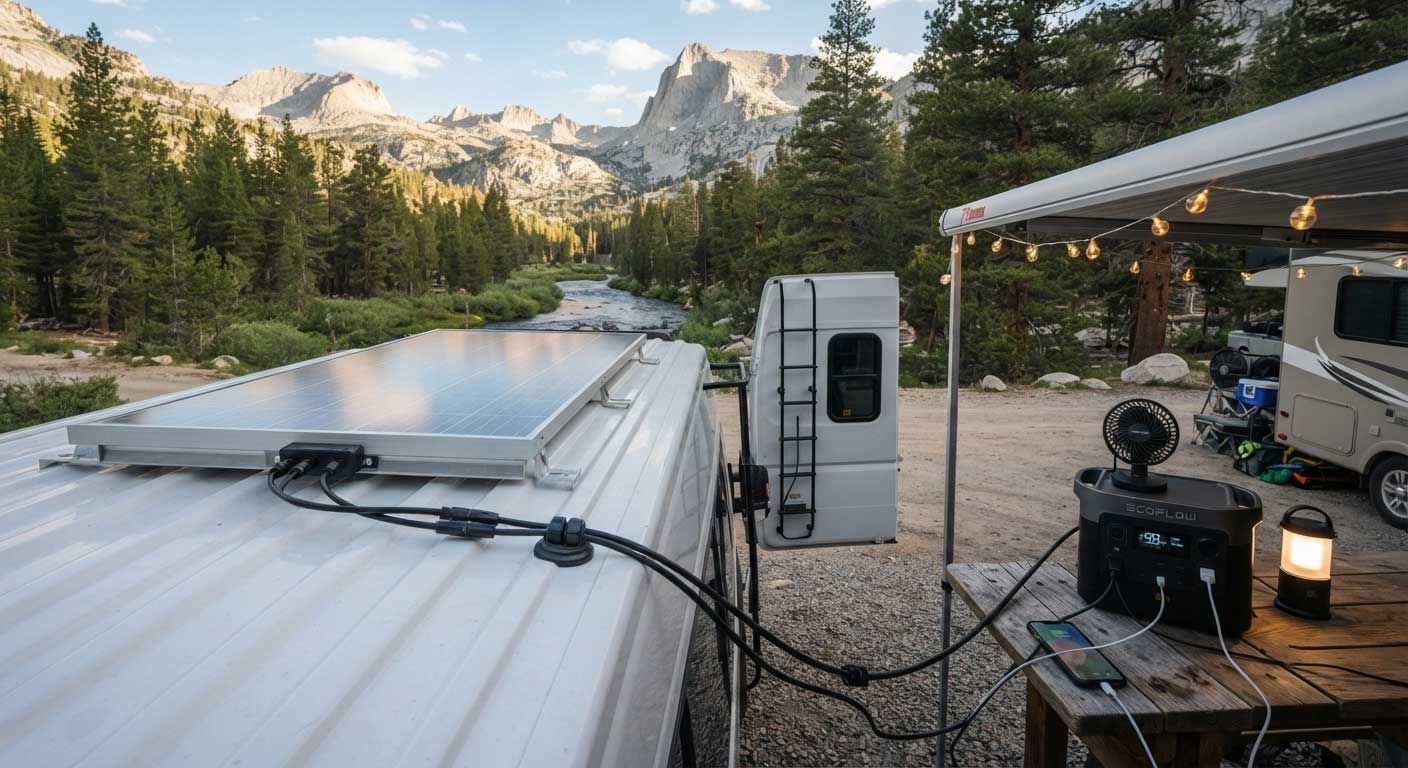
Many RV owners use 100W solar panels to maintain:
- 12V lithium batteries
- Marine batteries
- Portable power stations
Will a 100 watt solar panel power a refrigerator?
A 100 watt solar panel can power a small portable refrigerator, but the system requires proper energy storage.
Refrigerators are challenging because they use energy in cycles rather than continuously. The compressor may require extra power when starting.
Typical energy requirements:
| Refrigerator Type | Daily Consumption |
|---|---|
| 12V camping refrigerator | 300–500Wh |
| Portable freezer | 400–700Wh |
| Household refrigerator | 1000Wh+ |
A practical setup may include:
- 100W–200W solar panels
- 50Ah–100Ah lithium battery
- MPPT charge controller
The battery allows the refrigerator to continue operating when sunlight disappears.
Can a 100 watt solar panel run a laptop?
Yes, a 100W solar panel can power most laptops when combined with a battery and inverter.
Typical laptop consumption:
| Laptop Category | Power Usage |
|---|---|
| Basic office laptop | 30–50W |
| Business laptop | 40–70W |
| High-performance laptop | 80–120W |
Example:
A laptop using 50W for 5 hours:
50W × 5 hours = 250Wh
A 100W solar panel producing 500Wh per day can provide enough energy for this usage under favorable sunlight.
The U.S. Department of Energy Solar Photovoltaic Basics explains that actual solar electricity production depends on available sunlight, system efficiency, and installation conditions.
How long will a 100 watt solar panel power devices?
The operating time of devices powered by a 100W solar panel depends on energy production, battery capacity, and device consumption.
The basic calculation is:
Runtime = Available Energy (Wh) ÷ Device Power (W)
Example:
A 100W solar panel produces approximately 500Wh per day.
Possible usage:
| Device | Power Consumption | Approximate Operating Time |
|---|---|---|
| LED light (10W) | 10W | 50 hours |
| WiFi router (15W) | 15W | 33 hours |
| Camping fan (30W) | 30W | 16 hours |
| Laptop (50W) | 50W | 10 hours |
| Small monitor (40W) | 40W | 12 hours |
These calculations represent available energy, not continuous sunlight operation. If the system includes a battery, the stored electricity can be used after sunset.
At Bright Solar, I usually recommend designing with a 20–30% energy margin. Real installations rarely operate under perfect laboratory conditions. Dust, heat, cable length, and seasonal sunlight changes can reduce actual output.
Can a 100 watt solar panel power a TV?
A 100 watt solar panel can power a small LED TV when connected with a suitable battery and inverter.
Typical TV energy requirements:
| TV Size | Average Power Consumption |
|---|---|
| 19–24 inch LED TV | 20–40W |
| 32 inch LED TV | 40–70W |
| 43 inch LED TV | 70–100W |
| Large smart TV | 100W+ |
A small television used for several hours daily is realistic with a 100W solar system.
Recommended setup:
- 100W solar panel
- 12V lithium battery
- MPPT charge controller
- Pure sine wave inverter
Directly connecting a TV to a solar panel is not recommended because solar output changes constantly with weather and sunlight.
Can a 100W solar panel power a security camera?
Yes. Security cameras are one of the best applications for a 100W solar panel because they require very little energy.
Typical consumption:
- WiFi camera: 5–10W
- Outdoor security camera: 5–15W
- 4G solar camera: 10–20W
A 100W solar panel can support:
- Remote monitoring systems
- Farm security cameras
- Construction site cameras
- Off-grid surveillance equipment
These applications are common because the solar panel can keep batteries charged without requiring grid electricity.
What size battery is suitable for a 100 watt solar panel?
The battery size depends on how long you need backup power.
Common combinations:
| Solar Panel Size | Recommended Battery |
|---|---|
| 100W panel | 50Ah lithium battery |
| 100W–200W panels | 100Ah lithium battery |
| 200W+ panels | 100Ah–200Ah battery bank |
Example:
A 12V 100Ah lithium battery stores:
12V × 100Ah = 1200Wh
If your daily usage is 300Wh, the battery can provide several hours or even multiple days of backup depending on conditions.
A quality MPPT controller is recommended because it helps extract more usable energy from the solar panel, especially during mornings, evenings, and cloudy periods.
What can a 100 watt flexible solar panel power?
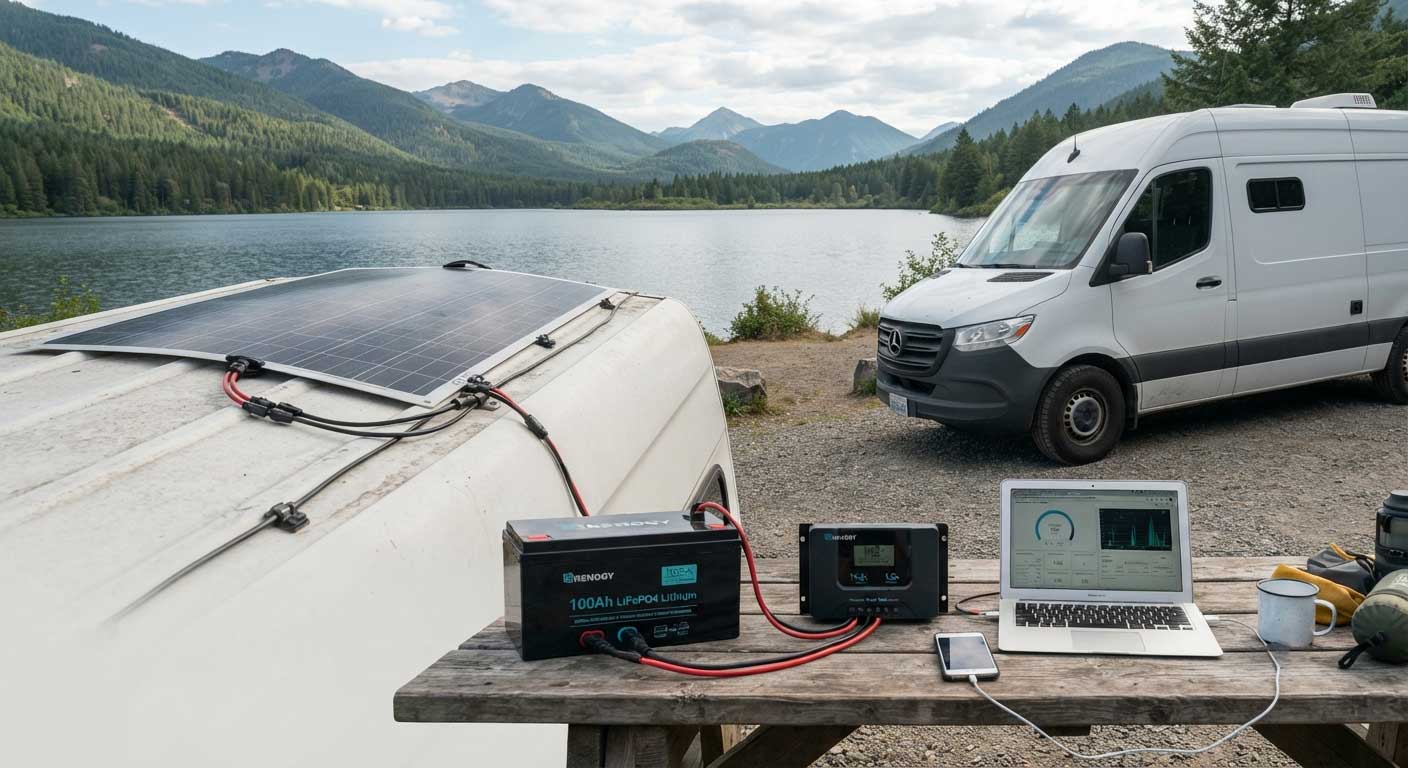
Flexible 100W solar panels are especially useful for applications where traditional rigid panels are difficult to install.
Common uses:
- RV roofs
- Boats
- Tiny homes
- Camping systems
- Portable power stations
- Remote sensors
Bright Solar flexible solar panels are designed for lightweight applications where installation space and weight are important factors.Visit the product page:Flexible Solar Panels
What can a 100 watt solar panel not power?
Understanding limitations is important when planning a solar system.
A single 100W solar panel cannot normally power high-energy appliances such as:
| Appliance | Typical Power Requirement | Reason |
|---|---|---|
| Air conditioner | 1000W–2500W | Requires much larger solar array |
| Electric heater | 1000W+ | Continuous high power demand |
| Microwave | 800W–1500W | High startup load |
| Hair dryer | 1200W+ | Exceeds panel output |
| Electric stove | 1000W+ | Too much energy consumption |
For these applications, Bright Solar recommends increasing solar capacity and adding appropriate battery storage.
FAQ About what will a 100 watt solar panel power?
Can a 100 watt solar panel power a refrigerator?
A 100W solar panel can power a small 12V refrigerator when combined with a battery and efficient controller. Large household refrigerators usually need more solar capacity.
Can a 100 watt solar panel run lights?
Yes. LED lighting is one of the easiest applications for a 100W solar panel because LED bulbs consume very little energy.
Can a 100 watt solar panel charge a phone?
Yes. A 100W solar panel can charge multiple smartphones, tablets, and small USB devices when connected through a suitable charger or power station.
Can a 100 watt solar panel power a laptop?
Yes. Most laptops can be powered or charged with a 100W solar panel system using battery storage and an inverter.
Can a 100 watt solar panel run a TV?
Yes, a 100W solar panel can support small LED TVs. Larger televisions require additional solar panels.
Can a 100W solar panel power an air conditioner?
No. A single 100W solar panel cannot provide enough energy for most air conditioners. AC systems usually require multiple solar panels.
How much energy does a 100W solar panel produce daily?
A 100W solar panel typically produces around 300–600Wh per day depending on sunlight hours, weather, temperature, and installation angle.
Final Thoughts: What will a 100 watt solar panel power?
The answer to what will a 100 watt solar panel power depends on how the energy is managed. A 100W solar panel is a practical choice for charging batteries, powering electronics, running LED lights, supporting RV systems, and maintaining small off-grid devices.
It is not designed to replace a full home solar system, but with the right battery and efficient appliances, it can provide dependable renewable energy for many everyday needs.
At Bright Solar, we focus on matching solar panel capacity with real usage conditions rather than only looking at watt ratings. A properly sized system delivers better reliability, longer equipment life, and improved energy independence.
The prev: What can i run on a 100 watt solar panel?The next: What can a 100w solar panel power?
Related recommendations
-

How Much Will Solar Panels Cost?
126Learn how much will solar panels cost in 2026. Explore real installation prices, panel costs, system sizes, and flexible solar options with Bright Solar.
View details -
How Many Kilowatts Can Solar Panels Produce?
30Solar panel capacity depends on panel wattage and quantity, while actual output varies with sunlight, temperature, shading, orientation, and system losses.
View details -
how much do photovoltaic panels cost?
151Discover how much do photovoltaic panels cost with real market data, pricing factors, and Bright solar insights on panel types, efficiency, and system value.
View details -
how to keep portable solar panels from being stolen?
165Secure portable solar panels with a physical cable lock and a fixed anchor, avoid leaving them unattended, and store them inside the RV when practical.
View details