What Direction Should Solar Panels Face?
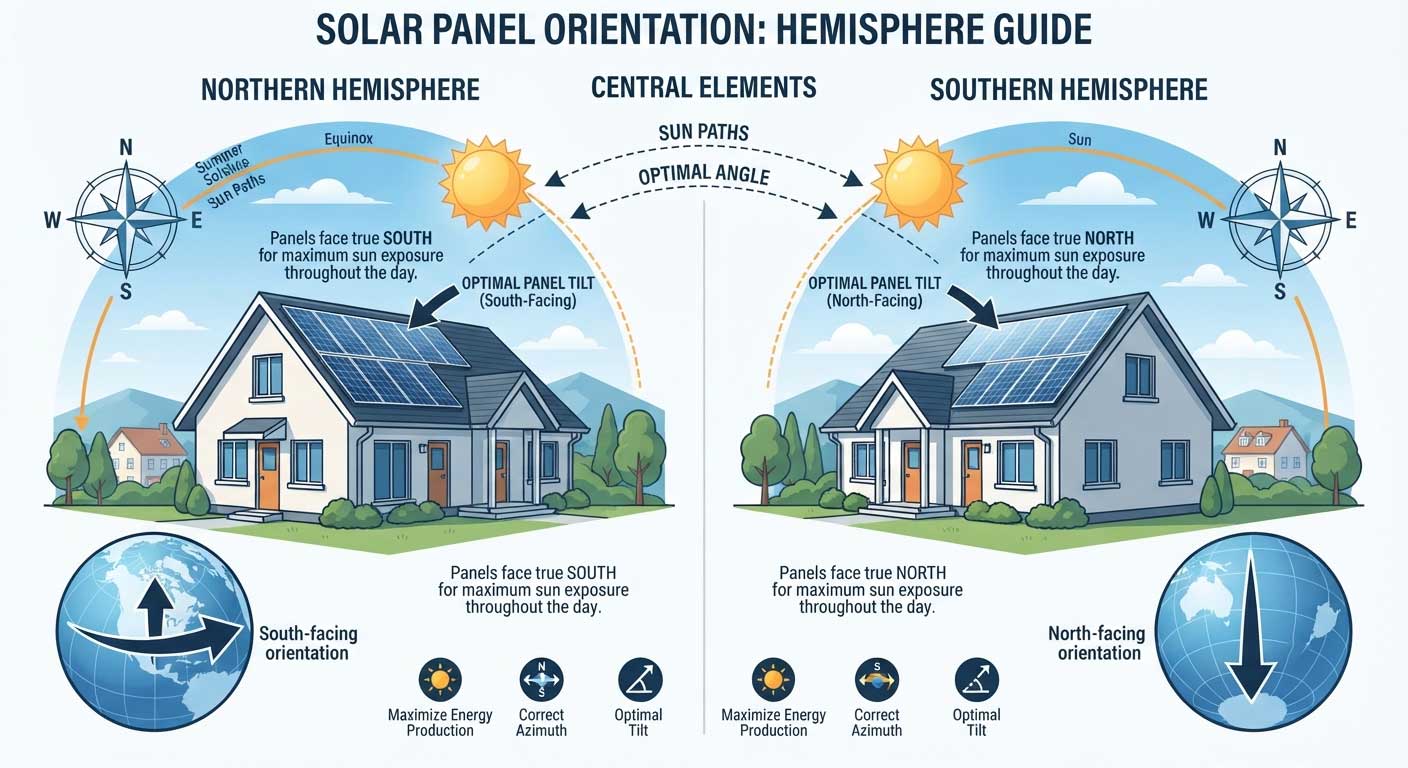
What direction should solar panels face? Solar panels should face the direction that receives the most sunlight throughout the year, which is usually south in the Northern Hemisphere and north in the Southern Hemisphere. Proper orientation improves energy production and system efficiency.
Choosing the correct solar panel direction is one of the most important decisions during solar system design. A high-quality panel installed in the wrong direction can produce less energy than an average panel positioned correctly.
At Bright Solar, we have evaluated flexible solar panel installations for residential rooftops, RVs, marine applications, and off-grid systems. One thing we repeatedly observe is that customers often focus on panel wattage while overlooking orientation. In many cases, adjusting the installation direction creates a bigger improvement than simply adding more panels.
Why Solar Panel Direction Matters
Understanding Solar Energy and Sun Position
Solar panels generate electricity when photovoltaic cells receive sunlight. The amount of energy produced depends on:
- Sun exposure time
- Solar panel direction
- Installation angle
- Local climate
- Shading conditions
The sun does not stay in the same position throughout the day. It moves from east to west, and its height changes with the seasons.
A well-designed solar system considers the yearly sun path instead of only looking at sunlight at one specific time.
According to National Renewable Energy Laboratory (NREL Solar Resource Data), solar resource availability varies significantly depending on geographic location, tilt angle, and orientation, making site assessment an important part of photovoltaic system design.
Best Direction to Face Solar Panels by Location
Solar Panel Direction in the Northern Hemisphere
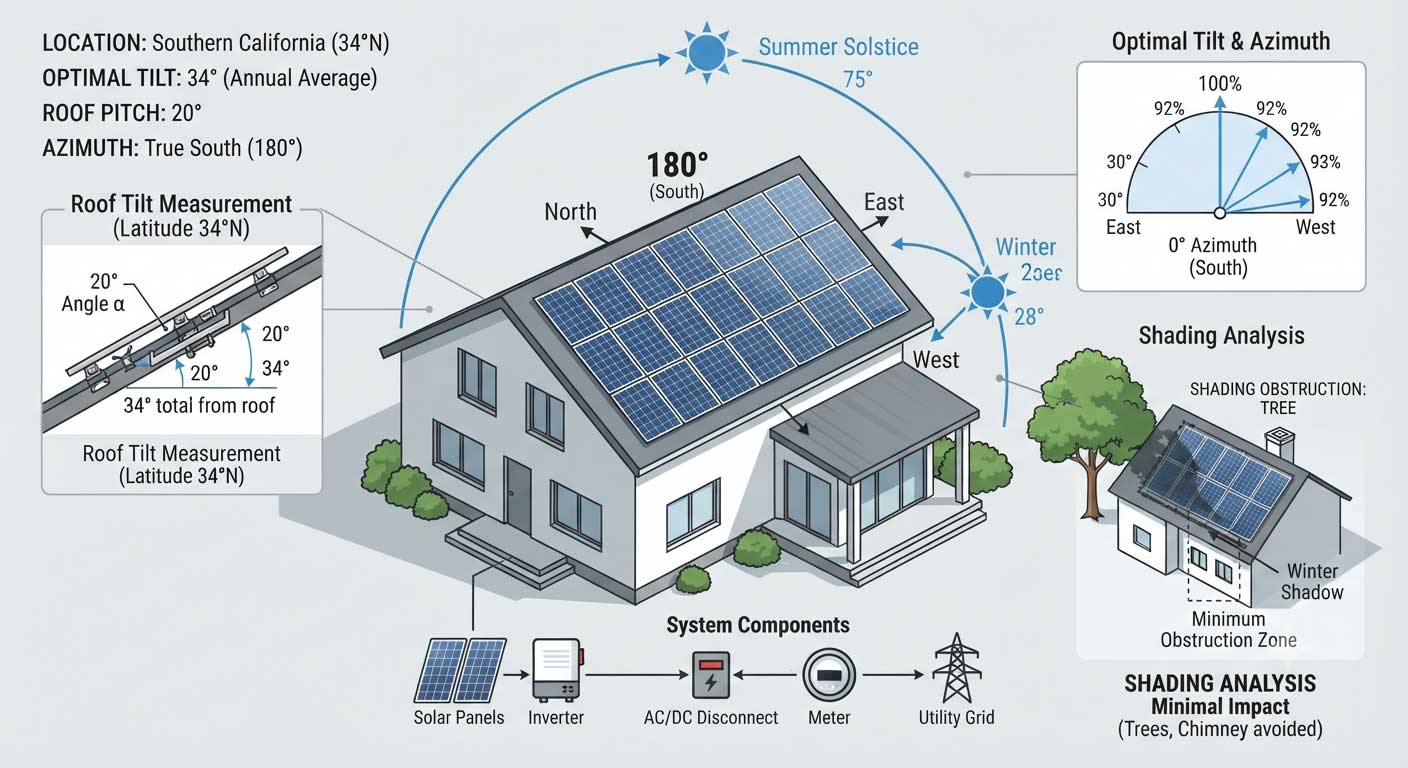
For countries located in the Northern Hemisphere, the best direction to face solar panels is generally south.
Examples include:
- United States
- Canada
- Most European countries
- Northern China
South-facing solar panels usually receive the most consistent sunlight because the sun travels through the southern part of the sky.
However, a slight adjustment may sometimes improve performance depending on:
- Electricity usage pattern
- Roof design
- Seasonal energy demand
Solar Panel Direction in the Southern Hemisphere
For locations in the Southern Hemisphere, solar panels generally perform best when facing north.
Examples include:
- Australia
- New Zealand
- Southern Africa
- Parts of South America
North-facing panels capture more direct sunlight during the day because the sun appears mainly in the northern sky.
Best Orientation for Solar Panels: East, West, or South?
Comparing Different Solar Panel Orientations
The ideal direction depends on your energy goals.
| Solar Panel Direction | Advantages | Limitations |
|---|---|---|
| South-facing | Highest yearly energy production in Northern Hemisphere | May not match evening energy usage |
| North-facing | Best in Southern Hemisphere | Lower output in opposite regions |
| East-facing | Produces more morning energy | Less afternoon generation |
| West-facing | Better afternoon production | Slightly lower annual output in many locations |
East-Facing Solar Panels
East-facing panels receive sunlight earlier in the day.
They may work well for:
- Homes with high morning electricity use
- Buildings with unsuitable south-facing roofs
- Systems designed for daytime consumption
West-Facing Solar Panels
West-facing solar panels receive stronger afternoon sunlight.
This can be useful when electricity demand increases later in the day because:
- People return home after work
- Air conditioning usage increases
- Evening appliances consume more power
A west-facing system may produce slightly less total energy but better match household consumption.
Solar Panel Optimal Angle and Direction Relationship
Best Angle for Solar Panels
Direction and angle work together.
The solar panel optimal angle depends mainly on:
- Latitude
- Seasonal sunlight changes
- Roof structure
A common guideline is:
Solar panel tilt angle ≈ local latitude
For example:
- Latitude 30° → around 30° tilt
- Latitude 45° → around 45° tilt
However, fixed rooftop systems often use the existing roof angle rather than installing adjustable mounts.
How Tilt Angle Affects Solar Performance
A panel facing the correct direction but installed at the wrong angle may still lose energy.
Common effects:
Too Flat
Advantages:
- Easier installation
- Less wind resistance
Disadvantages:
- Dust accumulation
- Reduced winter performance
Too Steep
Advantages:
- Better winter sunlight capture
- Easier rain cleaning
Disadvantages:
- Reduced summer production
The best angle balances yearly energy production rather than maximizing only one season.
Real Installation Experience: Why Roof Limitations Matter
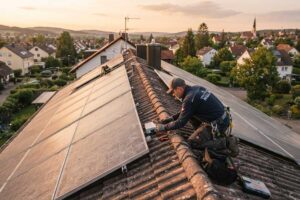
During real solar projects, perfect orientation is not always possible.
For example, a homeowner may have:
- A north-south roof ridge
- Nearby trees
- Chimneys creating shadows
- Limited available roof space
In these situations, the best solution is not always forcing the “perfect” direction.
At Bright Solar, we often recommend evaluating the entire system design, including panel efficiency, available surface area, and energy consumption habits. A slightly less ideal direction with better sunlight exposure can outperform a theoretically perfect orientation affected by shading.
How to Choose the Right Solar Panel Direction for Your Home
Consider Electricity Usage Patterns
The highest energy production does not always mean the highest savings.
For example:
- Morning electricity users may benefit from east-facing panels.
- Evening electricity users may benefit from west-facing panels.
- Balanced daily consumption usually favors the optimal yearly orientation.
Solar design should consider when electricity is consumed, not only when electricity is generated.
How to Determine the Best Solar Panel Orientation
Use a Solar Path Analysis Before Installation
Finding the best orientation for solar panels requires more than using a compass. Professional solar design considers the sun’s movement throughout the entire year.
Before installation, evaluate:
- Roof direction
- Nearby obstacles
- Seasonal shadow changes
- Local latitude
- Electricity consumption schedule
A roof that receives direct sunlight from 9 AM to 3 PM may perform better than a roof with a theoretically perfect direction but frequent shading.
How Shading Affects Solar Panel Direction
Avoid Shadows When Choosing Solar Orientation
Even correctly positioned solar panels can lose production when shadows cover photovoltaic cells.
Common shading sources include:
- Trees
- Buildings
- Chimneys
- Antennas
- Roof structures
A small shadow can have a larger impact on traditional string-connected solar systems because panels are electrically linked together.
For flexible solar panels used on RVs, boats, and irregular surfaces, placement flexibility can help avoid shading problems where rigid panel installation is limited.
Solar Panel Direction for Different Applications
Best Direction for Residential Solar Panels
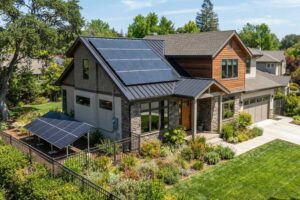
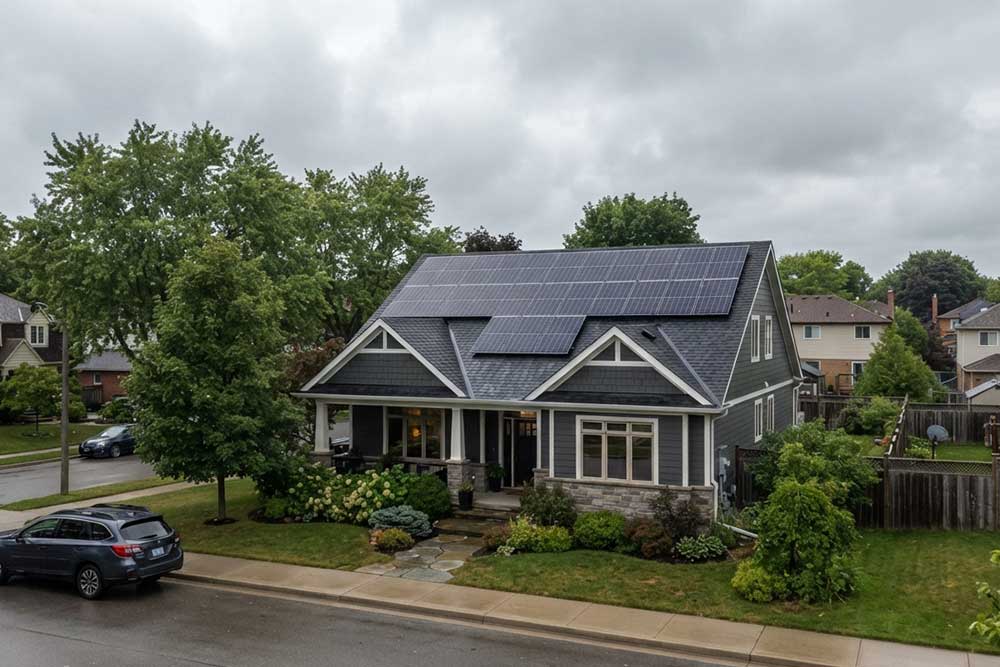
For most home solar systems, the goal is maximizing yearly energy production.
Recommended approach:
- Prioritize direct sunlight exposure
- Choose the least shaded roof area
- Match orientation with household energy usage
- Adjust tilt when possible
Residential solar panels homes often achieve better results through proper planning rather than simply increasing the number of modules.
Best Direction for RV Solar Panels
RV solar systems have different priorities.
Because RV roofs are limited, installers often focus on:
- Maximum available sunlight
- Low installation weight
- Flexible placement options
- Travel direction changes
A fixed RV may benefit from ideal orientation, but a traveling RV usually requires a practical installation that performs well under changing conditions.
Best Direction for Off-Grid Solar Systems
Off-grid systems need reliable daily energy production.
Important factors include:
- Battery capacity
- Daily energy demand
- Seasonal sunlight variation
- Backup power requirements
In remote locations, a slightly adjusted orientation can sometimes improve winter production when energy demand is higher.
How to Calculate Solar Panel Direction and Angle
Using Latitude to Estimate Solar Panel Angle
A simple starting point is matching panel tilt with local latitude.
Example:
| Location Latitude | Approximate Fixed Tilt |
|---|---|
| 20° | Around 20° |
| 35° | Around 35° |
| 50° | Around 50° |
This method provides a useful estimate, but professional solar design may adjust the angle depending on climate and energy goals.
Seasonal Adjustment for Maximum Output
Adjustable solar mounts can improve performance by changing panel angles during the year.
Typical approach:
- Lower angle during summer
- Higher angle during winter
However, most residential installations use fixed mounting because of cost, maintenance, and structural considerations.
Tools to Find the Best Direction for Solar Panels
Solar Orientation Analysis Tools
Installers commonly use:
- Solar path calculators
- Satellite roof analysis
- Digital compass tools
- Solar design software
These tools help identify:
- Best roof section
- Expected energy production
- Shadow patterns
- Seasonal performance changes
The U.S. Department of Energy Solar Photovoltaic System Basics explains that proper system design, including location and orientation considerations, is essential for efficient photovoltaic operation.
Common Mistakes When Choosing Solar Panel Direction
Focusing Only on Compass Direction
A compass direction is only one part of solar design.
A south-facing roof with heavy shade may produce less energy than an east-facing roof with full sunlight.
Ignoring Future Energy Needs
Household electricity use changes over time.
Consider:
- Electric vehicles
- Heat pumps
- Home expansion
- Battery storage
A good solar orientation should support future energy requirements.
Installing Panels Without Shade Analysis
Many homeowners check sunlight only during installation.
However, shadows change throughout the year because:
- The sun angle changes
- Trees grow taller
- Seasonal conditions vary
Long-term analysis prevents unexpected production losses.
FAQ About What Direction Should Solar Panels Face?
What direction should solar panels face for the best performance?
Solar panels should usually face south in the Northern Hemisphere and north in the Southern Hemisphere because these directions typically receive the most sunlight throughout the year.
What is the best direction to face solar panels?
The best direction to face solar panels depends on your location, roof structure, shading conditions, and energy usage pattern. Geographic conditions determine the ideal orientation.
Can solar panels face east or west?
Yes. East-facing panels provide stronger morning production, while west-facing panels provide more afternoon energy. Both can work well when roof conditions require alternative placement.
What is the best orientation for solar panels on a house?
The best orientation for solar panels on a house is the direction that receives consistent sunlight with minimal shading. In many regions, this is south-facing or north-facing depending on hemisphere.
Does solar panel angle affect energy production?
Yes. Solar panel angle affects how directly sunlight reaches photovoltaic cells. A properly adjusted tilt can improve yearly energy generation.
What is the best angle for solar panels?
The best angle for solar panels depends on latitude and installation location. A common guideline is setting the tilt close to the local latitude.
Do solar panels work if they are not facing the ideal direction?
Yes. Solar panels can still generate electricity when facing other directions, but energy production may decrease depending on sunlight exposure.
Expert Recommendations for Solar Panel Orientation
Choosing solar panel direction is a balance between theory and real-world conditions.
A perfect compass direction does not guarantee the best performance. The strongest solar installations consider:
- Available sunlight.
- Roof structure.
- Seasonal changes.
- Household electricity usage.
- Future energy requirements.
At Bright Solar, we focus on practical solar solutions that adapt to different environments, including flexible solar panels for homes, RVs, marine systems, and off-grid applications.Visit product page:Flexible Solar Panels
Conclusion: Choosing the Right Solar Panel Direction
What direction should solar panels face depends on location, sunlight availability, roof conditions, and energy goals. In most cases, panels should face south in the Northern Hemisphere and north in the Southern Hemisphere for maximum yearly production.
However, the best solar installation is not always the one with the “perfect” direction. Proper planning, shading analysis, and suitable tilt adjustment create a system that delivers reliable energy over many years.
Bright Solar provides flexible solar panel solutions designed to perform in diverse installation environments while helping homeowners build efficient solar power systems.
The prev: How to Test a Solar Panel?The next: Can Hail Damage Solar Panels?
Related recommendations
-

how long do solar panels last on a roof?
144Learn how long do solar panels last on a roof with real lifespan data, degradation rates, and field insights from Bright solar engineers across global installations.
View details -
How to Attach Solar Panel Semi Flexible?
194How to attach solar panel semi flexible systems securely? Learn proven installation methods, adhesive options, mounting mistakes to avoid, and expert RV and marine tips.
View details -
How Much for One Solar Panel?
255How much for one solar panel? Discover real solar panel prices, wattage options, cost factors, and expert buying advice from Bright Solar.
View details -
Will Solar Panels Work on a Cloudy Day?
187Yes, solar panels work on cloudy days because photovoltaic cells can use diffuse daylight, although thicker clouds usually reduce electricity production.
View details