How To Set Up Solar Panel System At Home Off Grid?
How To Set Up Solar Panel System At Home Off Grid?
Setting up an off-grid solar system at home requires solar panels, batteries, an inverter, a charge controller, and proper system sizing. A well-designed system can provide independent electricity without relying on the utility grid.
The basic process includes:
- Calculating household energy consumption
- Selecting suitable solar panels
- Sizing battery storage
- Installing electrical components
- Testing system performance
At Bright Solar, we have worked with different off-grid applications where energy reliability is the priority. One thing we often notice is that homeowners focus on buying more solar panels but underestimate battery capacity and daily power usage.
An off-grid solar system is not simply a collection of panels on a roof. It is an energy system designed around your lifestyle, location, and electricity demand.
Understanding An Off-Grid Solar System
What Is A Home Off Grid Solar System?
An off-grid solar system is a complete electricity solution that generates and stores power independently without connection to the public utility grid.
Unlike grid-tied systems, off-grid systems must balance:
- Energy generation
- Energy storage
- Electricity consumption
A typical home off-grid solar system includes:
| Component | Purpose |
|---|---|
| Solar panels | Generate electricity from sunlight |
| Charge controller | Controls solar charging process |
| Battery bank | Stores energy for nighttime use |
| Inverter | Converts DC power into AC electricity |
| Monitoring system | Tracks energy production and usage |
The energy flow works like this:
Sunlight → Solar panels → Charge controller → Battery → Inverter → Home appliances
The National Renewable Energy Laboratory (NREL) explains that photovoltaic system performance depends on solar resource availability, system design, and operating conditions.
Source:
https://www.nrel.gov/solar/
Step 1: Calculate Your Home Energy Requirements
Determine How Much Solar Power You Need
Before purchasing equipment, calculate your daily electricity consumption.
Start by listing:
- Refrigerator usage
- Lighting
- Internet equipment
- Water pumps
- Kitchen appliances
- Heating or cooling equipment
Example:
A small off-grid home uses:
| Appliance | Daily Energy |
|---|---|
| Refrigerator | 1,000Wh |
| LED lighting | 200Wh |
| Laptop and devices | 300Wh |
| Water pump | 500Wh |
Total:
2,000Wh per day
If your location receives 5 peak sunlight hours:
2,000Wh ÷ 5 hours = 400W
Considering system losses, a practical system may require approximately:
500W–600W solar capacity
The actual requirement depends on:
- Climate
- Seasonal sunlight
- Appliance usage
- Battery backup expectations
Step 2: Choose The Right Solar Panels For Off Grid Home
Selecting Solar Panel Capacity And Type
Solar panels are the main energy source in an off-grid system.
Common residential off-grid panel choices include:
| Solar Panel Capacity | Suitable Application |
|---|---|
| 100W–200W | Small cabins and basic systems |
| 300W–400W | Homes, RVs, small off-grid houses |
| 500W+ | Larger residential systems |
Choosing higher wattage panels can reduce the number of modules required.
However, panel selection should also consider:
- Roof space
- Installation environment
- Temperature performance
- Long-term durability
For homes with limited installation space, higher-efficiency panels can provide more energy from a smaller area.
Flexible Solar Panels For Off Grid Homes
When Flexible Solar Panels Are A Better Choice
Traditional rigid solar panels are common for residential installations, but flexible solar panels can solve specific installation challenges.
Flexible Solar panels are useful for:
- Tiny homes
- Remote cabins
- Curved structures
- Lightweight buildings
- Mobile off-grid applications
Advantages include:
- Lower weight
- Easier transportation
- Simple installation
- Better adaptability
At Bright Solar, we have seen increasing demand for lightweight solar solutions because many off-grid users install systems in locations where traditional mounting structures are difficult.
For example, a remote cabin may have limited roof strength or unusual roof angles. In these situations, flexible solar panels provide another installation option.
Step 3: Select Battery Storage For Off Grid Power
How To Size Solar Batteries
Battery storage is one of the most important parts of an off-grid system.
Solar panels generate electricity during the day, but homes also need power at night.
Battery size depends on:
- Daily electricity usage
- Backup requirements
- Battery chemistry
- Weather conditions
Common battery options:
| Battery Type | Characteristics |
|---|---|
| Lead-acid | Lower cost, heavier |
| Lithium-ion | Higher efficiency, longer lifespan |
| LiFePO4 | Popular for modern off-grid systems |
Lithium batteries are increasingly popular because they offer:
- Higher usable capacity
- Longer cycle life
- Lower maintenance
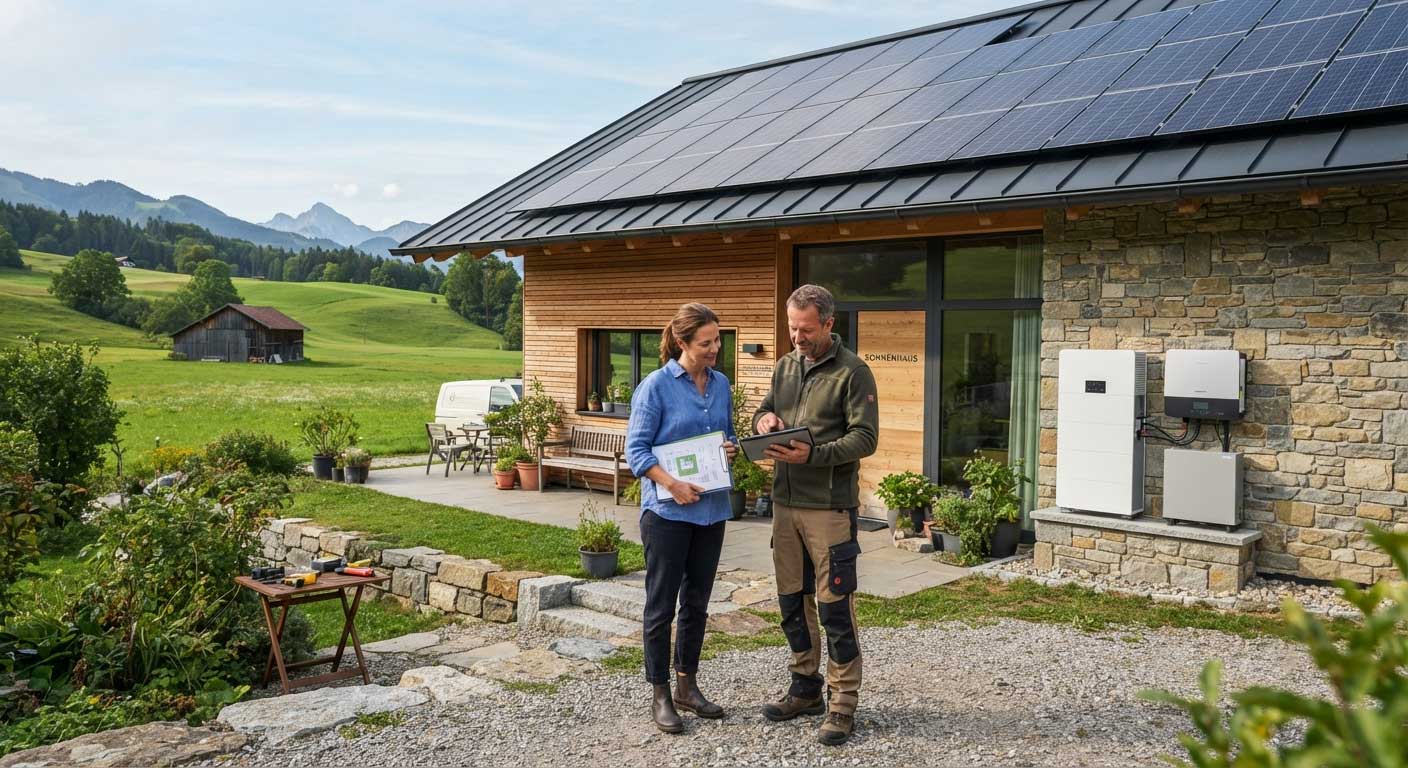
Step 4: Install Solar Panels And Electrical Components
Off Grid Solar Installation Process
After system design, installation begins.
The main steps include:
1. Install Solar Mounting Structure
The mounting system must support:
- Panel weight
- Wind conditions
- Weather exposure
2. Install Solar Panels
Panels should be positioned to maximize sunlight exposure.
Important factors:
- Roof direction
- Tilt angle
- Shading
- Seasonal sunlight changes
3. Connect Electrical Components
The wiring order is usually:
Solar panels → Charge controller → Battery → Inverter → Home electrical system
Safety considerations:
- Use correct cable sizes
- Install proper protection devices
- Follow electrical regulations
Choosing The Right Off Grid Solar Inverter
How An Inverter Powers Your Home
The inverter is the component that converts stored DC electricity from batteries into AC electricity used by household appliances.
When selecting an off-grid inverter, consider:
- Continuous power rating
- Surge power capacity
- Battery voltage compatibility
- Efficiency
- Protection features
For example:
A refrigerator may require more power when starting than when running. If the inverter is too small, the system may shut down even if the battery has enough energy.
Common inverter sizes:
| Inverter Size | Typical Application |
|---|---|
| 1kW–2kW | Small cabins, basic loads |
| 3kW–5kW | Small homes and off-grid houses |
| 5kW+ | Larger homes with multiple appliances |
A properly sized inverter improves system reliability and prevents unnecessary energy losses.
Monitoring And Maintaining An Off Grid Solar System
Keeping The System Operating Efficiently
A well-installed solar system requires regular monitoring.
Important maintenance tasks include:
Solar Panels
Check:
- Dust accumulation
- Leaves or debris
- Physical damage
- Cable connections
Batteries
Monitor:
- State of charge
- Temperature
- Charging cycles
- Battery health
Electrical Equipment
Inspect:
- Inverter status
- Controller performance
- Wiring connections
Solar panels generally require little maintenance, but small problems can reduce energy production over time.
The U.S. Department of Energy highlights that photovoltaic system performance can be affected by environmental conditions, system operation, and maintenance practices.
Source:
https://www.energy.gov/eere/solar/solar-photovoltaic-technology-basics
Common Mistakes When Building An Off Grid Solar System
Problems That Reduce Solar Performance
Many off-grid solar problems come from incorrect system design rather than equipment quality.
1. Installing Too Few Batteries
Some homeowners install enough solar panels but underestimate nighttime energy demand.
A system needs enough storage for:
- Evening electricity use
- Cloudy days
- Emergency backup
2. Oversizing Solar Panels Without Considering Storage
More panels do not always solve energy problems.
If battery capacity is limited:
- Excess solar energy may be wasted
- System balance becomes inefficient
Solar generation and storage should be designed together.
3. Ignoring Seasonal Changes
A solar system that works well in summer may produce less energy in winter.
Factors include:
- Shorter daylight hours
- Lower sun angle
- Weather conditions
A reliable off-grid design considers the worst expected conditions, not only the best sunny days.
Bright Solar Experience: Designing Reliable Off Grid Energy Systems
Real Application Matters More Than Theoretical Numbers
At Bright Solar, we have worked with customers who use solar power in different environments, from remote homes to mobile energy applications.
One interesting pattern we have noticed is that off-grid users usually do not need the biggest possible system.
They need the most suitable system.
For example:
A remote cabin with occasional weekend use requires a very different design from a full-time off-grid home.
The cabin may need:
- Smaller solar capacity
- Basic battery storage
- Lower installation cost
A permanent off-grid home may require:
- Larger solar arrays
- Higher battery capacity
- More powerful inverter systems
The installation location changes everything.
A solar solution should match:
- Energy habits
- Local climate
- Available space
- Future expansion plans
FAQ About How To Set Up Solar Panel System At Home Off Grid?
How to set up solar panel system at home off grid?
To set up an off-grid solar system, calculate energy needs, select solar panels, install battery storage, connect an inverter, and configure the electrical system safely.
How many solar panels are needed for an off-grid home?
The number depends on electricity usage, sunlight conditions, and panel wattage. A small off-grid home may require several hundred watts, while larger homes may need several kilowatts.
Can an off-grid solar system power a whole house?
Yes. A properly designed system can power an entire home, but the solar capacity and battery storage must match household energy consumption.
How long can off-grid solar batteries store electricity?
Battery backup time depends on battery capacity and energy usage. Many systems are designed to provide one to several days of backup power.
Are flexible solar panels suitable for off-grid homes?
Yes. Flexible solar panels can be useful for lightweight structures, tiny homes, cabins, and locations where traditional mounting is difficult.
Does an off-grid solar system work during cloudy weather?
Yes, solar panels can still generate electricity during cloudy conditions, but output is reduced compared with direct sunlight.
Conclusion: How To Set Up Solar Panel System At Home Off Grid?
How to set up solar panel system at home off grid? The process requires careful planning of solar panels, battery storage, inverter capacity, and electrical connections to create a reliable independent power system.
A successful off-grid solar installation depends on:
- Accurate energy calculations
- Correct equipment sizing
- Quality installation
- Battery management
- Long-term maintenance
At Bright Solar, we believe off-grid solar is not simply about producing electricity. It is about creating a dependable energy solution designed around real daily needs.
Whether for a remote home, cabin, tiny house, or backup power system, the right solar design can provide energy independence and long-term reliability.
Related recommendations
-

How Much To Install Solar Panels On House?
254How much to install solar panels on house? Learn residential solar installation costs, pricing factors, equipment details, and savings insights from Bright Solar.
View details -
how much solar panels cost?
241Understand how much solar panels cost with real installation data, market breakdowns, and field insights from Bright solar engineers across global residential projects.
View details -
how many kwh can a solar panel generate?
291how many kwh can a solar panel generate? Learn solar panel energy output, daily production factors, calculation methods, and ways to maximize solar power.
View details -
how much silver in a solar panel?
256A modern crystalline-silicon solar panel typically contains about 3–8 grams of silver in a 400W module, depending mainly on cell technology and silver loadin...
View details