How to Mount Flexible Solar Panels?
How to Mount Flexible Solar Panels?
To mount flexible solar panels correctly, clean the surface thoroughly, leave airflow space beneath the panel whenever possible, use high-quality adhesive or mounting hardware designed for outdoor solar use, and secure wiring against vibration and water intrusion. Proper installation directly affects panel lifespan, charging efficiency, and roof safety.
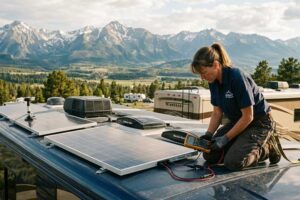
I learned this the hard way during an RV retrofit several summers ago. The owner had glued low-cost flexible panels directly onto a black fiberglass roof using generic construction adhesive. Six months later, the panel surface had warped badly from trapped heat. The roof underneath looked worse. Ever since then, I pay more attention to mounting methods than the panels themselves.
Flexible solar panels look simple. Mounting them properly is not.
Why Proper Mounting Matters More Than Most People Expect
A flexible solar panel is thinner and lighter than rigid glass panels, but that flexibility creates its own problems.
Poor mounting often leads to:
- Heat buildup
- Reduced charging performance
- Delamination
- Premature cell cracking
- Water intrusion
- Roof surface damage
According to the U.S. Department of Energy, excessive heat reduces photovoltaic efficiency and long-term solar panel performance.
Source: https://www.energy.gov/
That becomes especially important with flexible panels because many installations place them directly against roofs with minimal airflow.
Common Surfaces for Flexible Solar Panel Installation
Where Flexible Panels Are Usually Mounted
| Surface Type | Common Application |
|---|---|
| RV Roofs | Off-grid travel systems |
| Camper Vans | Van life conversions |
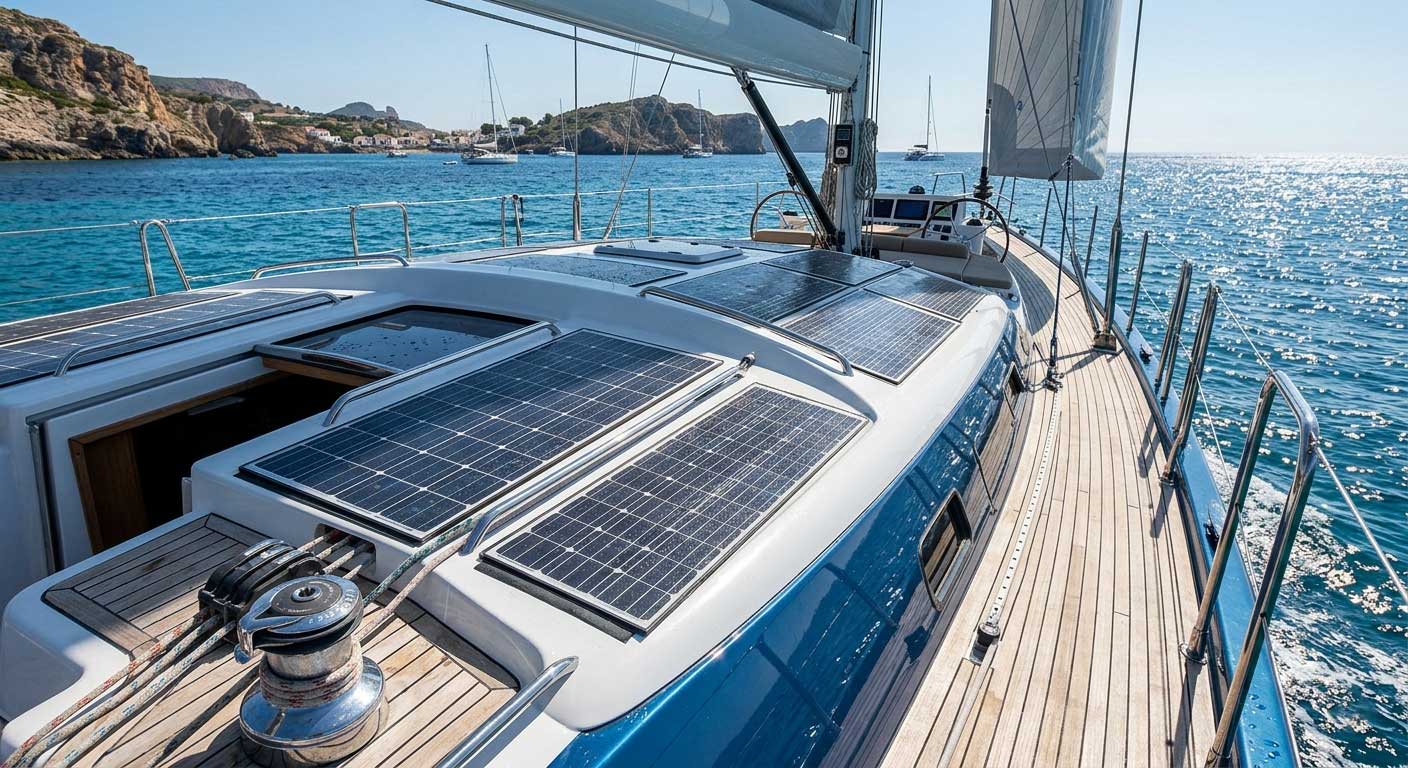
| Marine Decks | Boats and yachts |
| Truck Campers | Mobile battery charging |
| Curved Roofs | Aerodynamic installations |
| Portable Trailers | Remote power systems |
Flexible panels are popular mainly because they conform to curved surfaces while adding minimal weight.
But curved mounting surfaces also complicate heat management.
The Best Methods for Mounting Flexible Solar Panels
There is no single perfect mounting method.
The correct approach depends on:
- Roof material
- Climate
- Vibration levels
- Wind exposure
- Panel size
- Future maintenance access
Adhesive Mounting
Adhesive mounting is the most common method for RVs and vans.
Typical products include:
- 3M VHB tape
- Sikaflex marine adhesive
- Dicor lap sealants
- Polyurethane bonding adhesives
Advantages:
- No roof drilling
- Cleaner appearance
- Lower leak risk
- Faster installation
Disadvantages:
- Harder panel removal
- Heat retention risks
- Surface preparation becomes critical
I usually avoid fully bonding the entire back surface unless airflow is intentionally designed into the installation.
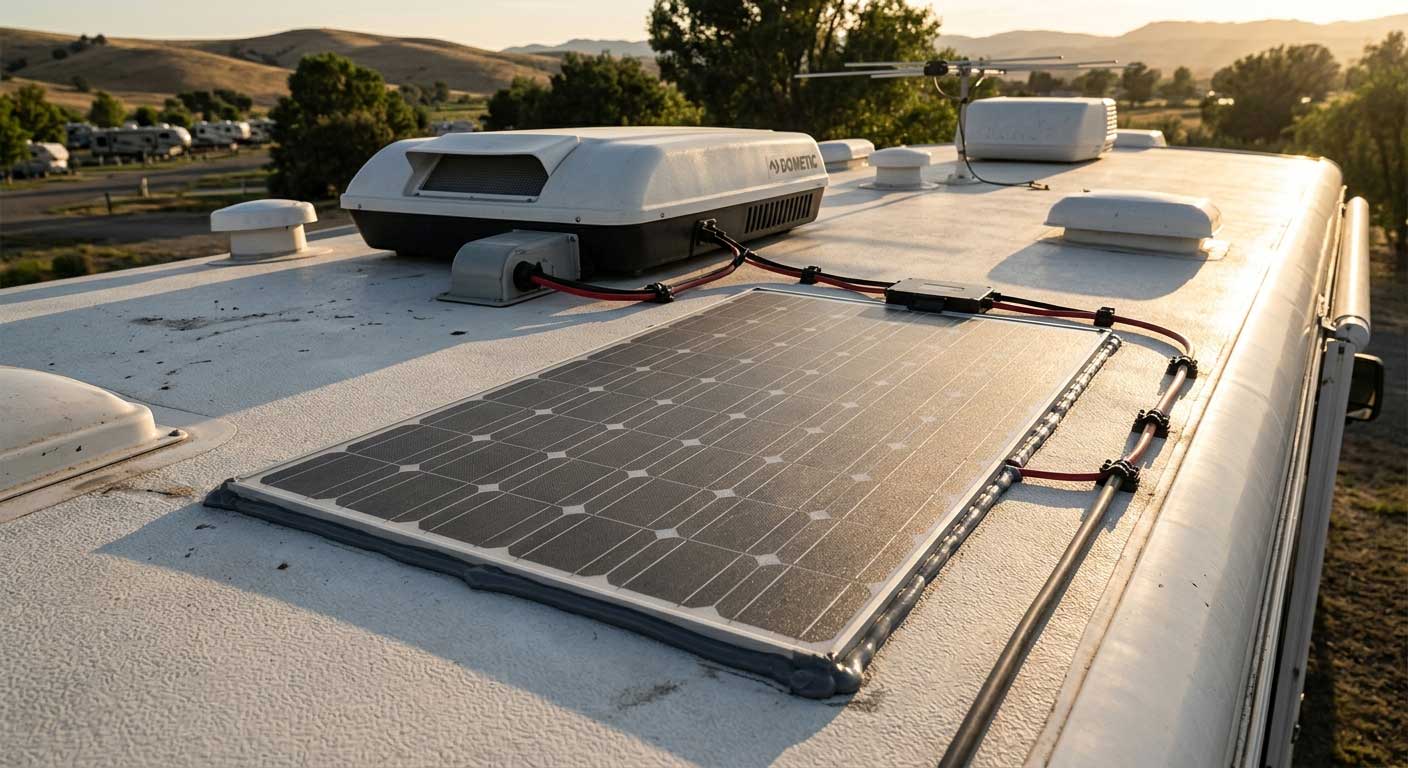
Why Airflow Under Flexible Solar Panels Matters
This is probably the most overlooked installation factor.
Flexible panels run hotter than rigid panels.
A lot hotter sometimes.
Heat Is the Silent Problem
When panels sit flush against hot roofs:
- Cell temperatures rise quickly
- Charging efficiency drops
- Adhesives age faster
- Surface warping increases
The National Renewable Energy Laboratory (NREL) notes that solar module efficiency declines as operating temperatures increase.
Source: https://www.nrel.gov/
In desert climates, roof temperatures can exceed 150°F (65°C).
That becomes brutal for directly bonded flexible panels.
H3: Small Air Gaps Help
Even a small airflow channel can reduce thermal stress noticeably.
Some installers now use:
- Corrugated mounting pads
- Spacer mesh
- Partial adhesive patterns
- Raised mounting corners
I’ve personally seen flexible panels last noticeably longer when airflow was prioritized from the beginning.
Mechanical Fastening vs Adhesive Bonding
Some users still prefer mechanical mounting systems.
Mechanical Mounting Advantages
| Mounting Type | Advantages | Drawbacks |
|---|---|---|
| Adhesive | No drilling, clean look | Harder heat management |
| Screw Mounting | Stronger retention | Roof penetration risks |
| Hybrid Mounting | Balanced durability | More installation work |
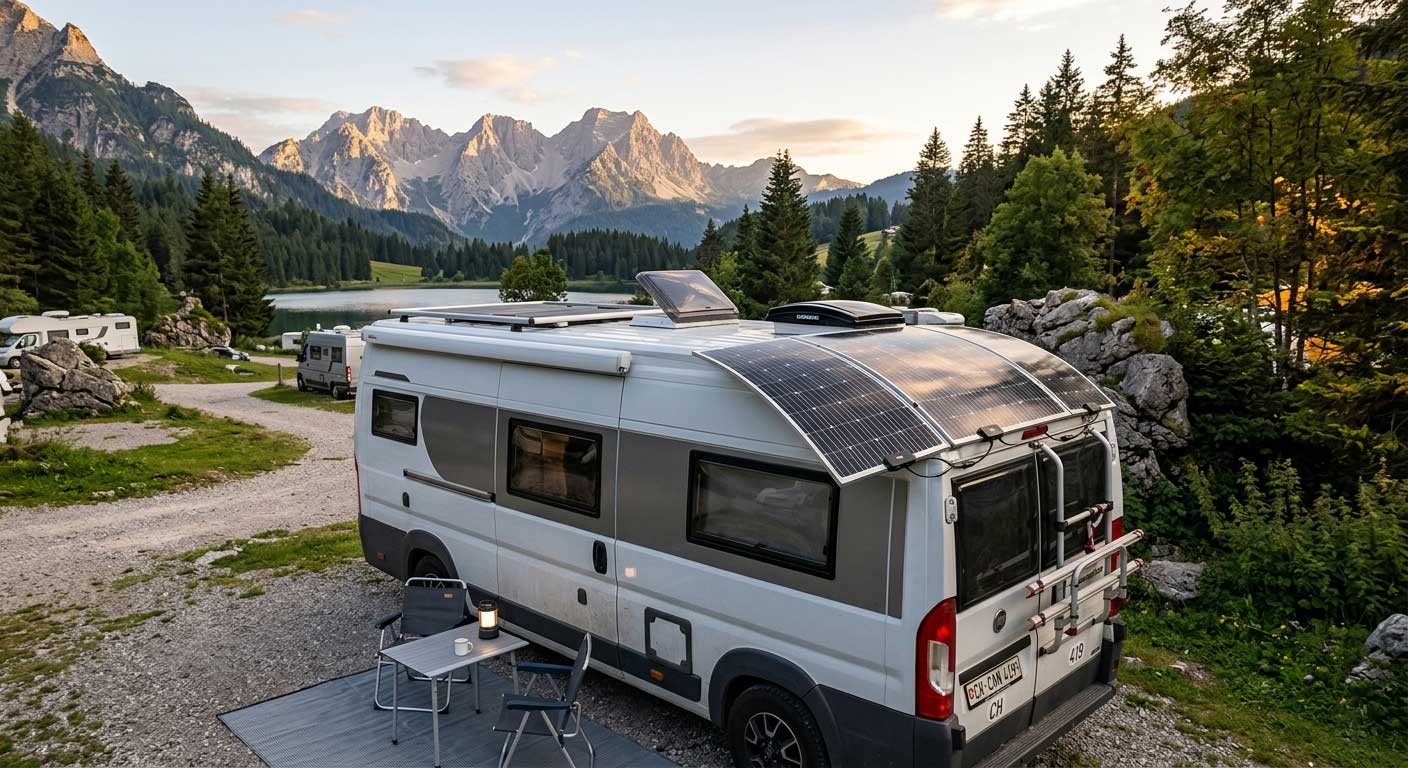
For vans traveling long distances in extreme heat, hybrid mounting often performs best.
Adhesive alone works well in moderate conditions, but long-term vibration can stress bonded edges.
Surface Preparation Is More Important Than Adhesive Brand
People obsess over adhesives.
Honestly, surface preparation matters more.
Proper Roof Preparation Steps
Before mounting:
- Wash the roof thoroughly
- Remove wax or silicone residue
- Degrease using isopropyl alcohol
- Dry completely
- Test-fit the panel
- Mark cable routing paths
Skipping prep work is one of the biggest causes of panel detachment.
I once inspected a van installation where the adhesive peeled off cleanly with almost zero resistance. The installer had mounted directly over oxidation residue.
The adhesive never had a chance.
Cable Routing Mistakes Can Destroy Good Installations
The panel itself is only half the system.
Poor wiring causes constant problems.
Common Wiring Failures
- Unsealed cable entry points
- Loose rooftop connectors
- Unsupported wire movement
- UV-damaged cable jackets
- Sharp bend stress
Marine-grade cable glands are usually worth the extra cost.
Especially on RVs and vans exposed to constant vibration and weather.
Realistic Lifespan Expectations for Flexible Solar Panels
Flexible panels generally do not last as long as rigid glass panels.
That surprises many buyers.
Average Lifespan Comparison
| Panel Type | Typical Lifespan |
|---|---|
| Rigid Glass Panels | 20–30 years |
| Flexible Solar Panels | 5–15 years |
Lifespan depends heavily on:
- Heat exposure
- Mounting method
- UV conditions
- Vibration
- Water intrusion
- Installation quality
Good mounting practices directly extend usable panel life.
Mistakes That Shorten Flexible Solar Panel Life
Installation Errors I See Repeatedly
- Fully sealing panels without airflow
- Using indoor adhesives outdoors
- Ignoring roof expansion movement
- Mounting over dirty surfaces
- Routing cables without strain relief
- Installing on uneven roof curves
Some failures happen surprisingly fast.
I’ve seen bubbling appear within a single summer on poorly ventilated black van roofs.
FAQ:How to Mount Flexible Solar Panels?
Can flexible solar panels be glued directly to a roof?
Yes, but partial airflow underneath is strongly recommended to reduce overheating and improve lifespan.
What adhesive is best for mounting flexible solar panels?
Marine-grade polyurethane adhesives and 3M VHB tape are among the most commonly used options.
Do flexible solar panels need airflow underneath?
Yes. Even small ventilation gaps help reduce heat buildup and improve long-term durability.
Can flexible solar panels be mounted on curved roofs?
Absolutely. Flexible panels are specifically designed for curved RV, van, and marine surfaces.
How long do mounted flexible solar panels last?
Most quality flexible solar panels last between 5 and 15 years depending on climate, mounting quality, and thermal exposure.
How to Mount Flexible Solar Panel?
Flexible solar panels are usually mounted using industrial adhesive, VHB tape, screws with spacers, or hybrid mounting systems. The safest installation keeps airflow under the panel, prevents water buildup, and avoids over-bending the panel surface. Done correctly, a flexible solar panel can stay securely mounted for 5–10 years on RVs, vans, boats, and curved roofs.Learn more about “How to Mount Flexible Solar Panel“
Final Thoughts
So, how to mount flexible solar panels correctly?
Carefully. Slowly. With more attention to heat and airflow than most online tutorials mention.
The mounting method often determines whether a flexible panel lasts two years or ten. In real-world installations, overheating and vibration usually cause failure long before the solar cells themselves wear out.
At Bright Solar, we’ve found that customers who prioritize roof preparation, airflow spacing, and proper cable protection almost always experience fewer long-term issues. The panels matter, of course. But installation quality matters just as much.
The prev: How to Mount Flexible Solar Panel?The next: how to mount flexible solar panels on RV?
Related recommendations
-

how much silver in a solar panel?
256A modern crystalline-silicon solar panel typically contains about 3–8 grams of silver in a 400W module, depending mainly on cell technology and silver loadin...
View details -
How Much Energy Can a Solar Panel Generate?
212Discover how much energy can a solar panel generate in real conditions. Learn actual daily output, weather impacts, and expert insights from Bright Solar.
View details -
how many kwh will a solar panel produce?
78A 400W solar panel can generate about 1.6 kWh with four equivalent full-sun hours, before system losses. Actual daily production depends on sunlight, weather...
View details -
How Many Watts Does a Solar Panel Produce?
297Learn how many watts does a solar panel produce, understand solar panel output, energy generation factors, and kWh production with Bright Solar.
View details