How to Compare Marine Flexible Solar Panels?
How to Compare Marine Flexible Solar Panels?
When evaluating marine flexible solar panels, compare durability, ETFE protection, saltwater resistance, weight, and long-term performance before comparing wattage. In marine environments, the panel that survives the longest often delivers the best value.
I remember standing on a dock in Newport, Rhode Island, several summers ago.
Two neighboring sailboats were preparing for long coastal trips. One owner proudly pointed to a brand-new flexible solar setup. The other laughed and said, “Come back in five years and we’ll see whose panel still works.”
At the time, I thought he was exaggerating.
He wasn’t.
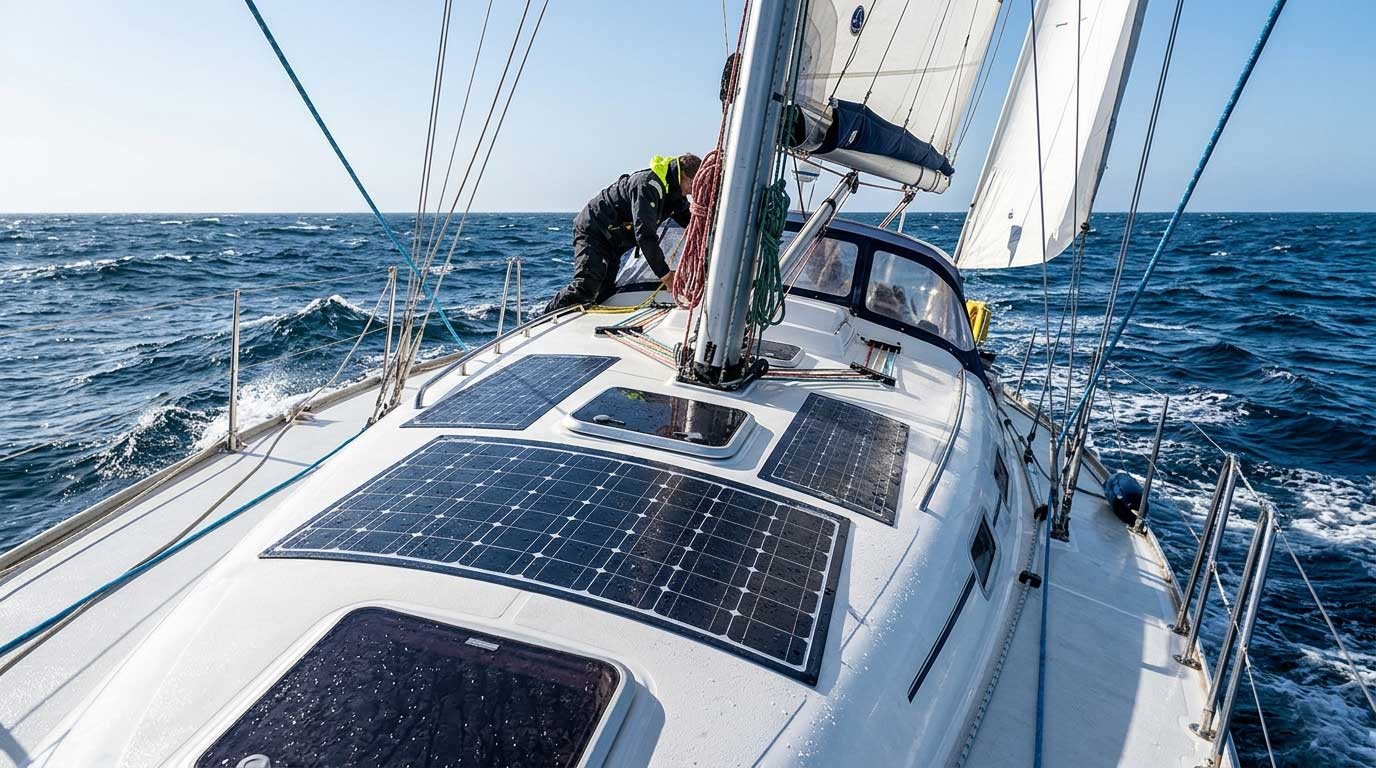
Marine solar is different. Boats expose equipment to a combination of UV radiation, salt spray, humidity, vibration, and occasional abuse that few RV installations ever experience.
That’s why comparing marine flexible solar panels requires a different mindset.
The Biggest Mistake Boat Owners Make
A surprising number of buyers start with one number:
Watts.
100W versus 120W.
200W versus 220W.
The problem is that advertised wattage tells you almost nothing about how a panel will look after years offshore.
One of the earliest flexible panels I inspected on a cruising catamaran produced nearly its rated power when new. Three years later, the surface had begun to haze. Output had noticeably declined.
The owner hadn’t purchased a bad panel.
He had purchased a panel designed for occasional outdoor use rather than continuous marine exposure.
That distinction matters.
According to testing and reliability studies published by the National Renewable Energy Laboratory (NREL), environmental conditions play a major role in photovoltaic degradation.
Source:
https://www.nrel.gov
Start With the Surface Material
This is where I usually begin.
Not with solar cells.
Not with efficiency.
The outer surface.
ETFE Versus PET
In marinas, I’ve seen older PET-coated panels turn slightly cloudy after years of UV exposure.
Not every PET panel fails.
Some perform reasonably well.
But ETFE generally ages better.
DuPont’s material data shows ETFE provides excellent resistance to UV radiation, weathering, and harsh environmental conditions.
Source:
https://www.dupont.com
That may sound like a small technical detail.
It isn’t.
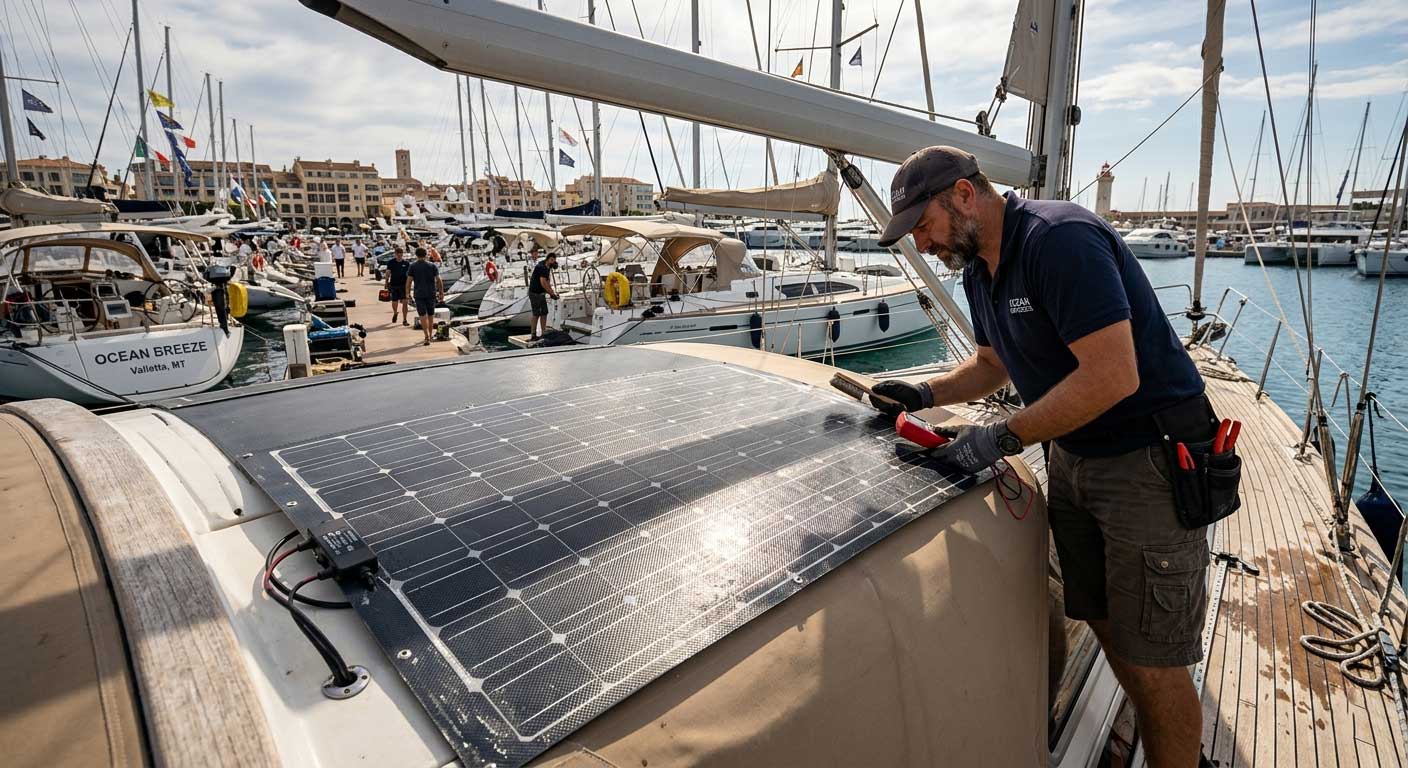
The top layer is the first thing sunlight, salt, rain, and dirt encounter every day.
Weight Becomes Important Faster Than Most People Expect
I didn’t fully appreciate this until I helped with a catamaran retrofit.
The owner initially planned to install conventional framed panels.
After weighing everything, including mounting hardware, he changed direction.
The difference surprised both of us.
The rigid system would have added almost 30 kilograms above deck level.
The flexible system reduced that figure dramatically.
On land, 20 kilograms doesn’t feel significant.
On a boat, especially higher up, it does.
Typical weights look something like this:
| Panel Type | Approximate Weight |
|---|---|
| 100W Flexible Panel | 2–3 kg |
| 100W Rigid Panel | 6–9 kg |
Those numbers vary by manufacturer, but the trend remains consistent.
Efficiency Matters — Just Not As Much As People Think
Efficiency is important.
Space on boats is limited.
No argument there.
Most premium marine flexible panels now use monocrystalline PERC technology.
According to the U.S. Department of Energy, modern monocrystalline solar cells generally outperform polycrystalline alternatives in energy conversion efficiency.
Source:
https://www.energy.gov
Still, I’ve watched sailors spend weeks comparing a 22.4% panel against a 23.1% panel.
Meanwhile they ignored cable quality, junction boxes, and waterproofing.
That’s focusing on the wrong battle.
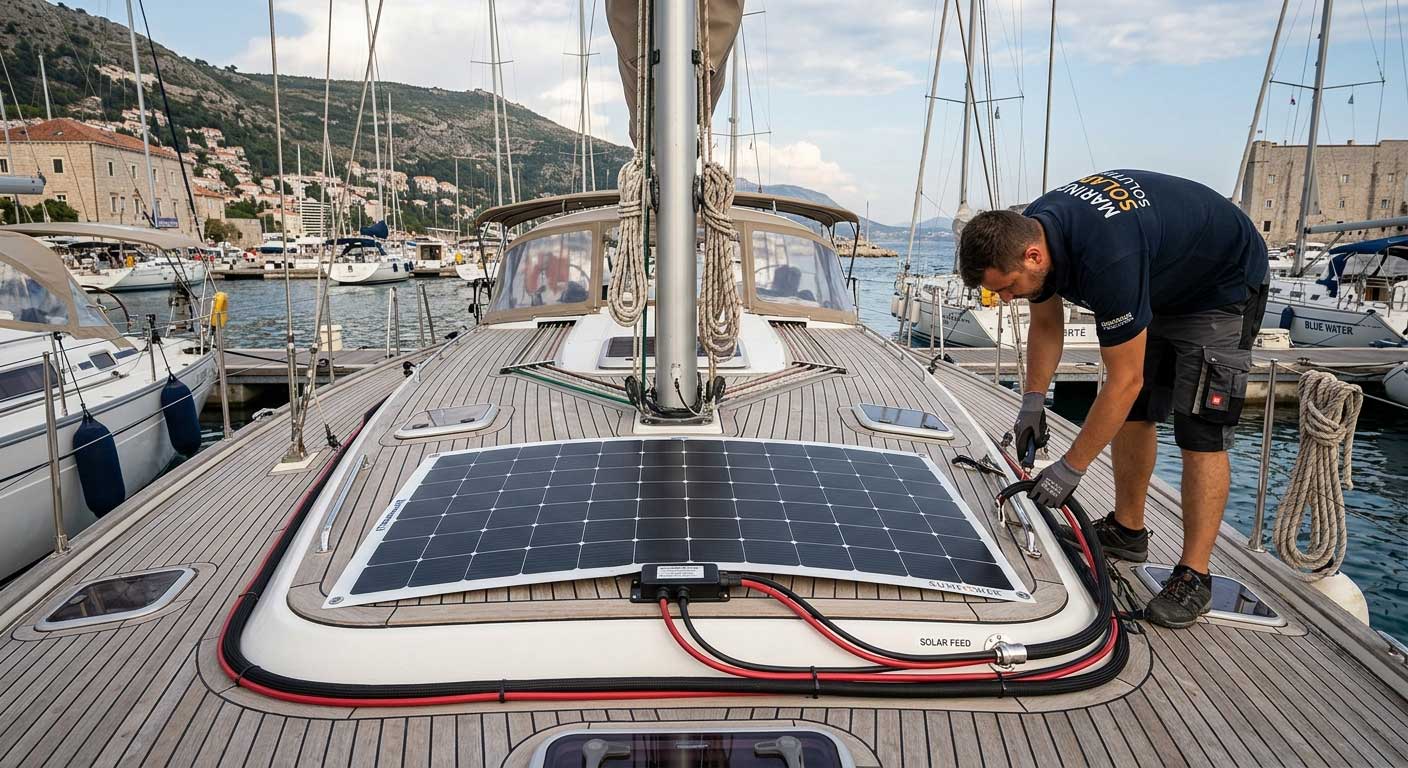
Look Closely at Construction Details
Some differences only become visible after you’ve handled enough panels.
For example:
- Connector quality
- Cable thickness
- Junction box sealing
- Edge finishing
- Lamination consistency
A panel can look impressive in product photos.
Then you hold it in your hands and immediately notice weak points.
Experienced installers learn to spot those things quickly.
Unfortunately, buyers online don’t always get that opportunity.
Warranty Tells an Interesting Story
Manufacturers rarely advertise what they don’t believe.
That’s why I always read warranty documents.
A five-year warranty doesn’t automatically mean the panel lasts five years.
But it often reveals how much confidence the manufacturer has in its own product.
If two panels appear similar and one offers significantly stronger coverage, I pay attention.
Not because the warranty itself is valuable.
Because confidence is valuable.
What I Personally Compare Before Recommending a Panel
After years around marine installations, my checklist has become fairly simple:
- ETFE surface
- Monocrystalline cells
- Saltwater resistance
- Weight
- Warranty
- Connector quality
- Manufacturer track record
Wattage comes later.
Not first.
That sometimes surprises new buyers.
FAQ About How to Compare Marine Flexible Solar Panels?
How to compare marine flexible solar panels correctly?
Compare ETFE protection, efficiency, weight, saltwater resistance, construction quality, and warranty rather than focusing only on wattage ratings.
Are ETFE marine solar panels better?
In most marine environments, ETFE panels offer better UV resistance and longer-term durability than PET-coated alternatives.
HWhat efficiency is considered good for marine flexible solar panels?
Most premium marine flexible solar panels achieve efficiencies above 22% using monocrystalline PERC cells.
How long do marine flexible solar panels typically last?
High-quality marine flexible panels commonly remain operational for 10–15 years when installed and maintained properly.
Final Thoughts
Anyone searching for how to compare marine flexible solar panels eventually discovers that solar isn’t really about wattage. Offshore, durability becomes the true performance metric. The panels that continue producing power after years of salt, heat, and vibration are usually the ones worth remembering. That’s ultimately how I compare marine flexible solar panels today.
The prev: How to Attach Solar Panel Semi Flexible?The next: How to Fix Flexible Solar Panel?
Related recommendations
-

how big are solar panels?
211How big are solar panels? Learn standard solar panel sizes, dimensions, wattage options, and roof space requirements with expert insights from Bright Solar.
View details -
How Much For Solar Power Home?
188How much for solar power home? Learn residential solar costs, system pricing factors, installation expenses, and expert solar solutions from Bright Solar.
View details -
how much are solar panels for a house?
256Find out how much are solar panels for a house with real installation data, pricing breakdowns, and field insights from Bright solar residential projects worldwide.
View details -
How Does Solar Power Make Electricity?
260How does solar power make electricity? Learn how sunlight becomes usable energy through photovoltaic cells, solar technology, and expert insights from Bright Solar.
View details