How to Turn Off Solar Panels?
How to Turn Off Solar Panels?
To turn off solar panels safely, switch off the inverter first, disconnect the AC breaker, then isolate the DC disconnect according to the system design. Solar panels themselves continue producing electricity whenever exposed to sunlight, so proper shutdown procedures are essential.
The first time I heard someone say, “Just turn the panels off,” I was standing beside an RV owner in New Mexico.
He pointed at four roof panels and asked where the power button was.
There wasn’t one.
That small misunderstanding appears surprisingly often. Solar panels are not like televisions or generators. If sunlight reaches the cells, electricity is produced. The system can be isolated, disconnected, or shut down, but the panels themselves continue generating voltage.
After years of inspecting RV systems, residential arrays, and flexible solar installations, I have learned that understanding how to turn off solar panels is really about understanding how solar systems work.
Can Solar Panels Actually Be Turned Off?
Technically, no.
A solar module exposed to sunlight continues producing direct current.
What can be turned off includes:
- Solar inverter.
- AC disconnect.
- DC disconnect.
- Charge controller.
- Battery system.
The U.S. Department of Energy explains that photovoltaic modules generate electricity whenever sunlight strikes the cells.
Source:
https://www.energy.gov/eere/solar
This distinction matters.
The system stops supplying power.
The panels themselves continue producing voltage.
Typical Solar Shutdown Sequence
Most installers follow a similar procedure.
| Step | Action |
|---|---|
| 1 | Turn off inverter |
| 2 | Switch off AC breaker |
| 3 | Turn off DC disconnect |
| 4 | Isolate batteries if necessary |
Manufacturers may recommend slightly different sequences.
Always consult the equipment manual.
One homeowner I visited switched off the DC side first while the inverter remained active.
Nothing catastrophic happened.
But the inverter displayed fault codes for several hours afterward.
Small details matter.
Why People Need to Shut Down Solar Systems
Common reasons include:
- Roof repairs.
- Electrical maintenance.
- Battery replacement.
- Inverter servicing.
- Emergency situations.
- System upgrades.
A roofing contractor once told me that nearly every solar job begins with confusion.
The workers know the roof.
The homeowners know the panels.
Very few understand the entire electrical system.
Residential Systems vs RV Systems
The shutdown procedure varies.
| System Type | Typical Shutoff Method |
|---|---|
| Residential solar | AC and DC disconnect |
| RV solar | Charge controller switch |
| Marine systems | Battery isolation |
| Portable solar | Unplug connectors |
| Off-grid systems | Controller shutdown |
RV systems are often simpler.
House systems involve additional safety equipment.
RV Flexible Solar Systems
Many RV owners simply disconnect:
- Solar charge controller.
- Battery switch.
- Anderson connectors.
The panels remain energized in sunlight.
The electrical path does not.
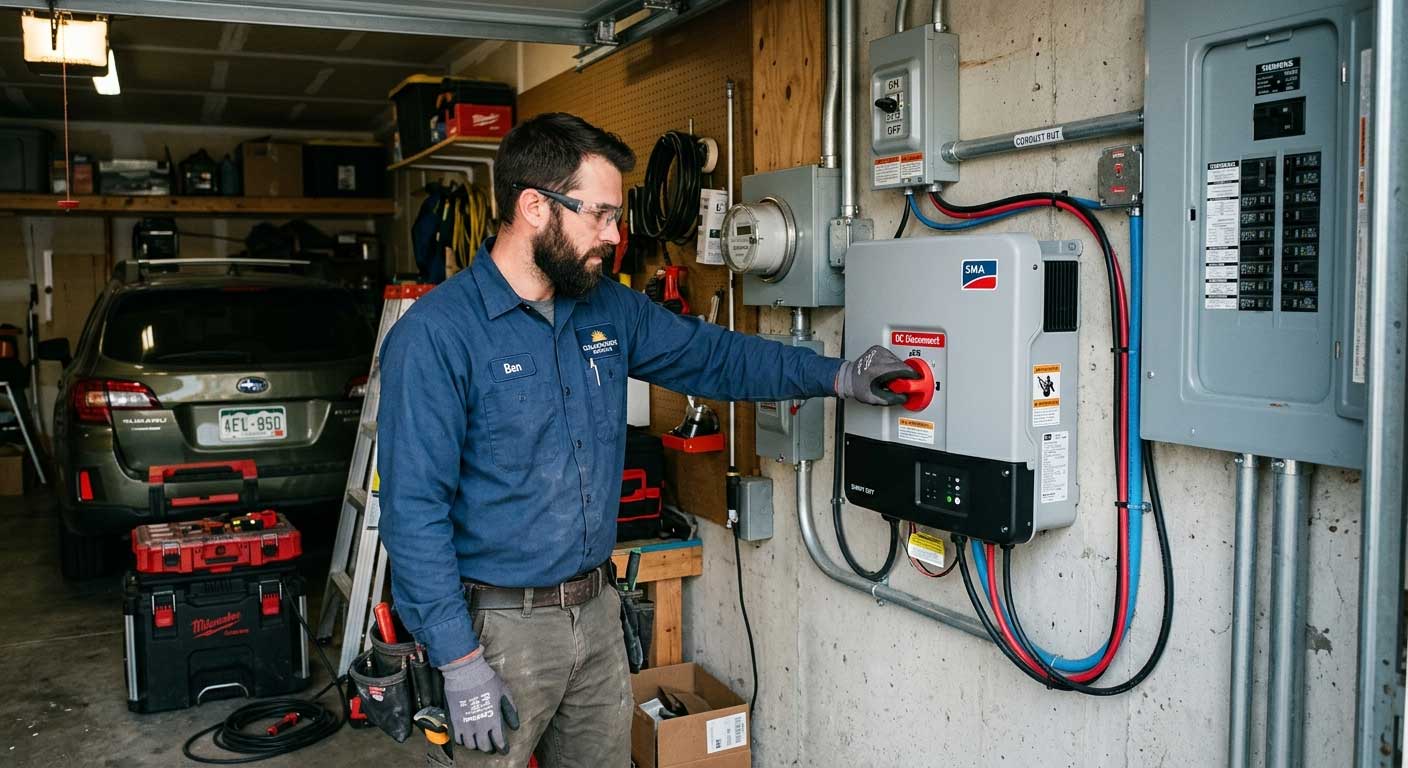
The Role of Rapid Shutdown Systems
Modern residential systems often include rapid shutdown devices.
The National Electrical Code introduced rapid shutdown requirements to improve firefighter safety.
Source:
These systems can quickly reduce voltage outside the array boundary.
Several firefighters I spoke with during a solar safety seminar emphasized how important these systems have become.
Roof access changes completely when conductors are de-energized.
Solar Panels Continue Producing Voltage
This surprises many people.
A disconnected panel may still measure voltage.
For example:
| Panel Rating | Open Circuit Voltage |
|---|---|
| 100W panel | 20–22V |
| 200W panel | 22–24V |
| 400W panel | 40–50V |
The National Renewable Energy Laboratory explains that photovoltaic modules generate electrical output whenever irradiance is present.
Source:
I once measured 37 volts on a disconnected RV panel during winter.
The owner thought the system was completely dead.
The sunlight disagreed.
Covering Panels During Maintenance
Some technicians temporarily cover panels.
Methods include:
- Opaque blankets.
- Cardboard sheets.
- Protective covers.
This reduces production.
It does not guarantee zero voltage.
Clouds help.
Sunlight wins.
During one service call in Arizona, technicians covered six panels with heavy blankets while replacing wiring.
Voltage dropped significantly.
Residual voltage remained.
Experience teaches caution.
Common Mistakes During Shutdown
Several mistakes appear repeatedly.
Mistake 1: Disconnecting Under Heavy Load
High current can create arcing.
Mistake 2: Ignoring Manufacturer Instructions
Inverters differ.
Charge controllers differ.
Mistake 3: Assuming the Panel Is Dead
Sunlight still produces electricity.
Mistake 4: Working Without Protective Equipment
Electrical safety remains important.
Lessons From Real Service Visits
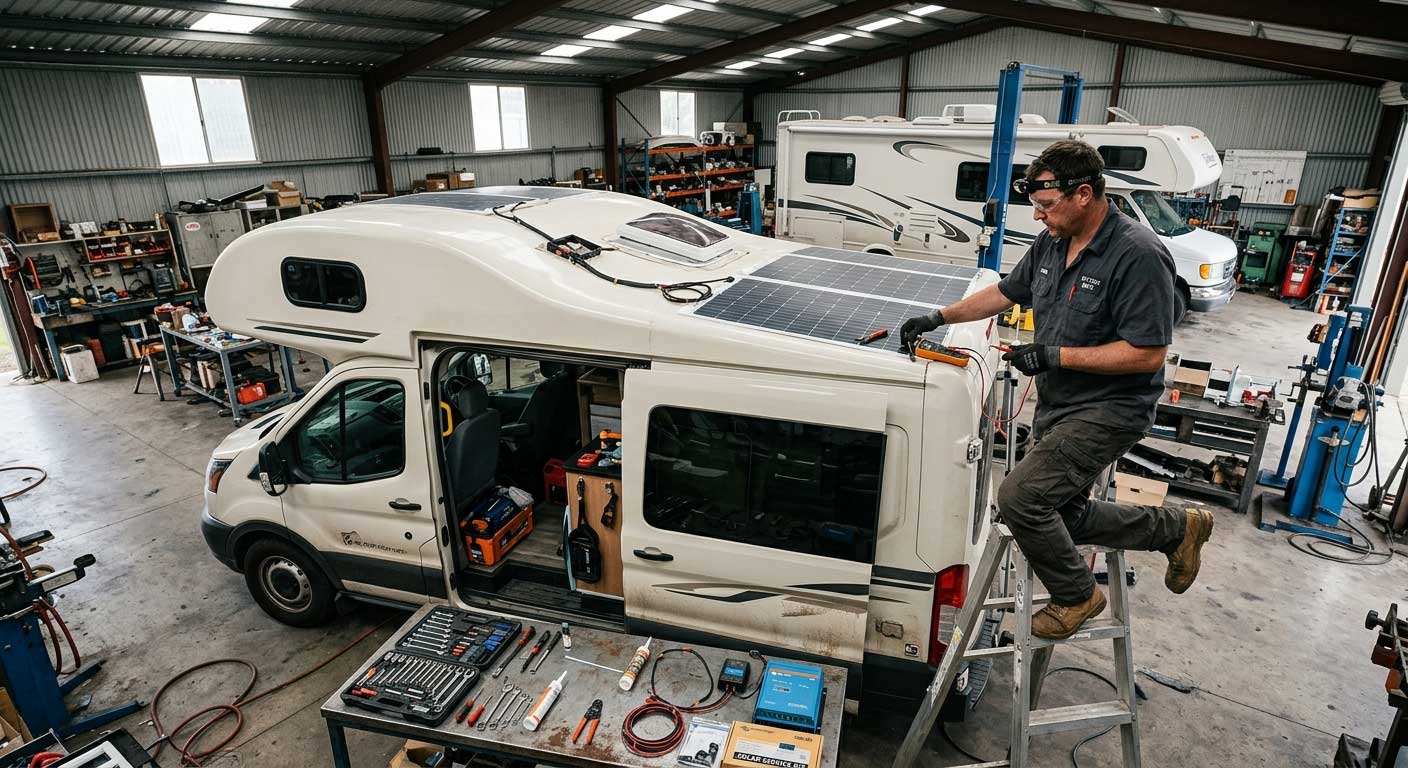
Several years ago, I visited a small camper repair shop.
The technician pointed toward a disconnected panel sitting beside the building.
He asked me to measure it.
The system had been “turned off” for two weeks.
The meter showed 19 volts.
That moment became one of the simplest ways to explain solar electricity.
Panels do not have an OFF button.
They have sunlight.
Or they do not.
Author Experience
Michael Turner has spent more than twelve years working with photovoltaic products, RV solar systems, flexible modules, and field inspections.
Professional experience includes:
- Product testing.
- Solar system inspections.
- Warranty investigations.
- RV installations.
- Mobile power systems.
Many examples in this article come from service visits, installation audits, and real maintenance situations.
FAQ About How to Turn Off Solar Panels?
Can solar panels be completely turned off?
No. Solar panels continue producing electricity whenever sunlight reaches the cells.
What is the safest way to shut down a solar system?
Turn off the inverter first, then disconnect AC and DC circuits according to manufacturer instructions.
Should I cover solar panels during maintenance?
Covering panels can reduce output but may not eliminate voltage entirely.
Do solar panels work when disconnected?
Yes. The panels continue generating voltage even if they are disconnected from the system.
Can I turn off RV solar panels?
You can disconnect the charge controller or battery system, but the panels still generate electricity in sunlight.
Visit the product page:Flexible Solar Panel
Final Thoughts
People searching how to turn off solar panels usually expect to find a switch.
After years of inspecting solar systems, climbing onto RV roofs, and measuring disconnected modules, I would answer differently.
Solar panels do not really turn off.
The system around them does.
The inverter stops.
The batteries disconnect.
The breaker opens.
But sunlight continues doing its job.
Understanding that difference is the first step toward working safely with solar energy.
Related recommendations
-

How Does a Portable Solar Panel Work?
255How does a portable solar panel work? Learn how portable solar panels convert sunlight into usable electricity for camping, RVs, and backup power systems.
View details -
how to use portable solar panels?
160Use portable solar panels by placing them in unobstructed sunlight, connecting them to a compatible power station or charge controller, and checking voltage,...
View details -
How much energy can a solar panel produce?
199How much energy can a solar panel produce? Learn solar output calculations, daily kWh production, influencing factors, and real-world examples.
View details -
how to fix flexible solar panel on roof?
194Learn how to fix flexible solar panel on roof surfaces securely using proven adhesive and fastening methods. Expert installation advice, real-world experience, and durability tips from Bright Solar.
View details