How to Fix Flexible Solar Panel?
How to Fix Flexible Solar Panel?
In most cases, how to fix flexible solar panel problems depends on identifying the failure source first. Loose wiring, damaged connectors, junction box faults, and surface delamination can often be repaired, while cracked solar cells usually require panel replacement rather than repair.
I still remember the first flexible solar panel I attempted to “fix.”
It was mounted on a cruising sailboat that had spent years in the Florida sun. The owner was convinced the panel was dead because battery charging had dropped dramatically.
He was already shopping for replacements.
The problem turned out to be a corroded MC4 connector hidden beneath a cable cover.
Twenty dollars in parts solved what looked like a several-hundred-dollar problem.
That experience taught me something important.
Many flexible solar panels are not actually broken.
They’re suffering from small failures that produce big symptoms.
The challenge is knowing where to look first.
Before You Attempt Any Repair
The first step is not grabbing tools.
It’s determining whether the panel itself has failed.
Over the years, I’ve inspected dozens of solar systems on boats, camper vans, and off-grid cabins. Surprisingly often, the panel isn’t the culprit.
Common causes of reduced solar performance include:
- Corroded connectors
- Loose terminals
- Damaged extension cables
- Failed charge controllers
- Dirty panel surfaces
- Battery-related issues
According to the U.S. Department of Energy, electrical connection problems remain one of the most common causes of photovoltaic system performance losses.
Source:
https://www.energy.gov
Before repairing anything, isolate the actual fault.
The Four Most Common Flexible Solar Panel Problems
1. Low Power Output
This is by far the complaint I hear most often.
The owner notices:
- Batteries charging slowly
- Lower daily energy production
- Reduced charging current
The causes vary.
Sometimes dramatically.
I recently inspected a 200W flexible solar panel system on a catamaran producing only 118W at noon.
The owner feared cell damage.
The real issue?
A thick layer of airborne salt residue combined with bird droppings around one corner of the panel.
After cleaning, output immediately increased.
2. Connector Corrosion
Marine environments are particularly harsh.
Saltwater attacks exposed electrical contacts relentlessly.
Typical warning signs include:
- Green corrosion
- Darkened connectors
- Excessive heat at connection points
- Voltage drops
Connector replacement is usually straightforward and inexpensive.
3. Junction Box Failure
The junction box often receives less attention than it deserves.
When water penetrates a poorly sealed junction box, symptoms can include:
- Intermittent charging
- Voltage instability
- Complete output loss
Many failures that appear to be panel defects originate here.
4. Surface Delamination
This issue is harder to repair.
Delamination occurs when layers begin separating.
Common signs include:
- Air bubbles
- Visible lifting
- Yellowing edges
- Moisture intrusion
Once delamination becomes extensive, replacement is often more economical than repair.
According to reliability studies published by the National Renewable Energy Laboratory (NREL), moisture ingress remains one of the major contributors to photovoltaic module degradation.
Source:
https://www.nrel.gov
My Troubleshooting Process in the Field
I follow the same sequence almost every time.
Not because it’s perfect.
Because it consistently finds problems quickly.
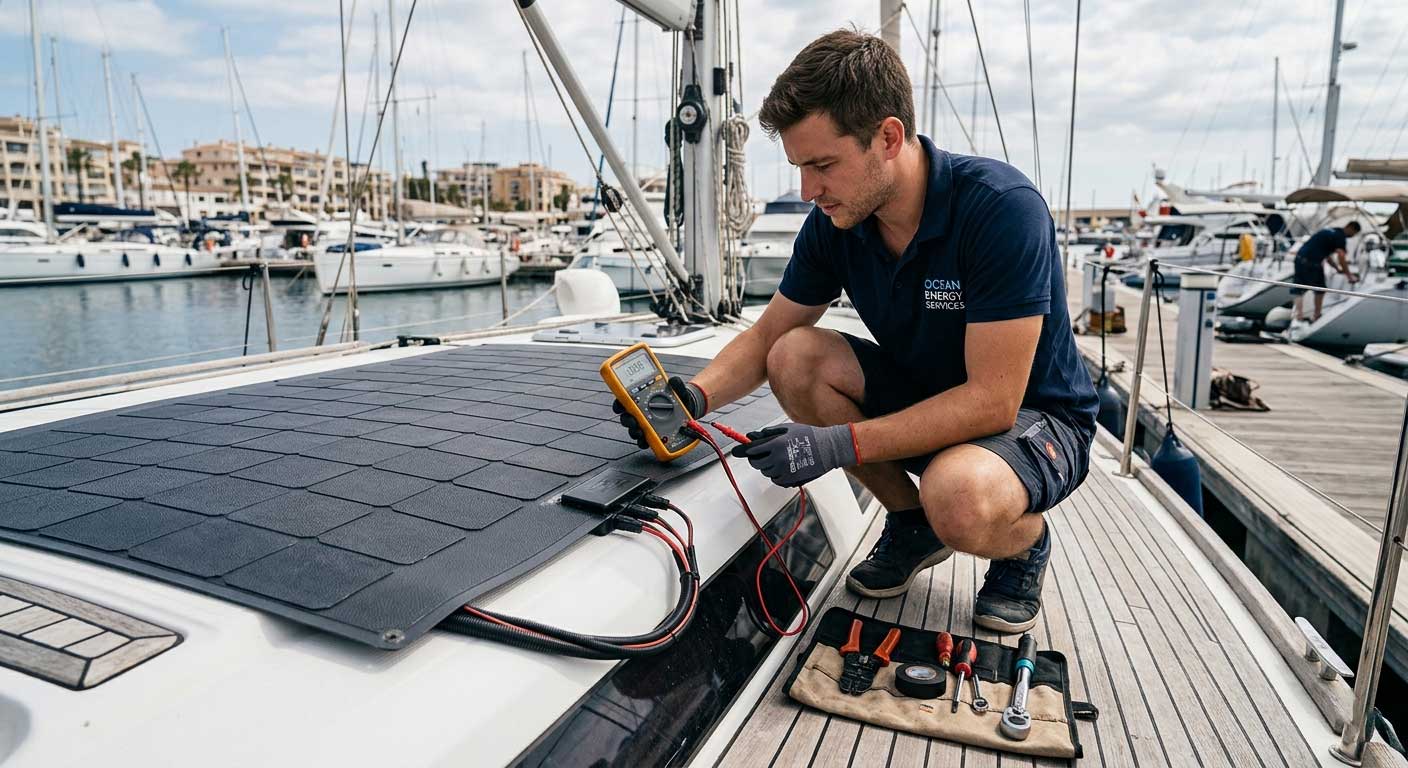
Step 1: Check Open-Circuit Voltage
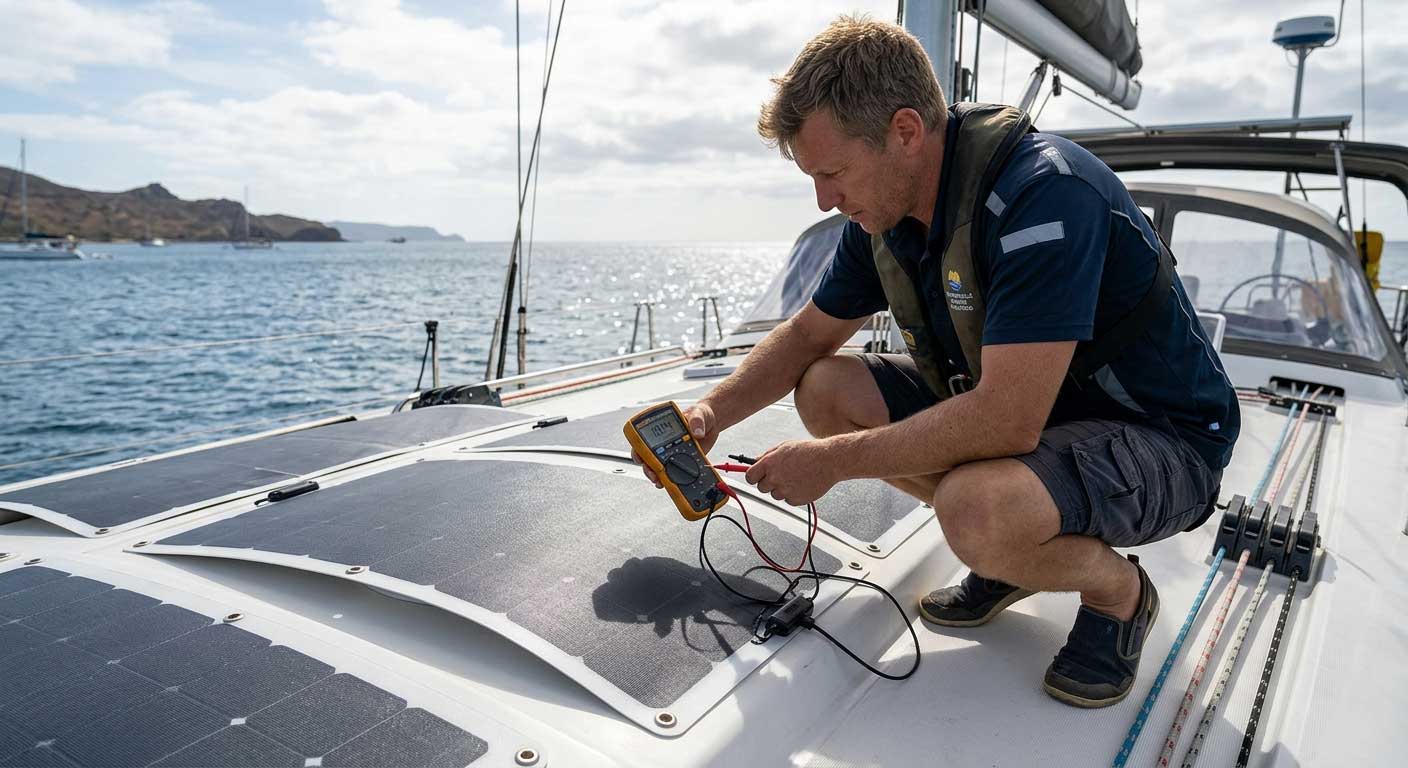
Using a multimeter, measure panel voltage in direct sunlight.
Compare the reading against manufacturer specifications.
If voltage appears normal, the cells are usually functioning.
Step 2: Inspect Connectors
I physically disconnect and inspect every connector.
Many hidden faults become obvious immediately.
Look for:
- Corrosion
- Burn marks
- Loose locking tabs
- Water intrusion
Step 3: Examine the Surface
Walk around the panel slowly.
Don’t rush.
I often spot:
- Microcracks
- Delamination
- Scratches
- Impact damage
The details matter.
Step 4: Verify Charge Controller Operation
A failed controller can mimic panel failure.
I’ve seen perfectly healthy panels replaced because nobody checked the controller.
Can Cracked Flexible Solar Panels Be Repaired?
This is where expectations become important.
Minor cosmetic damage?
Possibly.
Cracked solar cells?
Usually not.
Unlike wiring repairs, cell damage affects the photovoltaic structure itself.
Manufacturers generally do not recommend repairing cracked cells.
In practice, replacement becomes the more reliable option.
Repair Versus Replacement
| Problem | Repair Possible? |
|---|---|
| Dirty Surface | Yes |
| Connector Corrosion | Yes |
| Loose Wiring | Yes |
| Junction Box Fault | Often |
| Minor Seal Damage | Sometimes |
| Delaminated Panel | Limited |
| Cracked Solar Cells | Rarely |
That table reflects what I’ve encountered in real installations rather than theoretical possibilities.
Preventing Future Problems
The cheapest repair is the one you never need.
Maintenance Habits That Work
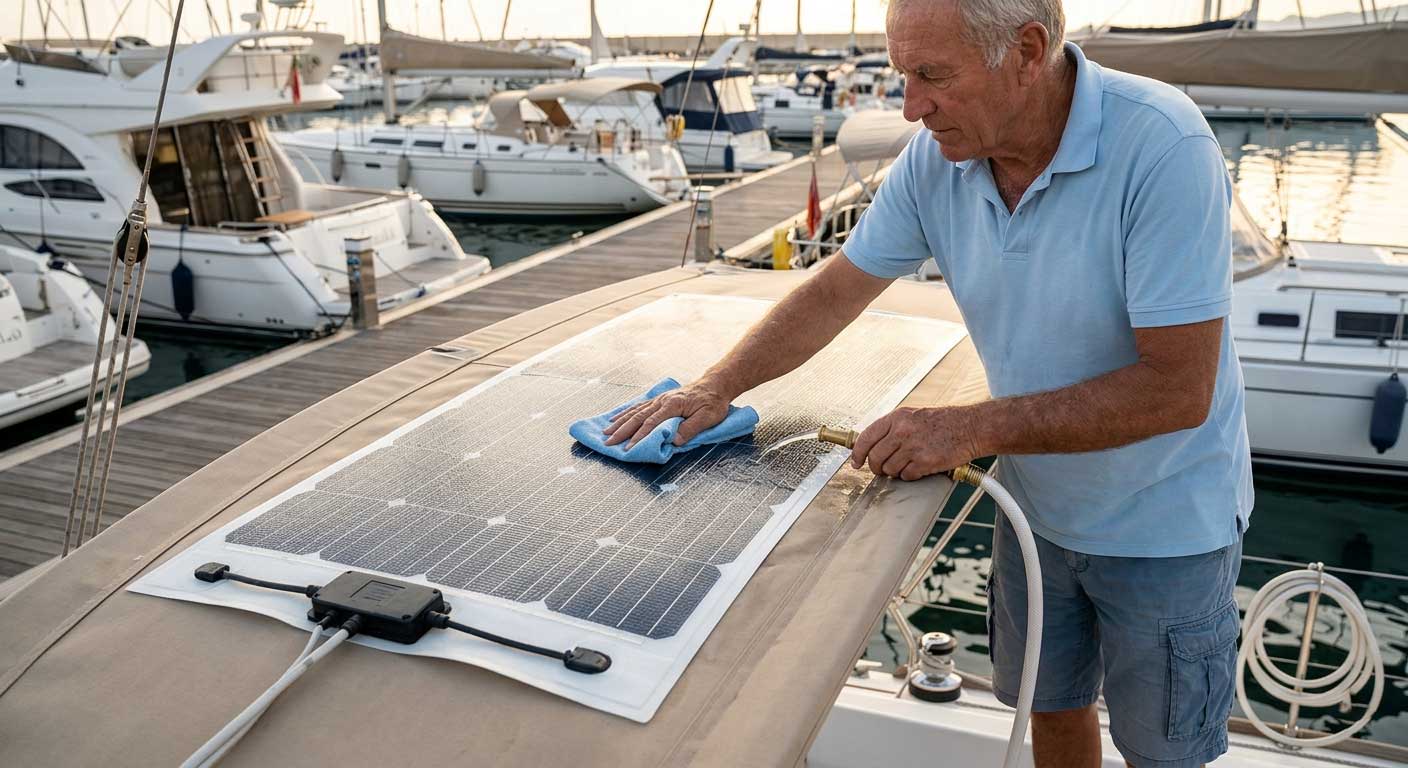
- Rinse marine panels regularly
- Inspect connectors every few months
- Avoid walking directly on panels
- Check cable routing annually
- Monitor charging performance
The International Energy Agency Photovoltaic Power Systems Programme (IEA PVPS) notes that routine maintenance significantly improves long-term system reliability.
Source:
https://iea-pvps.org
Small inspections often prevent expensive surprises.
Lessons Learned After Years of Solar Repairs
What surprises me most is how often people assume the worst.
A charging problem appears.
Output drops.
The panel gets blamed.
Yet many systems recover after cleaning, connector replacement, or minor electrical repairs.
The expensive component is frequently the innocent one.
That’s especially true in marine installations where connectors, cables, and junction boxes experience constant environmental stress.
What Bright Solar Recommends
At Bright Solar, we advise customers to diagnose before replacing.
Our typical inspection priority is:
- Wiring
- Connectors
- Junction box
- Charge controller
- Panel surface
- Solar cells
Following that sequence often saves significant time and money.
FAQ About How to Fix Flexible Solar Panel?
How to fix flexible solar panel low output?
Start by checking for dirt, salt buildup, connector corrosion, loose wiring, and charge controller faults before assuming the panel itself is damaged.
Can a flexible solar panel be repaired?
Many issues involving wiring, connectors, and junction boxes can be repaired. Cracked solar cells and severe delamination often require replacement.
Why is my flexible solar panel charging slowly?
Common causes include dirty surfaces, shaded cells, corroded connectors, battery problems, or controller malfunctions.
Can water damage a flexible solar panel?
Yes. Water intrusion into connectors, junction boxes, or delaminated areas can significantly reduce performance.
Is it worth repairing an old flexible solar panel?
If the problem is electrical, repair is often worthwhile. If the cells or laminate structure are damaged, replacement usually offers better long-term value.
common flexible solar panel problems and how to fix them?
Most flexible solar panel problems come from heat buildup, installation mistakes, water intrusion, cracked cells, or damaged connectors. In many cases the panel itself is not dead. Careful inspection, improved ventilation, connector replacement, or partial repairs can restore output and extend service life.View more about:common flexible solar panel problems and how to fix them
Final Thoughts
Anyone researching how to fix flexible solar panel problems should resist the urge to replace the panel immediately. In many real-world cases, the fault lies elsewhere—in connectors, wiring, or the junction box. A careful diagnosis often reveals that the solar panel is still capable of years of productive service. That’s the first lesson I learned repairing flexible solar systems, and it remains true today.
Related recommendations
-

How Much Does Solar Cost for a Home?
265How much does solar cost for a home? Explore real residential solar prices, installation factors, system sizes, and expert insights from Bright Solar.
View details -
How effective are solar panels?
173How effective are solar panels? Discover solar energy benefits, power output, efficiency factors, and real-world performance insights from Bright Solar experts.
View details -
How Are Solar Panels Produced?
152Discover how are solar panels produced, from silicon cells to final assembly. Learn the manufacturing process, materials, technology, and quality checks.
View details -
How Does Solar Panels Work?
169Discover how does solar panels work, how sunlight becomes electricity, and how modern solar systems power homes, RVs, and off-grid applications.
View details