How Solar Panel Made?
How Solar Panel Made?
Solar panels are made by transforming silicon materials into photovoltaic cells, assembling these cells into modules, and testing the finished panels for electrical performance. The manufacturing process includes silicon purification, wafer production, cell processing, module assembly, and quality inspection.
At Bright Solar, we often receive questions from customers who see a finished solar panel but rarely understand what happens behind the surface. A lightweight flexible panel used on an RV roof or marine application may look simple, but the manufacturing process behind it involves precise material selection, electrical engineering, and repeated quality checks.
The answer to how solar panel made begins with one material: silicon.
How Solar Panels Are Made From Raw Materials
Silicon Is The Foundation Of Solar Panel Manufacturing
The first stage of solar panel production starts with silicon, one of the most important semiconductor materials used in photovoltaic technology.
Most commercial solar panels use crystalline silicon because it provides a reliable balance between efficiency, durability, and production cost.
The manufacturing journey begins with:
- Silicon extraction
- Silicon purification
- Silicon ingot production
- Wafer cutting
- Solar cell manufacturing
- Module assembly
- Performance testing
Natural quartz is processed to produce high-purity silicon. The silicon must reach extremely high purity levels before it can be used in photovoltaic cells.
According to the International Energy Agency (IEA) Solar PV Supply Chain Report, crystalline silicon remains the dominant technology in global photovoltaic manufacturing, accounting for the majority of solar module production worldwide.
How Silicon Becomes Solar Cells
Manufacturing Photovoltaic Cells Step By Step
After purification, silicon is formed into large cylindrical or rectangular blocks called ingots.
These ingots are then sliced into thin wafers.
A typical production process includes:
1. Silicon Wafer Cutting
Diamond wire saws cut silicon ingots into extremely thin wafers.
The goal is to create wafers that are:
- Thin enough to reduce material usage
- Strong enough to survive manufacturing
- Uniform enough for electrical performance
2. Surface Treatment
The wafer surface is cleaned and textured.
This process improves light absorption by reducing reflection.
A solar cell must capture as much sunlight as possible because every small improvement affects final energy output.
3. Creating The Electrical Structure
Solar cells require different silicon layers to create an internal electric field.
Manufacturers add controlled amounts of materials to create:
- Positive (P-type) layers
- Negative (N-type) layers
This structure allows sunlight energy to move electrons and generate electrical current.
The U.S. Department of Energy Solar Photovoltaic Cell Basics explains that photovoltaic cells generate electricity by absorbing sunlight and using semiconductor materials to create electrical flow.
How Solar Cells Become A Complete Solar Panel
Solar Module Assembly Process
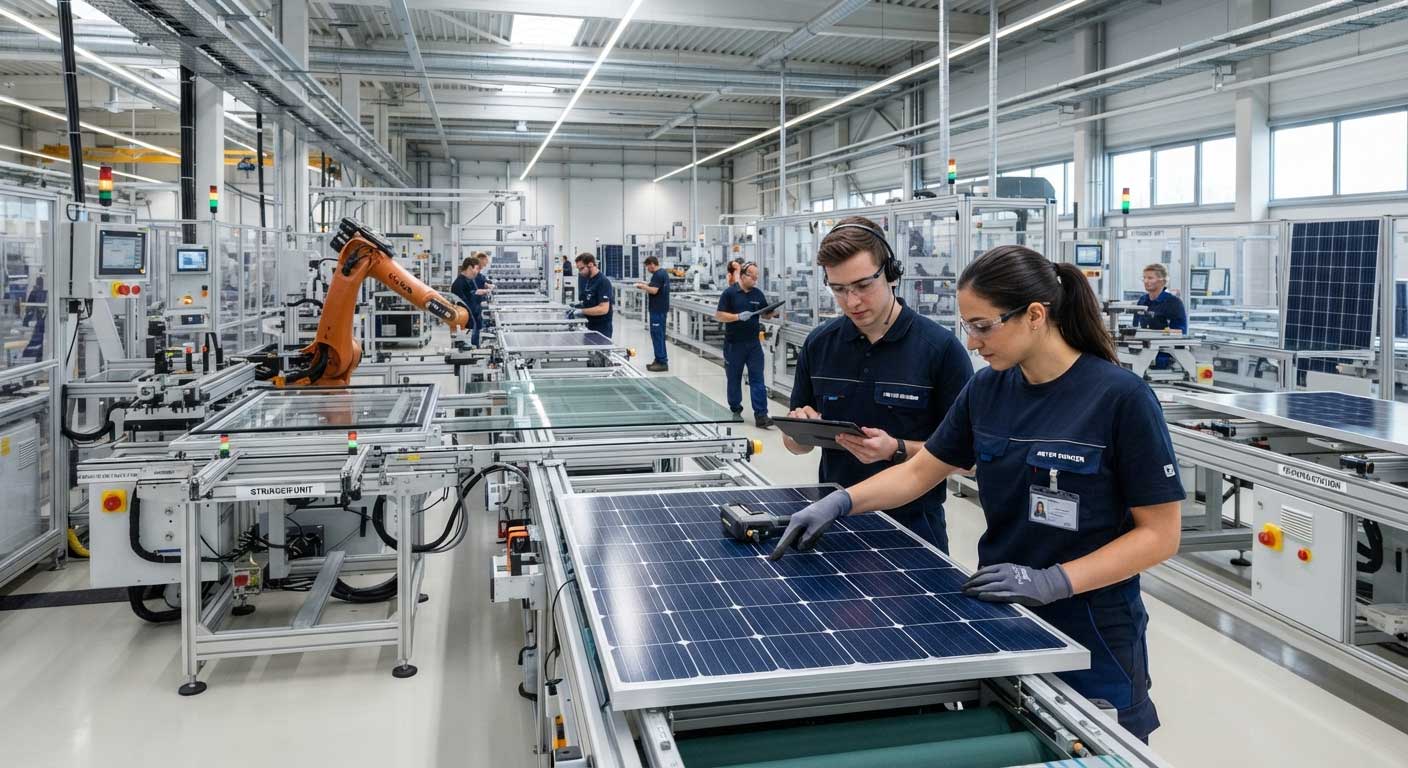
Individual solar cells cannot be installed directly outdoors. They need to be connected and protected inside a solar module.
The assembly process usually includes:
| Manufacturing Stage | Purpose |
|---|---|
| Cell interconnection | Connect individual cells electrically |
| String assembly | Create higher voltage circuits |
| Encapsulation | Protect cells from moisture and damage |
| Glass or surface layer installation | Improve durability |
| Frame or flexible backing installation | Provide structural support |
| Junction box installation | Manage electrical connections |
During module assembly, solar cells are connected using conductive ribbons.
The cells are arranged carefully because small alignment errors can affect electrical output.
At Bright Solar, flexible solar panel production requires additional attention because traditional glass protection is replaced with lightweight materials designed for curved surfaces and mobile applications.
The manufacturing focus changes from only maximizing output to balancing:
- Weight
- Flexibility
- Weather resistance
- Electrical reliability
Why Solar Panel Manufacturing Requires Strict Quality Control
Testing Ensures Long-Term Solar Performance
Solar panels are designed for outdoor operation over decades, so manufacturing quality directly affects lifespan.
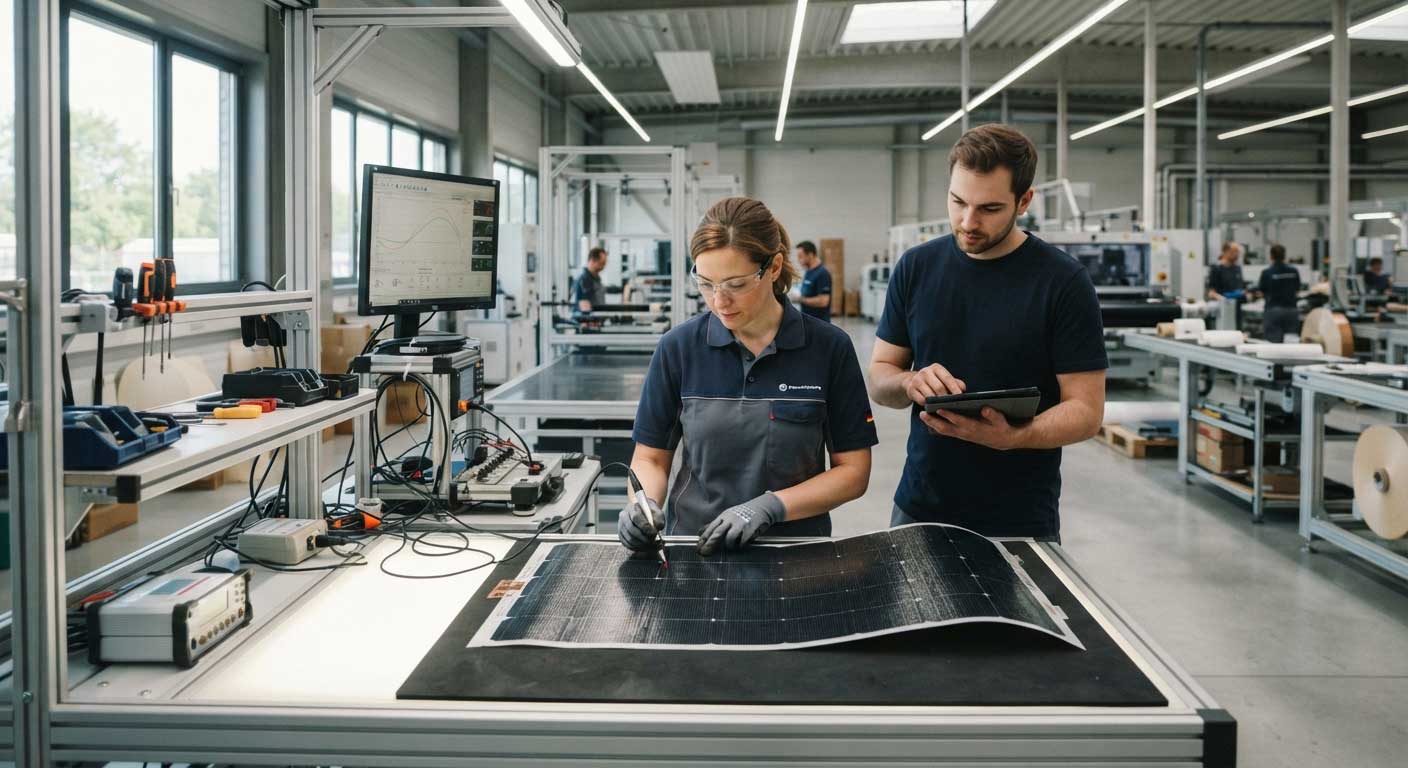
Before shipment, manufacturers test:
- Electrical output
- Voltage performance
- Current stability
- Insulation resistance
- Mechanical strength
- Environmental durability
The National Renewable Energy Laboratory (NREL) Photovoltaics Research Program studies photovoltaic reliability and performance, highlighting the importance of long-term testing under different environmental conditions.
From our experience at Bright Solar, many failures in solar applications are not caused by the photovoltaic technology itself. They often come from poor material selection, weak connections, or unsuitable installation environments.
That is why manufacturing is not only about producing a panel that generates electricity on day one. It is about ensuring the panel continues performing after years of exposure to sunlight, temperature changes, humidity, and mechanical stress.
How Solar Panel Made: Flexible Solar Panel Manufacturing Process
How Flexible Solar Panels Are Made Differently
The basic photovoltaic principle is the same for rigid and flexible solar panels. Both convert sunlight into electricity through photovoltaic cells. The main difference is the materials used to protect and support the cells.
Traditional rigid solar panels usually use:
- Tempered glass surface
- Aluminum frame
- Heavy mounting structure
Flexible solar panels replace these heavier components with lightweight protective materials.
At Bright Solar, flexible panel manufacturing focuses on balancing three factors:
- Electrical performance
- Mechanical flexibility
- Outdoor durability
This requires careful material selection because flexible modules may be installed in environments where conventional panels are difficult to use.
Typical applications include:
- RV rooftops
- Marine decks
- Portable power systems
- Off-grid equipment
- Curved surfaces
For example, during flexible panel testing, we often check whether the panel maintains stable electrical output after repeated bending cycles and exposure to temperature changes. A flexible solar panel is not simply a thinner version of a rigid panel; it requires a different engineering approach.
Solar Panel Materials Used During Manufacturing
Main Components Inside A Solar Module
A finished solar panel contains multiple layers working together.
A typical photovoltaic module structure includes:
| Component | Function |
|---|---|
| Solar cells | Convert sunlight into electricity |
| Encapsulation material | Protect cells from moisture and impact |
| Surface protection layer | Improve durability and weather resistance |
| Conductive ribbons | Transfer electrical current |
| Junction box | Connect panel output cables |
| Protective backing | Provide mechanical support |
For flexible solar panels, manufacturers may replace traditional glass layers with lightweight materials such as polymer-based protective films.
Bright Solar flexible solar panels are designed with materials selected for applications where weight and installation flexibility are important.
A marine user, for example, may prefer a lightweight panel that follows a curved surface rather than adding a heavy glass module requiring complex mounting brackets.
How Solar Panels Are Tested After Manufacturing
Quality Inspection Before Shipment
Producing a solar panel does not end when the module is assembled.
Every finished panel needs performance verification.
Common testing procedures include:
Electrical Performance Testing
Manufacturers measure:
- Maximum power output
- Operating voltage
- Operating current
- Open circuit voltage
- Short circuit current
These measurements confirm that the module performs according to its rated specifications.
Visual Inspection
Engineers check for:
- Cell cracks
- Surface defects
- Uneven lamination
- Connection problems
Small manufacturing defects can become larger reliability problems after years outdoors.
Environmental Testing
Solar panels are designed to survive challenging conditions.
Testing may include:
- Heat exposure
- Humidity resistance
- Mechanical stress
- UV durability
The International Electrotechnical Commission (IEC) Photovoltaic Standards Information provides international standards used for photovoltaic module safety and performance evaluation.
Bright Solar Manufacturing Insight: What Actually Determines Solar Panel Quality?
Beyond Wattage Ratings
Many buyers compare solar panels only by wattage.
However, manufacturing experience shows that long-term performance depends on much more.
Important factors include:
- Cell quality
- Material consistency
- Lamination process
- Electrical connections
- Production accuracy
- Environmental protection
A 100W panel with poor construction may not deliver reliable energy after years outdoors, while a well-manufactured panel can maintain stable performance for a much longer period.
At Bright Solar, we focus on application-based design.
A panel used on a camper traveling across Europe faces different challenges from a panel installed permanently on a commercial rooftop.
The manufacturing process must consider where the product will actually be used.
FAQ About How Solar Panel Made?
How solar panel made from silicon?
Solar panels are made from purified silicon that is formed into wafers, processed into photovoltaic cells, connected together, and protected inside a complete solar module.
What materials are used to make solar panels?
Most solar panels use silicon solar cells, protective layers, conductive materials, encapsulation films, junction boxes, and structural support materials.
How long does it take to manufacture a solar panel?
The actual production time depends on factory processes and automation levels. A modern manufacturing line can produce solar modules continuously through automated cell assembly, lamination, and testing stages.
Are flexible solar panels made differently from normal solar panels?
Yes. Flexible solar panels use similar photovoltaic cells but require different protective materials and manufacturing methods to achieve lightweight and bendable designs.
Why is solar panel quality testing important?
Quality testing ensures that solar panels meet electrical performance requirements and can withstand outdoor conditions such as temperature changes, moisture, and mechanical stress.
How long can manufactured solar panels last?
Most modern solar panels are designed to operate for 25 years or longer. Performance gradually decreases over time, but quality manufacturing helps maintain reliable energy production.
how are solar panels made?
how are solar panels made through a multi-step industrial process involving silicon purification, wafer slicing, photovoltaic cell production, module assembly, and quality testing. Each panel is engineered under controlled factory conditions to ensure durability, efficiency, and long-term energy conversion performance.Learn more about “how are solar panels made“
Conclusion: How Solar Panel Made?
How solar panel made begins with purified silicon and ends with a carefully tested photovoltaic module ready for real-world energy production.
The process involves much more than connecting solar cells together. It requires material engineering, precision manufacturing, electrical testing, and reliability verification.
From Bright Solar’s manufacturing experience, the most important part of solar production is not simply making a panel that works today. It is creating a product that continues producing electricity after years of exposure to sunlight, weather changes, and demanding applications.
Whether it is a flexible solar panel installed on an RV, a marine application, or an off-grid power system, every reliable solar solution starts with careful manufacturing.
The prev: How Big Is a Solar Panel?The next: How Much Solar Panel Generate Electricity?
Related recommendations
-

how much power does a solar panel produce?
266Learn how much power does a solar panel produce with real output data, watt examples, energy calculations, and Bright solar expert insights.
View details -
What Is IRC Certificate for Solar Panels?
134An IRC reference for solar panels concerns residential building-code compliance, not a standalone solar product certification.
View details -
How Many Solar Panels Do I Need?
107Learn how many solar panels do I need based on electricity usage, roof size, and panel wattage. Discover real examples, calculations, and expert advice.
View details -
How to Mount Solar Panels on Roof?
245Learn how to mount solar panels on roof safely with proper solar panel roof mounts, rails, and installation methods for reliable home solar power systems.
View details