How often should you clean your solar panels?
Solar panels should generally be cleaned once or twice a year, but the ideal schedule depends on dust, rainfall, pollution, bird activity, and installation location. Panels in dry or dusty areas may require more frequent cleaning.
How often should you clean your solar panels in real-world conditions?
The question of how often should you clean your solar panels does not have one universal answer. A solar panel installed on a clean residential roof in a rainy climate may naturally remove much of its surface dust, while a panel installed near farmland, deserts, construction sites, or coastal areas can collect dirt much faster.
At Bright Solar, our experience with flexible solar panel applications shows that maintenance requirements often depend on the environment more than the calendar. During field evaluations of RV, marine, and off-grid installations, we have found that panels exposed to road dust, salt spray, and outdoor storage conditions usually need closer inspection than fixed rooftop systems.
The U.S. Department of Energy notes that photovoltaic system performance can be affected by factors including shading, soiling, and environmental conditions. Research from the National Renewable Energy Laboratory (NREL) also highlights that soiling losses vary by location and climate.
A practical maintenance schedule:
| Installation Environment | Recommended Cleaning Frequency |
|---|---|
| Rainy residential areas | Once or twice per year |
| Dry or desert climates | Every 3–6 months |
| Agricultural areas | Every 3–6 months |
| Coastal locations with salt exposure | Every 3–6 months |
| Industrial areas with pollution | Several times per year |
| RV and portable solar systems | Inspect before major trips |
The goal is not to clean panels as often as possible. It is to prevent enough surface buildup from reducing energy production.
Why does cleaning solar panels matter?
Dirt and dust can reduce solar energy production
Solar panels work by allowing sunlight to reach photovoltaic cells. Dust, pollen, bird droppings, leaves, and other debris can block part of that sunlight.
The impact depends on the type and amount of contamination.
Common sources of solar panel dirt include:
- Dust from roads and construction
- Sand in dry regions
- Salt deposits near oceans
- Bird droppings
- Tree pollen and leaves
- Industrial particles
In Bright Solar’s flexible solar panel projects, especially RV and marine applications, we pay close attention to surface contamination because mobile systems often operate in harsher environments than residential rooftops.
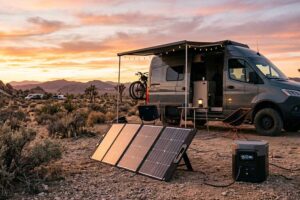
A solar panel mounted on a yacht may collect salt residue. A camper traveling through dry regions may accumulate fine dust within a few days. These are different maintenance situations even if the panels have the same watt rating.
Does rain clean solar panels completely?
Rain helps remove loose dust, but it does not always provide complete cleaning.
Light rain can actually leave behind mineral spots after water evaporates. Bird droppings and sticky organic materials usually require manual removal because they do not dissolve easily.
A simple comparison:
| Cleaning Method | Effectiveness |
|---|---|
| Heavy rainfall | Removes loose dust |
| Light rainfall | May leave water spots |
| Manual cleaning with water | Removes most surface dirt |
| Professional cleaning | Suitable for difficult buildup |
For most homeowners, occasional inspection is more important than frequent washing.
How to clean solar panels safely and correctly?
Use the right cleaning method
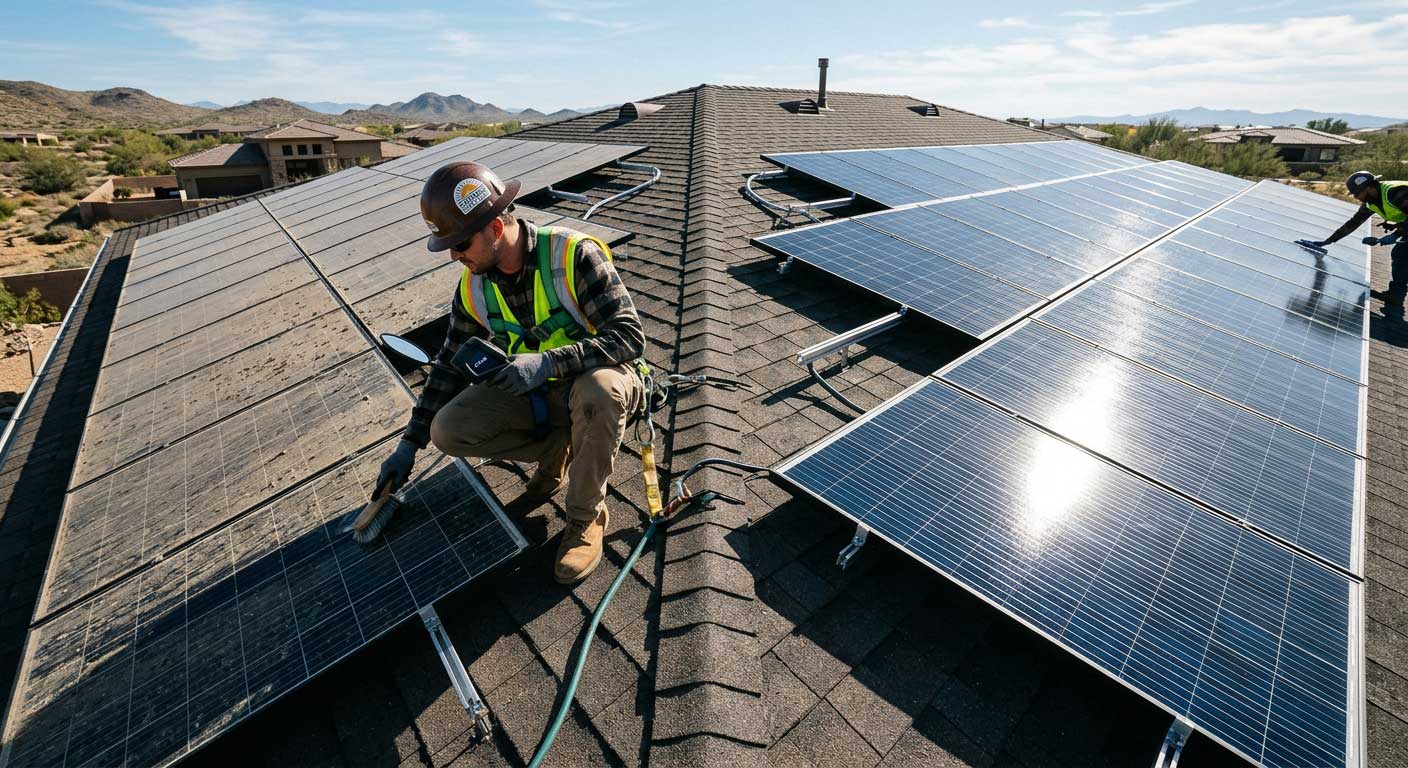
Solar panels generally do not require aggressive cleaning. Using incorrect tools can scratch protective surfaces or damage components.
Recommended cleaning practices:
- Turn off the solar system if required by the manufacturer
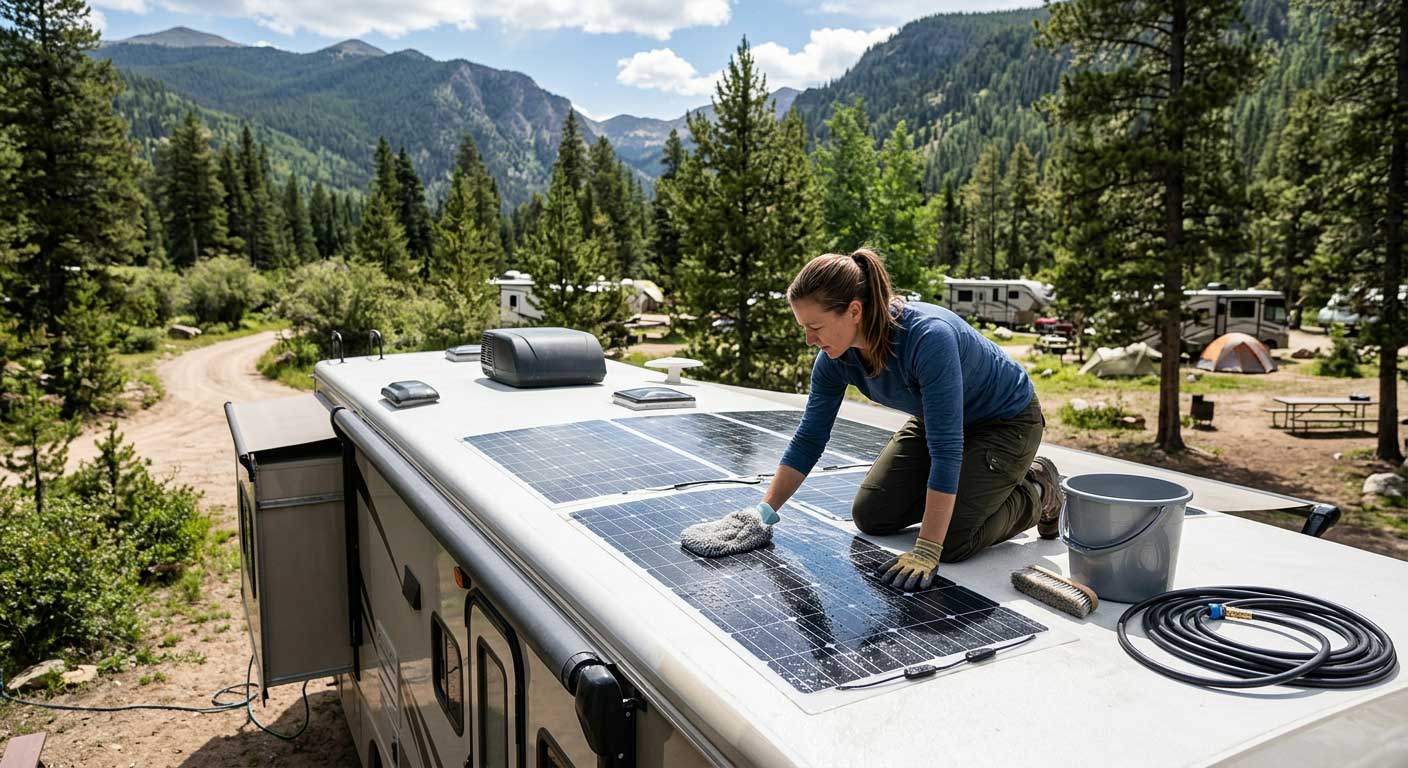
- Use clean water and a soft brush or sponge
- Avoid abrasive materials
- Clean during cooler morning or evening hours
- Remove stubborn debris carefully
- Follow manufacturer instructions
For flexible solar panels, additional care may be needed because installation surfaces can differ from traditional glass modules. Bright Solar flexible panels are designed for applications such as RVs, boats, and portable systems where installation conditions vary.
When should you avoid cleaning solar panels?
Cleaning is not always necessary immediately.
Avoid cleaning:
- During very hot midday conditions
- During storms or strong winds
- When panels are unsafe to access
- When professional equipment is required
Safety should always come before small efficiency improvements.
Solar panel cleaning schedule by application
Different solar systems have different maintenance requirements.
| Solar Application | Cleaning Considerations |
|---|---|
| Home rooftop solar | Check seasonal dust and debris |
| RV solar panels | Clean after dusty travel routes |
| Marine solar panels | Inspect salt buildup regularly |
| Portable solar panels | Clean before outdoor trips |
| Off-grid systems | Schedule based on local environment |
At Bright Solar, we often recommend users inspect panels visually before deciding whether cleaning is needed. A five-minute inspection can reveal whether dust, leaves, or deposits are affecting the surface.
FAQ About Solar Panel Cleaning
How often should you clean your solar panels?
Most solar panels should be cleaned once or twice per year. More frequent cleaning may be needed in dusty, coastal, or polluted areas.
Does cleaning solar panels increase energy output?
Yes. Removing dirt and debris can help panels receive more sunlight and maintain better electricity production.
Can rain clean solar panels?
Rain can remove some loose dust, but it may not remove bird droppings, salt deposits, or heavy dirt buildup.
What is the best time to clean solar panels?
Early morning or evening is usually better because panels are cooler and easier to clean safely.
Can I use soap to clean solar panels?
Mild cleaning solutions may be acceptable, but many situations only require clean water and a soft brush.
Do flexible solar panels need different cleaning methods?
Flexible solar panels usually require similar gentle cleaning methods, but users should consider the installation surface and manufacturer recommendations.
What happens if solar panels are never cleaned?
Heavy dirt buildup can reduce sunlight exposure and may lower energy production over time.
Final Answer: How often should you clean your solar panels?
Understanding how often should you clean your solar panels depends on where and how the system is installed. Most systems only need annual or semi-annual cleaning, while RV, marine, and dusty-area installations may require more frequent inspections.
Bright Solar supports flexible solar panel solutions for outdoor applications where reliability and practical maintenance are important. Regular inspection and proper cleaning help maintain stable solar performance throughout the system’s service life.
The prev: How much energy does solar panels produce?The next: How solar panels work diagram?
Related recommendations
-

How to connect solar panels in series?
32To connect solar panels in series, connect the positive terminal of one panel to the negative terminal of the next. Series wiring adds panel voltages while k...
View details -
How Much Is One Solar Panel Cost?
228How much is one solar panel cost? Learn solar panel prices, wattage factors, technology differences, and expert buying advice from Bright Solar.
View details -
How Much Is a Portable Solar Panel?
331How much is a portable solar panel in 2026? Discover real pricing, wattage costs, durability, and buying tips from field-tested portable solar experts at Bright Solar.
View details -
How Much Do Solar Panels Cost Per Panel?
193How much do solar panels cost per panel? Discover residential solar panel prices, cost factors, efficiency options, and expert advice from Bright Solar.
View details