how much silver in a solar panel?
how much silver in a solar panel? A modern crystalline-silicon solar panel typically contains only a few grams of silver, although the exact amount varies by cell technology, wafer size, efficiency, and metallization design. Current industry data indicate roughly 7–16 mg of silver per watt for major cell technologies, making a 400W panel roughly a few grams of silver.
How Much Silver in a Solar Panel?
The answer has changed considerably over the last decade.
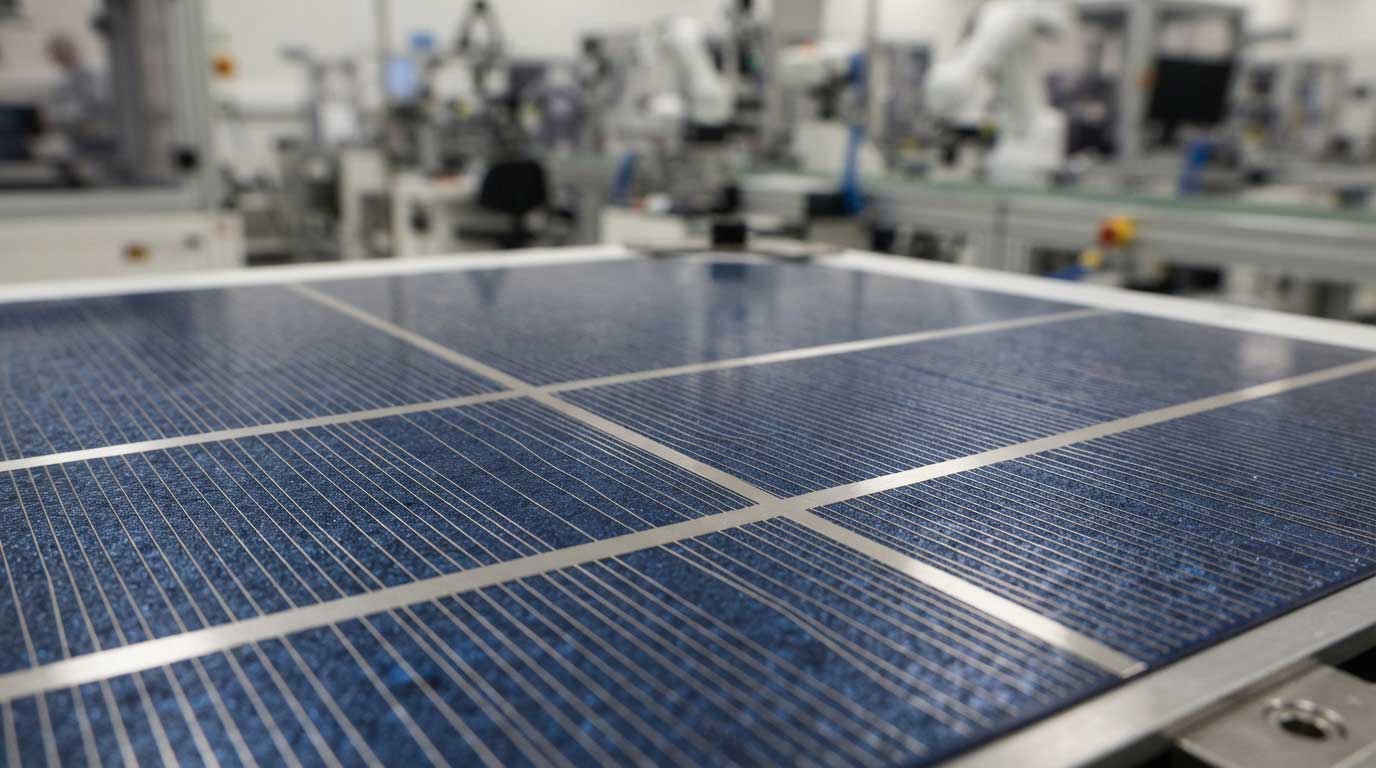
Silver is not spread throughout the panel as a thick layer. It is mainly used as a conductive metallization material on the solar cells. Silver paste forms extremely fine electrical contacts that collect current generated by the silicon cell and carry it toward the module’s electrical circuit.
The Silver Institute reports that silver PV demand reached 197.6 million ounces in 2023, up 64% from 118.1 million ounces in 2022. In 2024, photovoltaic demand remained a major driver of industrial silver consumption even as manufacturers sharply reduced silver loading per watt.
That last point is important. A solar panel manufactured today should not be evaluated using silver-content figures from older modules.
Typical Silver Content by Solar Cell Technology
Recent ITRPV data show substantial differences between cell architectures:
| Cell technology | Approx. silver per watt | Typical silver intensity |
|---|---|---|
| PERC | 7–8 mg/W | Lower |
| TOPCon | 12–16 mg/W | Medium |
| HJT/SHJ | 17–20 mg/W | Higher |
| Older PV technologies | Higher | Technology dependent |
These figures are reported by IEA PVPS based on Tier-1 manufacturer information and ITRPV data.
So, for a 400W module, a simplified estimate would be:
- PERC at 8 mg/W → about 3.2 g
- TOPCon at 14 mg/W → about 5.6 g
- HJT at 19 mg/W → about 7.6 g
These are engineering estimates rather than a universal specification for every commercial module.
Why Do Solar Panels Need Silver?
Silver is used because photovoltaic cells need highly conductive contacts with very low electrical resistance.
During cell manufacturing, silver powder is processed into a conductive paste and applied to the silicon wafer. After processing, the resulting fine metallization pattern collects electrical current from the cell.
The Silver Institute describes silver as an important conductive material in PV cells because it transports the electricity generated by sunlight through the cell’s electrical contacts.
From a manufacturing perspective, this is where the interesting part begins.
A solar cell does not need a visible sheet of silver. It needs extremely small conductive pathways distributed across the surface. Manufacturers therefore spend considerable effort reducing silver consumption without increasing electrical resistance enough to hurt cell performance.
That balance has become increasingly important as module power has climbed.
How Much Silver Is in a 400W Solar Panel?
A useful way to estimate silver content is:
Silver content ≈ panel wattage × silver consumption per watt
For a 400W panel:
| Technology assumption | Silver loading | Estimated silver |
|---|---|---|
| PERC | 8 mg/W | 3.2 g |
| TOPCon | 12 mg/W | 4.8 g |
| TOPCon | 16 mg/W | 6.4 g |
| HJT | 17 mg/W | 6.8 g |
| HJT | 20 mg/W | 8.0 g |
This gives a practical range of approximately 3–8 grams for a 400W crystalline-silicon module, depending heavily on cell architecture.
The important caveat is that “grams per panel” can become misleading when module technology changes. A 400W panel built with one cell architecture may use substantially more silver than another 400W panel while delivering essentially the same nameplate power.
For Bright Solar, this is especially relevant when comparing modern high-efficiency modules with older panel specifications. Panel wattage alone does not tell you the material composition.
Has the Amount of Silver in Solar Panels Decreased?
Yes. Silver thrifting has been one of the major material-efficiency trends in photovoltaic manufacturing.
The Silver Institute reported that average silver loading fell from 521 mg per cell in 2009 to 111 mg per cell in 2019. Its analysis showed continued reductions afterward, although the rate of reduction slowed as manufacturers approached technical limits.
More recent ITRPV data show that the technology mix matters enormously. For M10-format cells, the 2024 roadmap indicated approximately 70 mg per PERC cell, 110 mg for TOPCon, and 140 mg for SHJ.
This creates an interesting contradiction: solar modules are becoming more efficient at using silver per watt, while the industry is simultaneously moving toward high-efficiency n-type technologies that can require more silver per cell.
That is why looking only at “silver per cell” can give the wrong impression.
Silver Content Is Better Compared Per Watt
For solar manufacturers, mg/W is often more informative than grams per cell.
A larger cell naturally contains more metallization area. A higher-efficiency cell, however, can produce more power from that same area.
The ITRPV 2024 roadmap reported approximately:
- PERC: 8.9 mg/W
- TOPCon: 14.0 mg/W
- SHJ: 17.0 mg/W
for 2024 technology projections.
This is one reason Bright Solar evaluates module technology through a combination of power density, efficiency, cell architecture, and material utilization, rather than treating raw material weight as an isolated specification.
Why Silver Reduction Matters for Solar Manufacturing
Silver is a relatively expensive material, so reducing silver paste consumption directly affects cell manufacturing economics.
The trend is already visible in the market. The Silver Institute reported that total industrial silver demand reached a record 680.5 million ounces in 2024, while PV manufacturers continued reducing silver loading through improved metallization and substitution technologies.
Copper is one of the materials being investigated as a substitute or partial substitute for silver in photovoltaic metallization.
However, replacing silver is not simply a matter of swapping one metal for another. Contact resistance, adhesion, reliability, corrosion behavior, printing processes, and long-term module performance all have to work together.
Does a Solar Panel Have a Lot of Silver?
Not by weight.
Silver represents only a small fraction of the total mass of a photovoltaic module, but its electrical role is disproportionately important.
An older Silver Institute/University of Virginia project cited an estimate of around 20 grams of silver in an average two-square-meter solar panel. That figure is useful historical context, but it should not be treated as the standard content of a modern 400W–600W module because silver loading has fallen substantially and cell architectures have changed.
For current panels, using technology-specific mg/W figures provides a much more defensible estimate.
FAQ About Silver in Solar Panels
How much silver in a solar panel?
A modern crystalline-silicon panel generally contains a few grams of silver. Depending on cell technology and module power, a 400W module may contain roughly 3–8 grams.
Why is silver used in solar panels?
Silver is used mainly for electrical metallization because of its excellent conductivity. The conductive contacts collect and transport current generated by the silicon photovoltaic cell.
Which solar cell uses the most silver?
Among major current technologies, HJT/SHJ generally has higher silver consumption per watt than PERC, while TOPCon falls between them. Actual loading depends on the manufacturer’s metallization process.
How much silver is in a 400W solar panel?
A reasonable technology-dependent estimate is about 3–8 grams. PERC tends toward the lower end, while HJT tends toward the higher end based on current published loading ranges.
Is silver still used in modern solar panels?
Yes. Silver remains widely used in crystalline-silicon PV metallization, although manufacturers continue reducing silver consumption and developing copper-based alternatives.
Can silver be recovered from old solar panels?
Yes. Silver can be recovered from photovoltaic cells, although economical recovery requires appropriate recycling and separation processes. The U.S. Department of Energy has funded research specifically aimed at improving silver recovery from retired solar cells.
Will future solar panels use less silver?
The long-term direction is toward lower silver consumption per watt. ITRPV roadmaps project continued reductions in silver loading, while copper metallization and other approaches are being developed to reduce dependence on silver.
Final Answer
how much silver in a solar panel depends mainly on the cell technology and panel power. For a modern 400W crystalline-silicon module, a practical estimate is roughly 3–8 grams of silver, with PERC generally lower and TOPCon or HJT higher. The number continues to change as manufacturers improve metallization and reduce silver use per watt.
Related recommendations
-

How to Wire Solar Panels?
138Learn how to wire solar panels correctly with series and parallel connections. Explore professional wiring methods, safety tips, and expert insights from Bright Solar.
View details -
How to Install Flexible Solar Panels to TPO Roof?
307Learn how to install flexible solar panels to TPO roof surfaces safely. Real RV installation experience, mounting methods, adhesive selection, and long-term durability tips from Bright Solar.
View details -
How Much Do Solar Panels Cost To Install?
177How much do solar panels cost to install? Discover real installation prices, system size factors, labor costs, and expert solar insights from Bright Solar.
View details -
how do flexible solar panels work?
273How do flexible solar panels work? Learn how lightweight bendable solar panels generate electricity, where they perform best, and what affects long-term efficiency.
View details