how long does it take to get solar panels installed?
how long does it take to get solar panels installed? The physical installation usually takes 1–3 days, but the complete residential solar process commonly takes 60–90 days because design, permitting, inspection, utility interconnection, and permission to operate happen before the system can officially go live.
That distinction matters. Homeowners often hear “solar installation takes a day” and assume the panels will be producing electricity tomorrow. In practice, the crew on the roof is only one part of the project.
At Bright Solar, when we discuss solar projects with customers, I separate installation time from project completion time. The first is measured in days. The second can stretch into months, largely because several steps are controlled by local authorities and utilities rather than the installer.
How long does a solar panel installation take?
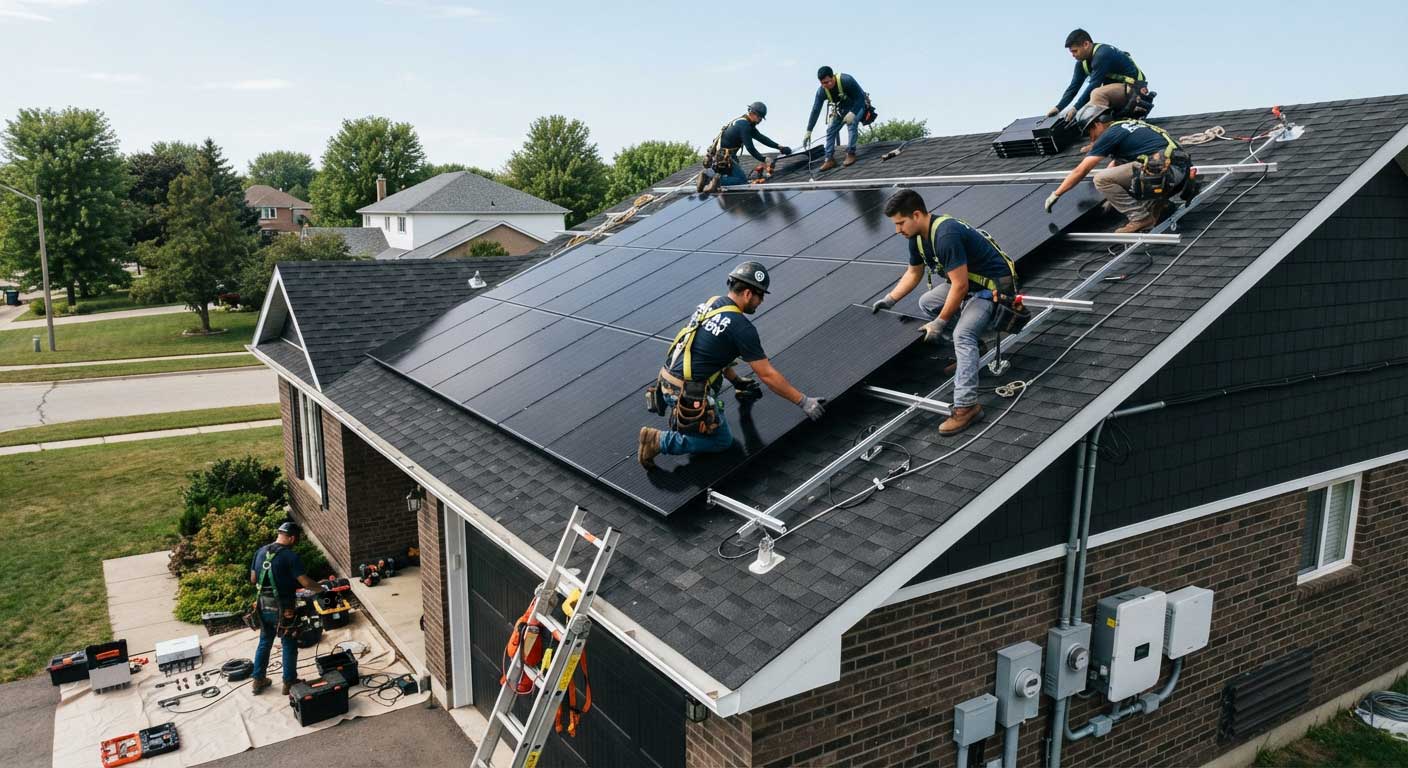
For a typical residential rooftop system, the actual construction work is usually completed within 1–3 days. EnergySage currently reports that most home installations take one to three days, with crews commonly including around 5–10 workers.
The broader project is different.
The U.S. Department of Energy says PV installation itself generally takes only a few days, while permits and inspections can take weeks to months, depending on local regulations.
| Stage | Typical timeframe | What happens |
|---|---|---|
| Site assessment & design | Several days to weeks | Roof, electrical system, shading and system design |
| Permitting | 1–4+ weeks | Local authority reviews plans |
| Equipment scheduling | Days to weeks | Panels, inverter and mounting hardware prepared |
| Physical installation | 1–3 days | Racking, panels, wiring and inverter installed |
| Final inspection | Days to weeks | Authority verifies installation |
| Utility interconnection/PTO | 1–4+ weeks | Utility approves grid operation |
| Total project | About 60–90 days commonly | Contract to operating system |
NREL/DOE data shows why the wider timeline can be much longer than the rooftop work itself. A DOE presentation citing residential PV process data reported typical projects taking 10–22 weeks from contract to operation, with permits commonly taking 1–2 weeks and inspections taking 2–3 weeks or more.
What happens before solar panels are installed?
The roof crew is not the first crew involved.
Before anyone carries a panel onto the roof, the installer usually needs to confirm:
- Roof condition and available installation area
- Roof orientation and shading
- Electrical panel capacity
- System size
- Inverter configuration
- Mounting method
- Local building requirements
- Utility interconnection requirements
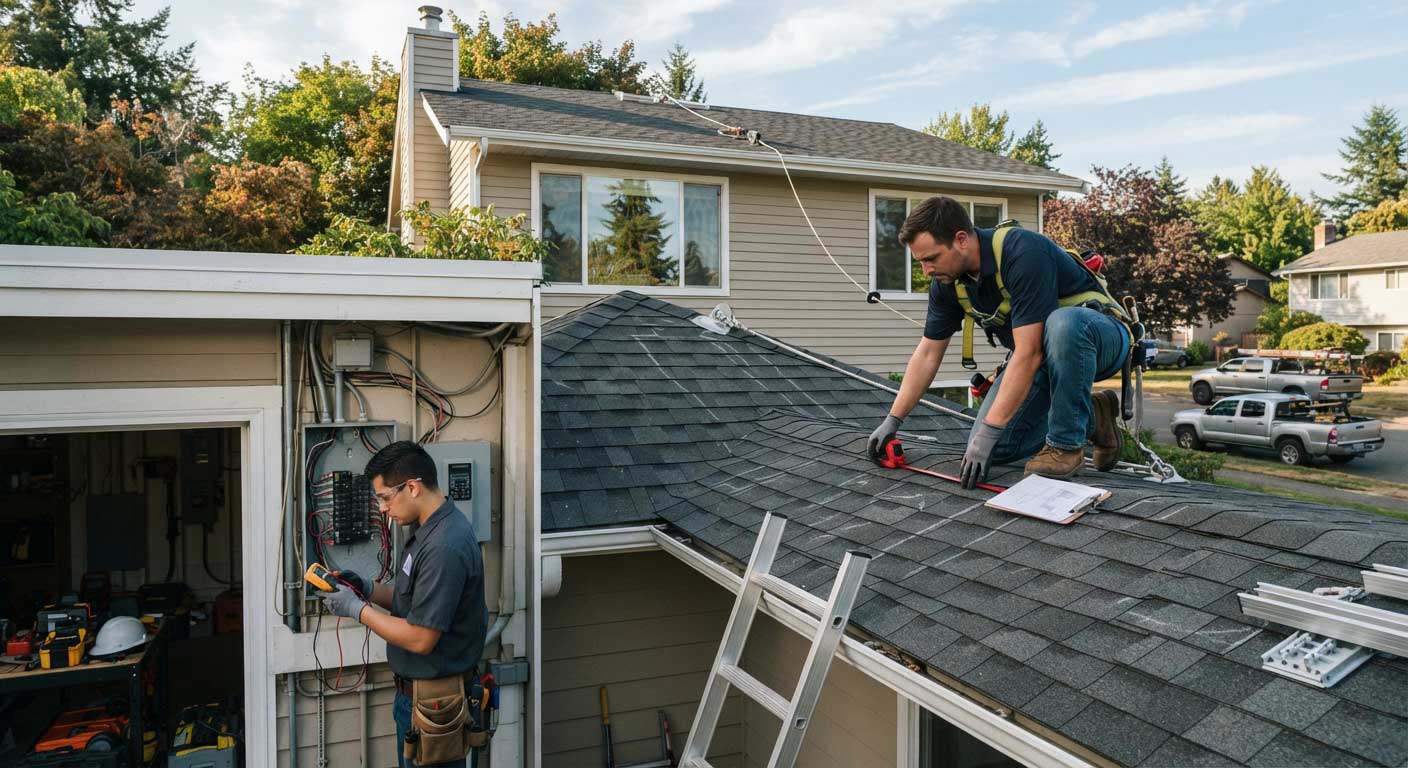
A final engineering site visit can uncover something that changes the schedule—a crowded electrical panel, roof damage, difficult attic access, or a structural issue.
EnergySage notes that the installer may perform additional measurements and photographs after the contract so engineers can finalize the system design and ensure it meets local codes.
This is where seemingly simple projects sometimes slow down.
How long does it take to install solar panels on a roof?
For a straightforward residential system, one to three days is a realistic expectation for the physical installation.
The work generally includes:
- Preparing the roof and confirming attachment points
- Installing roof mounting hardware
- Installing rails or the appropriate mounting structure
- Running DC wiring
- Mounting the solar panels
- Installing and connecting the inverter
- Completing electrical connections
- Testing the system
EnergySage reports that panels-only installations can sometimes be completed in a day, while larger systems or projects involving batteries may take longer.
A clean, accessible roof is very different from a steep roof with multiple roof planes, complicated electrical routing, or difficult attic access.
And weather matters. A crew may be able to work through light interruptions, but heavy rain, high winds, extreme heat, or unsafe roof conditions can push the schedule.
Why does solar installation take so long?
The slowest part is often not installing the panels.
Permitting and utility approval are the usual sources of uncertainty.
The U.S. Department of Energy explicitly notes that permits and inspections can take weeks to months. EnergySage also reports that a complete solar project commonly takes 60–90 days, even though the rooftop installation itself may take only one to three days.
There is another important step after construction: permission to operate (PTO).
A system may be physically complete but still not be legally authorized to operate as a grid-connected generator.
EnergySage explains that residential interconnection applications average around 2–3 weeks, with another 1–2 weeks on average after installation and inspection for PTO, although actual utility timelines vary considerably.
How can you make solar installation faster?
You cannot control the utility’s queue, but you can remove avoidable delays.
Before signing the contract, ask the installer:
- Who handles the permit application?
- How long are current installation queues?
- Has the utility approved similar systems recently?
- Who schedules the final inspection?
- Who submits the PTO application?
- Is the roof inspection already complete?
- Is an electrical panel upgrade required?
- What happens if the first inspection fails?
One small practical point gets overlooked: respond quickly when the installer asks for approval or documentation.
EnergySage specifically notes that homeowner delays in approving designs can hold up the permitting process.
If the installer sends the final design on Monday and it sits in an inbox until Friday, the permit cannot move forward just because the roof itself is ready.
How long does solar installation take with batteries?
Solar plus battery storage generally takes longer than a basic panel-only installation because there is additional electrical equipment, wiring, commissioning, and sometimes utility coordination.
EnergySage reports that residential battery installations are often completed within a single day, but projects combining batteries with new solar can require additional work and coordination.
For a combined solar-and-storage project, I would not use the “one-day installation” figure as the project deadline. It describes the crew’s physical work—not the entire approval process.
FAQ: how long does it take to get solar panels installed?
Can solar panels be installed in one day?
Yes. A relatively simple residential system can sometimes be physically installed in one day. However, the complete project still requires permitting, inspection, interconnection, and PTO.
How long does it take to install solar panels on a house?
Most residential rooftop installations take about 1–3 days of physical work. The full process from contract to operation is commonly around 60–90 days, although local conditions can make it shorter or considerably longer.
Why does solar take months if installation only takes days?
Because installation is only one stage. Engineering, permitting, equipment scheduling, inspections, utility interconnection, and PTO can each add waiting time.
How long after solar installation before the system works?
The system may be physically complete immediately after installation, but a grid-connected system generally needs final inspection and permission to operate before it can officially be switched on.
Does weather delay solar installation?
Yes. Heavy rain, strong winds, unsafe roof conditions, and other severe weather can postpone physical installation. The effect depends on the roof, crew, equipment, and local conditions.
Does a battery make solar installation take longer?
Usually, yes. A battery adds electrical equipment and additional commissioning or utility coordination. The physical work may still be completed quickly, but the project can require more planning.
Conclusion
how long does it take to get solar panels installed depends on whether you mean the work on the roof or the entire project. The physical installation is commonly 1–3 days, while a typical residential project can take 60–90 days from contract through approvals and commissioning.
From a practical project perspective, the roof crew is often the fastest part. Permits, inspections, utility scheduling, and PTO are where the calendar expands. Planning for those stages early gives homeowners a much more realistic installation date—and avoids confusing “panels installed” with “solar system officially operating.”
The prev: how many solar panels can i fit on my roof?The next: how hot do solar panels get?
Related recommendations
-

How to attach flexible solar panel to RV roof?
362Learn how to attach flexible solar panel to RV roof safely and securely. Discover real installation methods, adhesive tips, wiring advice, and RV solar insights.
View details -
How much is it to install a solar panel?
106How much is it to install a solar panel? Learn installation costs, labor factors, system sizing, and real pricing insights from Bright Solar experts.
View details -
How big is a 200 watt solar panel?
324How big is a 200 watt solar panel? Learn the dimensions, weight, installation space, and practical uses of 200W solar panels for RV and off-grid systems.
View details -
how much does it cost to install solar panels?
110Find out how much does it cost to install solar panels with real pricing factors, installation details, and expert advice from Bright Solar for your home.
View details