How Many Solar Panels Will I Need?
How Many Solar Panels Will I Need?
Most homes need between 15 and 30 solar panels, but the correct number depends on your annual electricity consumption, local solar radiation, roof orientation, and the wattage of each panel. A personalized calculation always delivers the most accurate result rather than relying on national averages.
It’s a question I’ve heard hundreds of times while helping homeowners compare photovoltaic system layouts.
Someone walks outside, looks up at their roof, and asks, “Can this roof really cover my electricity bill?” The honest answer isn’t based on roof size alone. Two houses across the street from each other may require completely different systems because their lifestyles, appliance loads, heating methods, and local sunshine differ.Visit the product page: Flexible Solar Panel
At Bright Solar, our engineers start every proposal with actual electricity consumption instead of guessing from house size. After reviewing thousands of residential energy profiles, one pattern appears repeatedly: homes with similar square footage often vary by more than 50% in annual electricity demand.
That is why professional system sizing begins with your utility bills—not your roof.
What Determines How Many Solar Panels You Need?
Several variables work together. Ignoring even one of them can oversize or undersize an installation.
| Factor | Why It Matters |
|---|---|
| Annual electricity usage (kWh) | Determines the energy your system must generate. |
| Solar irradiation | More sunshine means fewer panels are required. |
| Panel wattage | Higher-efficiency modules generate more electricity per panel. |
| Roof orientation | South-facing roofs generally produce the highest annual output in the Northern Hemisphere. |
| Roof pitch & shading | Trees, chimneys and nearby buildings reduce production. |
| System losses | Inverter efficiency, wiring, temperature and dust affect real-world performance. |
According to the U.S. Energy Information Administration (EIA), the average U.S. residential customer consumes approximately 10,500–11,000 kWh of electricity annually, although usage varies considerably by region and climate.
Source:
https://www.eia.gov/energyexplained/use-of-energy/electricity-use-in-homes.php
How Professionals Calculate the Number of Solar Panels
Instead of asking,
“How many panels fit on my roof?”
we ask,
“How much electricity must your roof produce every year?”
The calculation is straightforward:
Number of Panels = Annual Electricity Consumption ÷ Annual Energy Produced by One Panel
The challenge lies in estimating that second number accurately.
For example:
- Annual electricity use: 10,800 kWh
- Panel rating: 450 W
- Estimated annual production per panel: 650 kWh
Calculation:
10,800 ÷ 650 ≈ 17 panels
In another city with lower solar irradiance, the same homeowner may need 20 or even 22 panels despite using exactly the same amount of electricity.
That difference surprises many homeowners because they assume panel wattage alone determines system size.
It doesn’t.
How Much Electricity Does One Solar Panel Produce?
Modern residential panels commonly range between 400W and 500W.
Actual annual production depends far more on climate than on the nameplate rating.
The National Renewable Energy Laboratory (NREL) explains that system performance depends on local solar resource, module orientation, temperature, inverter efficiency, and numerous environmental variables rather than panel wattage alone.
Source:
https://www.nrel.gov/
Typical annual production of one 450W module:
| Location | Approximate Annual Output |
|---|---|
| Arizona | 700–800 kWh |
| Texas | 650–750 kWh |
| Florida | 650–730 kWh |
| New York | 500–620 kWh |
| Washington | 450–580 kWh |
These figures assume a properly designed residential rooftop system without significant shading.
Roof Size Isn’t the Same as Solar Capacity
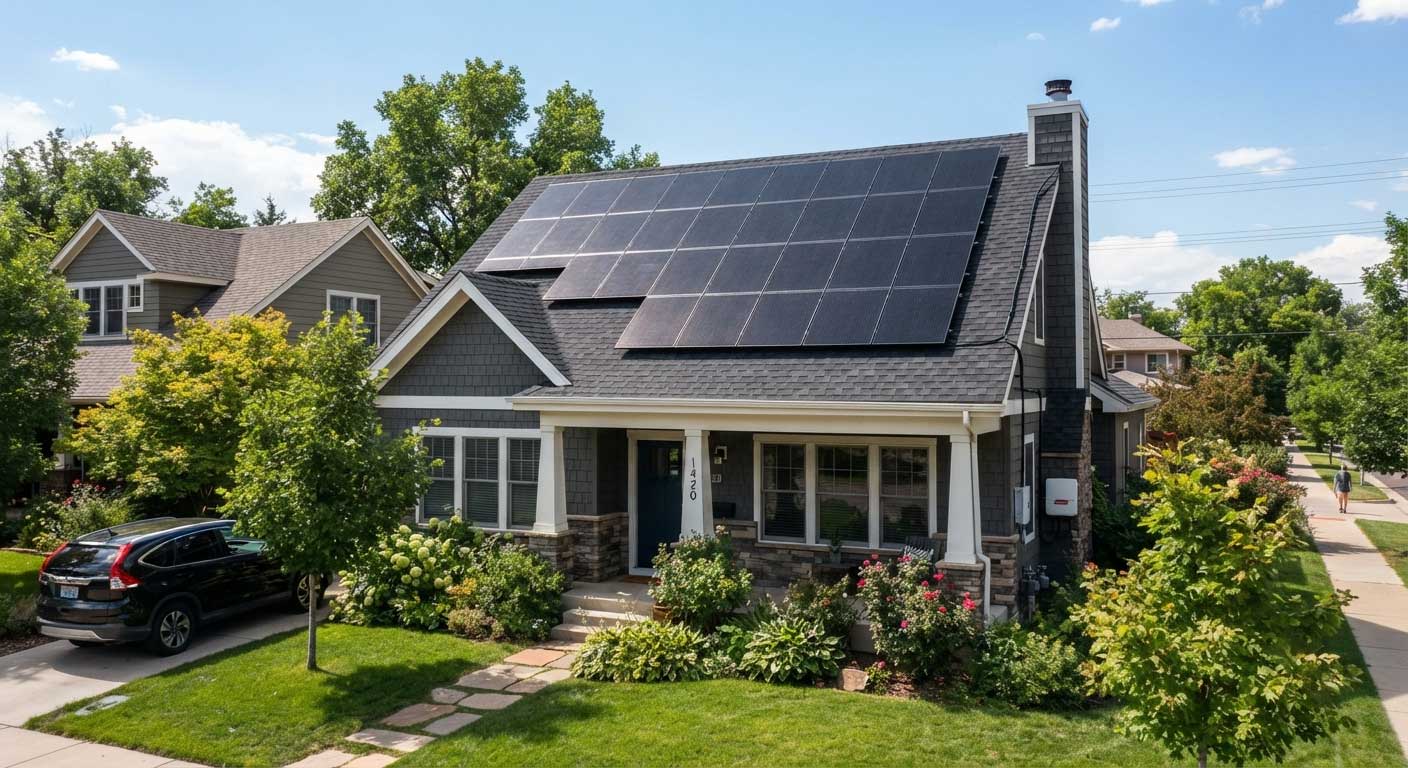
One mistake I often encounter during site visits is assuming that a larger roof automatically means a larger solar system.
In practice, usable roof area is usually much smaller than the total roof footprint.
Several obstacles reduce installation space:
- Skylights
- Chimneys
- Plumbing vents
- Fire setback requirements
- HVAC equipment
- Dormers
- Roof valleys
A roof measuring 2,000 square feet rarely provides 2,000 square feet for photovoltaic modules.
After accounting for setbacks and obstructions, installers may lose 20–40% of the available surface.
The International Residential Code (IRC) and local fire departments frequently require roof access pathways for firefighter safety, further reducing usable installation area.
Panel Efficiency Can Reduce the Number of Panels
Not every homeowner wants to maximize roof coverage.
Sometimes the objective is to generate the required electricity using the fewest panels possible.
Higher-efficiency modules achieve exactly that.
For example:
| Panel Efficiency | Estimated Panels Needed* |
|---|---|
| 19% | 22 panels |
| 21% | 20 panels |
| 23% | 18 panels |
*Example assumes identical household electricity consumption.
Although premium panels cost more upfront, they become attractive when roof space is limited.
This is particularly common in urban neighborhoods where roof geometry restricts installation options.
Can You Estimate Without a Utility Bill?
Only roughly.
If no electricity records are available, professionals usually estimate based on household size and major electrical appliances.
Typical examples include:
| Household Type | Estimated Annual Usage |
|---|---|
| Small apartment | 4,000–6,000 kWh |
| Average family home | 9,000–12,000 kWh |
| Large all-electric home | 14,000–20,000+ kWh |
These estimates provide a starting point, but they should never replace actual utility data when designing a permanent solar system.
How Many Solar Panels Does the Average Home Need?
Once we’ve reviewed a customer’s electricity bills, the next step is matching annual consumption with realistic solar production for that location. There isn’t a universal answer, but the ranges below reflect what we commonly see when designing residential systems.
| Annual Electricity Use | Estimated System Size | Approximate Number of 450W Panels* |
|---|---|---|
| 6,000 kWh | 4.5–5.5 kW | 10–13 |
| 8,000 kWh | 6–7 kW | 14–16 |
| 10,000 kWh | 7.5–8.5 kW | 17–20 |
| 12,000 kWh | 9–10 kW | 20–24 |
| 15,000 kWh | 11–13 kW | 24–30 |
*Actual panel count varies with local solar irradiance, roof orientation, system losses, and panel efficiency.
One project still stands out. Two neighboring homes had nearly identical roofs. One family worked from home, drove an electric vehicle, and used electric heating. The other relied on natural gas for heating and spent much of the day away from home. Their roofs looked almost identical, yet the recommended systems differed by eight panels. That experience reinforced a lesson we’ve seen repeatedly at Bright Solar: electricity consumption—not house size—drives solar sizing.
Regional Sunlight Makes a Bigger Difference Than Many People Expect
The same 8 kW system performs differently depending on where it’s installed. Solar resource varies across the country, influencing how much electricity each panel can generate over a year.
According to the National Renewable Energy Laboratory (NREL) solar resource maps, the U.S. Southwest receives significantly higher solar irradiation than many northern states, resulting in greater annual energy production from the same installed capacity.
| Region | Relative Solar Resource | Typical Impact on Panel Count |
|---|---|---|
| Arizona & Nevada | Excellent | Fewer panels required |
| Texas | Very Good | Slightly fewer panels |
| California | Very Good | Efficient production in most areas |
| Midwest | Moderate | Average panel count |
| Northeast | Moderate | More panels may be needed |
| Pacific Northwest | Lower | Highest panel count for equal energy output |
Reference:
https://www.nrel.gov/gis/solar.html
Instead of comparing your roof with someone else’s online, compare your annual electricity use with your local solar conditions. That’s how accurate system sizing begins.
Common Mistakes When Estimating Solar Panel Requirements
Many online calculators provide a quick estimate, but they often simplify factors that have a measurable impact on long-term energy production.
Some of the most common mistakes include:
- Estimating based on house size instead of annual electricity consumption.
- Ignoring future electricity demand, such as an electric vehicle or heat pump.
- Assuming every roof section receives the same amount of sunlight.
- Overlooking seasonal shading from trees or nearby buildings.
- Comparing systems using panel count instead of total system capacity and expected annual generation.
A well-designed solar system should meet your long-term energy goals, not just today’s electricity bill.
Is It Better to Install Extra Panels?
In many cases, yes—but only when your roof and local utility policies support it.
Homeowners frequently plan for future energy needs, including:
- Purchasing an electric vehicle.
- Installing electric water heating.
- Replacing a gas furnace with a heat pump.
- Adding a battery energy storage system.
- Expanding living space.
Designing with future demand in mind can reduce upgrade costs later. However, local net metering policies and utility interconnection rules should always be reviewed before increasing system capacity.
The U.S. Department of Energy recommends evaluating future electricity needs as part of residential solar planning rather than sizing only for current consumption.
Reference:
https://www.energy.gov/eere/solar/homeowners-guide-going-solar
Why Professional Solar Design Delivers Better Results
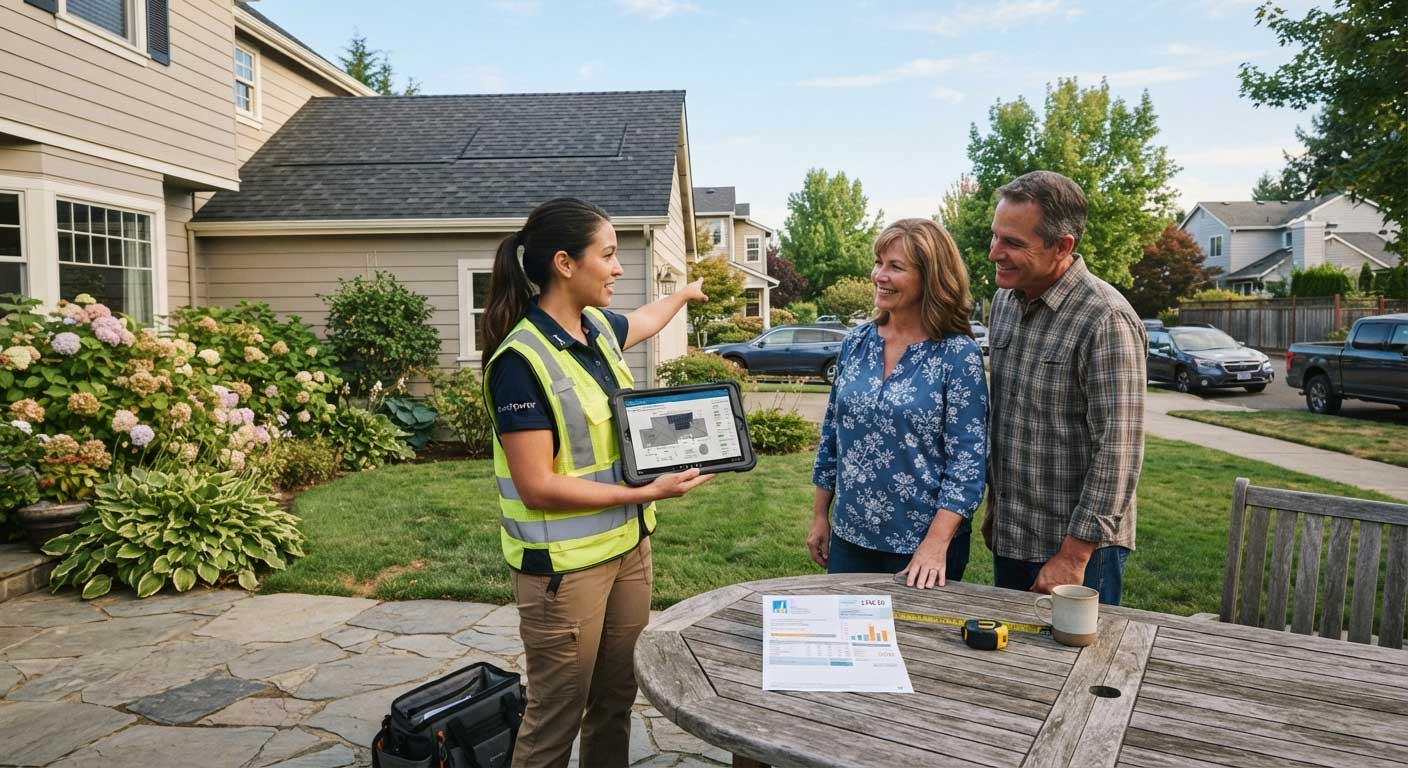
At Bright Solar, every residential proposal begins with actual data rather than assumptions.
Our engineering process typically includes:
- Reviewing 12 months of electricity bills.
- Assessing local solar irradiation.
- Measuring usable roof area.
- Evaluating roof orientation and shading.
- Selecting panel wattage based on available space.
- Estimating annual production using recognized solar performance modeling methods.
That approach produces a recommendation homeowners can understand and installers can build with confidence.
FAQ About How Many Solar Panels Will I Need?
How many solar panels will I need for a 2,000-square-foot house?
House size alone cannot determine panel count. Most 2,000-square-foot homes require between 16 and 24 panels, but annual electricity consumption is the deciding factor.
How many solar panels do I need for 10,000 kWh per year?
A household using around 10,000 kWh annually typically needs about 17–20 modern 450W panels, depending on local sunlight, roof orientation, and system efficiency.
Can I install fewer panels and add more later?
Yes. Many systems can be expanded later if the inverter, roof layout, and local regulations allow for future additions.
Does a higher-wattage panel reduce the number of panels?
Yes. Higher-output panels generate more electricity per module, helping reduce the total number required when roof space is limited.
Will batteries reduce the number of solar panels I need?
No. Batteries store excess electricity but do not generate additional energy. The number of panels depends on how much electricity your household consumes.
What’s the most accurate way to calculate how many solar panels will I need?
The most reliable approach uses your previous 12 months of electricity bills, local solar resource data, roof characteristics, and detailed system design performed by experienced solar professionals.
Conclusion
Choosing the right answer to how many solar panels will I need starts with understanding your own electricity use—not copying a neighbor’s system or relying on a generic online estimate. While many homes require between 15 and 30 panels, the ideal system is determined by annual energy consumption, local solar resources, roof characteristics, and the efficiency of the panels you choose.
At Bright Solar, we believe every solar installation should be backed by real data and thoughtful engineering. By analyzing your electricity bills, evaluating your roof, and using trusted performance modeling tools, we design systems that balance energy production, available space, and long-term value. The result is a solar solution that is tailored to your home today while remaining flexible for future needs such as electric vehicles, battery storage, or increased household demand.
If you’re still asking how many solar panels will I need, the most accurate next step is a professional solar assessment based on your actual energy usage and site conditions. With the right design, you can maximize your investment, improve energy independence, and generate clean electricity for decades. Bright Solar is ready to help you calculate the right system with confidence.
The prev: how long does solar panel last?The next: How Much Electricity Does a Solar Panel Produce?
Related recommendations
-

How many amps 200 watt solar panel?
262How many amps 200 watt solar panel produces depends on voltage and conditions. Learn current calculations, charging performance, and solar system sizing tips.
View details -
How To Install Solar Panels On A Camper?
155How to install solar panels on a camper? Learn the complete RV solar installation process, wiring tips, mounting methods, and expert advice from Bright Solar.
View details -
How Solar Energy Is Converted Into Electricity?
198How solar energy is converted into electricity? Learn how solar cells generate power, the photovoltaic process, and expert solar insights from Bright Solar.
View details -
How Much Is A Solar Panel For House?
148How much is a solar panel for house? Explore residential solar panel pricing, installation factors, equipment costs, and expert advice from Bright Solar.
View details