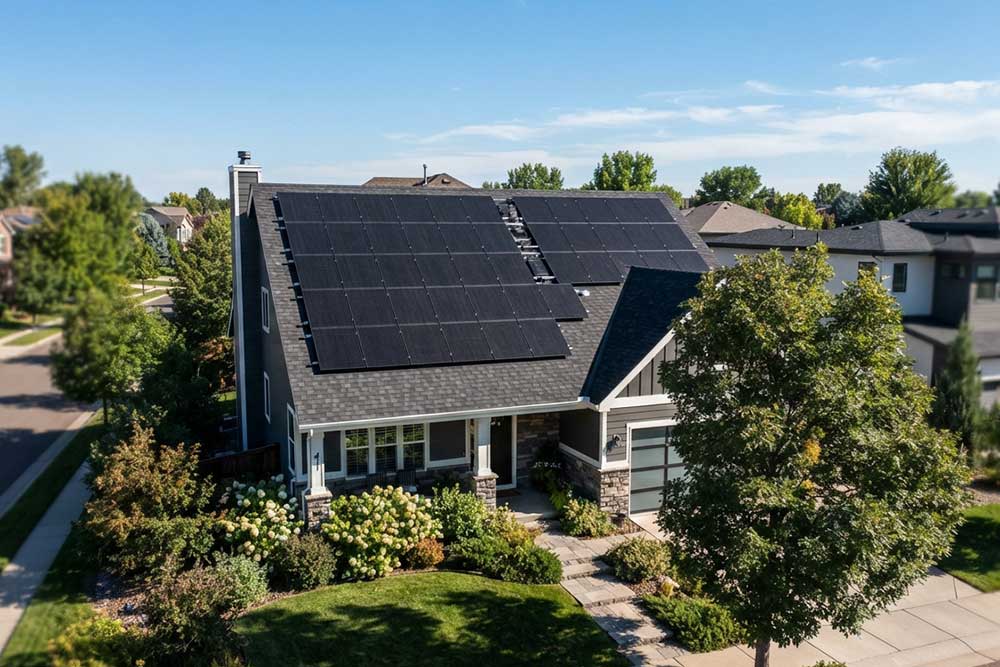
how many kilowatts does a solar panel generate?
A typical solar panel is rated between about 0.3 and 0.7 kilowatts, although larger modules can exceed 0.7 kW. The actual electricity generated depends on sunlight, temperature, orientation, shading, and system losses. A 400W panel, for example, has a rated output of 0.4 kW under standard test conditions.
How Many Kilowatts Does One Solar Panel Produce?
The first point to clarify is that kilowatts (kW) measure power, while kilowatt-hours (kWh) measure energy produced over time.
A panel labeled 400W is a 0.4 kW solar panel. A 500W panel is 0.5 kW. That rating describes the panel’s maximum DC power under standardized laboratory conditions, not the amount of electricity it will continuously produce throughout a day.
NREL defines PV system nameplate capacity as the DC power rating measured under Standard Test Conditions (STC). STC uses 1,000 W/m² irradiance, a 25°C cell temperature, and an air mass of 1.5.
| Solar panel rating | Rated power in kW | What the rating means |
|---|---|---|
| 300W | 0.30 kW | Maximum rated DC output |
| 400W | 0.40 kW | Maximum rated DC output |
| 450W | 0.45 kW | Maximum rated DC output |
| 500W | 0.50 kW | Maximum rated DC output |
| 600W | 0.60 kW | Maximum rated DC output |
This distinction matters when comparing product specifications with real installation performance. A 400W module does not simply deliver 0.4 kW from sunrise to sunset.
What A 400W Solar Panel Looks Like in Real Use
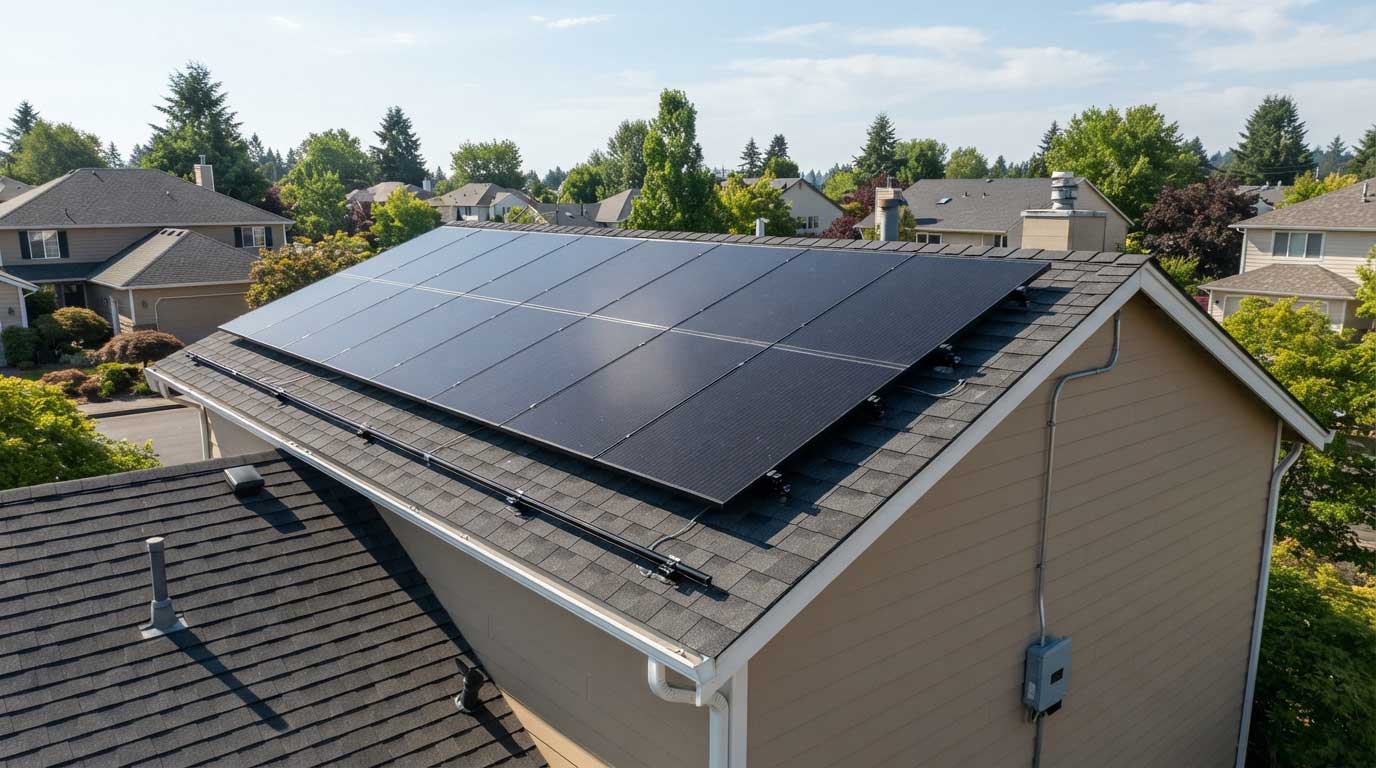
How Much Electricity Can a Solar Panel Generate Per Day?
The answer changes with the site.
For a simple illustration, if a 400W panel effectively operates at its rated output for four equivalent full-sun hours, the theoretical energy would be:
0.4 kW × 4 hours = 1.6 kWh
That is an energy estimate, not a guaranteed production figure.
Actual PV output is affected by irradiance, temperature, clouds, dirt, shading, orientation, wiring, inverter performance, and other system conditions. The U.S. Department of Energy specifically notes that solar production varies with season, time of day, clouds, dust, haze, rain, snow, and obstructions.
Heat is another detail that is easy to overlook during product evaluation. DOE explains that higher temperatures generally reduce PV voltage, which lowers electrical output.
For this reason, installers and engineers generally estimate annual or monthly kWh, rather than promising a fixed daily kWh figure.
NREL’s PVWatts model is designed for this purpose. DOE recommends PVWatts for estimating how much electricity a proposed PV installation can generate at a specific location.
How Many Solar Panels Are Needed for 1 Kilowatt?
The calculation is straightforward:
Number of panels = Required system capacity ÷ Panel wattage
For example:
- 1 kW ÷ 400W = 2.5 panels, so a practical array needs 3 panels for at least 1 kW of module capacity.
- 5 kW ÷ 400W = 12.5 panels, so 13 panels provide 5.2 kW DC.
- 8 kW ÷ 400W = 20 panels, giving an 8 kW DC array.
- 8 kW ÷ 500W = 16 panels, also giving 8 kW DC.
The relationship is particularly important when roof area is limited. DOE’s 2025 residential PV benchmark uses an 8 kW DC system with twenty 400W modules, illustrating how module wattage directly affects the number of panels required.
Why Rated Kilowatts and Actual Output Are Different
A panel’s nameplate rating is a useful comparison point, but it should not be treated as its daily production.
In practical system design, the following factors can move production away from the nameplate number:
- Solar irradiance and local weather
- Module operating temperature
- Roof orientation and tilt
- Partial shading
- Dust, dirt, and snow
- DC wiring and connection losses
- Inverter efficiency
- Module mismatch
- System availability and degradation
NREL’s PVWatts documentation explicitly treats the DC system capacity as a nameplate value and models additional system characteristics and losses separately.
This is one reason two 400W panels installed in different locations can produce noticeably different amounts of electricity over a year.
What Does This Mean for Flexible Solar Panels?
For flexible solar panels, the same electrical principle applies: a panel’s rated wattage determines its nominal DC capacity.
The difference is often the installation environment. Flexible modules can be useful where conventional rigid modules are difficult to mount, including RV roofs, campers, boats, and other applications where weight, profile, or surface conformity matters.
For B2B projects, Bright Solar focuses on flexible and semi-flexible solar panel solutions where module wattage, dimensions, bending requirements, materials, and installation conditions need to be considered together. The correct panel size should therefore be selected from the actual electrical and mechanical requirements of the project rather than wattage alone.

FAQ About how many kilowatts does a solar panel generate?
Is a 400W solar panel equal to 0.4 kW?
Yes. A 400W panel has a rated power of 0.4 kW. That is its nameplate DC capacity under specified test conditions.
Can one solar panel produce 1 kW?
A single panel can produce 1 kW only if its rated capacity is approximately 1,000W. Most residential modules are considerably below that level.
How many 400W panels make 5 kW?
Thirteen 400W panels provide 5.2 kW of total DC nameplate capacity. Twelve panels provide 4.8 kW.
Does a solar panel produce its rated kW all day?
No. The rated kW is a test-condition power rating. Solar irradiance, temperature, shading, orientation, and other system losses cause output to vary throughout the day.
Is kW or kWh more important for solar production?
Both describe different things. kW indicates power capacity, while kWh indicates the amount of electricity generated over a period of time. For energy bills and annual production, kWh is usually the more useful measurement.
How can I estimate the actual output of a solar panel?
Start with the panel’s rated kW, then evaluate local solar resources, system orientation, temperature, shading, and losses. NREL PVWatts can be used to model expected PV energy production for a specific location.
Conclusion
So, how many kilowatts does a solar panel generate? The answer starts with its nameplate rating: a 400W panel is 0.4 kW, while a 500W panel is 0.5 kW. Actual energy production is measured in kWh and depends heavily on installation conditions. For accurate project sizing, panel wattage should always be evaluated together with site conditions and system design.
Related recommendations
-

what are solar panels made of?
112Discover what are solar panels made of, from silicon cells to glass and aluminum layers. Learn real manufacturing details and Bright solar insights.
View details -
How to Wire Solar Panels in Series?
238How to wire solar panels in series correctly? Learn step-by-step wiring methods, voltage calculations, safety tips, and real-world installation insights from Bright Solar.
View details -
How Flexible Are Solar Panels Keep From Over Heating?
220How flexible are solar panels keep from over heating? Learn how flexible solar panels manage heat, improve performance, and stay efficient in RV, marine, and off-grid applications.
View details -
how many kilowatts will a solar panel produce?
17A solar panel’s kilowatt rating depends on its wattage: 400W equals 0.4 kW, while 500W equals 0.5 kW. Actual output varies with sunlight, temperature, shadin...
View details