how durable are flexible solar panels?
how durable are flexible solar panels?
Flexible solar panels are durable enough for RVs, vans, boats, and mobile off-grid systems when installed correctly, but they generally do not last as long as rigid glass panels. Most quality ETFE flexible panels operate reliably for 5–15 years depending on heat exposure, installation quality, vibration, and environmental conditions.
The first flexible solar panel I ever removed was only three years old.
From a distance, it still looked fine. No cracks. No major discoloration. But output had dropped dramatically during peak afternoon sunlight. When we peeled it off the van roof, the backside told the story — trapped heat had slowly warped sections of the laminate, and microcracks had spread through the cells from constant road vibration.
That experience changed how I evaluate “durability.”
With flexible solar panels, durability is not only about surviving rain or hail. It is about surviving heat cycles, UV radiation, vibration, expansion stress, salt exposure, and years of movement without performance collapse.
Why Flexible Solar Panels Wear Differently Than Rigid Panels
Rigid solar panels use tempered glass and aluminum frames for protection.
Flexible panels trade some of that structural protection for lower weight and bendability.
Structural Differences Matter
| Feature | Flexible Solar Panels | Rigid Solar Panels |
|---|---|---|
| Protective Surface | ETFE or PET polymer | Tempered glass |
| Flexibility | Bendable | Rigid |
| Weight | Very light | Heavy |
| Airflow Under Panel | Often limited | Better ventilation |
| Typical Lifespan | 5–15 years | 25+ years |
The photovoltaic technology inside both systems is similar. The durability difference mainly comes from packaging and thermal behavior.
According to the U.S. Department of Energy, elevated operating temperatures reduce photovoltaic efficiency and contribute to long-term material stress.
Flexible panels usually operate hotter because they sit closer to mounting surfaces.
That changes everything.
Heat Is the Biggest Durability Problem
People often blame rain or snow.
In reality, heat destroys more flexible solar panels than storms do.
Why Heat Builds Up Faster
Most flexible panels mount directly onto roofs.
That limits airflow underneath the panel.
On dark-colored van roofs in Arizona and Nevada, I have measured surface temperatures exceeding 70°C during summer installation testing. Output dropped sharply during peak heat hours.
More importantly, long-term thermal expansion slowly stresses the laminate and cell connections.
The International Energy Agency (IEA) notes that thermal cycling remains one of the major reliability concerns in photovoltaic systems.
Signs of Heat Damage
- Bubbling surfaces
- Warped laminate edges
- Yellowing materials
- Reduced afternoon output
- Cell microcracks
- Delamination
Some failures happen gradually enough that owners never notice until battery charging performance collapses months later.
ETFE vs PET: Durability Is Not Equal
This distinction matters more than most marketing pages admit.
ETFE Flexible Panels
ETFE is generally more durable.
Advantages include:
- Better UV resistance
- Higher temperature tolerance
- Improved scratch resistance
- Longer outdoor lifespan
PET Flexible Panels
PET panels are cheaper but age faster.
Common issues include:
- Yellowing
- Surface haze
- UV degradation
- Cracking under prolonged heat

How Long Flexible Solar Panels Actually Last
This is the question buyers usually ask first.
The honest answer depends heavily on installation quality and climate.
Realistic Lifespan Expectations
| Environment | Typical Lifespan |
|---|---|
| Mild climate RV use | 8–15 years |
| Hot desert van roof | 5–8 years |
| Marine salt exposure | 5–10 years |
| Cheap PET panels | Sometimes under 5 years |
Premium rigid panels still outperform flexible systems in long-term durability.
But rigid panels also weigh significantly more and require rack systems many RV owners want to avoid.
Road Vibration Changes Everything
Static rooftop solar behaves differently from mobile solar.
Flexible panels installed on RVs and vans constantly experience:
- Highway vibration
- Wind uplift
- Chassis flex
- Expansion and contraction
- Temperature shock
I once inspected a camper van that traveled through Alaska and Baja California in the same year. The panel looked intact externally, but infrared testing showed internal hot spots caused by vibration-related cell fractures.
The owner had no visible warning signs.
Just reduced charging performance.
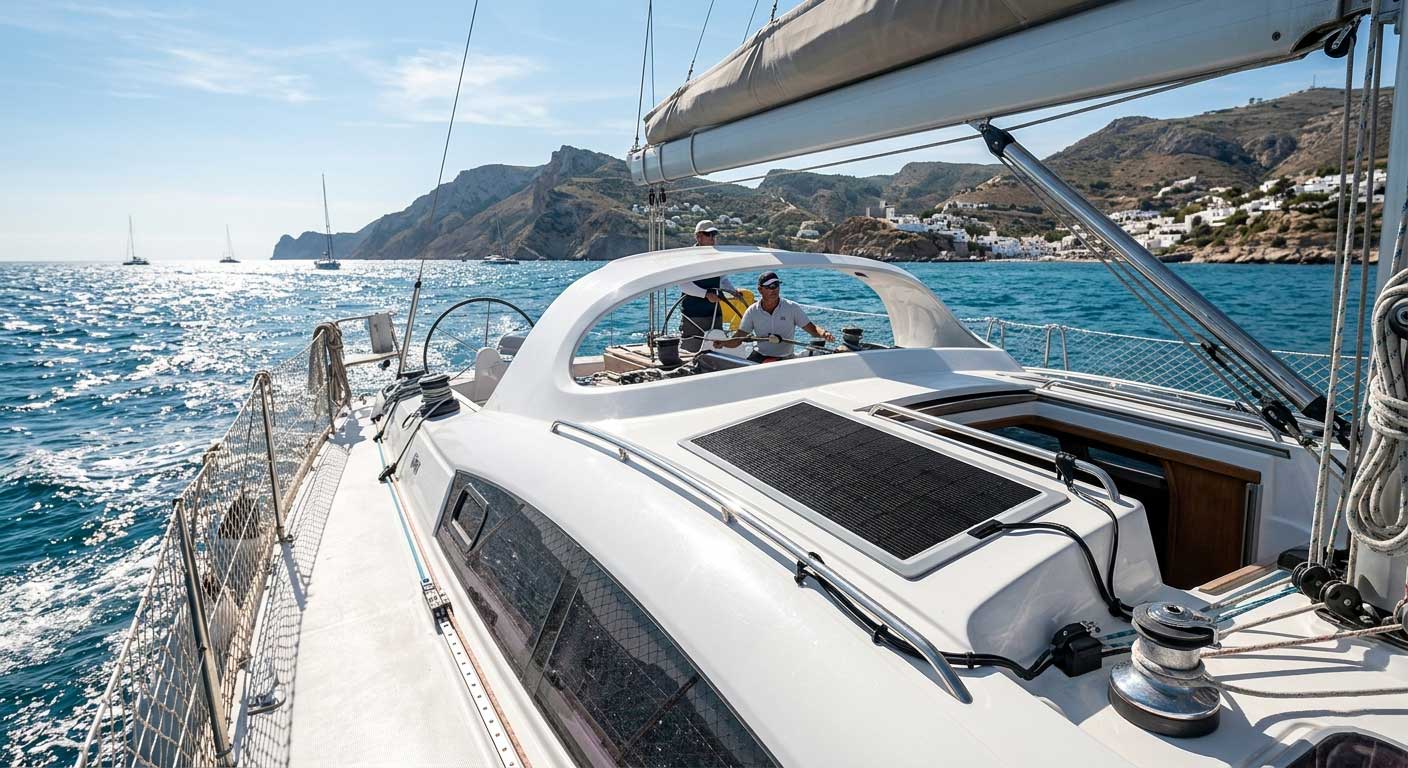
Marine Installations Reveal Real Durability Limits
Boat environments are brutal.
Salt spray, UV intensity, and constant movement expose weaknesses quickly.
Yet flexible panels remain popular in marine systems because they reduce wind resistance and weight.
What Marine Installers Usually Prioritize
- ETFE surfaces
- Corrosion-resistant connectors
- Ventilation spacing
- Waterproof cable glands
- Rounded mounting edges
Marine installers often understand flexible solar durability better than RV installers because ocean environments punish shortcuts fast.
Installation Quality Directly Affects Lifespan
A durable panel installed poorly still fails early.
Common Installation Mistakes
| Mistake | Long-Term Effect |
|---|---|
| Full adhesive bonding | Excessive heat buildup |
| Poor roof cleaning | Edge lifting |
| Cheap sealant | Water intrusion |
| No airflow gap | Faster degradation |
| Unsupported foot traffic | Cell cracking |
One RV roof I inspected had standing water trapped beneath the panel after rain because the installer blocked natural drainage channels with adhesive.
The panel survived.
The roof did not.
Are Flexible Solar Panels Weatherproof?
Generally yes — but within limits.
Most quality flexible panels resist:
- Rain
- Snow
- UV exposure
- Salt spray
- Dust
- Moderate hail
Still, waterproof does not mean indestructible.
The cable entry points and installation seals often fail long before the panel surface itself.
That distinction matters in long-term outdoor use.
How to Make Flexible Solar Panels Last Longer
Practical Durability Tips
- Use ETFE-coated panels
- Avoid dark roof overheating
- Leave airflow space underneath
- Wash salt and dust regularly
- Avoid walking directly on cells
- Use proper UV-resistant sealants
- Check edge adhesion yearly
Small maintenance habits extend lifespan far more than most people realize.
FAQ:how durable are flexible solar panels?
Are flexible solar panels durable enough for full-time RV living?
Yes, especially high-quality ETFE models installed with proper ventilation and waterproofing.
Do flexible solar panels crack easily?
They resist impact well, but internal microcracks can form over time from vibration and thermal stress.
Are flexible solar panels waterproof?
Most quality models are weather resistant, but installation quality determines real waterproof performance.
What causes flexible solar panels to fail?
Heat buildup, UV degradation, poor airflow, vibration, and improper installation are the main causes.
Are flexible panels less durable than rigid panels?
Usually yes. Rigid glass panels generally last longer, but flexible panels provide advantages in weight and installation flexibility.
Final Thoughts on How Durable Are Flexible Solar Panels
Understanding how durable are flexible solar panels requires looking beyond simple warranty numbers.
In real-world RV, van, and marine applications, durability depends on heat management, installation quality, material choice, and environmental stress far more than advertising claims suggest.
A well-installed ETFE flexible panel can deliver years of reliable off-grid power while surviving vibration, rain, and constant travel. A poorly ventilated cheap panel on a hot metal roof can degrade surprisingly fast.
The difference often comes down to details invisible in product photos.
That is why experienced installers pay attention to airflow, mounting methods, and thermal behavior long before they talk about wattage.
Sources
- U.S. Department of Energy — Solar Photovoltaic Technology Basics
- International Energy Agency (IEA) — Photovoltaic Reliability Research
- National Renewable Energy Laboratory (NREL) — Solar Module Temperature Performance
The prev: how do flexible solar panels work?The next: How Flexible Are Flexible Solar Panels?
Related recommendations
-

How Long Does a Solar Panel Last?
153How long does a solar panel last? Learn solar panel lifespan, degradation rates, maintenance factors, and expert insights to maximize residential solar performance with Bright Solar.
View details -
How Do Solar Panels Work?
262Discover how do solar panels work, how sunlight becomes electricity, and what happens inside a solar system. Expert insights and real-world experience from Bright Solar.
View details -
How do solar panels work simple explanation?
96Solar panels use photovoltaic cells to convert sunlight into DC electricity, which can be used directly, converted to AC, or stored in batteries.
View details -
How Much Solar System Cost for Home?
204How much solar system cost for home? Learn real 2026 residential solar prices, system size costs, installation factors, and expert insights from Bright Solar.
View details