How Do You Replace a Roof With Solar Panels?
How do you replace a roof with solar panels? You replace the roof by removing the solar panels and mounting hardware first, completing the roofing work, inspecting the new roof, then reinstalling or replacing the solar system. The critical point is coordinating the roofer and solar installer so the new roof is not damaged during reinstallation.
Can You Replace a Roof Without Removing Solar Panels?
Usually, no. If solar panels are mounted on the roof that needs replacement, the roofing crew generally needs access to the roof surface, flashing, shingles, underlayment, or other roofing materials beneath the array.
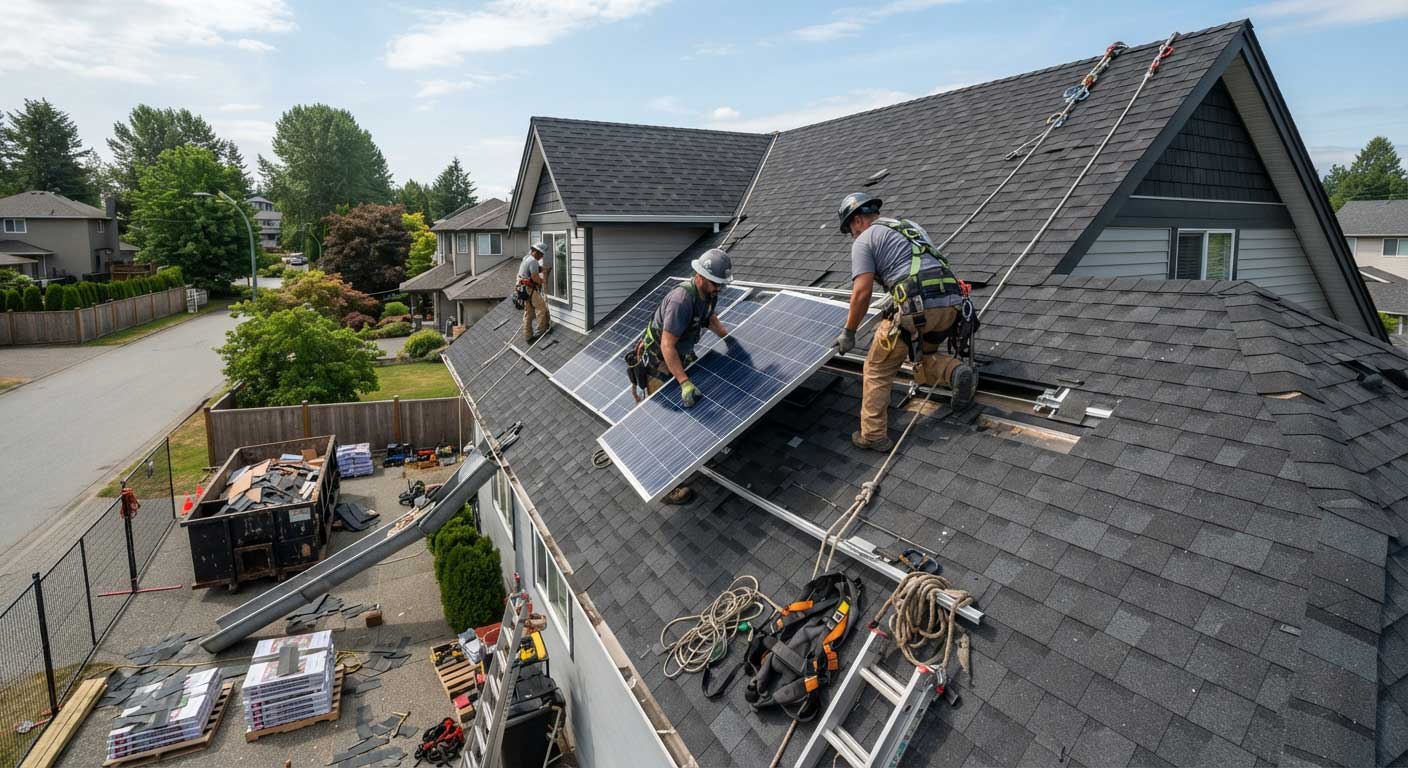
The U.S. Department of Energy specifically notes that during a roof replacement, solar panels and the mounting system need to be removed to complete the work. DOE also points out that some homeowners use the opportunity to replace the solar system at the same time.
That distinction matters. A roof replacement is not simply a matter of lifting a few panels, changing shingles underneath them, and putting everything back.
A typical project involves:
- Electrical shutdown and system isolation
- Removal of solar modules
- Removal or temporary removal of mounting hardware
- Roofing inspection and replacement
- Repair of damaged roof structure or flashing
- Waterproofing and roof inspection
- Reinstallation of the mounting system
- Reinstallation or replacement of solar modules
- Electrical testing and system commissioning
For an older solar array, the roof replacement can also become a sensible point to review the condition of the modules, inverter, wiring, connectors, and mounting hardware.
The Roof Should Be Evaluated Before Solar Removal
The roofing contractor should identify the actual condition of the roof before work begins. Look for:
- Water intrusion
- Damaged decking
- Deteriorated underlayment
- Failed flashing
- Corrosion around penetrations
- Sagging or weakened structural areas
- Roof areas hidden beneath the solar array
This is one place where project sequencing makes a real difference. If a leak is discovered after the panels have already been reinstalled, the crew may have to remove equipment a second time.
What Happens to the Solar Panels During a Roof Replacement?
The solar system should be electrically shut down and handled by appropriately qualified personnel before removal.
Panels are then carefully removed from the racking rather than treated as ordinary roofing materials. The modules should be protected from impact, uncontrolled stacking, and unnecessary cable stress.
For a large rooftop array, the removal plan should also consider where the modules will be stored while the roof is being replaced.
OSHA specifically warns that workers should not climb ladders while carrying solar panels. It recommends using appropriate lifting equipment such as hoists, cranes, or conveyors where practical.
Should You Replace the Solar Panels at the Same Time?
Not automatically.
A roof replacement and solar replacement are separate decisions. DOE reports that many existing rooftop solar systems maintain at least 80% of their initial power output for at least 25 years, although actual system performance varies.
The better question is whether the existing solar equipment makes sense to reinstall.
| Item | Check Before Reinstallation |
|---|---|
| Solar modules | Physical damage, age, output history |
| Inverter | Age, operating condition, replacement availability |
| Mounting system | Corrosion, compatibility, mechanical condition |
| Wiring | Insulation, connectors, routing |
| Roof | Remaining service life and waterproofing |
| System design | Whether the existing layout still suits the roof |
There is little value in installing new roofing and then discovering that an aging inverter fails shortly afterward. On the other hand, replacing perfectly serviceable panels simply because the roof is new can unnecessarily increase project cost.
For B2B projects, OEM or customized solar modules may also be considered when the new roof has unusual dimensions, curved surfaces, weight constraints, or application-specific requirements.
How Do You Reinstall Solar Panels After a New Roof?
Once the roofing work is complete, the new roof should be inspected before solar equipment goes back on.
The mounting layout may need to be reviewed rather than blindly copied from the old installation.
Pay particular attention to:
- Roof penetrations and flashing
- Attachment locations
- Structural members
- Waterproofing details
- Array setbacks and access paths
- Cable routing
- Module orientation
- Existing electrical equipment
The new roof and the solar mounting system need to work together. A technically sound solar module installation can still create a roofing problem if penetrations, flashing, or attachment points are handled incorrectly.
The final electrical work should include appropriate testing before the system is returned to service.
Solar Roof Replacement Safety Matters
Roof replacement combined with solar work creates two different hazards: roofing hazards and electrical hazards.
OSHA states that construction workers installing solar panels who are exposed to falls of 6 feet or more must be protected using appropriate fall-protection methods, such as guardrails, safety nets, or personal fall-arrest systems.
There is another practical issue that is easy to underestimate: the roof becomes a busier work surface when solar equipment is present. Modules, rails, electrical cables, roofing materials, ladders, and workers all compete for limited space.
That is why the removal and reinstallation plan should be agreed upon before anyone starts stripping the roof.
When Is the Best Time to Replace Solar Panels With the Roof?
If the solar system is already near the end of its useful service life, roof replacement is a logical point to evaluate the complete system.
Consider replacement together when:
- The solar modules are substantially aged.
- The inverter is approaching the end of its service life.
- Mounting components show corrosion or damage.
- The existing array no longer fits the planned roof layout.
- A higher-capacity system is being considered.
- The new roof changes available installation space.
If the solar equipment remains in good condition, however, reinstalling it may be more practical.
The important planning detail is to make the roofing scope and solar scope one coordinated project, even when two different companies perform the work.
Bright Solar Considerations for Roof Replacement Projects
Bright Solar supplies flexible and semi-flexible solar panel solutions for applications including RVs, campers, outdoor power, selected marine uses, and off-grid systems. For B2B customers, product configuration and dimensions can also be discussed for OEM, ODM, and bulk procurement projects.
For a roof-related solar project, product selection should follow the actual installation surface rather than starting with a nominal wattage alone.
Roof geometry, available area, mounting approach, module dimensions, wiring arrangement, and environmental conditions all affect the final configuration. This is particularly relevant when a replacement roof has a different usable surface from the original installation.
FAQ About How Do You Replace a Roof With Solar Panels?
Do solar panels have to be removed to replace a roof?
In most conventional rooftop installations, yes. The panels and mounting hardware normally need to be removed so roofing materials underneath the array can be replaced and inspected.
Can a roofer remove solar panels?
Solar panel removal involves electrical equipment as well as roofing work. The electrical portion should be handled by appropriately qualified solar personnel, with the roofing contractor coordinating access and roof work.
Is it worth replacing solar panels when replacing the roof?
Not necessarily. DOE notes that many rooftop solar systems can retain at least 80% of their original power output for 25 years or more. The age and condition of the complete system should be evaluated before replacement.
Can new shingles be installed around solar panels?
Some localized roofing work may be possible without complete system removal, but a full roof replacement generally requires the solar array to be removed so the roofing system can be properly installed.
What should be replaced during a roof-and-solar project?
Inspect the modules, inverter, mounting hardware, wiring, connectors, flashing, roof penetrations, and structural attachment points. Replace components based on condition rather than automatically replacing everything.
How long do solar panels last after a new roof is installed?
The roof replacement itself does not determine solar-panel life. DOE states that many rooftop systems maintain at least 80% of initial output for at least 25 years, although individual products and operating conditions differ.
Conclusion
How do you replace a roof with solar panels? Remove the solar equipment first, complete and inspect the new roof, then reinstall or replace the solar system using a coordinated roofing and electrical plan. The strongest projects treat the roof and solar array as one integrated installation rather than two unrelated jobs.
The prev: How Do You Install Solar Panels?The next: How Does Leasing Solar Panels Work?
Related recommendations
-

how to connect solar panel to portable power station?
261Connect a solar panel to a portable power station through its solar/DC input after verifying voltage, current, wattage, polarity, and connector compatibility.
View details -
How Is Solar Energy Made Into Electricity?
145How is solar energy made into electricity? Learn how sunlight becomes usable power through solar cells, inverters, and real photovoltaic systems.
View details -
How effective are solar panels?
173How effective are solar panels? Discover solar energy benefits, power output, efficiency factors, and real-world performance insights from Bright Solar experts.
View details -
How to Mount a Flexible Solar Panel?
314Learn how to mount a flexible solar panel correctly using adhesive, airflow spacing, and waterproof wiring. Real installer tips for RVs, vans, boats, and off-grid use.
View details