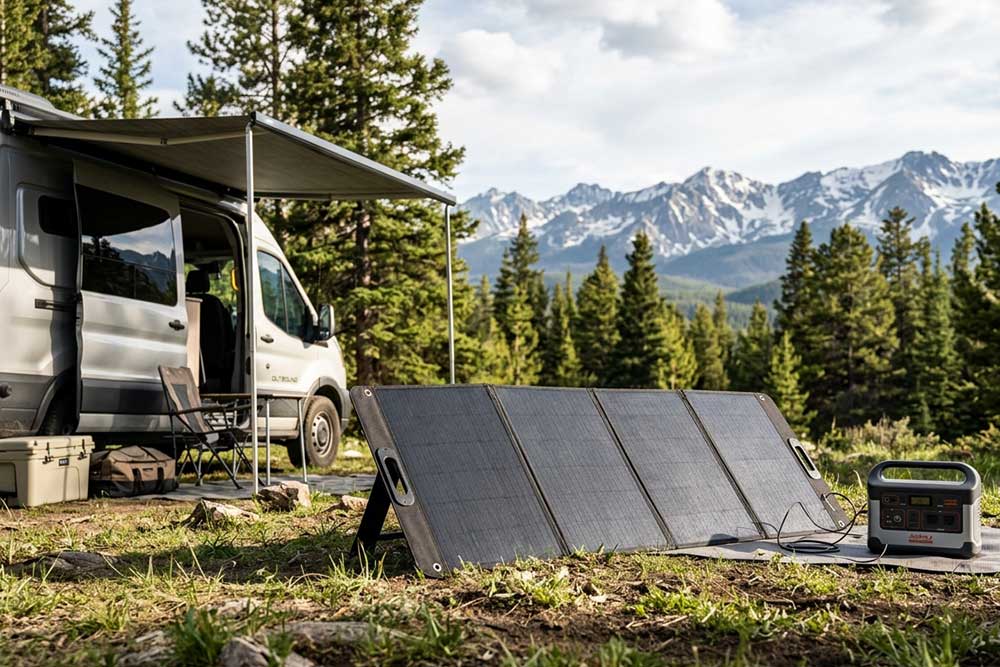
Flexible solar panel for car: Lightweight Solar Energy Solution for Modern Vehicles
A flexible solar panel for car provides lightweight renewable energy for vehicles where traditional solar panels are too heavy or difficult to install. These panels fit curved surfaces, support battery charging, and are ideal for RVs, electric vehicles, camping vehicles, and mobile power applications.
When people think about adding solar power to a vehicle, they often imagine a large rigid panel mounted on a flat roof.
That image works for houses.
Cars are different.
A vehicle roof is curved. Space is limited. Weight matters. Wind resistance matters.
At Bright Solar, we have worked with customers who wanted additional solar capacity without changing the original vehicle design.
Their requirements were usually similar:
- Keep the vehicle lightweight
- Avoid complicated mounting structures
- Maintain a clean appearance
- Generate extra power during travel
This is where a flexible solar panel for car becomes a practical solution.
Unlike traditional framed modules, flexible solar panels are designed for applications where solar surfaces are not perfectly flat.
They allow vehicles to turn unused areas into energy-producing surfaces.
What is a flexible solar panel for car?
A flexible solar panel for car is a lightweight photovoltaic module designed to generate electricity on vehicle surfaces such as:
- Car roofs
- RV roofs
- Camper vans
- Electric vehicles
- Utility vehicles
- Mobile work vehicles
Traditional automotive solar installations often face several limitations:
| Challenge | Traditional Solar Panel Issue |
|---|---|
| Curved roof design | Difficult installation |
| Vehicle weight limits | Heavy glass structure |
| Aerodynamics | Larger mounting systems |
| Appearance | Bulky external frames |
Flexible solar panels solve these problems by using:
- Thin photovoltaic materials
- Lightweight composite layers
- Flexible protective coatings
- Low-profile installation designs
The purpose is not replacing the main vehicle battery.
Instead, automotive solar panels provide additional energy for:
- Auxiliary batteries
- Camping equipment
- Refrigerators
- Lighting systems
- Communication devices
- Emergency charging
Why choose a flexible solar panel for car applications?
Vehicle solar systems have different requirements from residential solar installations.
A car moves.
It experiences:
- Vibration
- Temperature changes
- Wind pressure
- Weather exposure
A suitable automotive solar panel must handle these conditions.
Lightweight design reduces vehicle load
Weight is one of the biggest advantages of flexible solar panels.
For vehicles such as:
- Camper vans
- RVs
- Expedition vehicles
Every additional kilogram affects:
- Fuel consumption
- Driving range
- Vehicle handling
A traditional glass solar panel requires:
- Aluminum frames
- Mounting brackets
- Reinforcement structures
A flexible panel reduces the need for these additional components.
For electric vehicles, reducing unnecessary weight is especially important.
The U.S. Department of Energy highlights that vehicle weight reduction can improve energy efficiency because less energy is required to move the vehicle.
Source:
U.S. Department of Energy – Vehicle Technologies Office
https://www.energy.gov/eere/vehicles
Better fit for curved vehicle surfaces
Most vehicles do not have large flat roofs.
Common automotive installation areas include:
- Van roofs
- Camper tops
- Truck caps
- Special vehicles
A flexible solar panel can follow the shape of these surfaces.
This creates more usable solar area without installing large external structures.
For example:
A camper owner may have only a slightly curved roof section available.
A rigid module might leave gaps or require custom brackets.
A flexible panel can use that same surface more efficiently.
Cleaner vehicle appearance
Many vehicle owners care about design.
A large framed solar panel can change:
- Vehicle appearance
- Aerodynamics
- Parking clearance
Flexible solar panels create a lower-profile installation.
This is especially valuable for:
- Premium RVs
- Adventure vehicles
- Electric cars
- Mobile business vehicles
How much power can a flexible solar panel for car generate?
The energy output depends on:
- Panel wattage
- Sunlight conditions
- Installation angle
- Vehicle location
- Shading
The basic calculation:
Daily Energy Production = Solar Panel Wattage × Peak Sun Hours × System Efficiency
Example:
| Panel Size | Suitable Vehicle Application |
|---|---|
| 50W–100W | Battery maintenance, small electronics |
| 100W–200W | Camping vehicles and auxiliary power |
| 200W–400W | RVs and larger mobile systems |
| 400W+ | Professional off-grid vehicles |
According to the National Renewable Energy Laboratory (NREL), solar photovoltaic output depends strongly on solar radiation conditions and geographic location.
Source:
National Renewable Energy Laboratory Solar Resource Data
https://www.nrel.gov/gis/solar-resource-maps.html
A vehicle solar system can support:
- Portable refrigerators
- LED lighting
- Fans
- Navigation equipment
- Communication devices
- Battery banks
However, the correct system size depends on energy usage.
A small car used for commuting has very different requirements from an RV traveling across remote areas.
Real-world Bright Solar automotive application experience
At Bright Solar, we have received inquiries from customers who wanted solar power solutions for mobile lifestyles.
One European camper manufacturer approached us because their customers wanted longer off-grid travel capability.
Their original design used:
- Portable solar panels
- External charging equipment
- Temporary setups
The problems were clear:
- Panels required storage space
- Setup took additional time
- Charging was inconsistent during travel stops
After integrating flexible solar panels into the vehicle roof design:
The system achieved:
| Improvement | Result |
|---|---|
| Installation appearance | Cleaner |
| Daily setup time | Reduced |
| Roof usage | Improved |
| User convenience | Increased |
The customer feedback was interesting.
They did not choose flexible solar technology simply because it was “new”.
They chose it because it solved a practical problem:
They wanted solar power always available without carrying extra equipment.
Flexible solar panel for car vs traditional solar panels
Choosing between flexible and rigid solar depends on the vehicle type.
| Feature | Flexible Solar Panel | Traditional Solar Panel |
|---|---|---|
| Weight | Lightweight | Heavier |
| Curved surface compatibility | Excellent | Limited |
| Installation complexity | Lower | Higher |
| Vehicle appearance | Low profile | More visible |
| Best use | Cars, RVs, mobile systems | Flat surfaces |
Rigid panels still have advantages for large fixed installations.
However, vehicles require different priorities.
For mobile applications, flexibility often becomes more valuable than maximum panel rigidity.

How to install a flexible solar panel for car
Installing a flexible solar panel for car requires careful planning because vehicles have different conditions compared with stationary solar systems.
A successful automotive solar installation depends on three factors:
- Correct panel position
- Secure attachment
- Proper electrical integration
At Bright Solar, we have found that most installation problems come from ignoring vehicle-specific details rather than from the solar module itself.
Step 1: Select the best installation area
The first step is choosing a location with maximum sunlight exposure.
Common installation locations include:
- Vehicle roof
- Camper roof
- Van roof
- Truck canopy
- Utility vehicle surfaces
Before installation, evaluate:
| Inspection Point | Purpose |
|---|---|
| Available surface area | Determines panel size |
| Roof shape | Determines flexible compatibility |
| Shading objects | Prevents energy loss |
| Cable pathway | Simplifies wiring |
Avoid areas blocked by:
- Roof racks
- Antennas
- Air conditioning units
- Storage equipment
Even partial shading can reduce solar performance.
A customer in Germany installed a flexible solar panel system on an expedition van.
The original installation position looked ideal because it had the largest surface area.
However, a roof-mounted storage box created afternoon shadows.
After repositioning the panel:
- Charging stability improved
- Energy production increased
- No additional panels were required
The experience showed that location selection is often more important than simply choosing a higher wattage panel.
Step 2: Prepare the vehicle surface
Before attaching a flexible solar panel, the vehicle surface should be properly prepared.
Recommended preparation:
- Wash the surface thoroughly
- Remove grease and dust
- Allow the area to dry completely
- Confirm adhesive or mounting compatibility
Suitable surfaces include:
- Painted metal roofs
- Fiberglass camper roofs
- Composite vehicle structures
A clean surface improves:
- Adhesion strength
- Long-term reliability
- Weather resistance
Step 3: Connect the solar charging system
A flexible solar panel is only one part of the complete vehicle energy system.
A typical setup includes:
| Component | Function |
|---|---|
| Flexible solar panel | Produces electricity |
| MPPT charge controller | Optimizes charging |
| Battery storage | Stores energy |
| Inverter | Converts DC to AC power |
| Monitoring device | Tracks system performance |
For mobile applications, many users choose lithium batteries because they provide:
- High energy density
- Lower weight
- Longer cycle life
A properly designed system should match:
Solar production → Battery capacity → Daily energy consumption
Step 4: Test the completed installation
After installation, check:
- Voltage output
- Charging current
- Battery status
- Connector protection
- Cable routing
Initial performance data helps future troubleshooting.
Recommended records:
- Installation date
- Panel specification
- Initial output
- Battery capacity
This information makes maintenance easier over the vehicle’s lifetime.
Applications of flexible solar panel for car technology
A flexible solar panel for car is useful for many mobile energy applications.
Electric vehicles
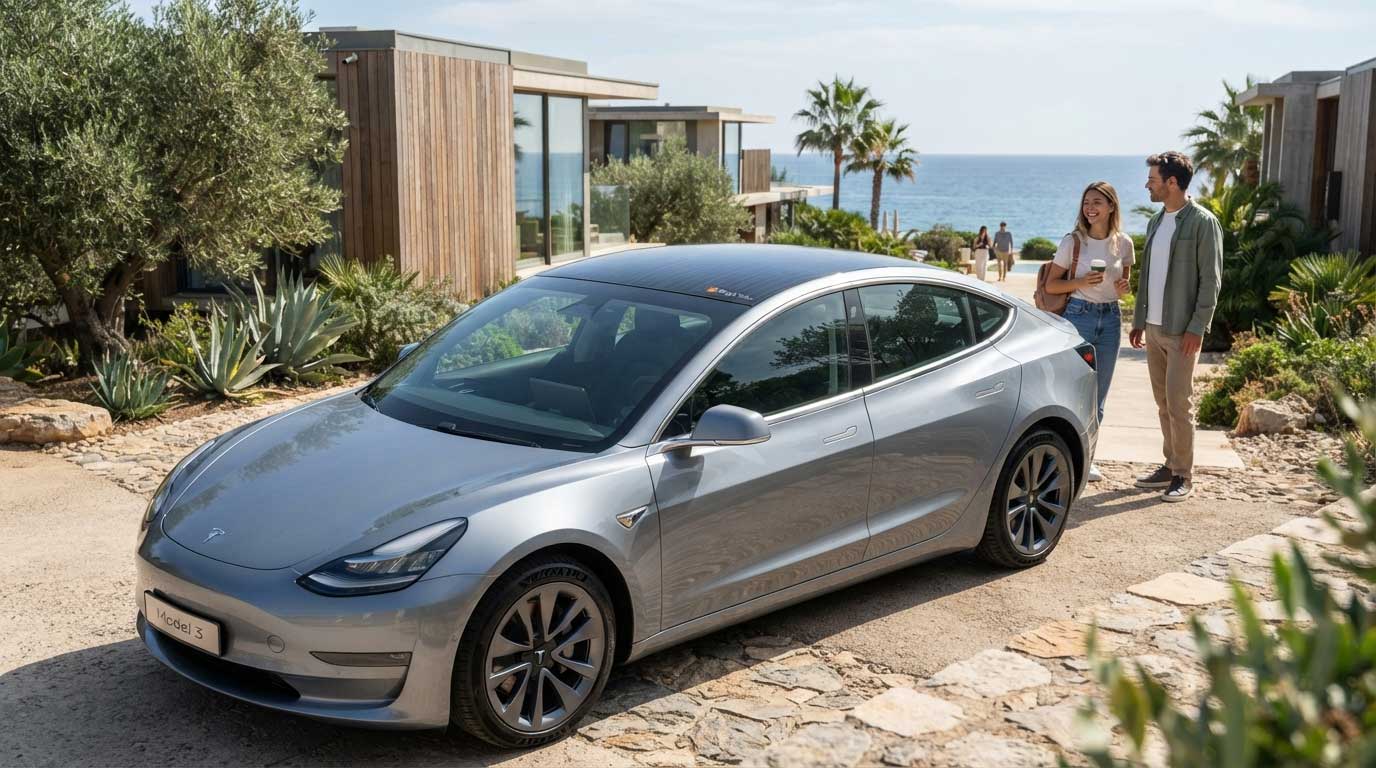
Electric vehicle owners are interested in solar charging because renewable energy can support auxiliary power needs.
Possible uses:
- Battery maintenance
- Cabin electronics
- Sensors
- Emergency charging support
A vehicle roof cannot usually provide enough area for complete EV charging, but solar can reduce energy demand from other sources.
RV and camper vehicles
This is one of the most popular applications.
RV owners use flexible solar panels for:
- Refrigerators
- Interior lighting
- Fans
- Water pumps
- Communication devices
The main advantage is convenience.
The solar system works while the vehicle is parked, reducing dependence on external electricity connections.
Adventure and expedition vehicles
Remote travel vehicles often require independent power.
Applications include:
- GPS equipment
- Satellite communication
- Cameras
- Portable computers
- Emergency systems
For these users, reliability matters more than simply having the largest solar capacity.
Commercial mobile vehicles
Businesses also use vehicle solar systems.
Examples:
- Mobile service vehicles
- Food trucks
- Field research vehicles
- Emergency response units
Solar power can support equipment without continuously running engines or generators.
Durability and materials of flexible solar panel for car
Automotive environments create special challenges.
A vehicle solar panel must withstand:
- Road vibration
- Rain
- UV exposure
- Temperature changes
- Dust
ETFE surface protection
Many premium flexible solar panels use ETFE coatings because they provide:
- Strong UV resistance
- Weather protection
- Lightweight surface protection
- Improved outdoor durability
This makes them suitable for long-term outdoor vehicle applications.
Low-profile structure
A lower installation profile helps reduce:
- Wind resistance
- Visual impact
- Vehicle height changes
This is especially useful for:
- Camper vans
- Delivery vehicles
- Adventure vehicles
Temperature considerations
Vehicles experience extreme temperature changes.
Examples:
- Hot parking lots
- Desert travel
- Winter camping
Solar system design should consider:
- Panel material
- Battery location
- Controller protection
The International Energy Agency (IEA) notes that photovoltaic system performance depends on environmental conditions, module quality, and installation design.
Source:
International Energy Agency – Solar PV Reports
https://www.iea.org/reports/solar-pv
How much does a flexible solar panel for car cost?
The cost depends on:
- Panel wattage
- Solar cell technology
- Protective materials
- Brand quality
- Installation method
Typical price range:
| Product Type | Approximate Cost |
|---|---|
| 50W–100W flexible panel | $100–$250 |
| 200W flexible vehicle solar system | $300–$600 |
| 300W–400W vehicle solar system | $500–$1,000 |
| Complete RV solar package | $1,000–$3,000+ |
A complete system cost may include:
- Solar panel
- Charge controller
- Battery
- Wiring
- Installation accessories
Choosing the cheapest option may create additional costs later.
Important purchasing factors include:
- Product durability
- Warranty support
- Weather resistance
- Technical assistance
Maintenance guide for flexible solar panel for car
Flexible automotive solar panels require minimal maintenance, but regular checks improve reliability.
Clean the solar surface
Remove:
- Dust
- Road dirt
- Bird contamination
- Leaves
A clean surface allows more sunlight to reach the solar cells.
Inspect electrical connections
Check:
- Cable condition
- Connector sealing
- Charge controller operation
Vehicle vibration can gradually affect connections.
Monitor energy production
Track:
- Charging performance
- Battery condition
- Seasonal changes
A sudden decrease in output may indicate:
- Shading
- Dirt buildup
- Connection problems
FAQ About Flexible Solar Panel for Car
Can a flexible solar panel for car charge a car battery?
Yes. A flexible solar panel can charge vehicle batteries when connected through an appropriate solar charge controller. The charging speed depends on panel wattage and battery capacity.
Are flexible solar panels suitable for electric vehicles?
Yes. They can support auxiliary electrical systems and reduce energy consumption, although most vehicle roofs cannot provide enough area for complete EV charging.
Can flexible solar panels be installed directly on a car roof?
Yes. Many flexible panels are designed for vehicle roof installation, especially on RVs, vans, and specialized vehicles.
What size flexible solar panel is best for a camper?
Many camper owners choose 100W–400W systems depending on electricity usage. Larger systems are suitable for refrigerators, batteries, and longer off-grid travel.
Do flexible solar panels damage car paint?
Proper installation should not damage vehicle surfaces. Surface preparation and suitable mounting methods are important.
How long does a flexible solar panel for car last?
The lifespan depends on material quality, weather exposure, and maintenance. Premium flexible solar panels are designed for long-term outdoor applications.
Can solar panels replace a vehicle alternator?
No. Solar panels are designed to supplement vehicle power systems. They help reduce energy consumption but usually do not replace the vehicle’s charging system.
Final Thoughts: Choosing the Right Flexible Solar Panel for Car Solution
A flexible solar panel for car provides a practical way to add renewable energy to modern vehicles without heavy structures or complicated installation.
The biggest advantages are:
- Lightweight design
- Flexible installation
- Better use of vehicle surfaces
- Support for off-grid lifestyles
At Bright Solar, our experience with mobile solar projects shows that the right solution depends on the vehicle’s purpose.
A commuter car, an RV, and an expedition vehicle have completely different energy requirements.
The best automotive solar system is not always the largest one.
It is the system that fits the vehicle, the environment, and the owner’s daily energy needs.
Flexible solar technology is helping vehicles become more independent, from weekend campers to professional mobile applications.
Related recommendations
-

100 Watt Folding Solar Panel: Output, Uses and Setup Guide
29A 100 watt folding solar panel provides portable electricity for camping, RV travel, and small off-grid systems. Actual energy production depends on sunlight...
View details -
USB Solar Panel Flexible: Portable Solar Charging Solution for Outdoor Power Needs
185USB solar panel flexible provides lightweight portable charging for camping, hiking, and emergency power. Explore Bright Solar technology, performance, and real outdoor applications.
View details -
300w flexible solar panel for RV, Marine and Off-Grid Solar Applications
273Explore 300w flexible solar panel technology from Bright Solar for RV, marine, and off-grid applications. Learn output, installation methods, materials, and real project experience.
View details -
Flexible 200 Watt Solar Panel: Reliable Off-Grid Energy Without the Extra Weight
151Discover how a flexible 200 watt solar panel delivers lightweight, reliable off-grid energy for RVs, boats, campers, and mobile solar systems.
View details