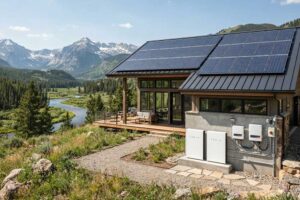
Clear Flexible Solar Panels: Benefits, Uses and Buying Guide
Clear flexible solar panels are lightweight photovoltaic modules designed to allow light transmission while generating electricity. Depending on their construction, they can be considered for applications such as architectural glazing, vehicle windows, canopies, and specialized solar installations. Buyers should verify transparency, power output, flexibility, and installation requirements before selecting a product.
What Are Clear Flexible Solar Panels?
Clear flexible solar panels are solar modules designed to combine some degree of light transmission with photovoltaic electricity generation. Unlike conventional opaque solar panels, which cover their active area with photovoltaic cells, transparent or semi-transparent designs allow some visible light to pass through the module.
However, clear does not necessarily mean completely transparent. Products described this way may be translucent, partially transparent, patterned, or designed with transparent spaces between photovoltaic elements.
The amount of light transmitted depends on the technology, cell arrangement, substrate, and protective layers. A product’s appearance alone cannot establish how much electricity it will generate.
For commercial buyers, the first question should be: How much visible light must pass through the installation, and how much electrical power does the project require? Those two requirements can affect the choice of technology and module design.
Clear, transparent, and semi-transparent solar panels
These terms are sometimes used loosely in product descriptions, so it is important to distinguish them.
| Description | General meaning | What buyers should verify |
|---|---|---|
| Clear solar panels | A broad marketing description for modules that allow some light through | Actual visible-light transmission and module construction |
| Transparent solar panels | Solar technologies designed to transmit visible light while generating electricity | Transparency measurement, wavelength response, and power output |
| Semi-transparent solar panels | Modules that transmit some light but retain visibly active photovoltaic areas | Transmission percentage, cell spacing, appearance, and rated power |
| Flexible solar panels | Modules designed to bend within specified mechanical limits | Maximum permitted curvature, substrate, and mounting instructions |
A flexible panel is not automatically transparent. Likewise, a transparent photovoltaic product is not necessarily flexible.
These are separate characteristics that must be confirmed independently.
How Do Clear Flexible Solar Panels Work?
The operating principle depends on the photovoltaic technology used.
Conventional photovoltaic cells absorb sunlight and convert a portion of its energy into electricity. In a semi-transparent design, the module may allow light through selected areas between cells or use materials and structures intended to transmit some visible wavelengths.
Photovoltaic conversion and light transmission
In a typical photovoltaic module, incoming light transfers energy to a semiconductor, creating charge carriers that can be collected as electrical current.
The U.S. Department of Energy explains the basic operation of photovoltaic technology and how solar cells convert sunlight into electricity. Its overview provides a useful foundation for understanding the energy-conversion process. How Does Solar Work? — U.S. Department of Energy
For transparent or semi-transparent products, the design challenge is balancing light transmission with electrical generation.
Allowing more light through the module can reduce the area available for absorbing sunlight, depending on the technology and structure. This means transparency and power output should be evaluated together rather than treated as unrelated features.
Why the construction matters
A clear flexible solar module may include several functional layers:
- A transparent or partially transparent substrate.
- Photovoltaic material or patterned photovoltaic elements.
- Electrical contacts and interconnections.
- Protective encapsulation.
- A surface layer selected for the intended environment.
The exact structure varies by product. Buyers should request technical documentation rather than assuming that all clear modules use the same cell chemistry or manufacturing process.
Benefits and Limitations of Clear Flexible Solar Panels
Clear flexible solar panels may offer useful design possibilities, but the value depends on the application. A product intended for a window or canopy has different priorities from a module designed to maximize electricity generation on an opaque roof.
Potential benefits
1. Daylight access
Semi-transparent designs may allow natural light into a space while generating electricity. This can be relevant to selected architectural or covered outdoor applications.
2. Alternative design options
A transparent or partially transparent appearance may suit projects where conventional opaque modules would obstruct a view or change the character of a structure.
3. Flexible form factors
Where the product is genuinely designed to bend, it may accommodate certain gently curved surfaces that cannot conveniently accept rigid glass modules.
4. Integration opportunities
Some transparent photovoltaic technologies are developed for building-integrated applications, including glazing and façades. Suitability depends on the product’s structural, electrical, and building-code requirements.
Limitations buyers should consider
Transparency does not guarantee high power output. A clear module’s rated power and efficiency must be checked against the intended installation area.
Other considerations include:
- Whether the module is genuinely flexible or only thin and lightweight.
- Whether it is suitable for outdoor exposure.
- How the product should be mounted or bonded.
- Whether the transparent surface is scratch-resistant or requires special cleaning.
- Whether the module is certified for the intended application.
- Whether replacement or repair is practical after installation.
A panel designed for architectural glazing, for example, should not be assumed to be suitable for a vehicle roof or marine environment without explicit confirmation.
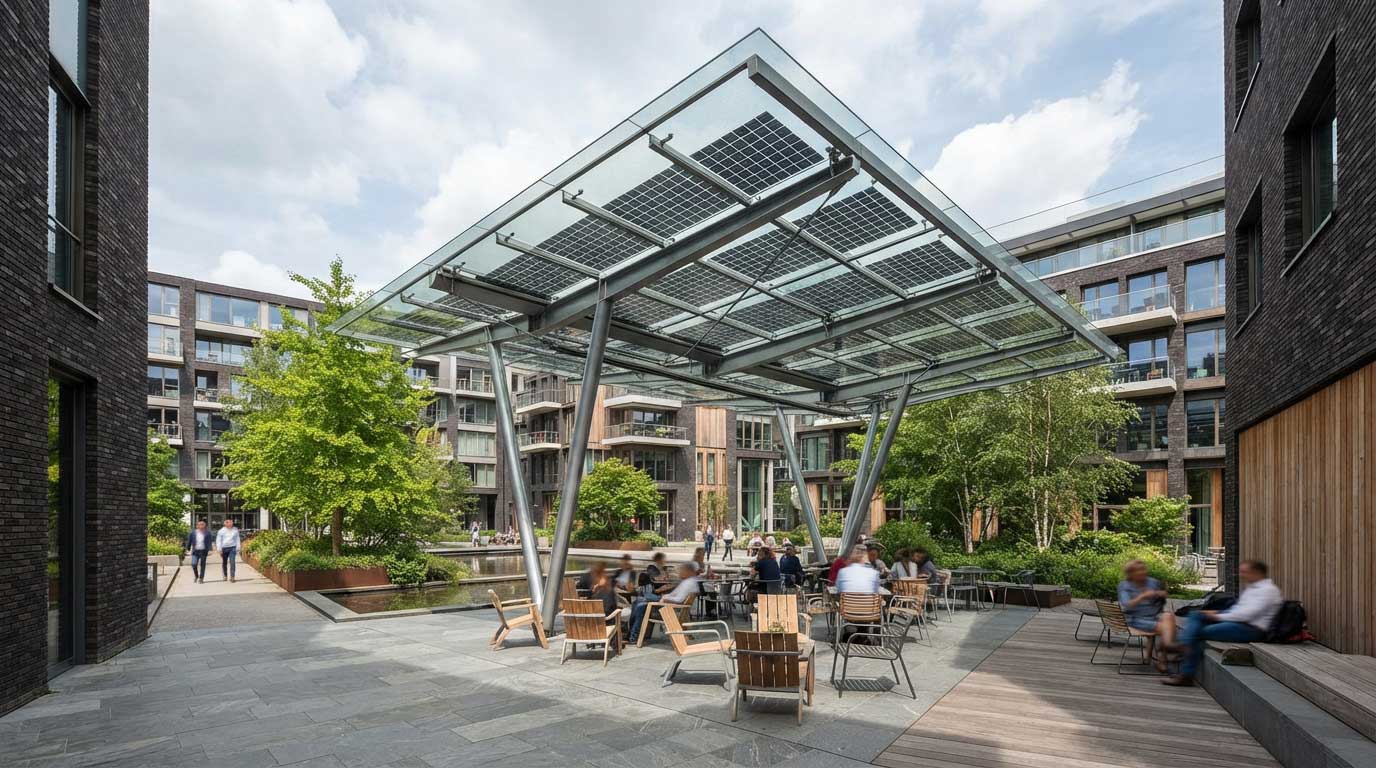
How to Choose Clear Flexible Solar Panels for a Project
Choosing a suitable product starts with the installation rather than the appearance of the panel. A module that looks transparent in a showroom may transmit a different amount of light under outdoor conditions, and its electrical output may change with the available sunlight.
Step 1 — Define the required transparency
Ask the project designer how much visible light needs to pass through the installation.
For a canopy, the priority might be daylight beneath the structure. For a window, visibility and color neutrality may matter more. For a decorative architectural feature, the visual pattern of the photovoltaic elements may be part of the design brief.
Request these details from the supplier:
- Average visible transmittance (AVT), if measured and applicable.
- The method and conditions used to measure transmission.
- Whether the product is clear, tinted, patterned, or semi-transparent.
- Whether transmission varies across the module.
- Whether the sample represents the production configuration.
Do not compare transparency percentages unless the measurement methods and definitions are consistent.
Step 2 — Establish the power requirement
Estimate the energy demand of the equipment or building system that the panels are expected to support.
Record the expected daily consumption, available installation area, local sunlight conditions, and whether battery storage is required. Then compare the proposed module’s rated power and expected operating characteristics with the system design.
The National Renewable Energy Laboratory provides photovoltaic data and modeling resources, including tools for estimating system energy production. These can support early-stage analysis, but project estimates still depend on accurate site and system inputs.
Step 3 — Check mechanical and environmental suitability
For flexible installations, request written confirmation of:
- Maximum permitted bending or minimum bending radius.
- Approved mounting and bonding methods.
- Substrate and protective-layer materials.
- Operating temperature and environmental limitations.
- Cleaning and maintenance instructions.
- Applicable electrical and safety certifications.
If the module will be installed on a moving vehicle, near saltwater, or in a location exposed to frequent moisture, make sure the supplier confirms that the specific model is intended for those conditions.
Step 4 — Review a sample before bulk purchasing
A sample inspection can reveal issues that are difficult to identify in a brochure.
Check the actual transparency under daylight, inspect the edges and protective layers, and compare the sample dimensions with the approved drawing. Review the connector location and cable arrangement. If the project requires a particular appearance, evaluate the sample from both sides and at the intended viewing distance.
Record any differences and obtain written approval before production begins.
Clear Flexible Solar Panels and the Transparency–Efficiency Trade-Off
Transparency and electricity generation are related design considerations. In many semi-transparent photovoltaic configurations, increasing the proportion of light transmitted through the module can reduce the amount of incoming light absorbed by active photovoltaic material.
The precise relationship depends on the technology. Transparent photovoltaic research includes approaches that selectively absorb certain wavelengths while transmitting more visible light. A review published in Nature Reviews Clean Technology discusses the role of wavelength-selective solar cells and the need to assess optical and electrical performance together.
Why one efficiency number is not enough
When comparing products, consider at least three separate questions:
- How much electricity does the module generate? Review rated power, efficiency, and the conditions under which they were measured.
- How much light passes through? Check the visible-transmittance measurement and whether it represents the whole module.
- Does the product suit the installation? Review mechanical limits, environmental exposure, mounting requirements, and applicable approvals.
A module with greater transparency may be more appropriate for a daylight-sensitive application, while a less transparent module may be considered where electrical output takes priority. The design objective should be defined before products are compared.
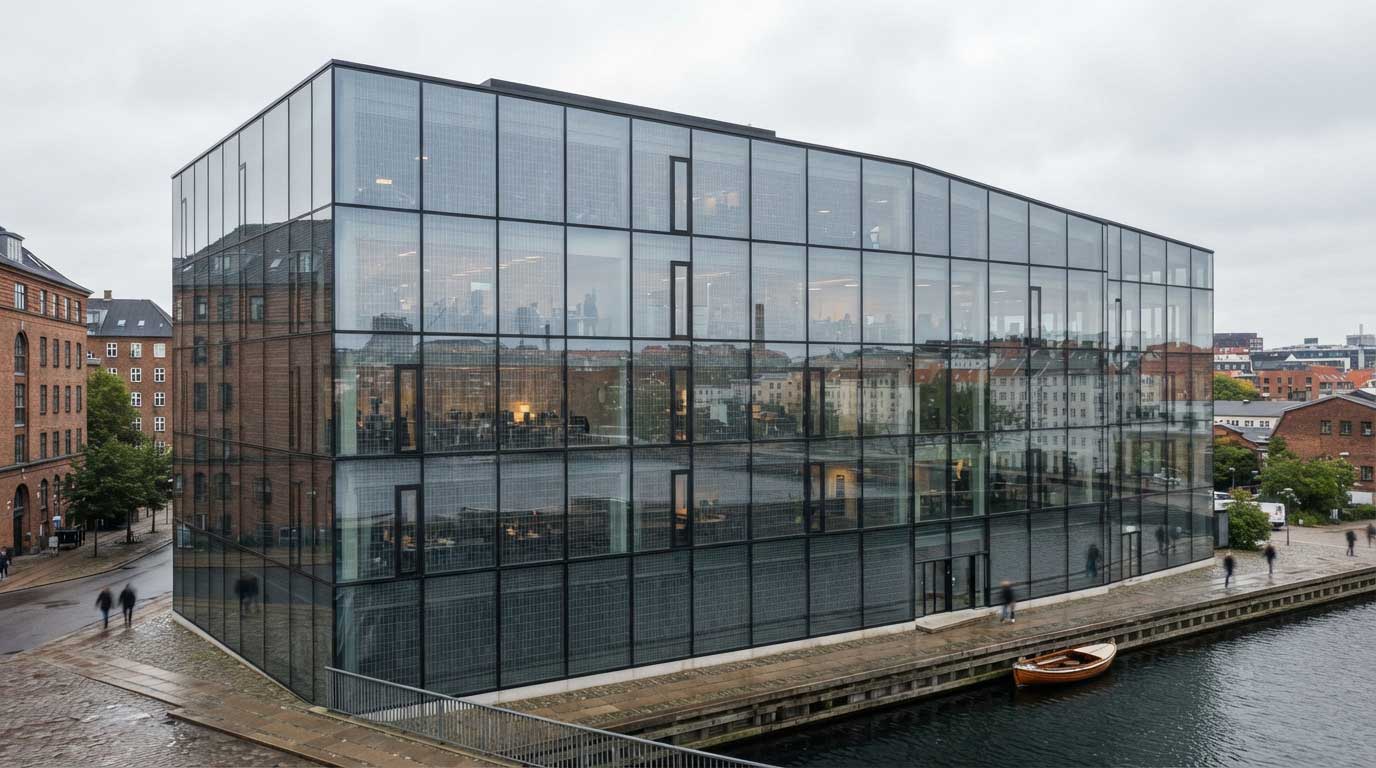
Practical Project Example: Planning a Solar Canopy
Consider a hypothetical commercial property in western Europe planning a covered outdoor seating area. The design team wants to generate electricity without making the canopy completely opaque.
Before requesting quotations, the team records three requirements:
- The canopy must preserve a defined level of daylight beneath it.
- The solar installation must connect safely to the site’s electrical system.
- The selected product must be suitable for the canopy’s structure and outdoor exposure.
The team requests samples and asks suppliers to document visible-light transmission, rated power, dimensions, mounting requirements, and applicable certifications. It then reviews the samples under outdoor daylight and checks the proposed layout with the project’s structural and electrical designers.
This is an illustrative planning example, not a documented Bright Solar installation or a measured customer result. No energy savings, efficiency percentage, or project cost is being claimed.
What the example reveals
The most important early decision is the balance between daylight and power generation. If the project team does not define that balance first, it may compare products that were designed for entirely different purposes.
A useful specification should therefore describe both the desired visual result and the electrical objective. That gives manufacturers a clearer basis for identifying suitable products and explaining any trade-offs.
Bright Solar Flexible Solar Panel Solutions
Bright Solar provides flexible and semi-flexible solar panel solutions for applications including RVs, marine use, outdoor power, and off-grid systems.
When considering Bright Solar for a project involving clear flexible solar panels, buyers should distinguish between a transparent photovoltaic requirement and a general flexible-panel requirement. These are not interchangeable product categories.
Bright Solar’s specified product ranges include:
| Product range | Manufacturer-specified features | Important consideration |
|---|---|---|
| L Series | PERC monocrystalline cells, DuPont ETFE surface, maximum flexibility of 30%, and saltwater-resistant characteristics | Confirm the exact model’s permitted bending and installation requirements |
| H Series | Designed for marine and yacht applications; double-ETFE construction; walkable design; IP67-rated junction box | Confirm the model-specific marine suitability and conditions for walkability |
| PSP / RS / NB | Bright Solar product-family names | Request the individual model datasheet and construction details |
These product descriptions do not establish that the listed ranges are transparent or clear photovoltaic modules. Buyers requiring a transparent or semi-transparent panel should request explicit confirmation of the optical properties and cell technology of the proposed product.
Information to include in a Bright Solar inquiry
To make a product discussion more productive, provide:
- Intended application and installation location.
- Required visible-light transmission or visual appearance.
- Target rated power and available installation area.
- Surface shape and any mechanical constraints.
- Electrical-system voltage and controller requirements.
- Expected exposure to weather, moisture, or salt.
- Target quantity, destination market, and documentation requirements.
If transparency is a mandatory requirement, state it clearly at the beginning of the inquiry. A conventional flexible panel should not be substituted for a transparent product without the project’s approval.
FAQ About Clear Flexible Solar Panels
Are clear flexible solar panels completely transparent?
Not necessarily. The term can refer to products that are translucent, semi-transparent, patterned, or transparent only in selected areas. Buyers should request measured visible-light transmission data and confirm how the figure was calculated.
Do clear flexible solar panels generate electricity?
Yes, photovoltaic products designed to be transparent or semi-transparent can generate electricity from sunlight. Their output depends on the technology, active photovoltaic area, rated power, sunlight, temperature, and installation conditions.
Can clear flexible solar panels be installed on windows?
Some transparent photovoltaic technologies are developed for glazing and building-integrated applications. However, suitability depends on the exact product’s structural design, optical performance, mounting method, electrical safety, and building-code requirements. A general flexible panel is not automatically suitable for windows.
Are transparent solar panels less efficient than conventional panels?
Transparency and electrical efficiency are related design considerations, but a universal comparison is not appropriate across all technologies. The outcome depends on the photovoltaic material, device structure, and transparency target. Compare products using consistent measurement methods and application requirements.
Can clear flexible solar panels be bent around curved surfaces?
Only if the particular product is designed for bending and the installation remains within its specified mechanical limits. Transparency does not establish flexibility, and flexibility does not mean that a panel can be folded or bent repeatedly without restriction.
What should I ask a supplier before buying clear flexible solar panels?
Request the exact model datasheet, visible-light transmission data, rated power, efficiency measurement basis, dimensions, weight, bending limits, mounting instructions, applicable certifications, and warranty terms. For a commercial project, review a sample and establish written acceptance criteria before bulk production.
Does Bright Solar manufacture clear flexible solar panels?
Bright Solar supplies flexible and semi-flexible solar panel product ranges. The specified L Series uses PERC monocrystalline cells, while the H Series is designed for marine and yacht applications. Buyers seeking clear or semi-transparent modules should contact Bright Solar to confirm whether a suitable product is available and request model-specific optical and electrical documentation.
Conclusion
Clear flexible solar panels offer a way to combine photovoltaic electricity generation with light transmission in applications where conventional opaque modules may not meet the design requirements. Their suitability depends on transparency, electrical output, mechanical construction, environmental conditions, and installation constraints.
For commercial buyers, the key is to define the required visual appearance and power output before comparing suppliers. Verify the actual module specifications, review samples, and confirm that the product is approved for its intended application.
Bright Solar provides flexible and semi-flexible solar panel solutions for a range of applications. Contact the team with your project requirements to discuss available products, technical specifications, and potential customization options.
Related recommendations
-

ETFE Solar Panel Flexible: Benefits, Uses and Buying Guide
100An ETFE solar panel flexible uses an ETFE front surface and a bendable module construction. It can suit RV, marine, and off-grid projects, but selection depe...
View details -
highest watt flexible solar panel: Powerful Flexible Solar Solution for High Energy Demand
213Discover the highest watt flexible solar panel for RVs, marine, and off-grid applications. Learn power output, technology, installation, and benefits from Bright Solar.
View details -
50 watt flexible solar panel: Compact Solar Power Solution for RV and Off-Grid Use
123Explore the 50 watt flexible solar panel from Bright Solar for RV, marine, camping, and off-grid applications. Learn output, installation, and practical uses.
View details -
Off Grid Solar System Cost: Complete Price Guide for 2026
243Explore off grid solar system cost with our complete guide covering panels, batteries, installation, and pricing factors to build a reliable solar power solution with Bright Solar.
View details